
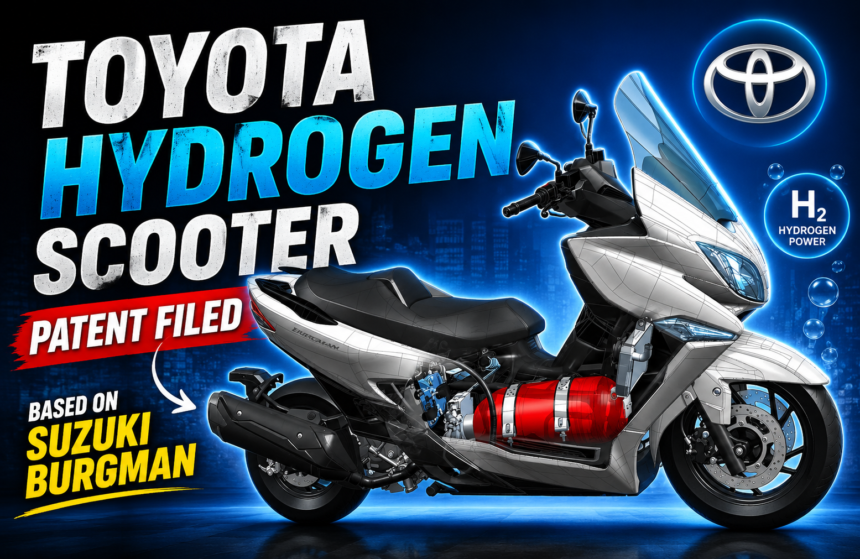
The Toyota hydrogen-powered scooter uses hydrogen fuel cell technology, which could make it costlier than hydrogen internal combustion engine (HICE) models
While the emphasis is on BEVs, alternative green fuel options are also being actively researched. One alternative that shows strong promise is hydrogen, which could be used in fuel cell technology or internal combustion engines. Cars like the Toyota Mirai and Hyundai Nexo are already using hydrogen and we have seen trucks, buses and even trains running on hydrogen.
However, the use of hydrogen in two-wheelers has not yet reached commercial production. In a welcome development for green mobility, Toyota has filed a patent for a hydrogen fuel cell scooter. It is based on the earlier version of Suzuki Burgman 400. Let’s see the details.
swappable hydrogen tank
Leading Japanese OEMs including Toyota and Suzuki are already actively collaborating to develop HySE (Hydrogen Small Mobility and Engine) technology. They are also likely to collaborate on hydrogen fuel cell technology for two-wheelers. Toyota’s patent for its hydrogen fuel cell scooter is based on the Bergman fuel cell prototype that was unveiled in 2011.
More recently, Suzuki also showcased the HICE-based Burgman concept at the 2023 Japan Mobility Show. Given its strong experience in this field, Toyota may focus on hydrogen fuel cell technology for two-wheelers. The patent shows that Toyota is not only looking at fuel cell technology but also the practical aspects of the scooter.
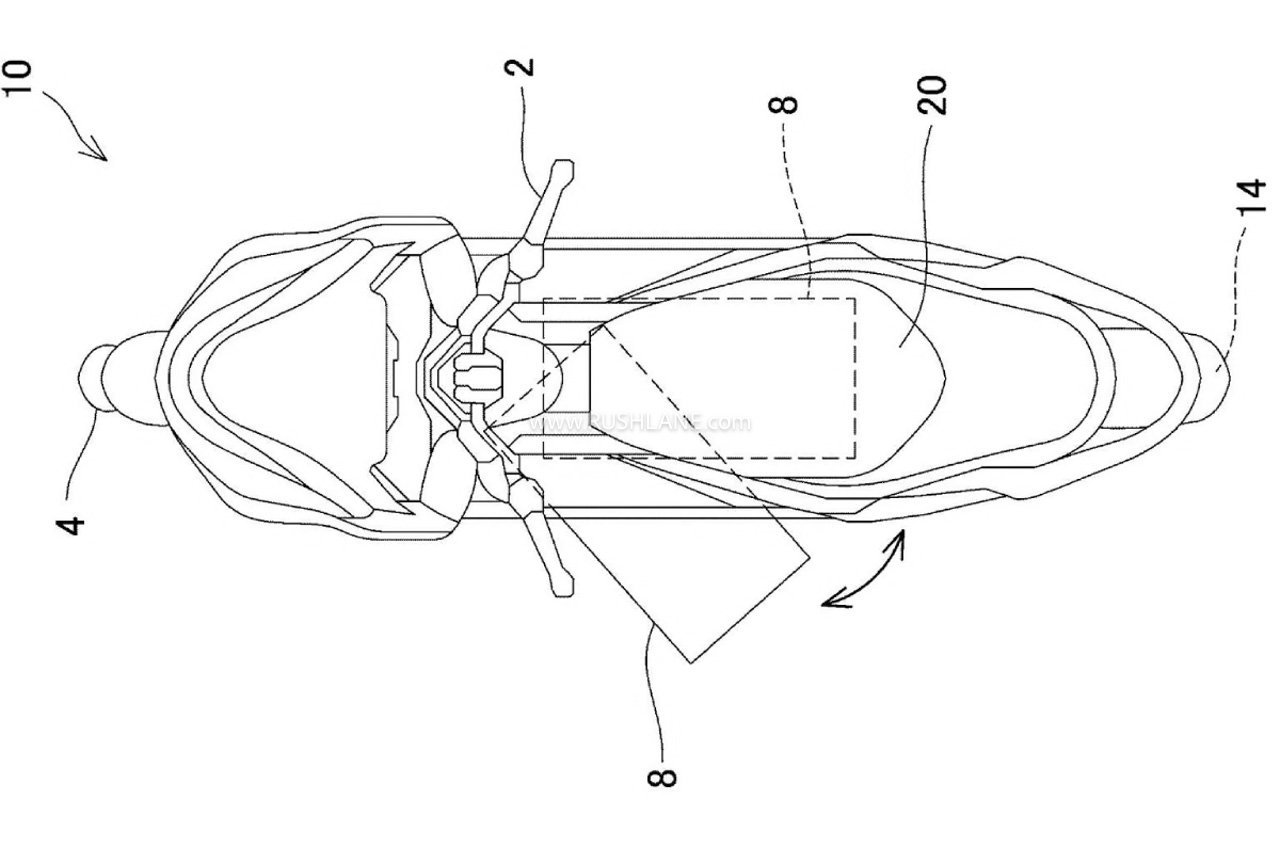
One of the useful features is the removable hydrogen tank, which is placed around the floorboard area. This is very similar to the removable battery pack in electric scooters. It is convenient and allows users to load fuel quickly and safely. With a removable hydrogen tank, the hassle of filling hydrogen at the gas station is completely eliminated.
easy pull out mechanism
In the patent, Toyota also shows two different methods of removing the tank. In one method, a hinged mechanism is used to pull the cylinder holder to one side. Another method shows a scissor linkage system, which is used to pull out the cylinder holder. Testing is likely to be done to understand which method is the most convenient, safe and reliable.
The use of pre-filled cylinders may also be a requirement for hydrogen fuel cell propulsion systems, and not just a matter of convenience and safety. This is because fuel cells typically require cleaner hydrogen than HICE units. Pre-filled cylinders can avoid the risk of infection during transportation.
Hydrogen fuel cell is greener than HICE. When hydrogen is obtained from renewable sources such as solar-powered electrolysis, it has zero emissions. The only byproduct is water, which is pushed out through the exhaust. In comparison, HICE can give rise to byproducts such as nitrogen oxides.
While Toyota has filed a patent for its hydrogen fuel cell scooter, Indian OEMs like TVS Motor and Bajaj Auto are also working on hydrogen-powered two-wheelers. With a swappable cylinder based setup, such vehicles could be easier to handle than electric two-wheelers with heavy battery packs. However, hydrogen powered two-wheelers can be expensive, limiting their overall potential in the early stages.