
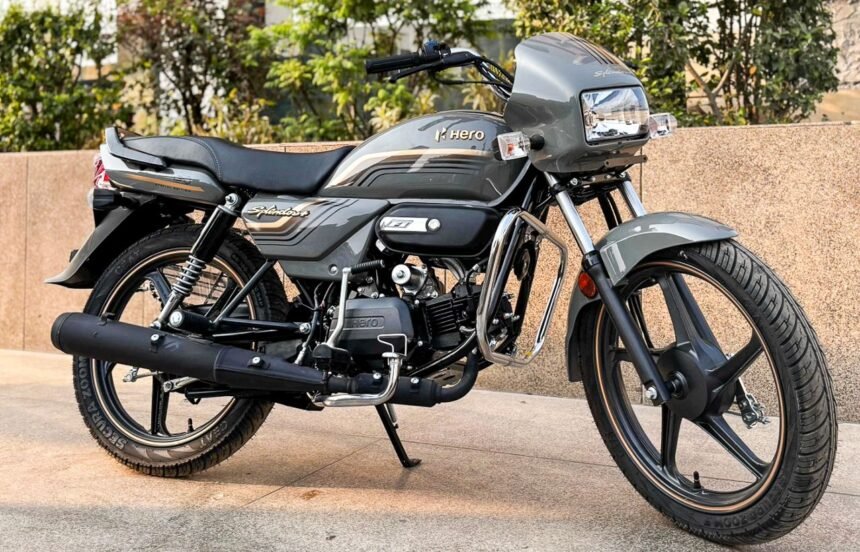
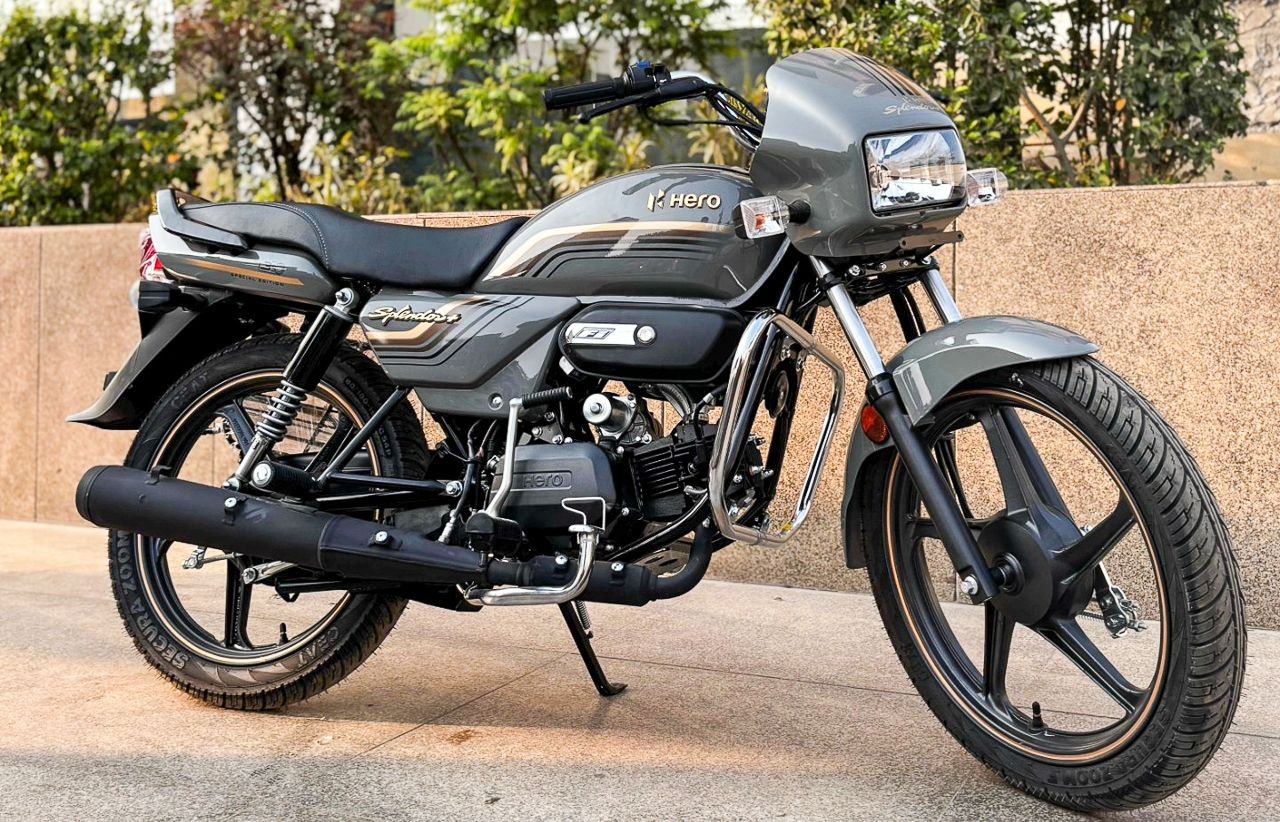
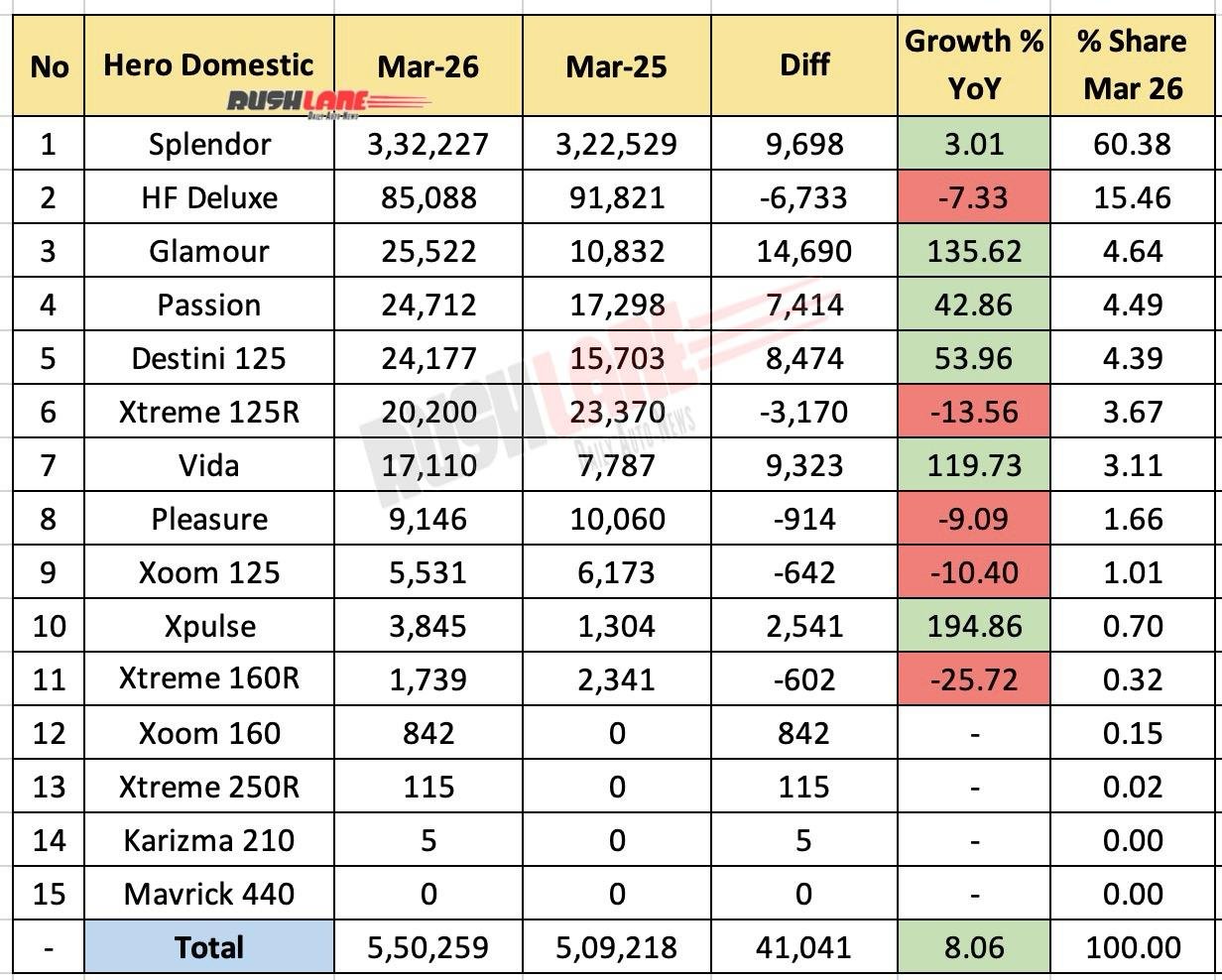
It is possible that Hero’s first flex fuel bike could be the Splendor E85 or the HF Deluxe E85, which are the two best-selling models of the brand.
As world powers compete for global energy dominance, large oil importing countries like India are looking to diversify their energy sources. The focus is on renewable energy and self-reliance. One fuel that fits the bill is ethanol, which is already available in E20 blends nationwide.
Going forward, the government is actually aiming for a flexible-fuel ecosystem that can support up to E85 blends or even E100. In this direction, Maruti will launch its E100 flex fuel car on June 5. In the two-wheeler sector, Hero MotoCorp will take the lead with the launch of its first E85 bike on June 3.
Hero E85 Bike – What to Expect?
India has been working on its energy self-sufficiency plans even before the current crisis in the Middle East began. Hero MotoCorp had showcased its flex-fuel prototype at the 2025 Bharat Mobility Global Expo. This prototype was based on the HF Deluxe. Now it remains to be seen which bike Hero launches on June 3.
Splendor can be a good option as it has been India’s best selling bike for many years. The main components in the HF Deluxe are largely the same. The unveiling on June 3 will be a proper production version and not a concept model. Specifications and prices may be announced at the launch event or in the days after the launch.
Creating fully flexible fuel vehicles works better for the entire industry. Consumers benefit because they don’t have to worry about the ethanol blend they put into their bike. As of now, bikes are manufactured to support only one specific ethanol blend. This approach puts millions of vehicles at risk when a new policy mandates higher ethanol blends. With flex fuel, the risk of damage from unsupported ethanol blends is eliminated.
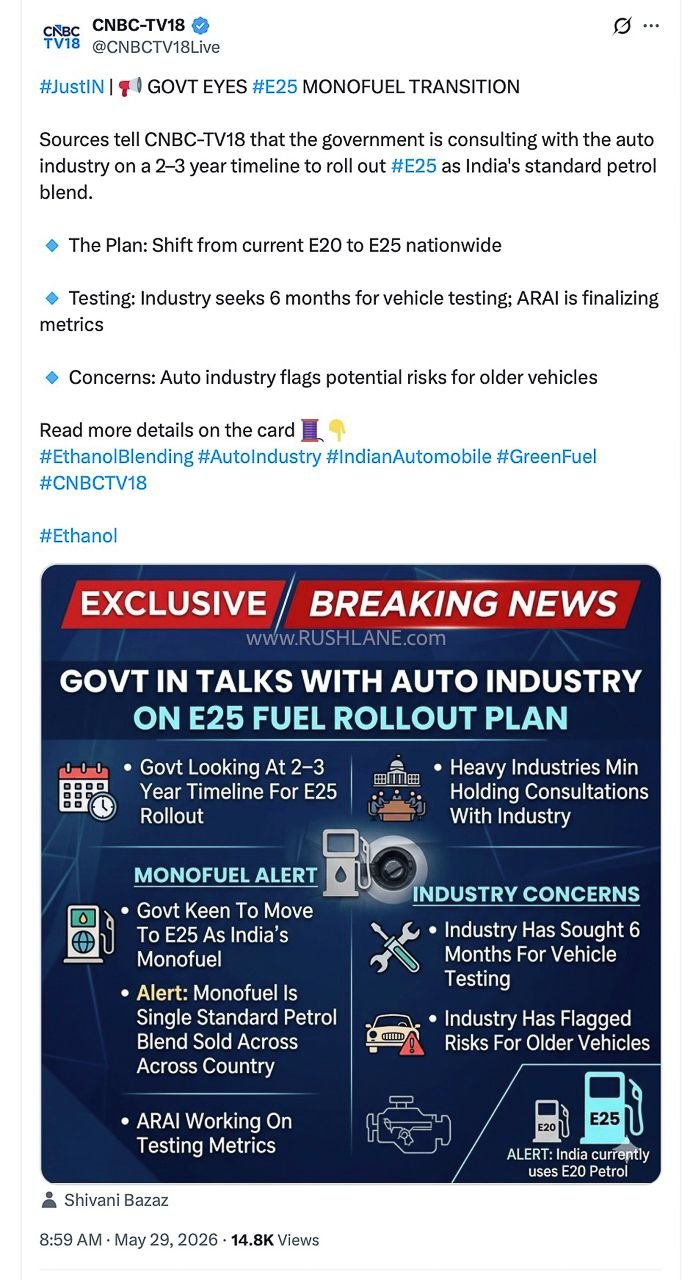
The industry is moving in the same direction
Apart from Hero MotoCorp, other OEMs are also working on their respective flex-fuel models. With uncertainties related to global energy supply, the push toward flex fuel and other renewable energy sources has only become stronger and more urgent. Interestingly, Honda has launched the CB300F flex fuel in 2024. Although the bike was later discontinued, it shows that the flex fuel ecosystem can be scaled rapidly.
Royal Enfield is also working on flex fuel versions of its existing bikes. A Classic 350 test mule was recently spotted with E85 markings. Another OEM working on flex fuel and other green options is Suzuki. Apart from flex fuel, Suzuki is also focusing on CNG and electric two-wheelers. TVS has also focused on developing flex fuel vehicles. At the 2025 India Expo, TVS had showcased the Raider 125 flex fuel model.
The production cost of flex fuel versions of 100cc to 125cc commuter bikes could increase by around Rs 4,000 to Rs 7,000. To reduce the burden on consumers, it is possible that GST rates on flex fuel bikes may be reduced. As of now, petrol bikes below 350cc attract 18% GST rate. GST on electric bikes and scooters is quite low at 5%. Since ethanol is renewable and green, a lower GST rate makes sense.