
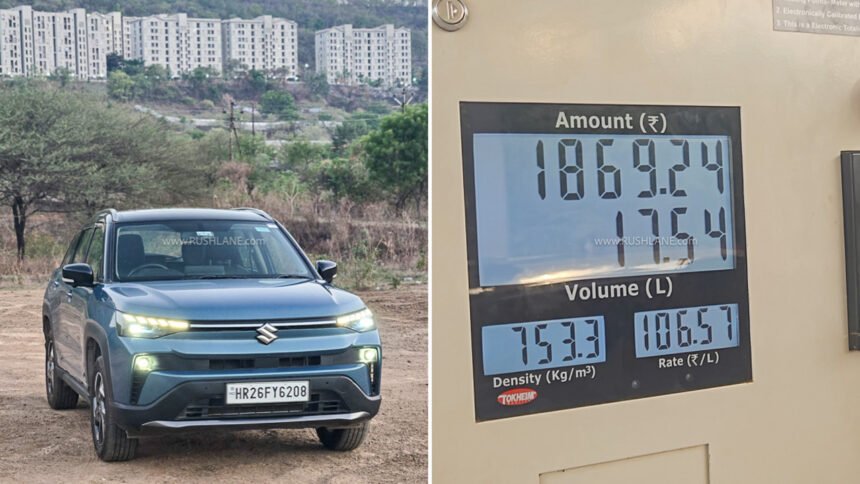
Maruti Suzuki launched the Victoris SUV in the country in September 2025 and it has quickly emerged as one of India’s best-selling C segment mid-size SUVs. It is offered with NA petrol, CNG and strong hybrid powertrain options. This is the third hybrid SUV from the Maruti-Toyota duo in the country.
We had the Victoris Hybrid for about a month and explored the fuel efficiency aspect of this hybrid SUV. We compiled our fuel efficiency figures in three different driving scenarios and drove around 2,000 km with this hybrid SUV. Here is our detailed mileage test report.
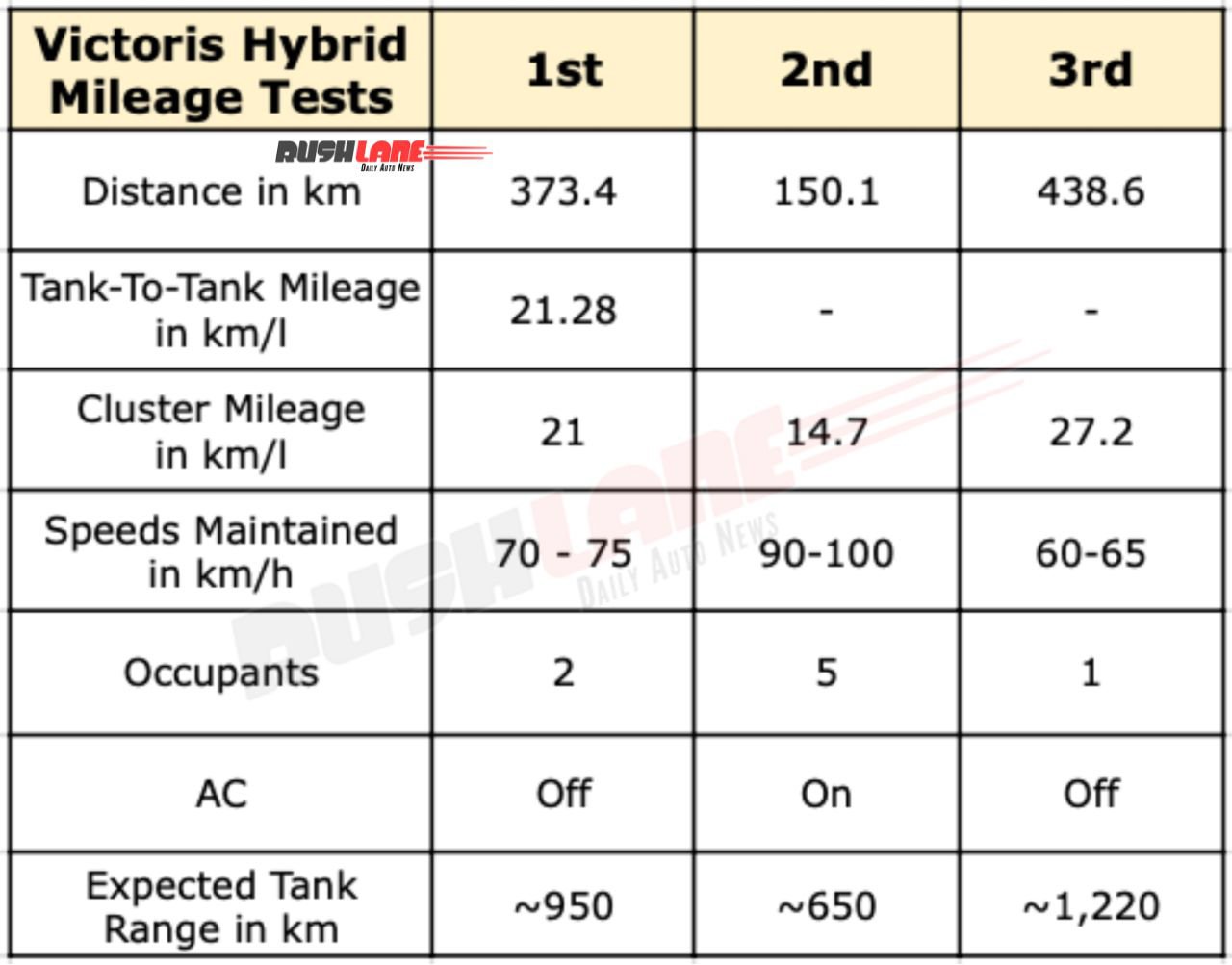
Maruti Suzuki Victoris Mileage Test
There is a lot to talk about Maruti Suzuki Victoris in other departments like design, features, equipment and comfort. This article will strictly cover mileage tests in various scenarios and driving conditions. Results vary with different conditions and we even came very close to the claimed ARAI-certified mileage figure of 28.65 km/l, but in favorable conditions.
Test 1 – Mileage achieved – 21.28 km/l
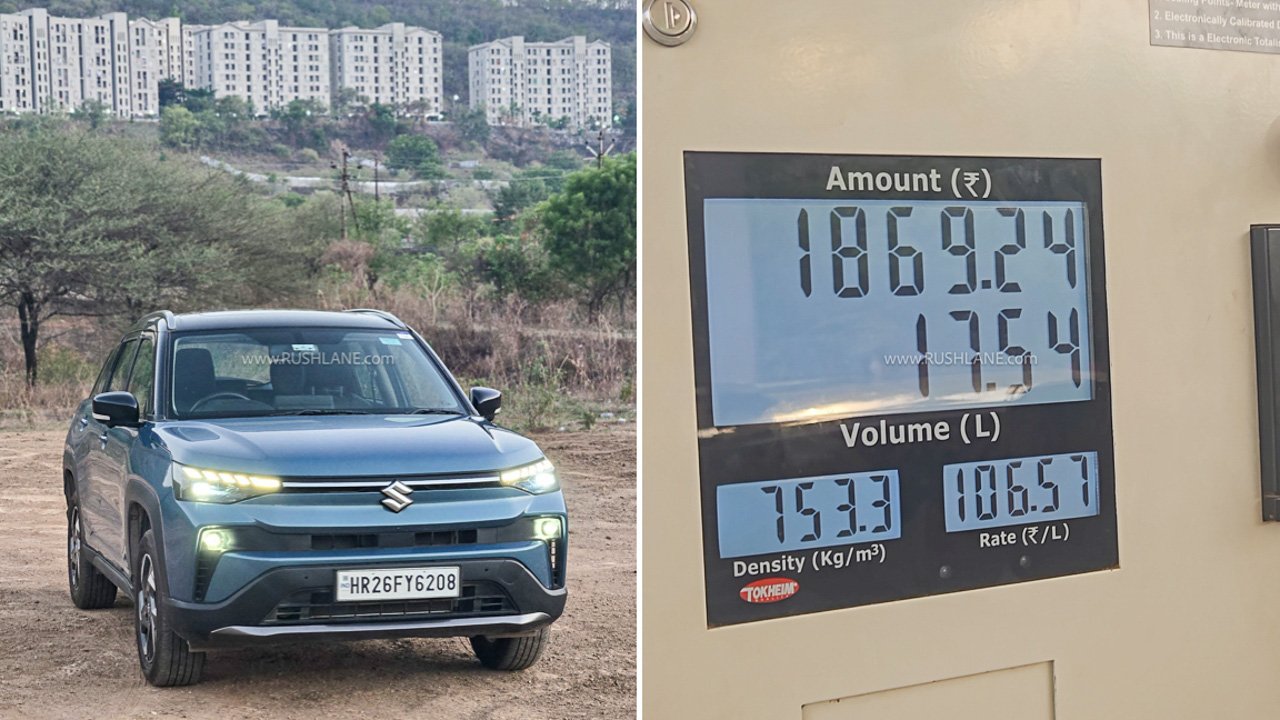
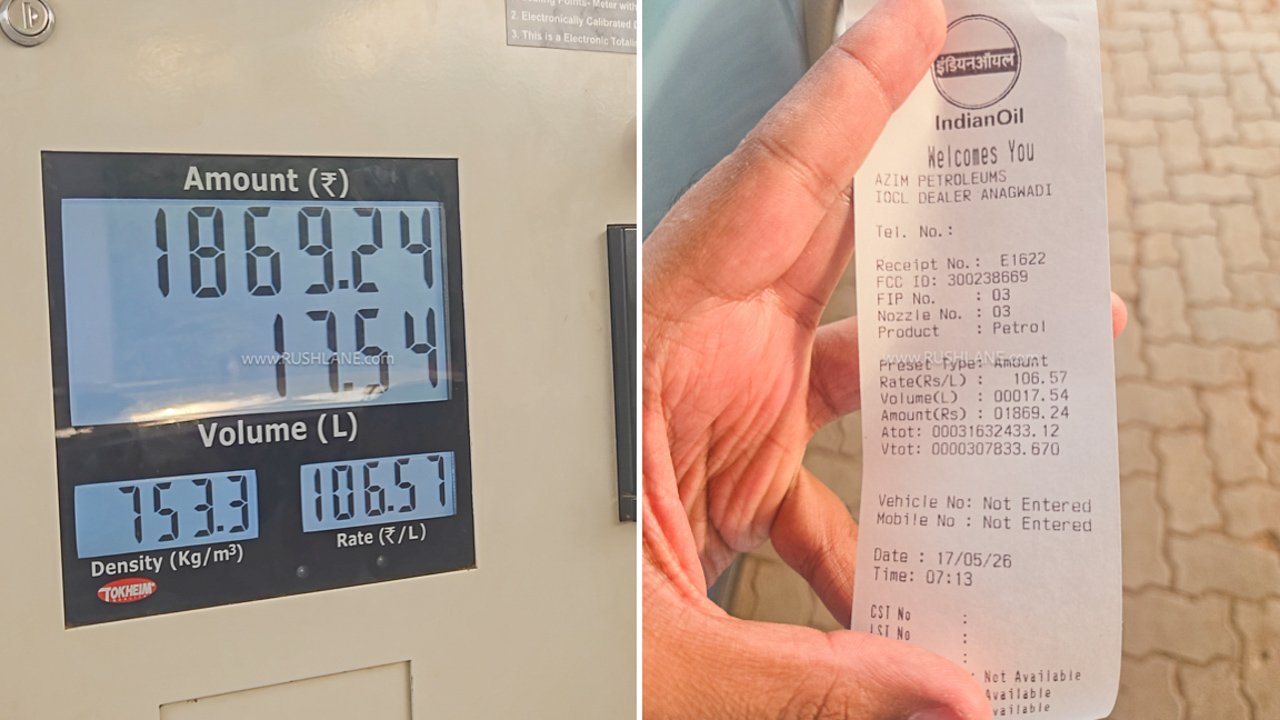
The first mileage run was at night and it was a pleasant night drive with the AC off. There were two adults in the car and the fuel tank was already full and ready to go. At the time of refill the odometer reading was 4,681 km and we covered a distance of 373.4 km when the odometer reading was at 5,055 km. On refilling the Victoris Hybrid’s fuel tank the next day, it took 17.54L of fuel to fill it to the same spot where it was before.
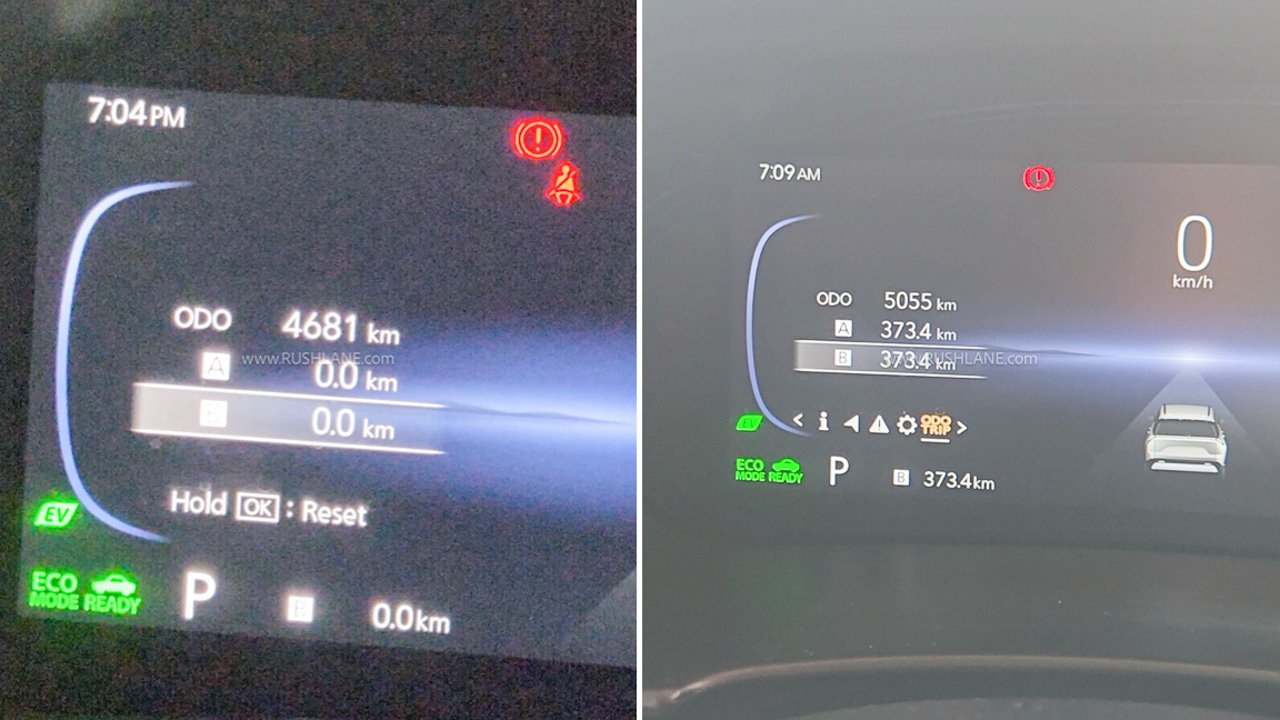
This resulted in a tank-to-tank fuel efficiency of 21.28 km/l in the first test. The instrument cluster was showing around 21 km/l which was close to the result we achieved. About 50 km of this drive was in Pune city traffic, driven in B gear on the ECVT which unlocks more regen braking. And then in D gear when we go on the highway, which allows better coast determination. During this mileage test, we did not overspeed or do acceleration runs and drove the Victoris Hybrid quite gently.
The speed on the highway was maintained between 70 km/h to 75 km/h and reached up to 85 km/h during overtakes or whenever traffic conditions allow us to travel at higher speeds. During the first mileage run, we got ample amount of electric assistance from the hybrid system for short bursts and in favorable conditions the Victoris Hybrid runs on electric power for a few kilometers, which reduces fuel consumption.
Test 2 – Mileage achieved – 14.7 km/l
The second and third mileage tests took place during the West Asia war crisis and petrol stations refused to let us fill the full tank. So, considering how accurate the instrument cluster readings were during the first mileage run. We reset the Victoris Hybrid’s fuel economy readings and took the real-time mileage rating it was showing us.
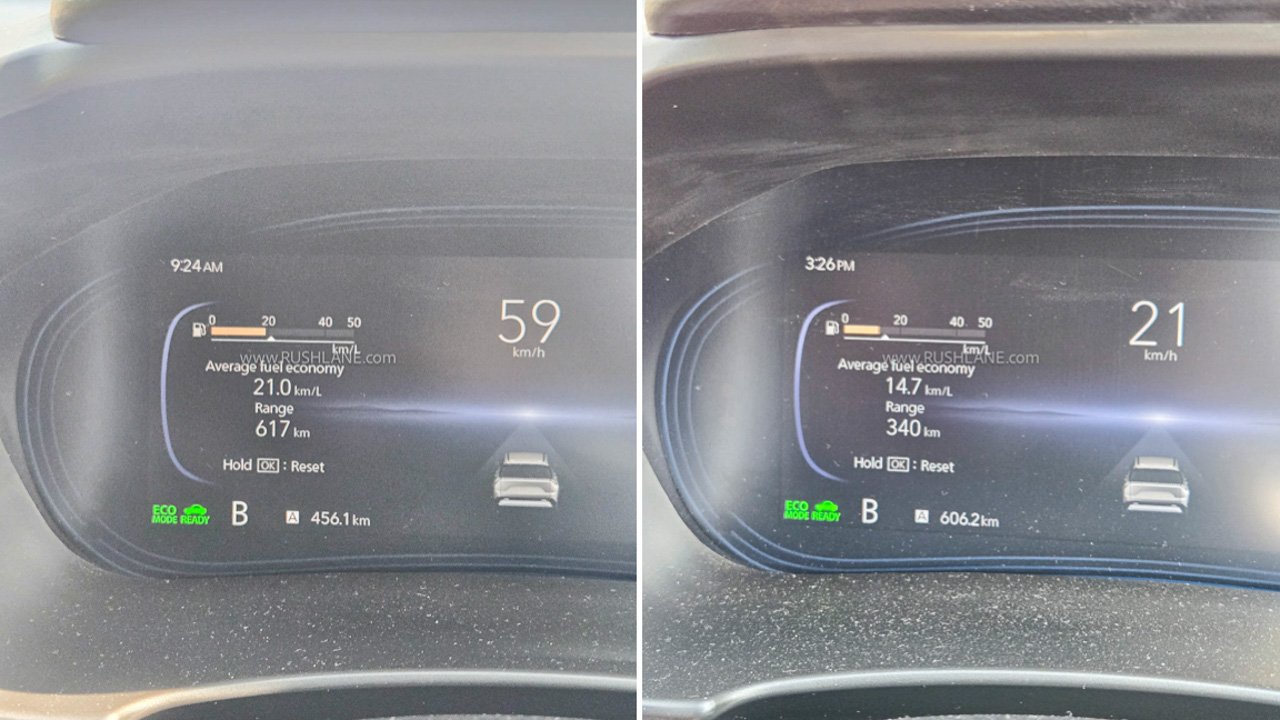
This mileage test run was the most interesting because it’s a route I’m familiar with – from home to farm house. We started this trip when Trip A was at 456.1 km and ended it when Trip A was at 606.2 km. It was a 150km journey and there were 5 adults in the car and we had turned on the AC as it was a hot day. I drove the Victoris Hybrid exactly like I drive my diesel manual SUV and covered the distance in exactly the same time.

The fuel economy computer of the Victoris Hybrid showed us a mileage of 14.7 km/l. The same journey and driving style and driving conditions in my diesel MT SUV gives me a consistent mileage of 20 km/l. The speed maintained here was between 90 km/h and 100 km/h. When driven whole house with AC on at highway speeds to cover the time, the hybrid system and electric assistance were virtually non-existent and the engine was on almost the entire time.
Test 3 – Mileage achieved – 27.2 km/l
In the third mileage test run, we decided to hypermile and extract as much fuel efficiency as possible and came close to the claimed figure of 28.65 km/l. To establish optimal conditions, I was alone in the Victoris Hybrid with the AC off. We traveled between 60 km/h and 65 km/h on the highway and drove it slowly and carefully.
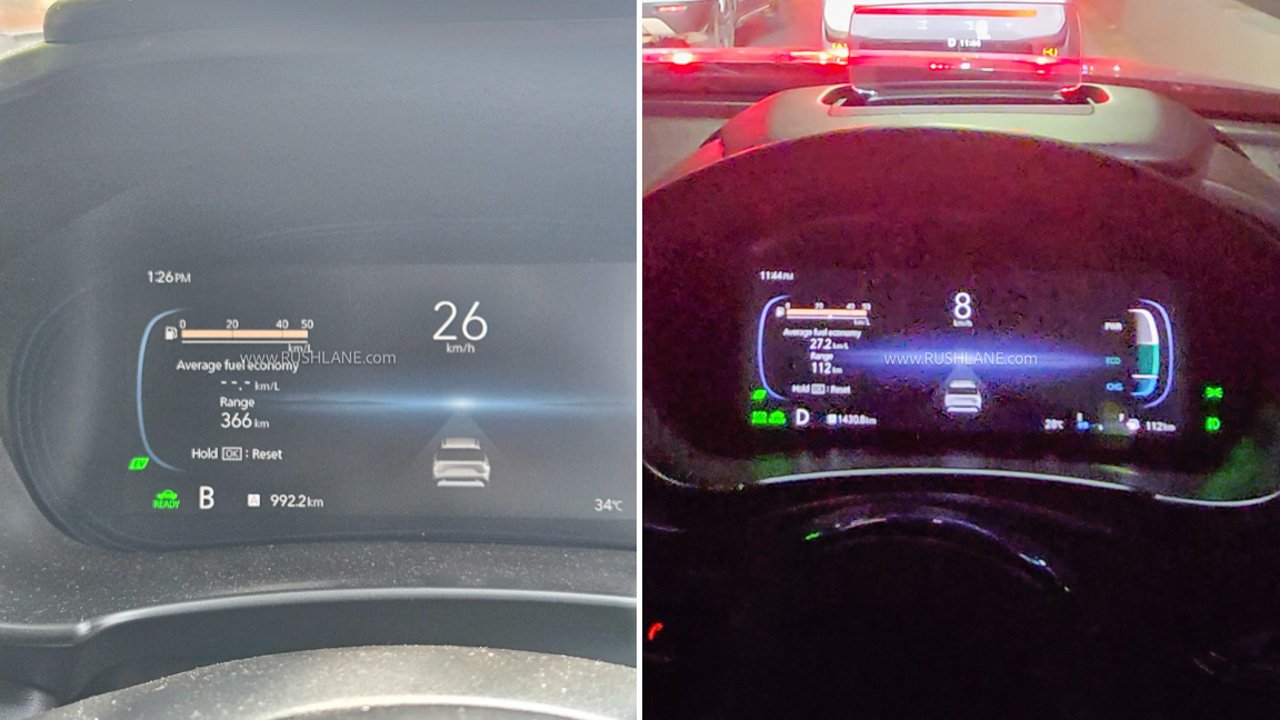
I reset the fuel efficiency meter in the cluster and started the 438.6 km hypermile when Trip A was at the 992.2 km mark and ended it when Trip A was at the 1,430.8 km mark. The mileage indicated in the cluster was 27.2 km/l, which seemed close or accurate as I was monitoring the fuel level during the journey. The hybrid system works best at low speed and hypermiling situations and shuts down the engine as much as possible and saves precious fuel.
Can hybrid replace diesel?
Hybrids are now being advocated as diesel replacements. This is the case if you do not consider time as a limited resource and are okay with your lack of driving experience. For reference, the Victoris Hybrid comes with a 3-cylinder NA petrol hybrid setup. In comparison, diesel engines are turbocharged, providing a surge of torque and driving pleasure that NA petrol hybrids cannot match.
In our second mileage race, time was a resource for me as I had to reach the destination quickly and spend as little time as possible on the road. If I think in that direction, the diesel emerges as a far more economical fuel option than the Victoris Hybrid because in its current state, this hybrid system works best in low speeds and urban driving styles.

To bring strong hybrid systems closer to diesel replacement, they must have larger battery packs with greater pure electric range. These systems need to resist kicking in the engine for long periods of time and at high sustained speeds and times. With the Victoris Hybrid, we can achieve excellent mileage figures and potentially go up to 1,000 km on a tank, but at the cost of time. If you want to go 1,000 km on a tank with high revs without thinking about anything, diesel is still king.