
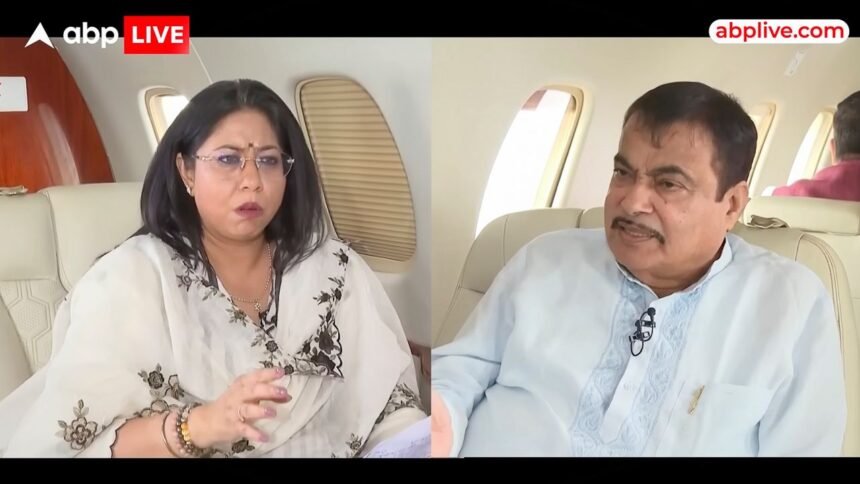
Union Road Transport and Highways Minister Nitin Gadkari has addressed growing concerns about E20 petrol, answering questions about low mileage, vehicle damage claims and the rollout of ethanol-blended fuel. Recent interview with ABP Live journalist Megha Prasad.
Nitin Gadkari on E20 petrol controversy
One of the major topics discussed was whether E20 petrol results in lower fuel efficiency. Gadkari said the calorific value of ethanol is lower than petrol, which naturally creates a difference in mileage. However, he pointed out that the effect is generally less noticeable in city driving and may be more pronounced during sustained highway runs.
Responding to claims that he has accepted this fact only recently, Gadkari said he has consistently said that the calorific value of petrol and ethanol is different and the issue is technical in nature. The discussion also touched on reports from vehicle owners claiming low mileage, fuel pump failures and other issues after switching to E20 petrol. Gadkari said that such complaints should come Before concluding that ethanol is responsible, it should first be verified by an authorized dealership..
Asked owners to lodge complaint
he urged Owners are facing problems in filing complaints with their vehicle manufacturers And also submit the details through the website of Ministry of Road Transport and Highways for further investigation. According to him, the ministry has not received any verified complaint establishing ethanol as the cause of vehicle damage.
Questions were also raised about the ARAI report, which reportedly noted lower mileage and possible degradation of fuel system components in older E10-compliant vehicles running on E20 fuel. Gadkari denied that the report was being suppressed, saying that such technical reports are shared with government departments and the automotive industry, and can also be accessed through the RTI process.
Explaining the government’s push toward E20, Gadkari said the program aims to reduce India’s annual petroleum import bill of Rs 22 lakh crore.Reducing emissions and improving farmers’ income through higher ethanol production. He said automakers conduct extensive testing before approving vehicles for ethanol-blended fuels.
Petrol prices were also discussed in the interview, with Gadkari clarifying that fuel pricing and ethanol blending policy comes under the Ministry of Petroleum and Natural Gas. Supporting Brazil’s model of offering multiple fuel options at fuel stations, he said such decisions were outside the scope of his ministry.
Gadkari answers key questions – family business, road condition after first rains
When questioned about allegations linking his family’s business interests to ethanol, Gadkari rejected the claims, saying ethanol contributes less than 10 per cent to his family’s business business and cautioned. Defamation action can be taken on false allegations.
At the end of the interview, Gadkari admitted that there were potholes on a section of the Delhi-Dehradun Expressway after heavy rains. He attributed the issue to incomplete drainage connections due to pending land acquisition and said the affected portion was repaired after the problem was identified.
Addressing consumers directly, Gadkari advised vehicle owners facing mileage or performance issues to get their vehicles inspected at authorized service centres. If a bona fide defect related to ethanol is established, he said manufacturers are responsible for addressing it under applicable warranty provisions.
Key questions and answers of Nitin Gadkari’s interview
Q. Does E20 reduce petrol mileage?
A: Gadkari said the calorific value of ethanol is lower than petrol, which means mileage may vary. According to them, the effect is more noticeable during highway driving, while no significant difference is seen during city driving.
Q. What should owners do if they suspect that E20 has reduced their vehicle’s mileage?
A: He advised owners to get the vehicle checked at an authorized dealership first. If any genuine issue is found, they should file a complaint with the manufacturer and also submit it to the Ministry of Road Transport and Highways through their website.
Q. Has the government received complaints about E20 causing damage to vehicles?
A: Gadkari said his ministry has not received a single verified complaint to prove that ethanol blended petrol has caused damage to the vehicle.
Q. Why was the E20 introduced earlier than originally planned?
A: He said higher ethanol availability allowed India to accelerate the rollout. Its objective was to reduce crude oil imports, reduce emissions and improve farmers’ income.
Q. Why was the ARAI report on E20 not made public?
A: Gadkari said the report has not been hidden and has been shared with government departments and the automotive industry. He said that such report can also be sought through RTI process.
Q. Why did petrol prices not come down despite ethanol blending?
A: Gadkari clarified that petrol pricing and blending policy is controlled by the Ministry of Petroleum and Natural Gas and not by the Ministry of Road Transport and Highways.
Q. Can E20 damage older vehicles?
A: Gadkari said manufacturers test vehicles extensively before approving ethanol-blended fuel. He said that any claim of damage should be technically verified through authorized service centers before connecting to E20 petrol.
Q. What did Gadkari say on the allegations related to his family’s business?
A: He rejected claims that his family business has significantly benefited from ethanol, saying ethanol contributes less than 10 per cent of the group’s business. He also warned that false allegations could lead to defamation action.
Q. Why were there potholes on the Delhi-Dehradun Expressway?
A: Gadkari said the problem was caused by incomplete drainage connections due to pending land acquisition. Heavy rains resulted in accumulation of water, following which repairs were made to the affected area.
Q. Did Gadkari say that people should have been given information about E20 petrol?
A: Yes. At the end of the interview, he acknowledged that the public could have been better informed that E20 petrol was being supplied, adding that government notifications and cabinet decisions had already been announced publicly.