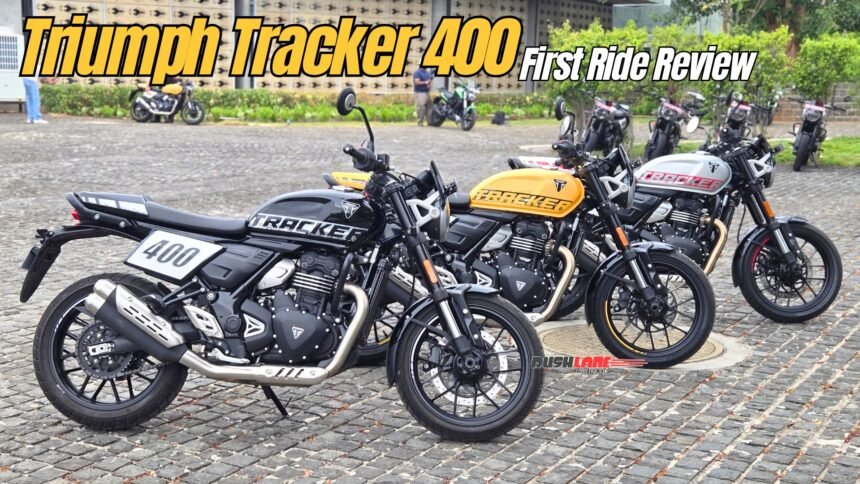
Bajaj Auto and Triumph Motorcycles partnership has given birth to another 400 class (350cc) motorcycle in the form of the Tracker 400. The motorcycle is slated to be launched in April 2026 and the prices were announced on the same occasion as the media ride of the 350cc Triumph 400 family, (Speed, Scrambler, Thruxton).
The media ride for the Tracker 400 was held at Bajaj’s Akurdi facility in Pune a few days ago and today, July 25, the ban was lifted. It is to be noted that the deliveries of this motorcycle started in April 2026. After driving it in and around Pune city, we take a look at Triumph’s latest 400 class motorcycle with tracker styling.
triumph tracker 400 review
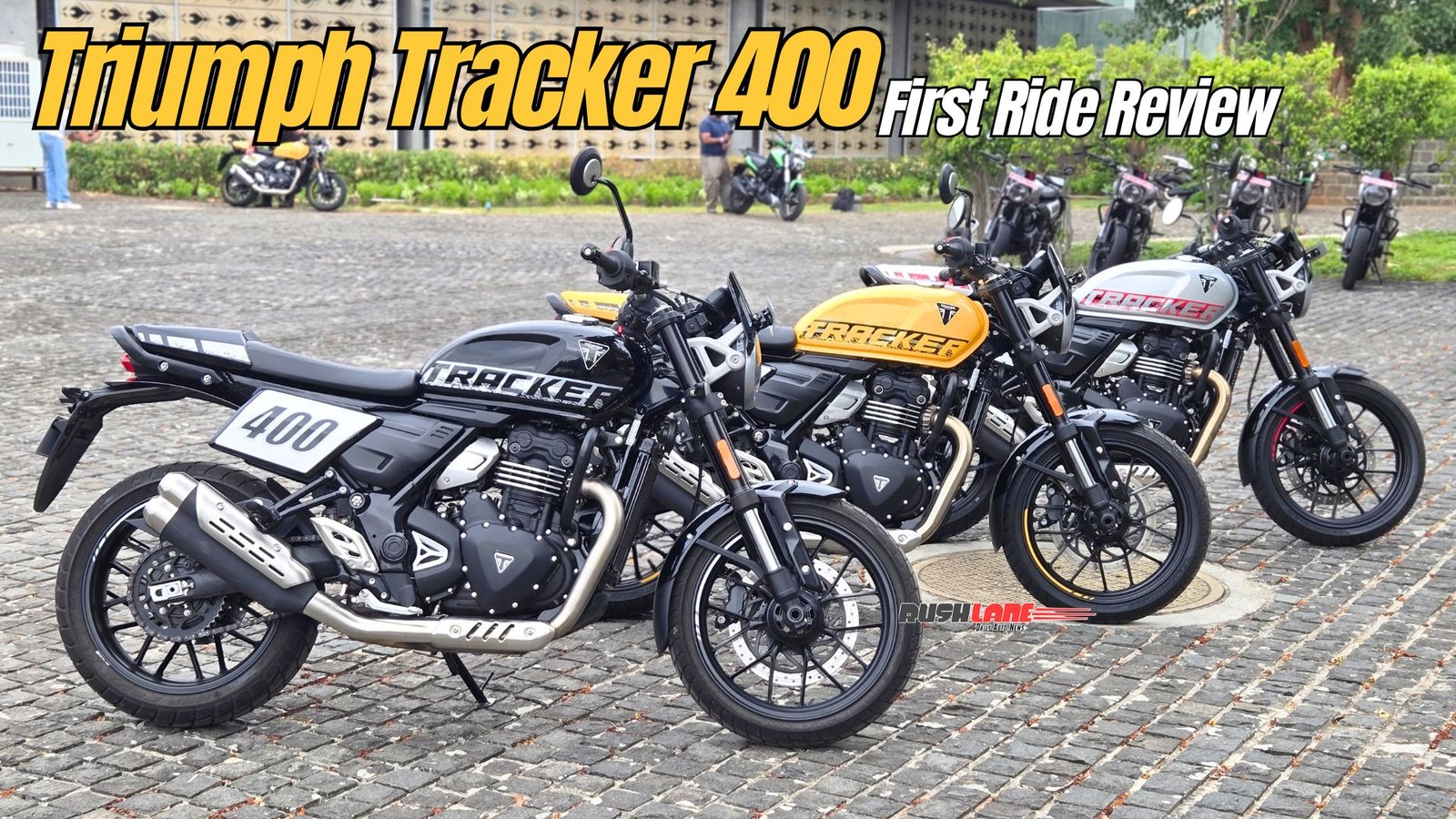
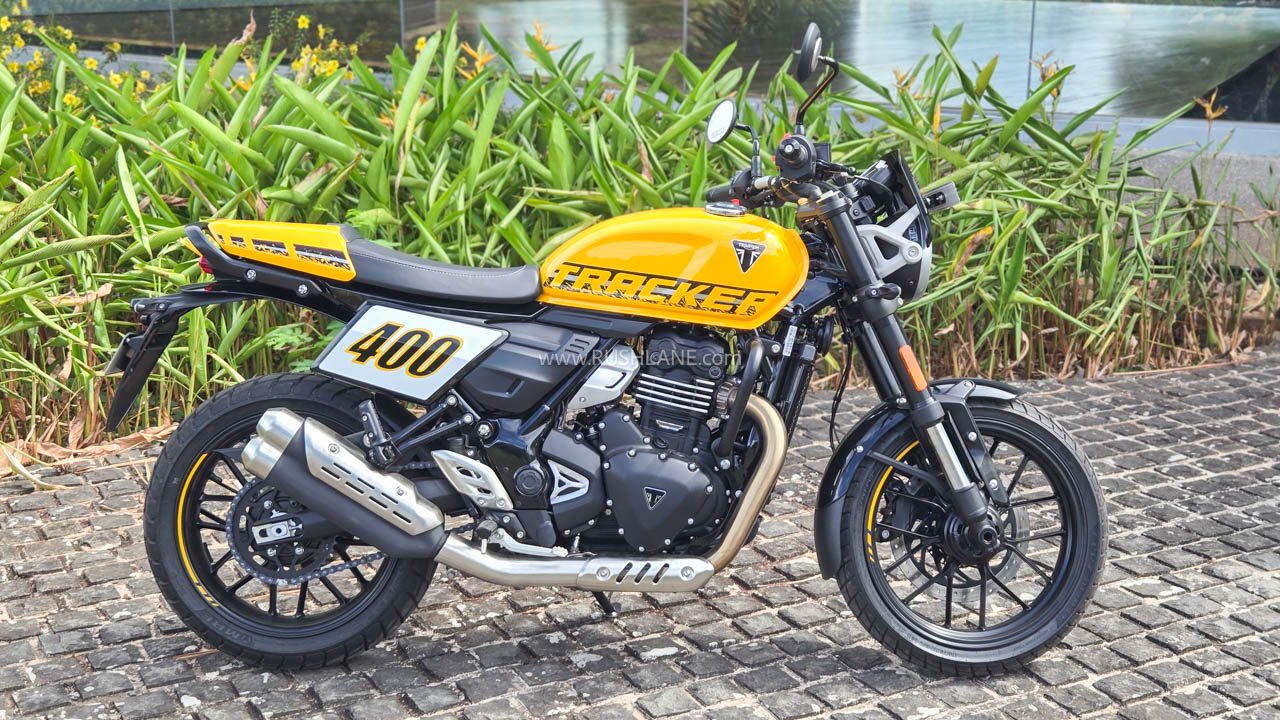
The launch price of Triumph Tracker 400 is Rs 2.46 lakh (ex-sh) and there are three colors to choose from – Aluminum Silver, Phantom Black and Racing Yellow. We rode Racing Yellow, but we believe Aluminum Silver has more sophistication and aesthetic appeal, while Racing Yellow is more attractive. People who like stealth aesthetics will be attracted to Phantom Black.
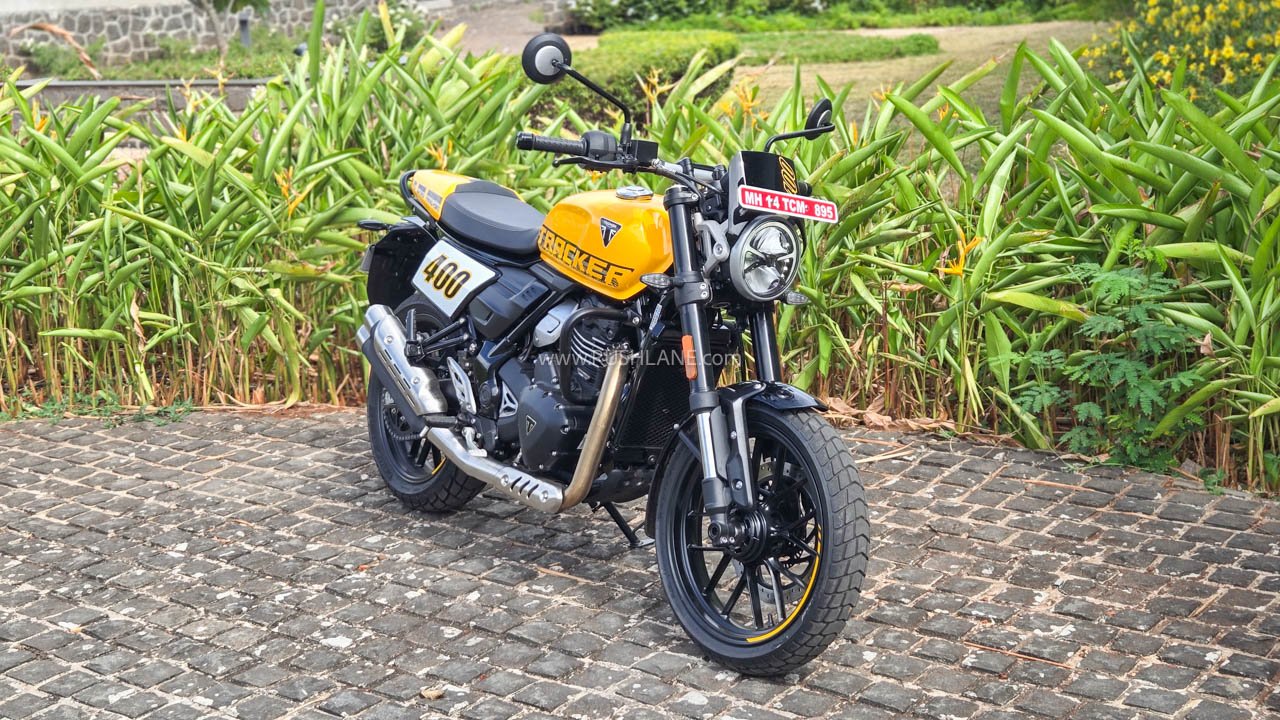
According to the company, the Triumph Tracker 400 is a tracker in form and not a tracker in function. So, it has the design of a flat tracker and not functionality and should not be considered as a tracker at all. Instead, it is a celebration of one of the oldest forms of motorcycle racing, popularized by American brands like Harley-Davidson and Indian Motorcycle.
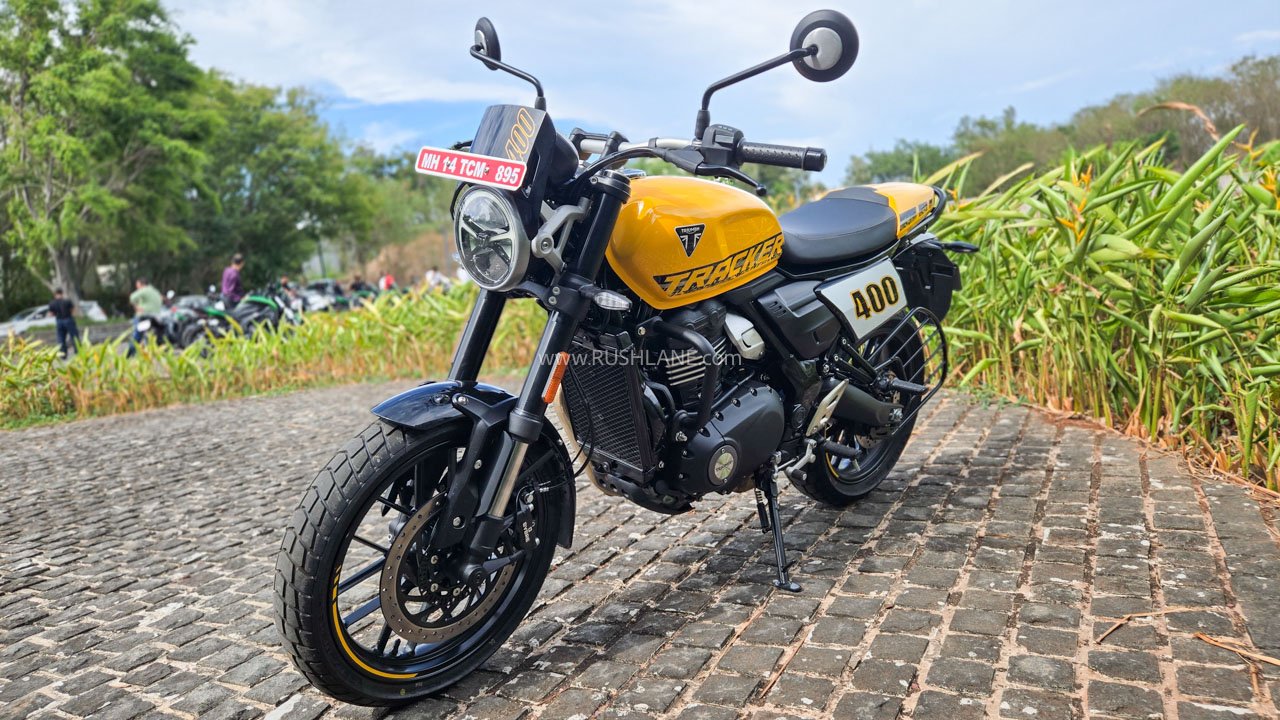
In that regard, the Triumph Tracker 400 has headlights and front brakes to meet the regulations. Looking at the Tracker 400, we have to say that Bajaj and Triumph have done a good job in capturing the overall essence of a flat tracker motorcycle. Even though it shares most of its components with other Triumph 400 motorcycles along with a few unique bits, it has a distinct look.
tracker aesthetics
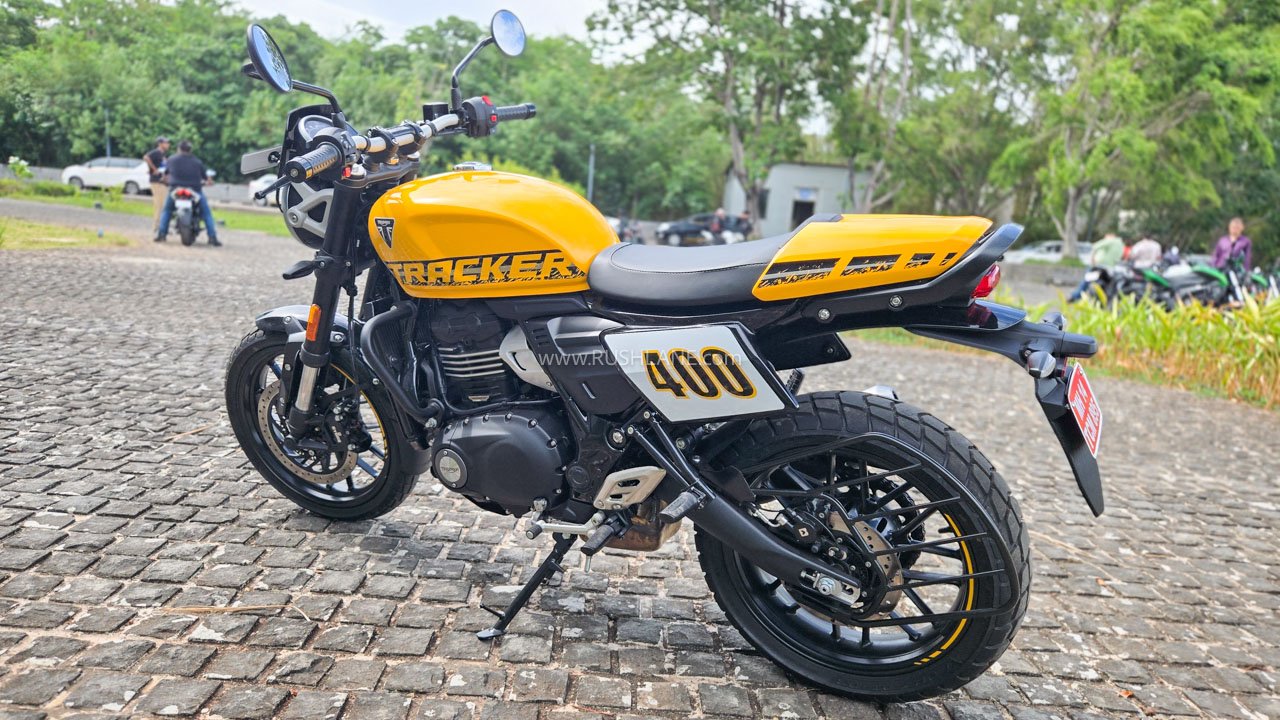
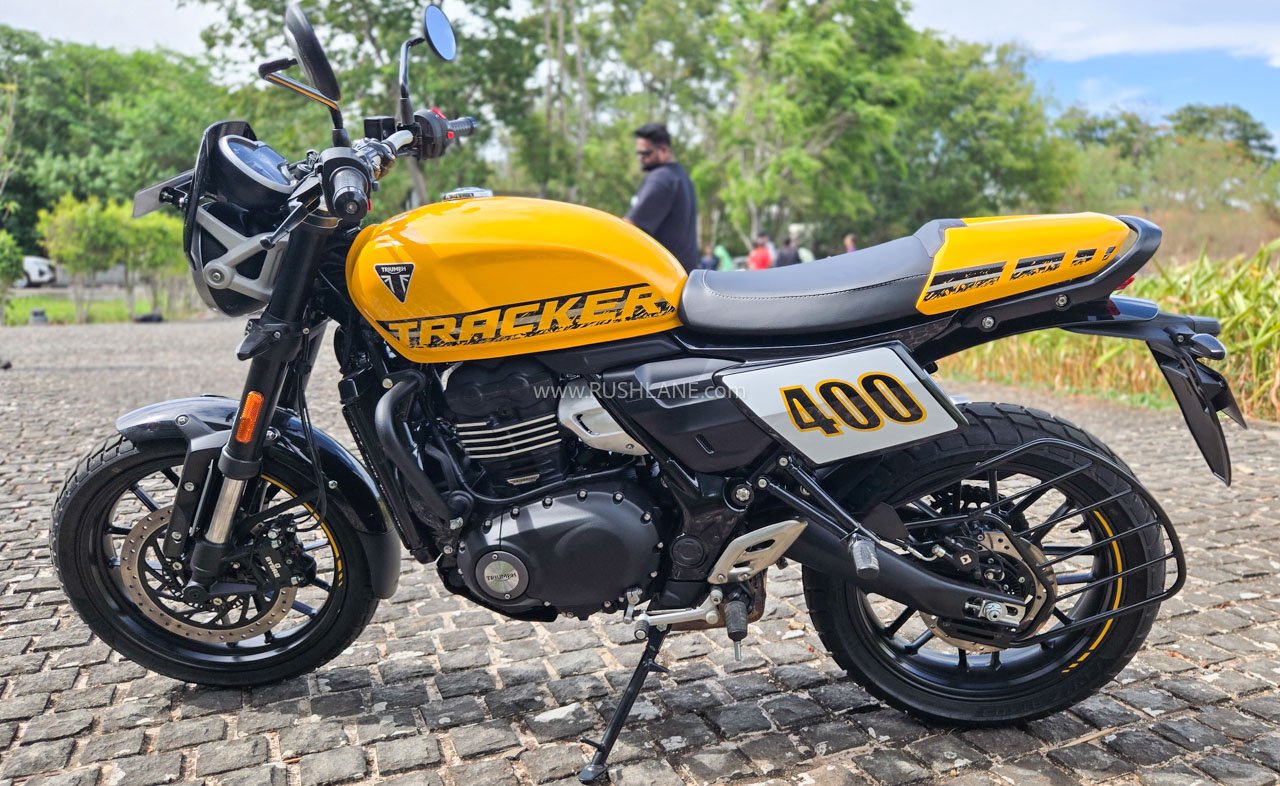
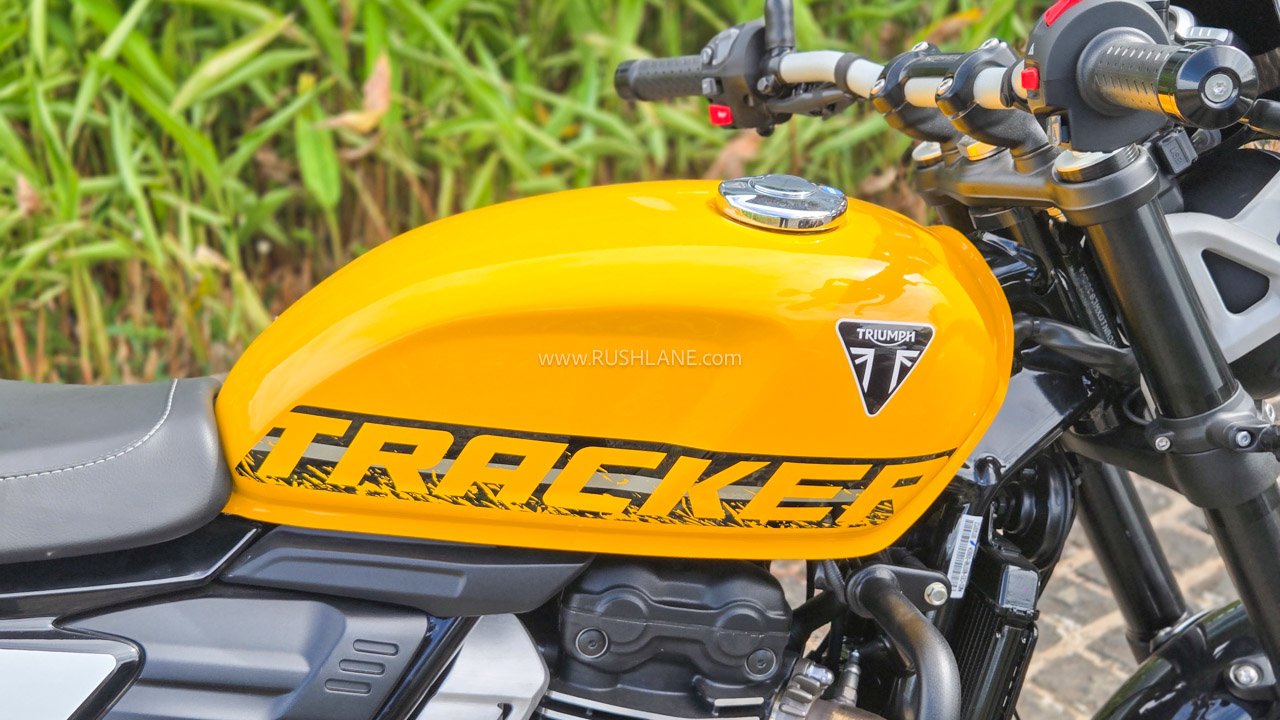
For starters, we can see a unique fuel tank with the Tracker 400 that resembles the Thruxton 400 with its long semi-teardrop shape with knee recesses. This fuel tank has an off-set fuel filler cap on top as well as the Triumph logo and Tracker lettering on the sides. The circular LED headlights continue and the Tracker 400 gets a unique fly screen.
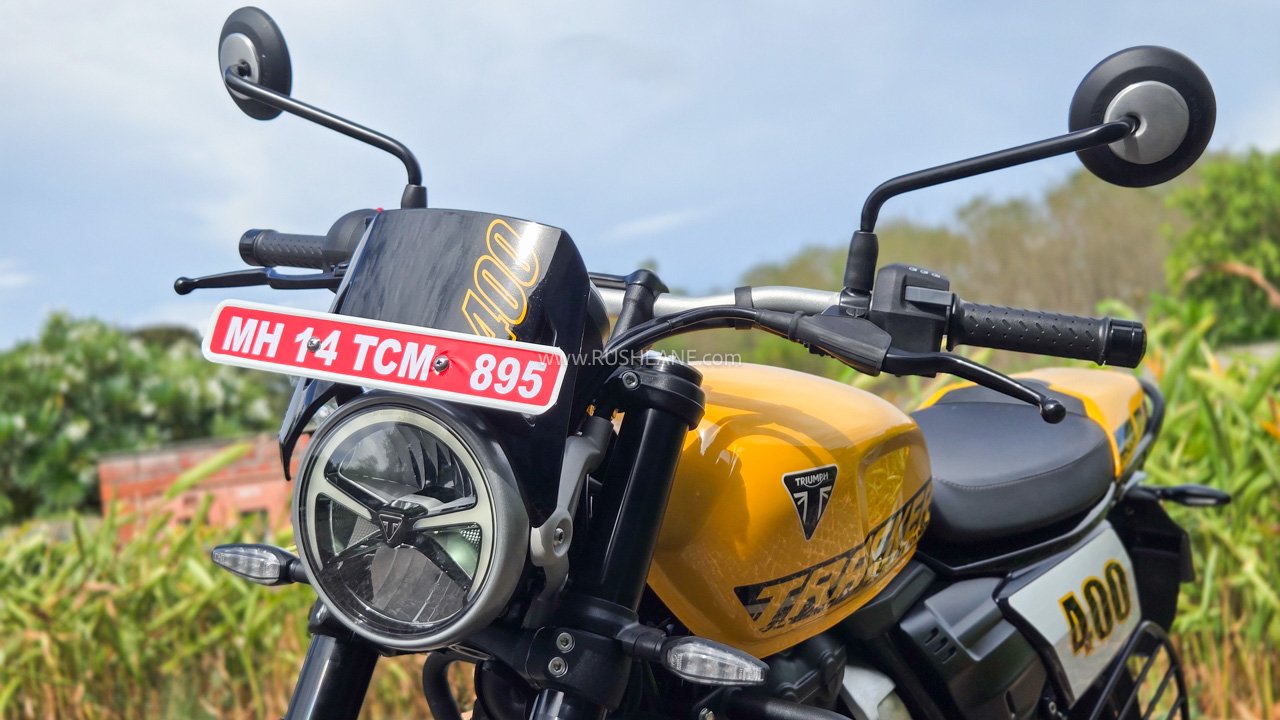
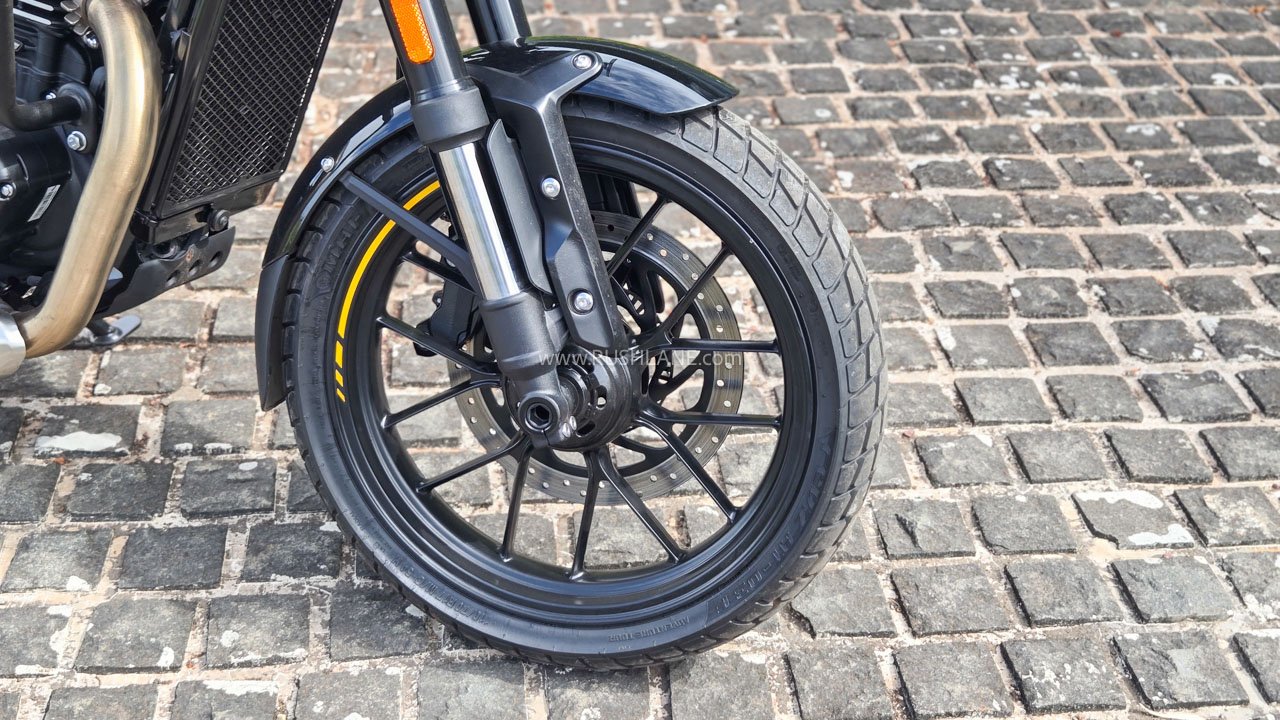
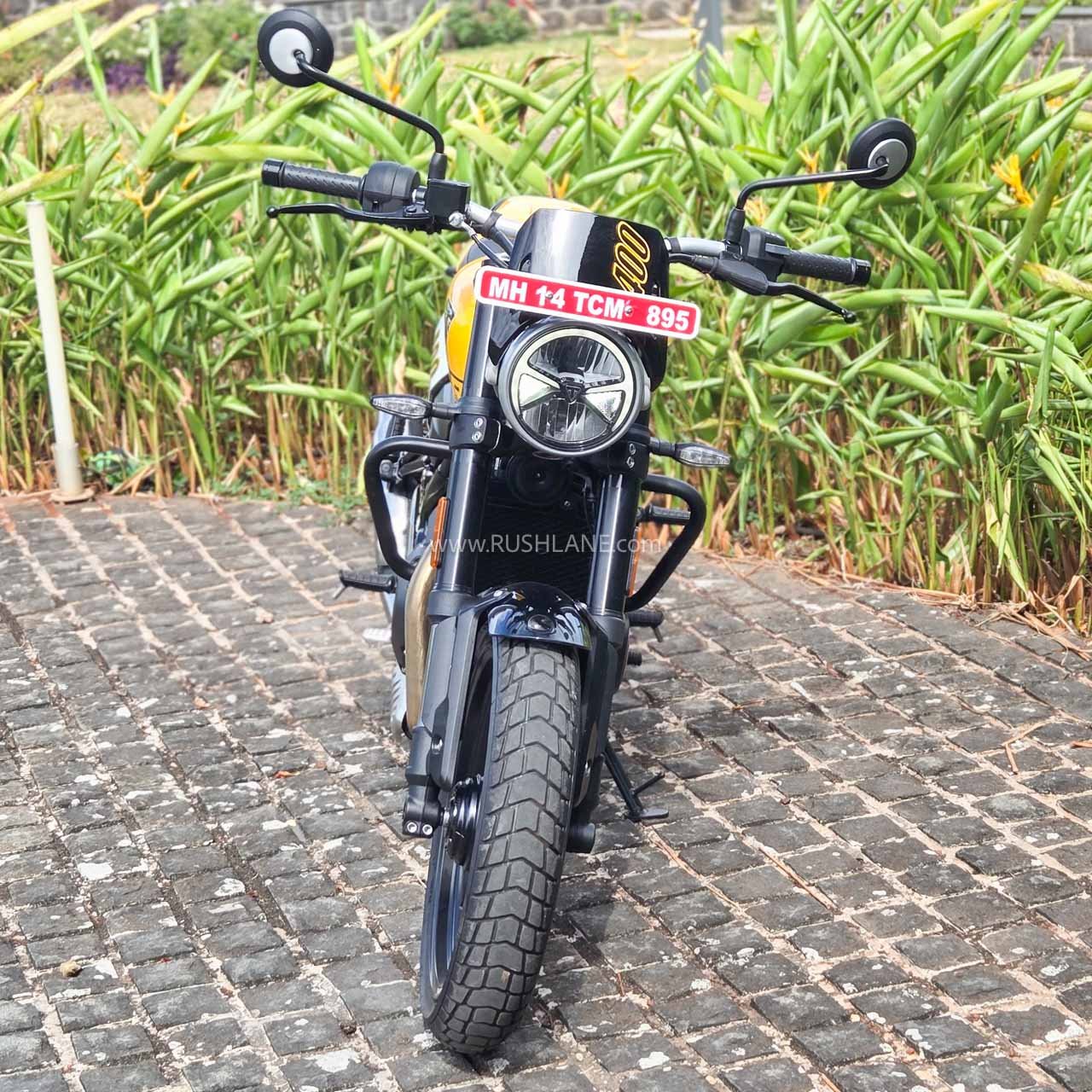
We wished the front number plate was located below the headlight, which would have given a cleaner look. The current position is between the fly screen and the headlight, which is turned-off. The dual-spoke alloy wheel design and hydroformed aluminum handlebar with the Tracker 400 are also unique and give a distinct look from the Speed 400.
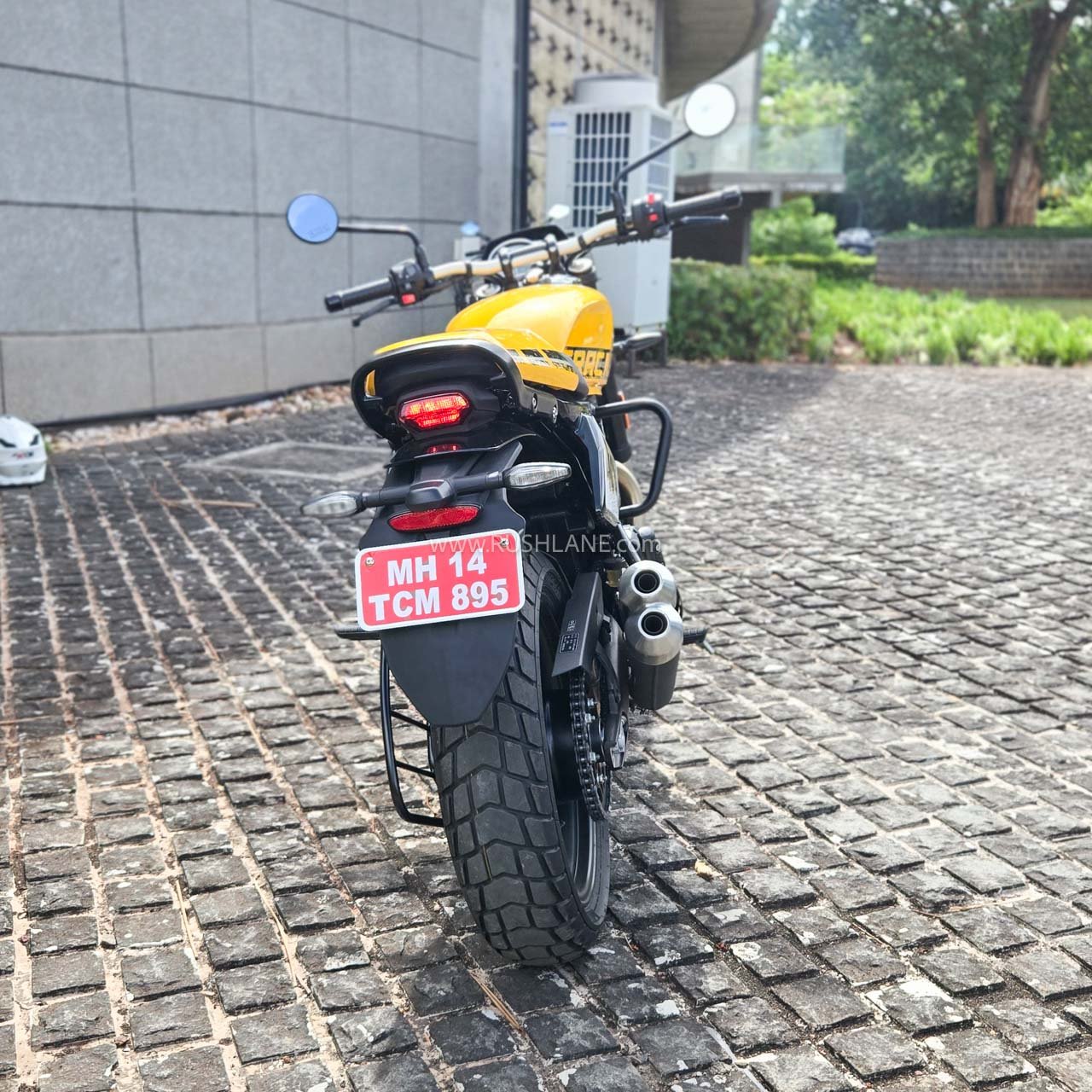
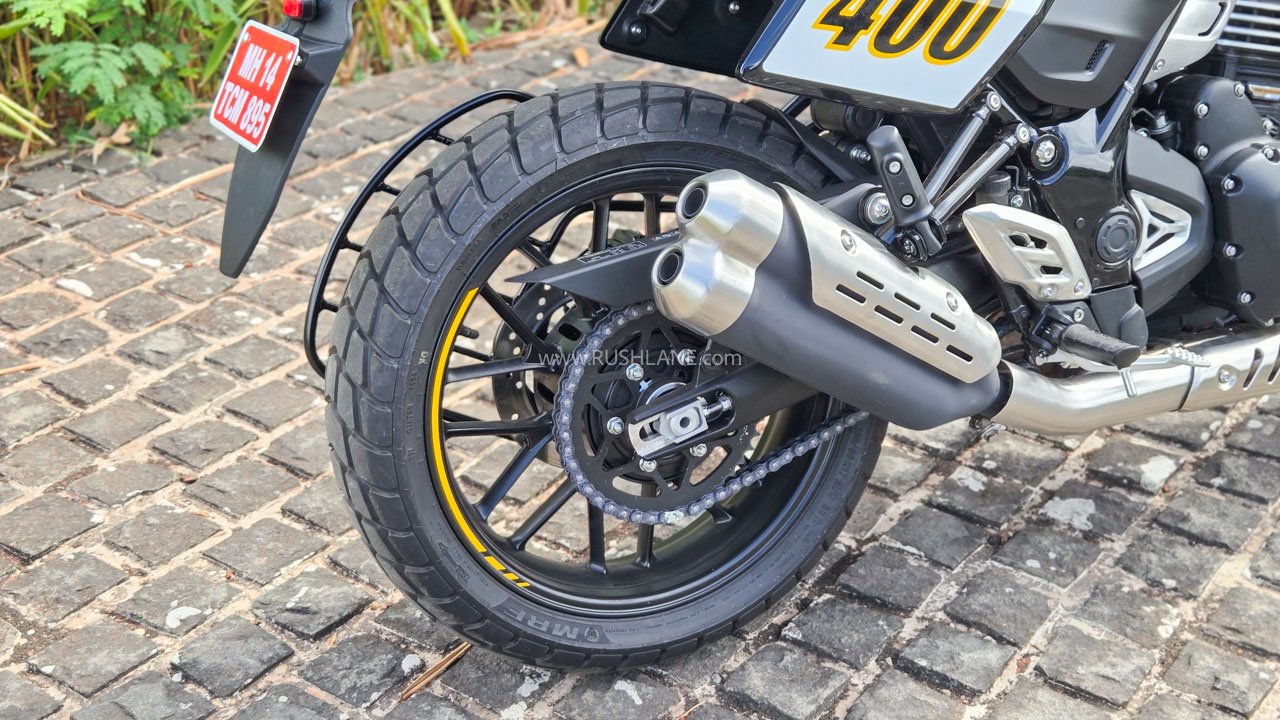
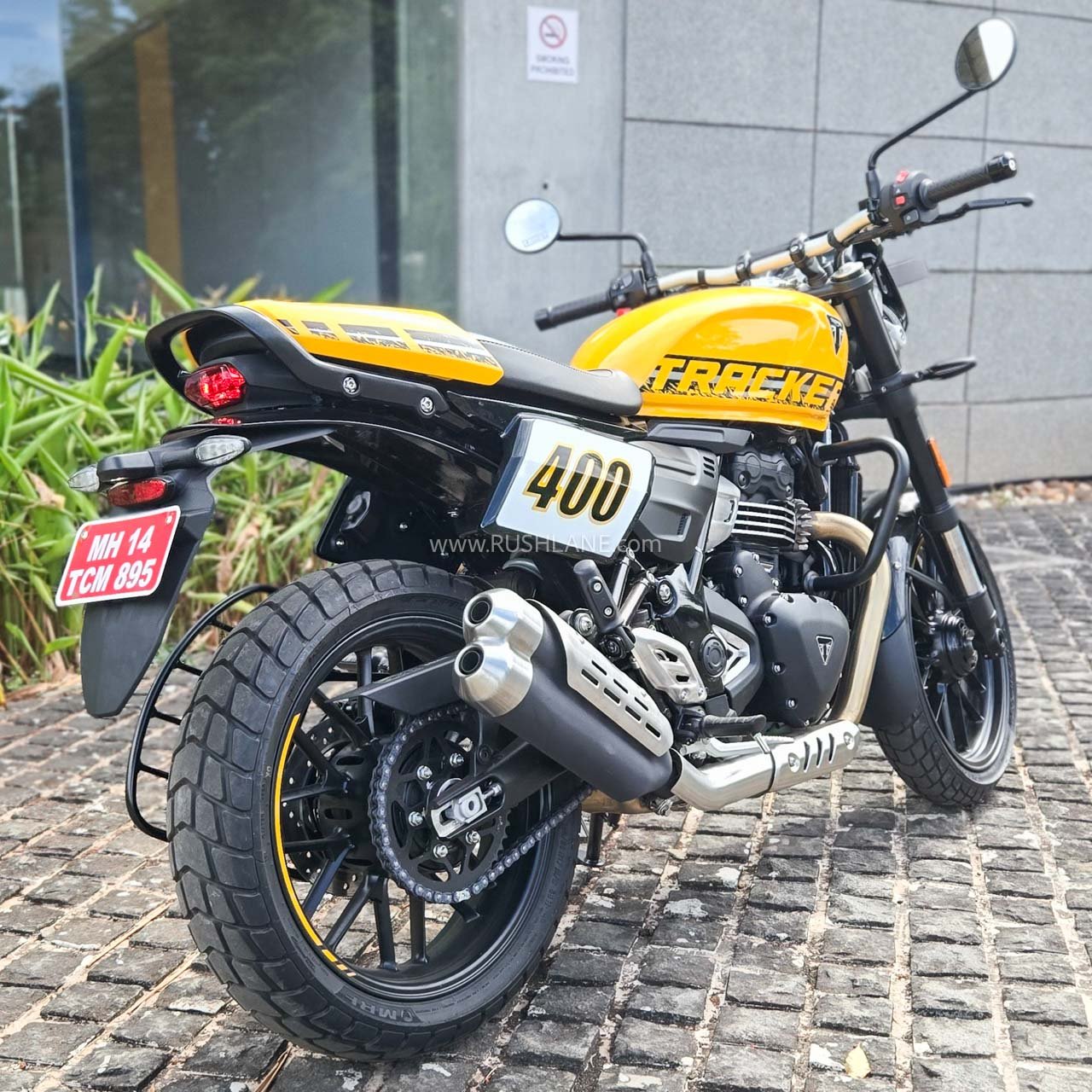
The main design highlight of the Tracker 400 is the side body panel where we can see the side number board like a racing motorcycle. The Tracker 400 features the same bolt-on rear subframe as the Thruxton 400 with a single-piece seat and removable rear cowl, while the exhaust end-can is shared with the Scrambler 400s. The tires are MRF REVZ A/T block-pattern and the rear tire is a 150-section size.
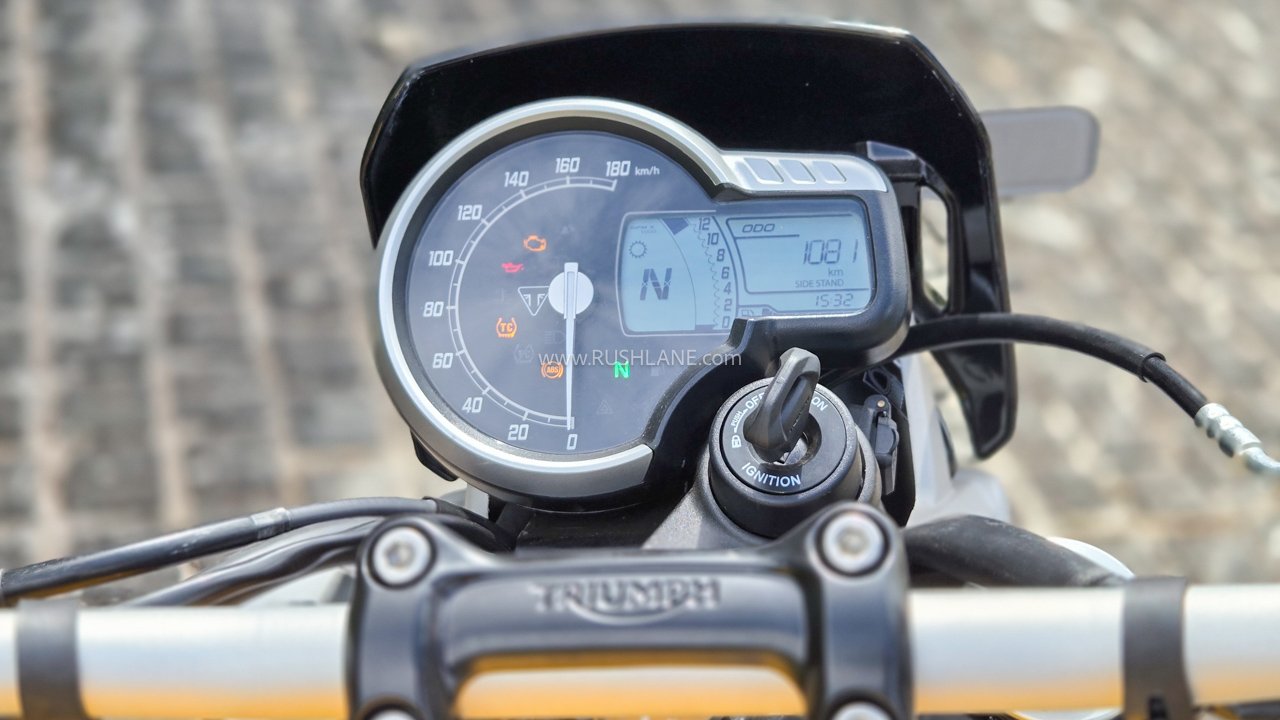
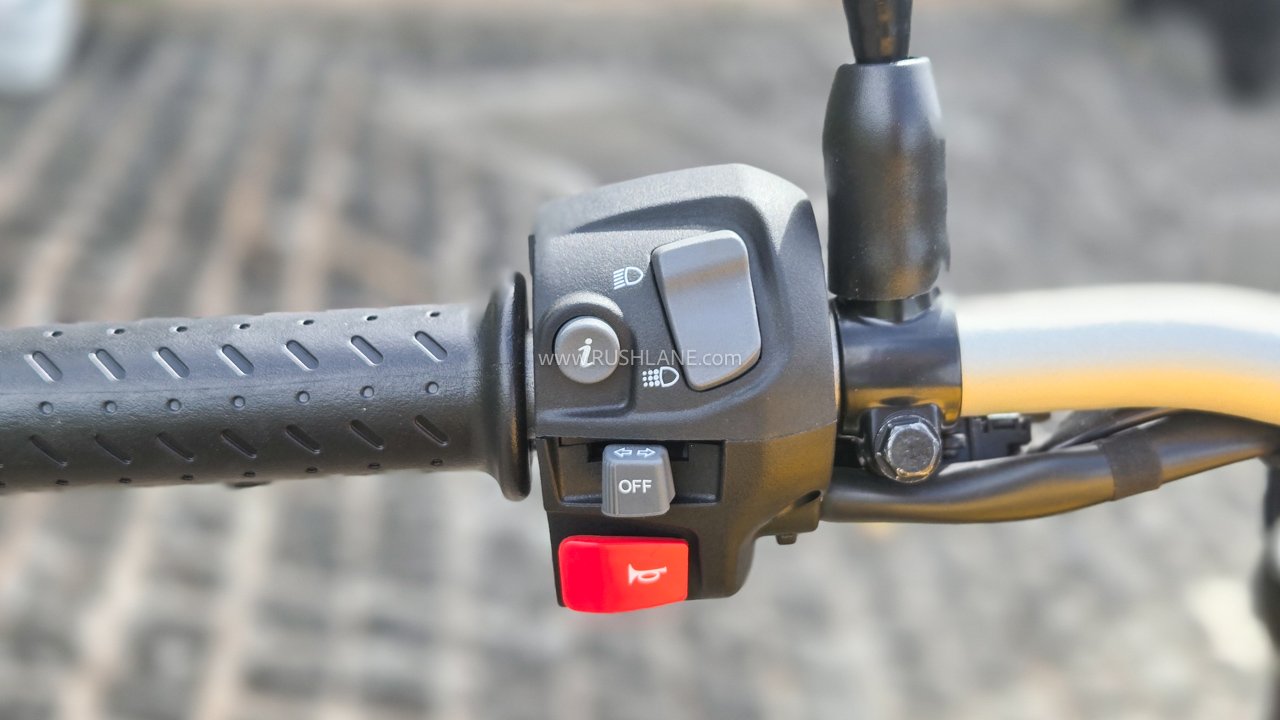
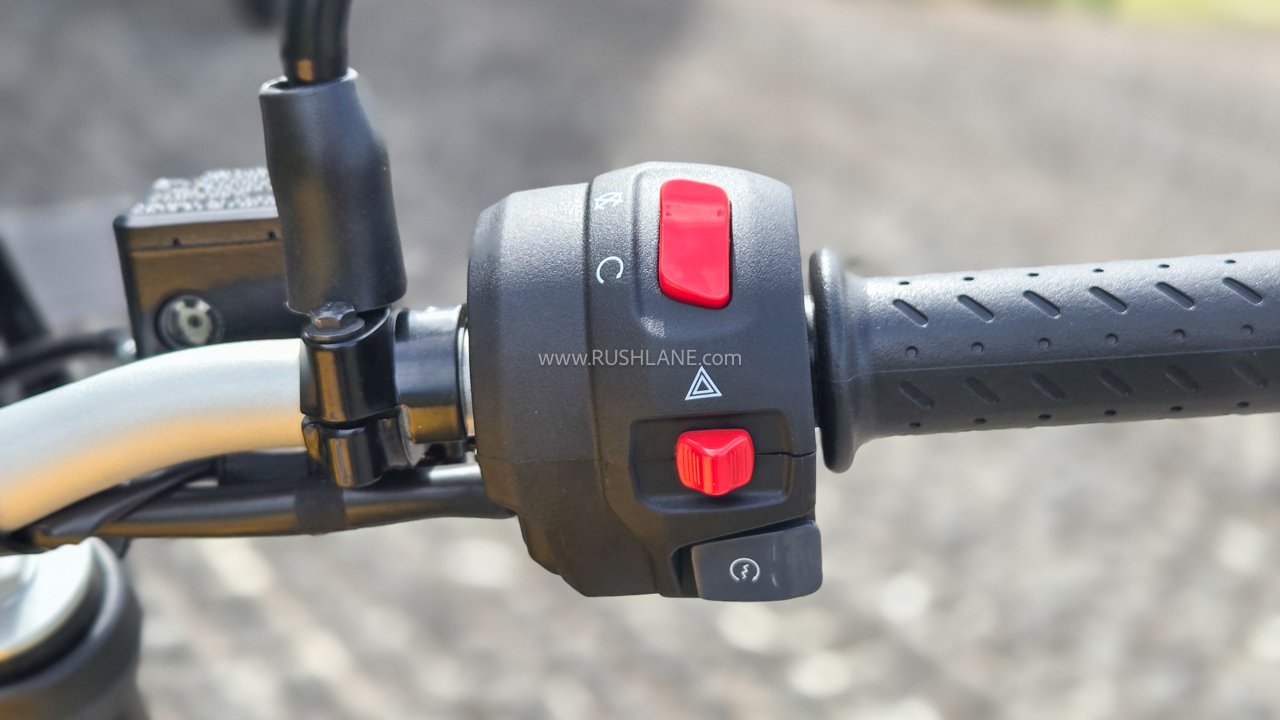
The circular ORVMs are shared with other Triumph 400s along with the semi-digital instrument cluster, tail lights, LED turn indicators, braking hardware, traction control, dual-channel ABS, suspension (including the same damping coefficient and travel as the Thruxton 400), overall fit and finish and the 349 cc liquid-cooled engine.
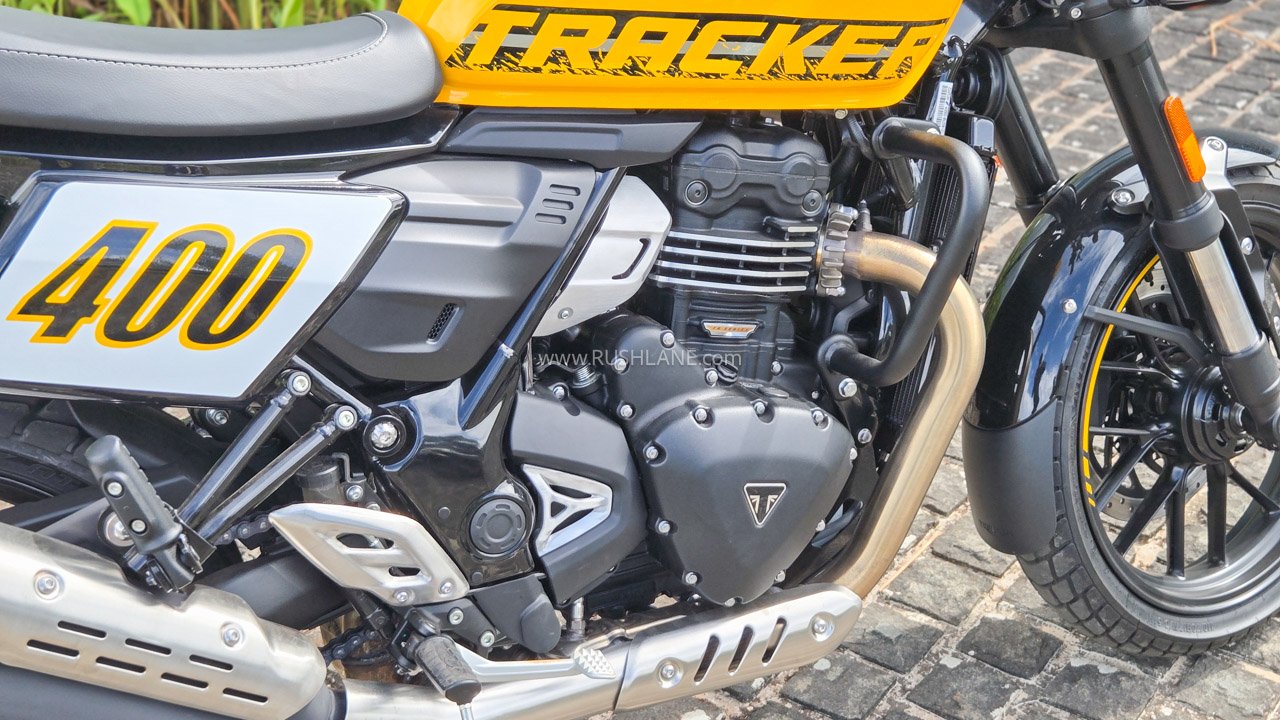
new 350cc engine
The engine of the Tracker 400 is an all-new unit, shared with other Triumph 400 motorcycles. It measures exactly 349cc and is a single cylinder liquid cooled unit with a DOHC 4V/cylinder head. This engine has the same high-spec tune as the Thruxton 400, producing 40 PS of peak power and 32 Nm of peak torque, mated to a slip and assist clutch and a 6-speed gearbox.
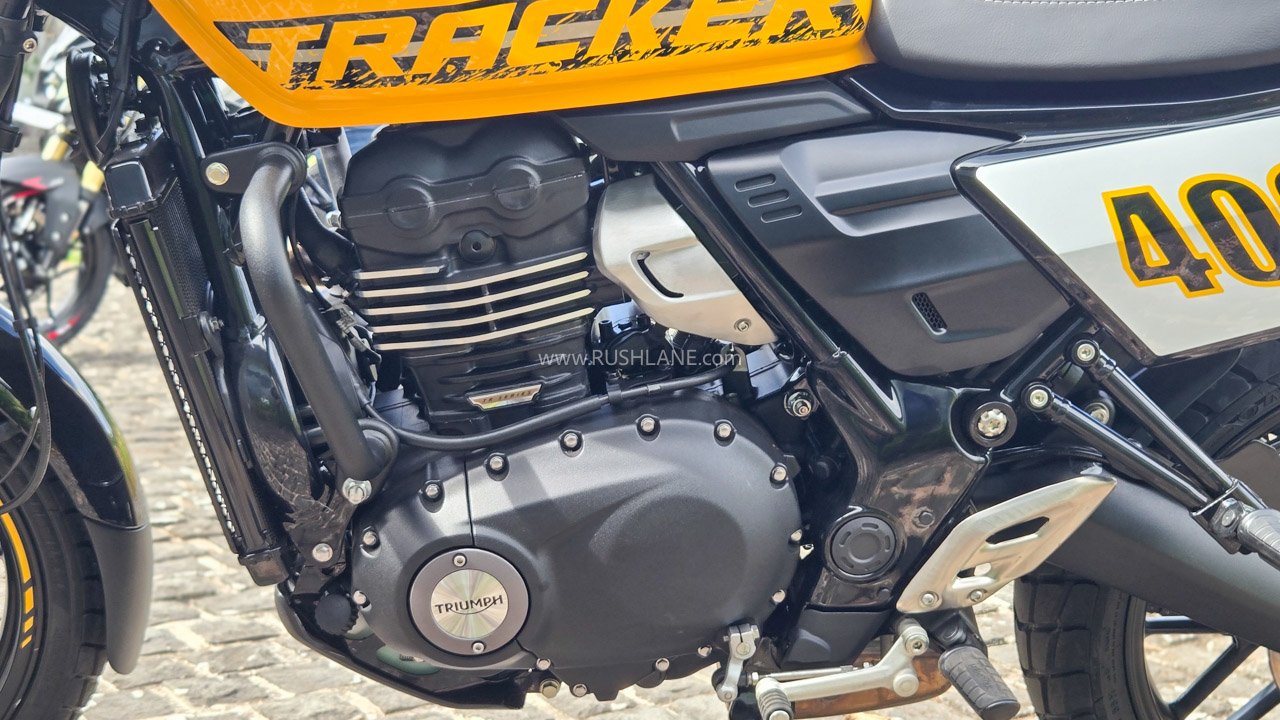
In our experience, this engine sounds exactly the same as the one with the Thruxton 400, which is no bad thing. Overall refinement is impressive and we also liked the exhaust note and intake sound this engine produces. Vibrations are minimal and whatever you feel at mid-level revs speeds can be passed off as character rather than annoying or spine-shattering.
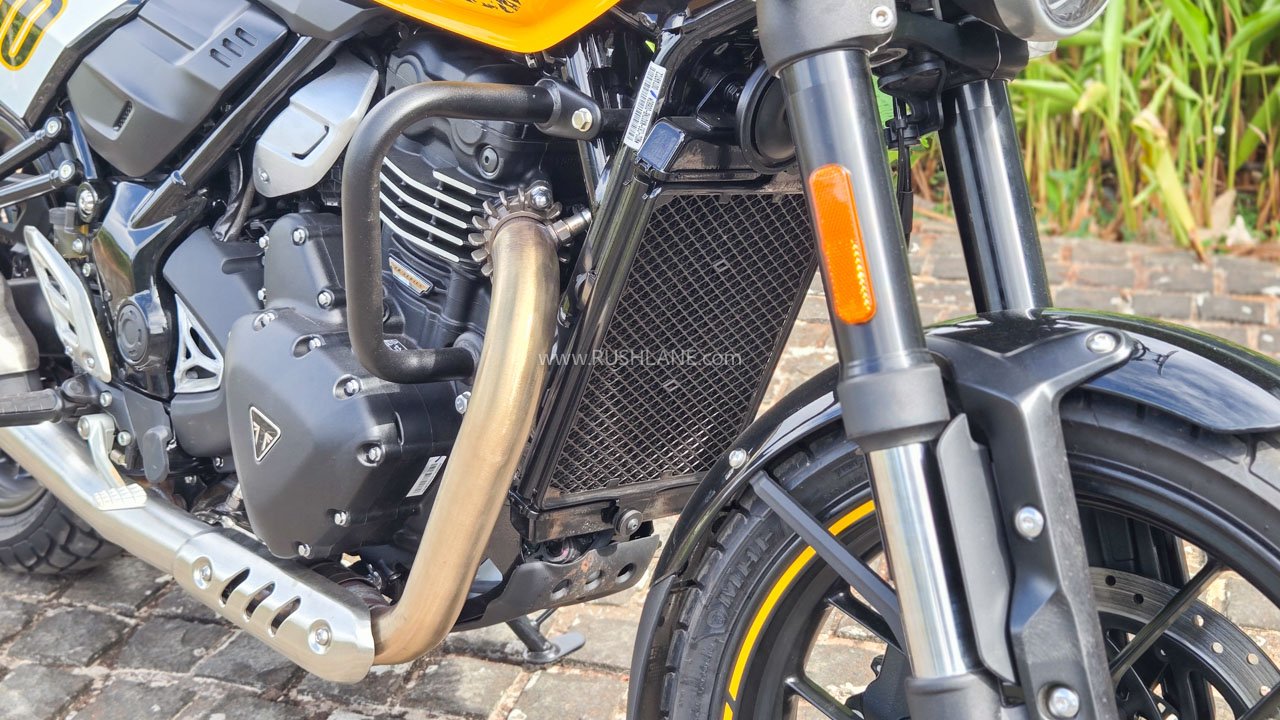
We like the way it puts down engine power as the gearbox is precise and we never faced a false neutral between gears. It picks up speed very quickly and one can rev the engine and make it sing to enjoy the upper mid-range and top-end performance and the duality of this engine allows low revs at high gears (relatively). The clutch action is also light.
Ergonomics, ride and comfort
The Triumph Tracker 400 may look like a slightly different looking motorcycle with many shared components with other Triumph 400s. However, it offers a unique riding experience as the Tracker 400 has redesigned ergonomics. It has a 23 mm wider handlebar and the handlebar is placed 134 mm lower than the Speed 400.
Additionally, the rider’s footpegs are positioned 86 mm further back and 27 mm higher than the Speed 400. The combination of these two has ensured a unique rider triangle that you won’t find in any other Triumph 400 motorcycle. It’s not quite as straightforward and conventional as the Scrambler 400X, but not as committed as the Thruxton 400. It slots right in the middle and can be called sporty.
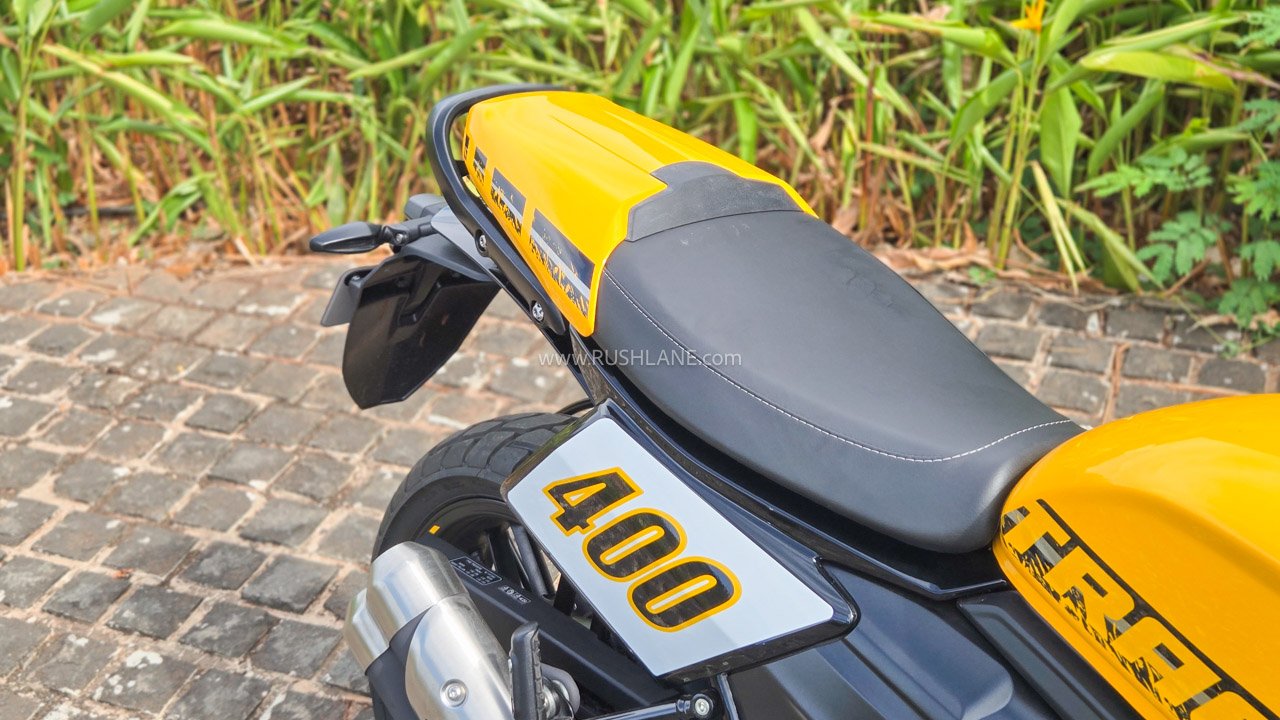
Seat height is 795 mm, which is not exactly high, but the shape of the seat does not allow uninterrupted access to the ground. This makes it feel a little more than what it is, but not annoyingly so. The curb weight is exactly the same as the Thruxton 400 at 181 kg and 2 kg lighter than the Thruxton which weighs 183 kg.
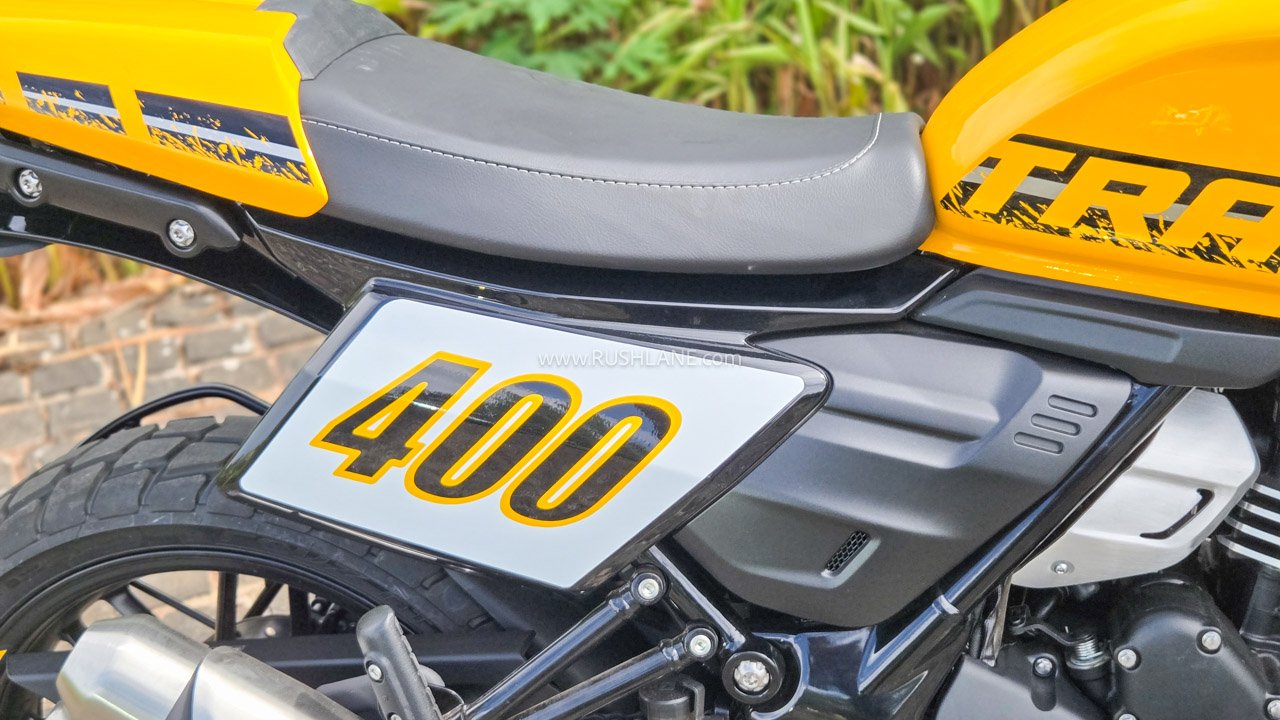
Since the suspension setup is similar to the Thruxton 400, it also rides the same way. It inspires confidence to push the machine hard and is eager to lean into a corner. The sporty ergonomics keep the rider in a fun mood, which is a much nicer feeling than the Speed 400 and the committed riding position is far more comfortable than the clip-on Thruxton 400.
conclusion
At Rs 2.46 lakh (ex-sh), the Triumph Tracker 400 brings a lot of value to the table as it is now the most affordable Triumph 400 motorcycle offering the higher status of the Thruxton 400. It’s right in the middle between the Speed 400 and the Thruxton 400 in terms of sportiness, which is likely to be a sweet spot for many.
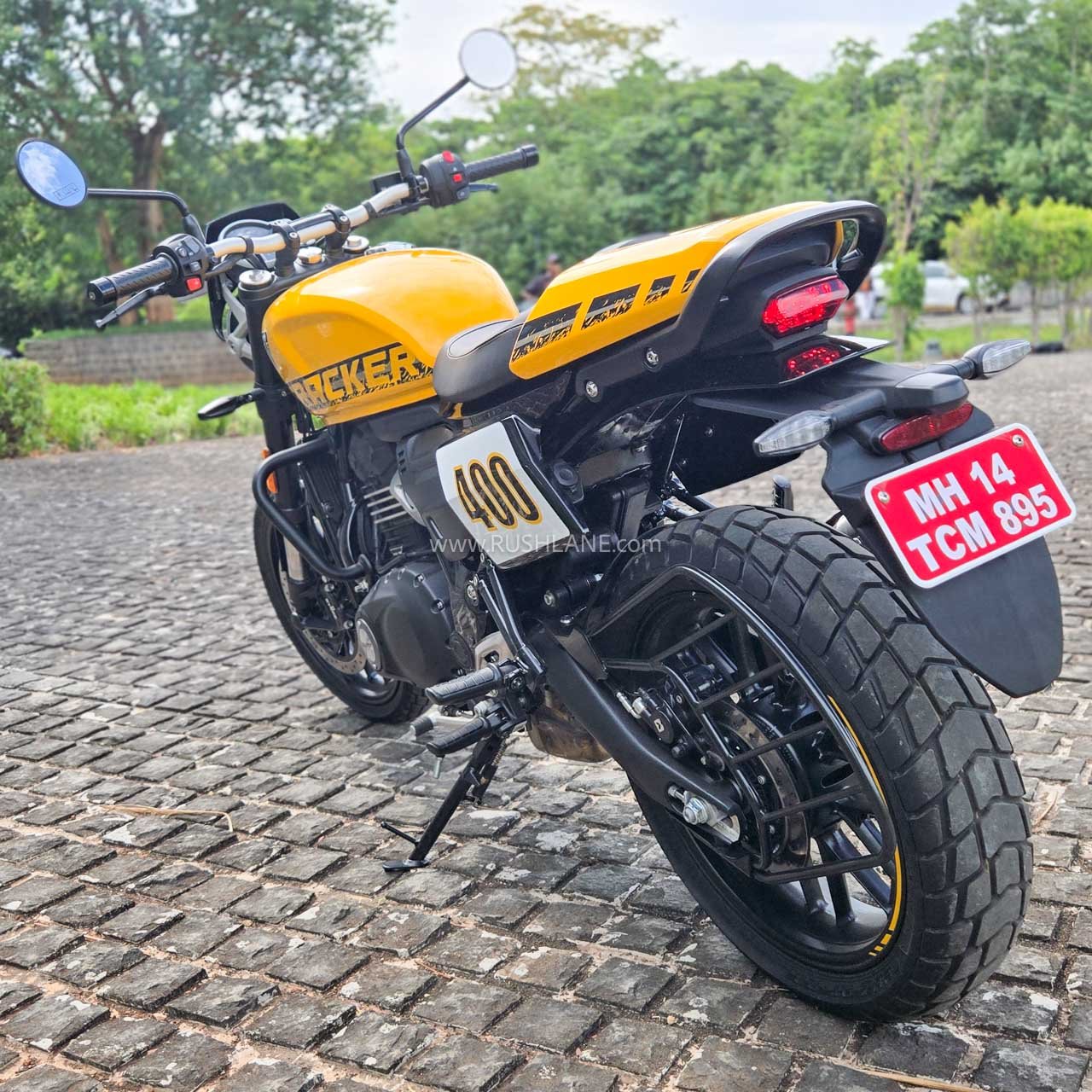
Sure, we’d love an analog tacho to watch the revs climb, but that’s just nitpicking now. The overall performance and VFM quotient of the Tracker 400 is quite high and we also have to consider the unique flat tracker aesthetics that it brings to the table. So, if you are looking for a retro machine with a unique personality, the Tracker 400 should be at the top of your wish list.