
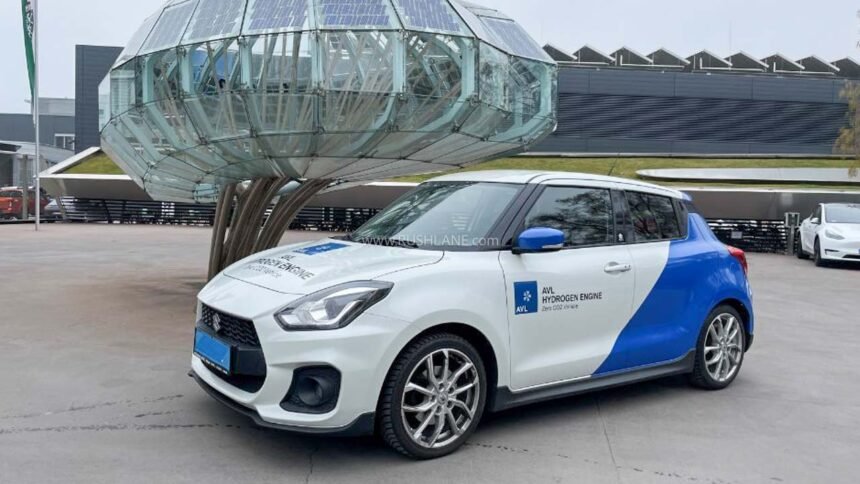
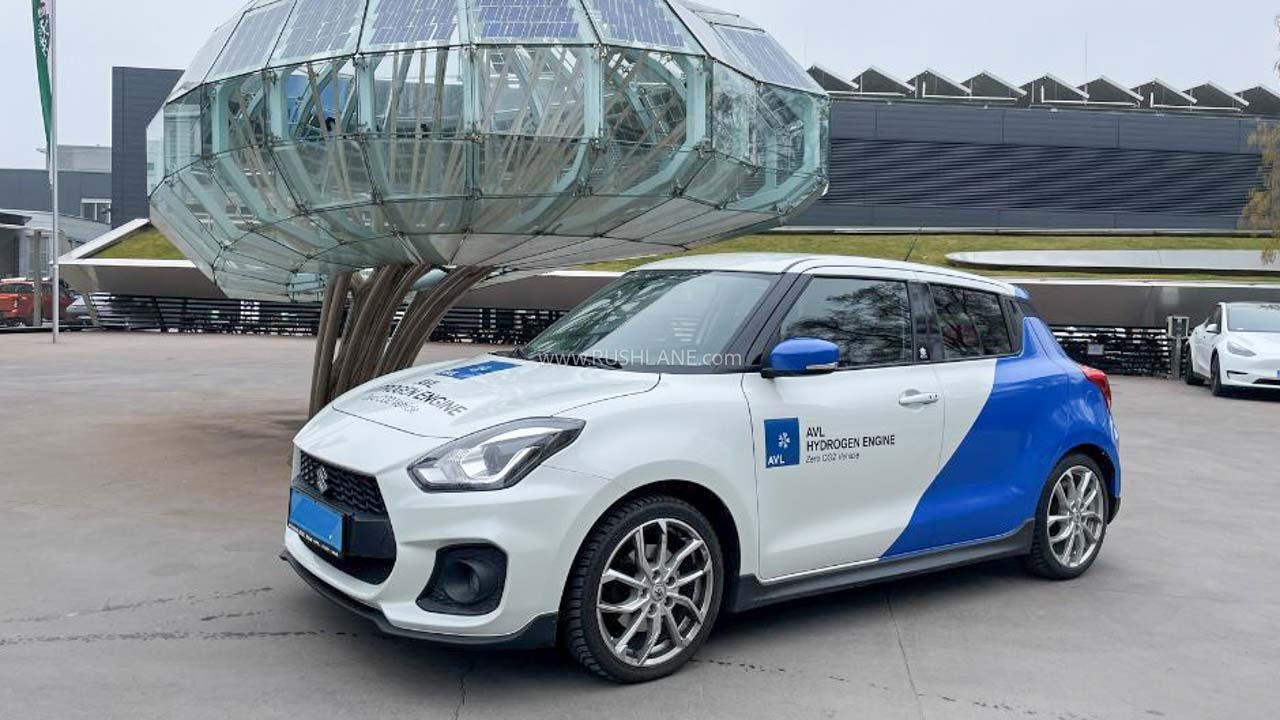
The Suzuki Swift has been one of the most popular hatchbacks in the world and in India, the Maruti Suzuki Swift is one of the best-selling cars across all styles. The Swift has multiple powertrains across its life cycle with NA petrol, turbo petrol, diesel, mild hybrid and CNG depending on the market. Now, the Swift powered by a hydrogen engine has been showcased. let’s take a closer look.
Suzuki Swift Hydrogen showcased
Hydrogen powered vehicles have been around for some time. They use hydrogen fuel cells to convert hydrogen (stored in tanks) into electricity, which is stored in the battery pack and used to power the electric motors that ultimately propel the car. The only material eliminated from hydrogen fuel cell technology is water.
However, there have been advances in technology, where hydrogen is now being used directly as a combustible fuel rather than being converted into electricity. Mobility technology company, AVL, together with Suzuki Motor Corporation, has made a breakthrough in hydrogen engines and is showcasing its latest and greatest at the 2026 Vienna Motor Symposium.
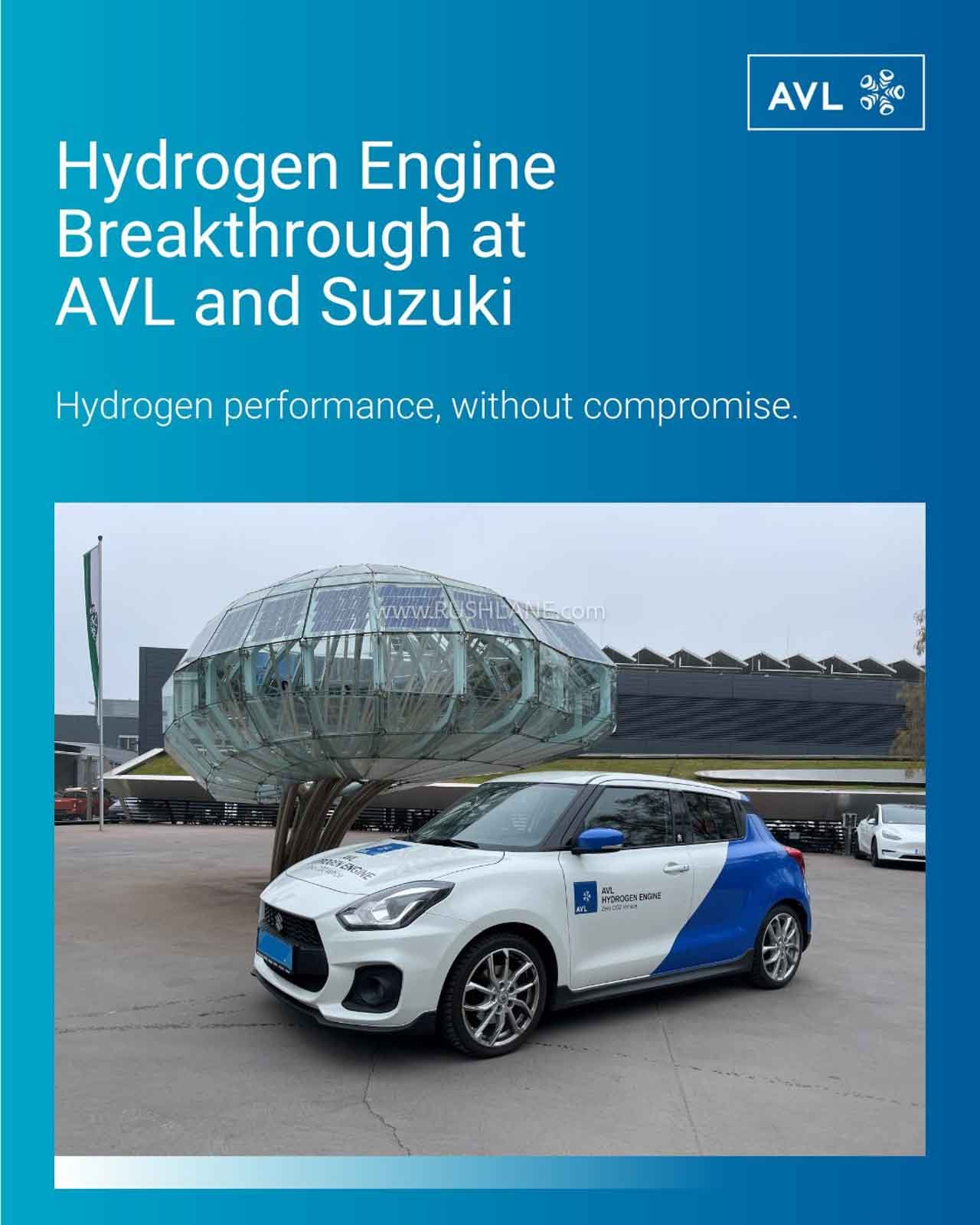
A Suzuki Swift has been used as a technology demonstrator running on a prototype hydrogen engine which they call Hydrogen DI Technology. The breakthrough is that this hydrogen engine can not only be operated but also stoichiometric with the help of a combustion moderator in the form of cooled EGR.
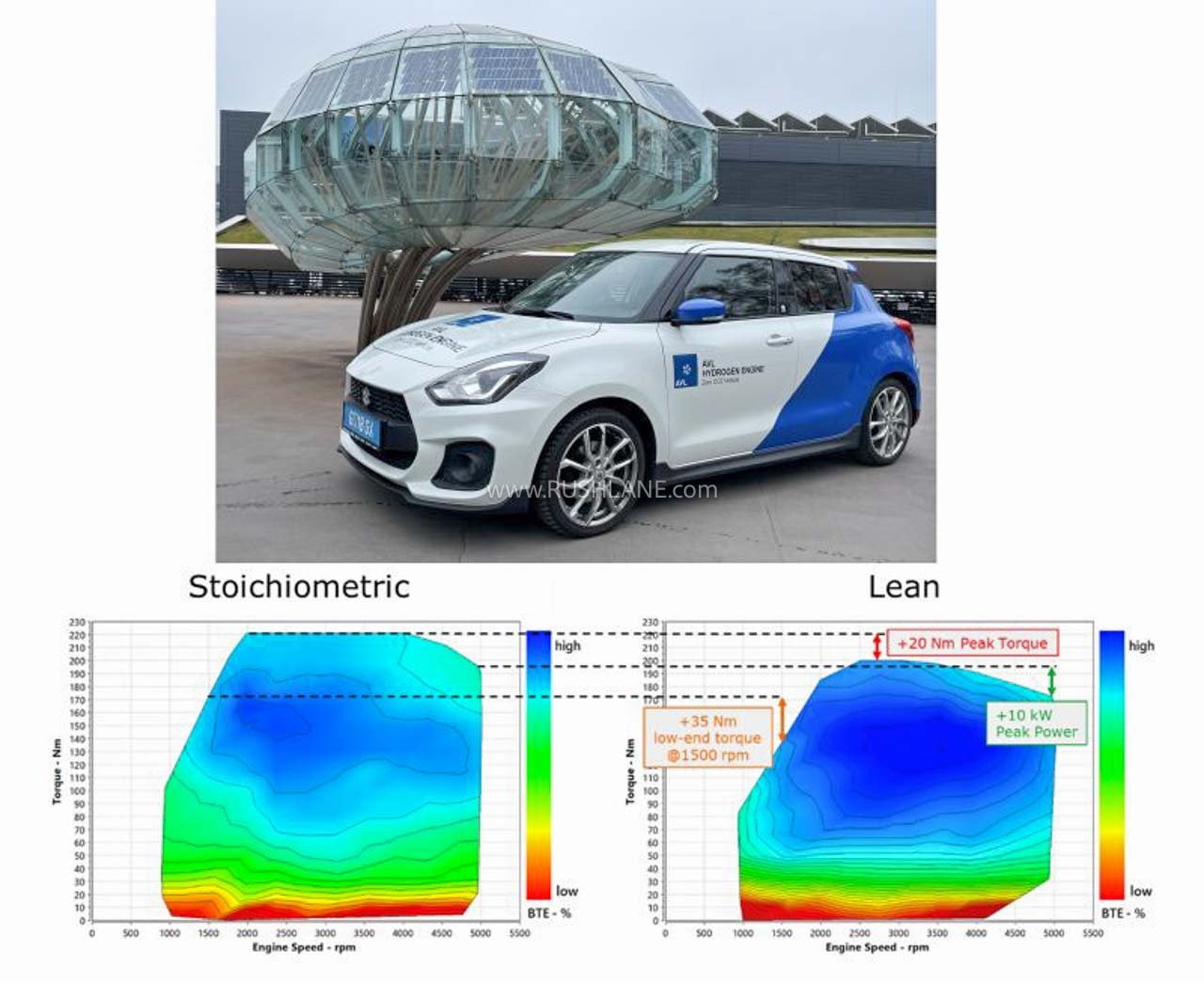
The lean approach is typical with hydrogen combustion engines, but AVL and Suzuki’s new hydrogen DI technology is calibrated for both lean and lambda = 1 stoichiometric combustion modes. Better performance is achieved with the lambda = 1 combustion mode with approximately 10 kW and 20 Nm of gain, giving a total of 100 kW and 220 Nm.
AVL’s system is based on a Suzuki-based 1.4L 4-cylinder hydrogen engine and claims to offer clear benefits to customers. These include high power density with hydrogen combustion, stable lean and lambda = 1 operation, robust intake and charge air systems as well as scalable hydrogen combustion solutions for series development.
India’s efforts for green fuel
Nitin Gadkari, the ardent Union Minister for Road Transport and Highways, has been a strong advocate of green fuels and reducing carbon footprint. Currently, there is a greater trend to increase the ethanol content in domestic fuel to 85% as well as an emphasis on electric and electrified vehicles (hybrids).
While there are benefits of higher ethanol content in reduction of crude oil imports, industry experts and motoring enthusiasts have expressed strong objections. On the other hand, hydrogen could emerge as a viable green fuel. Cochin International Airport in the state of Kerala has set up a hydrogen station in partnership with BPCL to operate hydrogen buses and other vehicles within the airport premises. Further penetration of hydrogen and research into this green fuel could shape the entire automotive industry in the future.