
MSIL’s biggest number this year is not sales figures – Maruti Suzuki Service Load
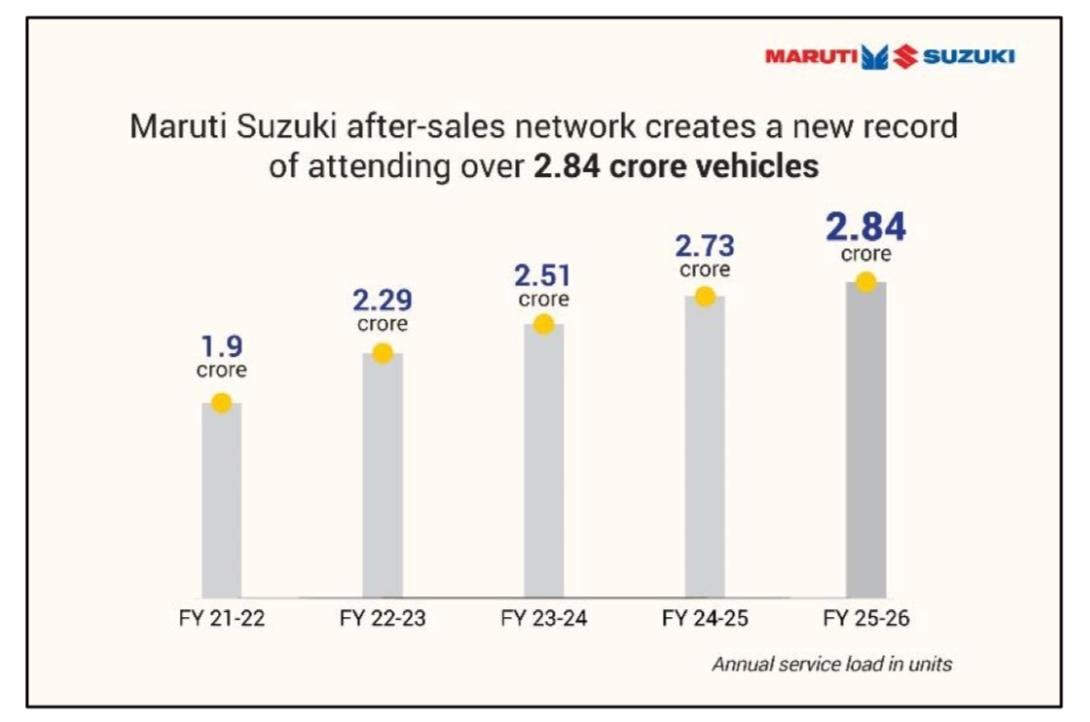
Maruti Suzuki India Limited (MSIL) is reporting its highest ever annual service volume, with over 2.84 crore vehicles attended during the financial year. This figure represents the largest service load handled by MSIL. Vehicle servicing remains an important component of automotive ownership, supporting maintenance needs throughout the ownership cycle.
Across India, Maruti Suzuki operates 5,926 service touchpoints that form its after-sales network. These touchpoints include workshop facilities and customer service locations distributed across urban and rural markets. The vast network supports vehicle owners through scheduled maintenance, repairs, inspections and service-related needs. Wider geographical coverage improves service access.
Processes, People and Software Shared Workshop Duties
This network is supported by trained manpower, structured service processes and technology-enabled operations. Workshop personnel perform vehicle inspection and maintenance activities through defined operational procedures. Digital tools support appointment management, workflow coordination, and service tracking. These systems contribute to consistent service delivery across different locations.
Channel partners are an important part of the Maruti Suzuki service network and support operational continuity across all regions. Service operations depend on coordination between company systems and dealership facilities. This arrangement enables vehicle servicing activities in a distributed automotive support network.
Service availability is a part of the ownership decision
Customer confidence continues to influence after-sales operations in the automotive sector. Vehicle owners often evaluate product considerations as well as service availability. Regular maintenance assistance can help manage vehicle health over extended ownership periods. Consistent service experiences can also contribute to repeated workshop visits and long-term customer engagement.
Vehicle lifecycle support is another component of the company’s after-sales strategy. As vehicle use increases over time, servicing requirements evolve. Maintenance schedules, component inspections and repair requirements create constant demand for workshop infrastructure. Service networks support vehicle performance at various stages of ownership.
Maruti Suzuki wants service growth before sales growth
Advances in vehicle technology are impacting service operations throughout the industry. Modern vehicles include additional electronic systems, software functions, and connected features. These changes increase the need for trained personnel and process-driven workshop operations. With technology adoption, customer expectations regarding convenience and service availability are also changing.
Capacity planning remains a central consideration for automotive service infrastructure. Maruti Suzuki has said that its service offerings should go beyond vehicle sales growth. Such an approach seeks to ensure adequate workshop capacity as the vehicle population increases. Access to the service often depends on network availability rather than just vehicle sales volume.
Pathway to reach 8,000 service touchpoints by FY 2030-31
Future network development plans extend to FY 2030-31. Maruti Suzuki aims to expand its service network to approximately 8,000 touchpoints across India. Based on the current network size of 5,926 locations, this target implies adding approximately 2,074 service touchpoints. The expansion activity is expected to strengthen service coverage in many markets.
The growth in service infrastructure reflects broader trends in automotive aftersales operations. Service expansion is linked to rapidly changing customer requirements and increasing vehicle complexity. Large vehicle populations create demand for additional servicing over time. Long-term workshop development, trained manpower availability and service process standardization remain important elements of the automotive maintenance network.