
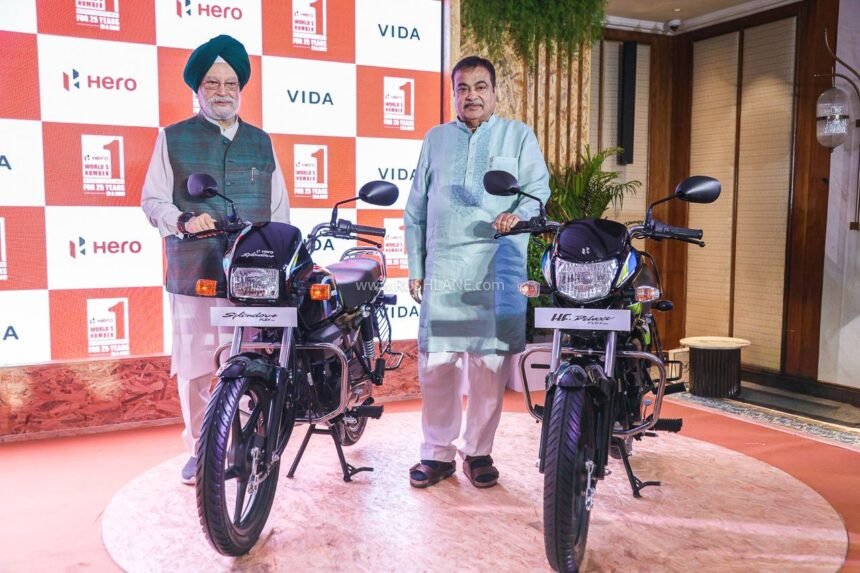
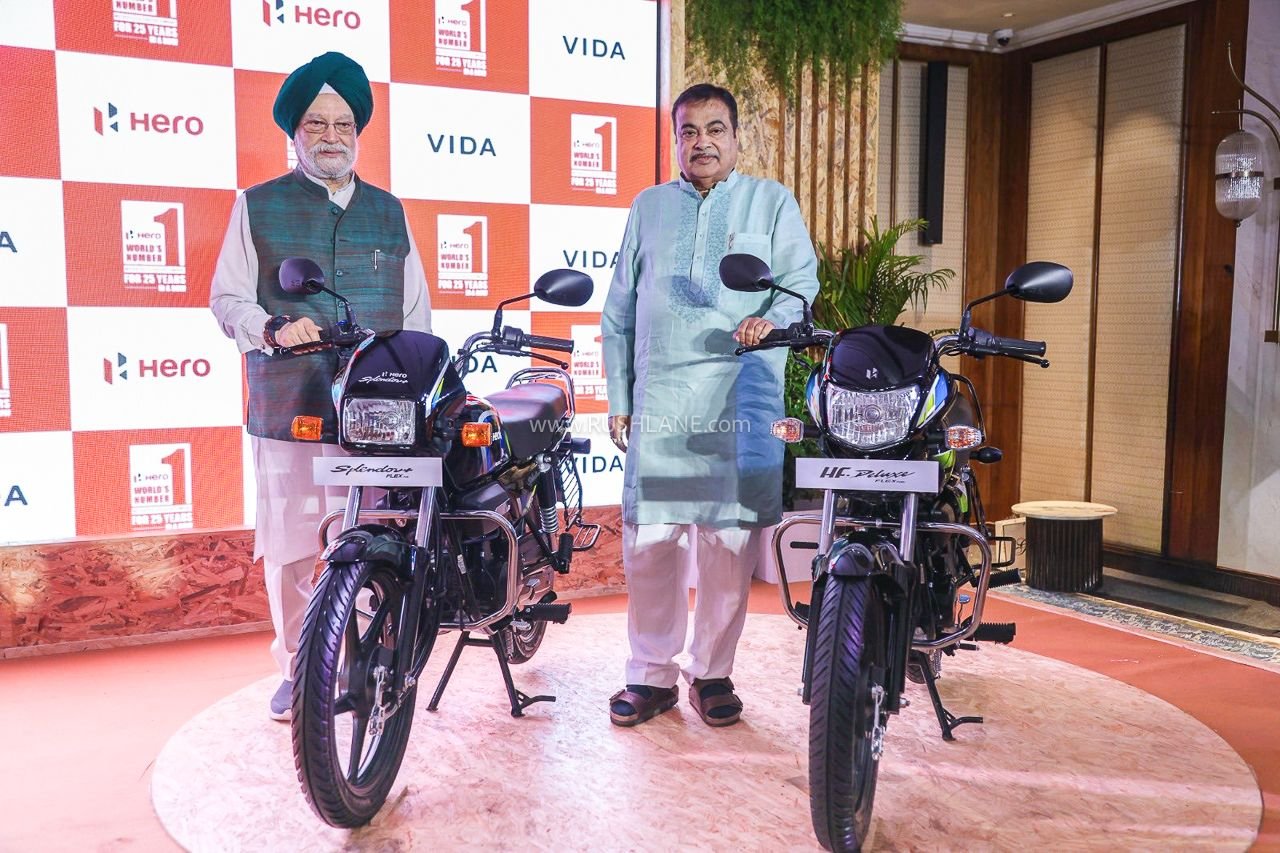
The Splendor+ Flex and HF Deluxe Flex will now get a discount of Rs 4,000, bringing the prices closer to the regular petrol models.
India recently got a big boost towards ethanol-powered mobility with the launch of new flex-fuel versions of Hero MotoCorp’s Splendor+ and HF Deluxe. The launch was also attended by Union Minister Nitin Gadkari, who has been one of the Strong supporter of ethanol as an alternative to petrol.
However, in an interesting development, Hero is offering a discount of Rs 4,000 on both the motorcycles soon after their launch. move Reduces price gap to a great extent Between the new flex-fuel motorcycles and their conventional E20-compatible counterparts. Deliveries of the Hero Flex Fuel bike will begin in July 2026.
Price difference reduced
After discounts, the Splendor+ Flex is available at an effective ex-showroom price of Rs 78,710. This means it now costs just Rs 1,153 more than the comparable E20-compliant Splendor+. The result of HF Deluxe Flex looks even more interesting. After the discount, its effective price comes down to Rs 68,792, making it Rs 1,650 cheaper than the equivalent E20-compliant HF Deluxe variant. The offer is currently valid till July 2026.
Time raises interesting questions
This relaxation comes at a time when the government is accelerating its ethanol roadmap. Just a few days ago, Nitin Gadkari had announced that rules legally authorizing E100 fuel had been signed, paving the way for vehicles capable of running on 100% ethanol. Hero’s flex-fuel motorcycles are among the first mass-market two-wheelers designed to operate on ethanol blends ranging from E20 to E85.
While the technology is clearly linked to the government’s long-term vision, the initial discount highlights the practical reality of the market. Consumers still prioritize purchase price over future fuel flexibility, especially in the highly price-sensitive commuter motorcycle segment.
Future-proofing for fuel transition
Both motorcycles use Hero’s familiar 97.2cc single-cylinder engine, which has been modified with revised ECU mapping and upgraded fuel system components to handle higher ethanol concentrations. The bikes can run on fuels ranging from standard E20 petrol to E85, potentially making them future-ready as ethanol availability increases across India. As yet infrastructure is limited. Initially, the motorcycles will be available only in Delhi and selected areas of Maharashtra before expanding to other markets.
Can incentives drive adoption?
The rebate could be seen as an early effort to encourage adoption of flex-fuel technology among mainstream buyers. By bringing the prices almost in line with regular commuter motorcycles, Hero is effectively removing one of the biggest barriers to entry.
As India moves toward higher ethanol blends and eventually E100-compliant vehicles, the success of these early flex-fuel products could provide valuable insights into how quickly consumers are willing to adopt alternative fuels. For now, Hero’s latest discount suggests the government may be ready for ethanol mobility, but reassuring customers may require more than just policy support.