
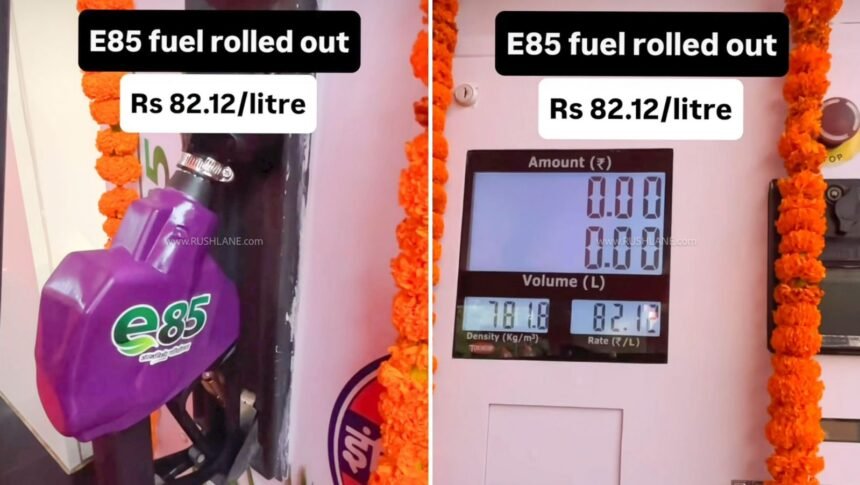
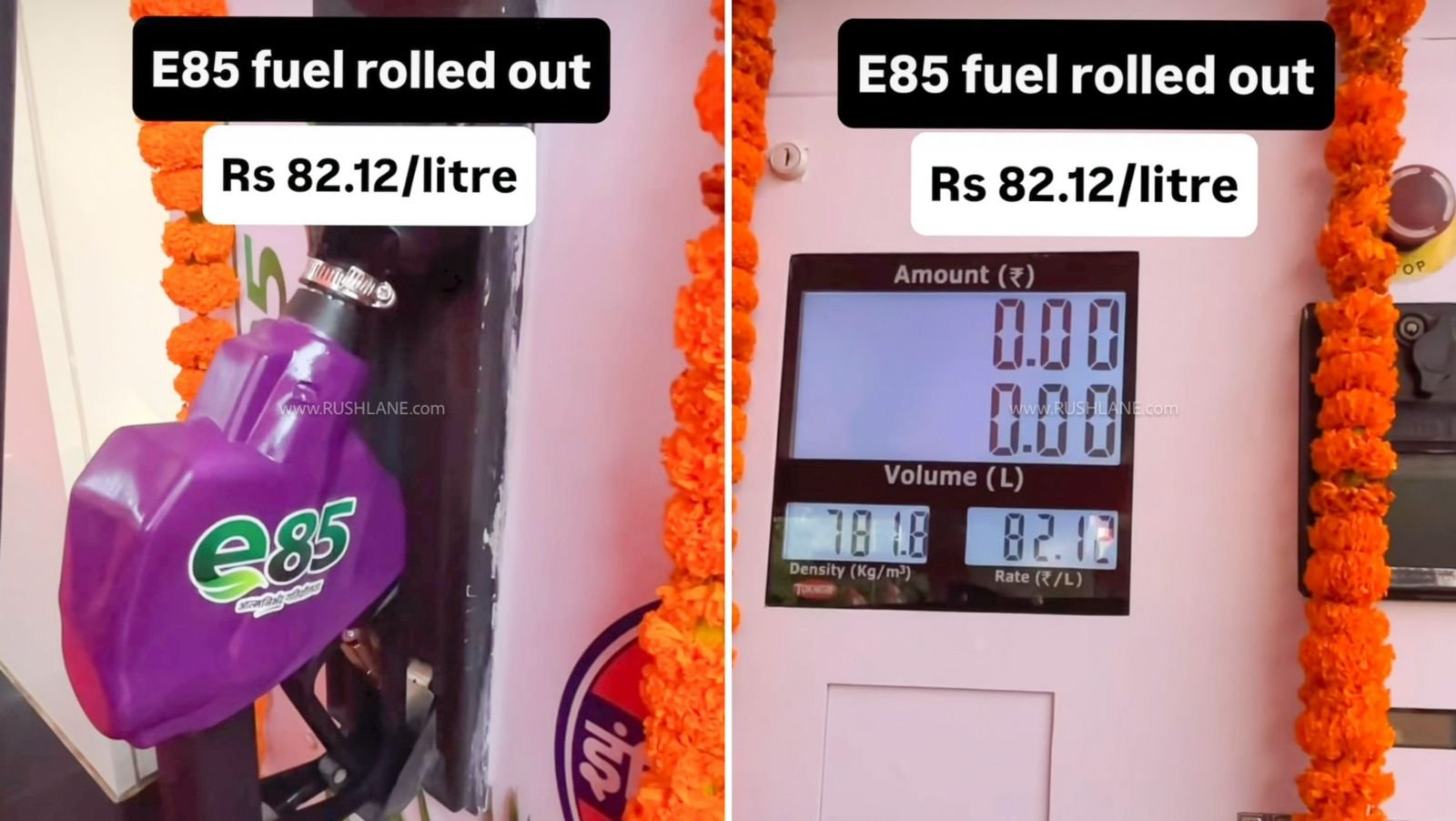
India’s effort towards higher ethanol-blended fuels took another step forward on World Environment Day as the country’s first E85 fuel dispensing station was inaugurated in Delhi. The new fuel, which is priced at Rs 82.12 per liter in the national capital, is about Rs 20 cheaper than E20 petrol, which currently sells at Rs 102.12 per litre.
The inauguration was attended by Union Minister of Petroleum and Natural Gas Hardeep Singh Puri, who announced that E85 fuel will be introduced across the country in a phased manner. the government is target between 50 and 100 E85 distribution stations in the coming months, expansion to 500 stations by the end of 2026 and so on 5,000 stations by the end of 2027.
What is E85 fuel?
E85 is a fuel blend consisting of 85% ethanol and 15% petrol. This is quite different from the E20 fuel currently sold across India, which contains up to 20% ethanol. According to the government, widespread adoption of ethanol-based fuel could help reduce India’s dependence on imported crude oil, improve energy security and support domestic sugarcane and biofuel industries.
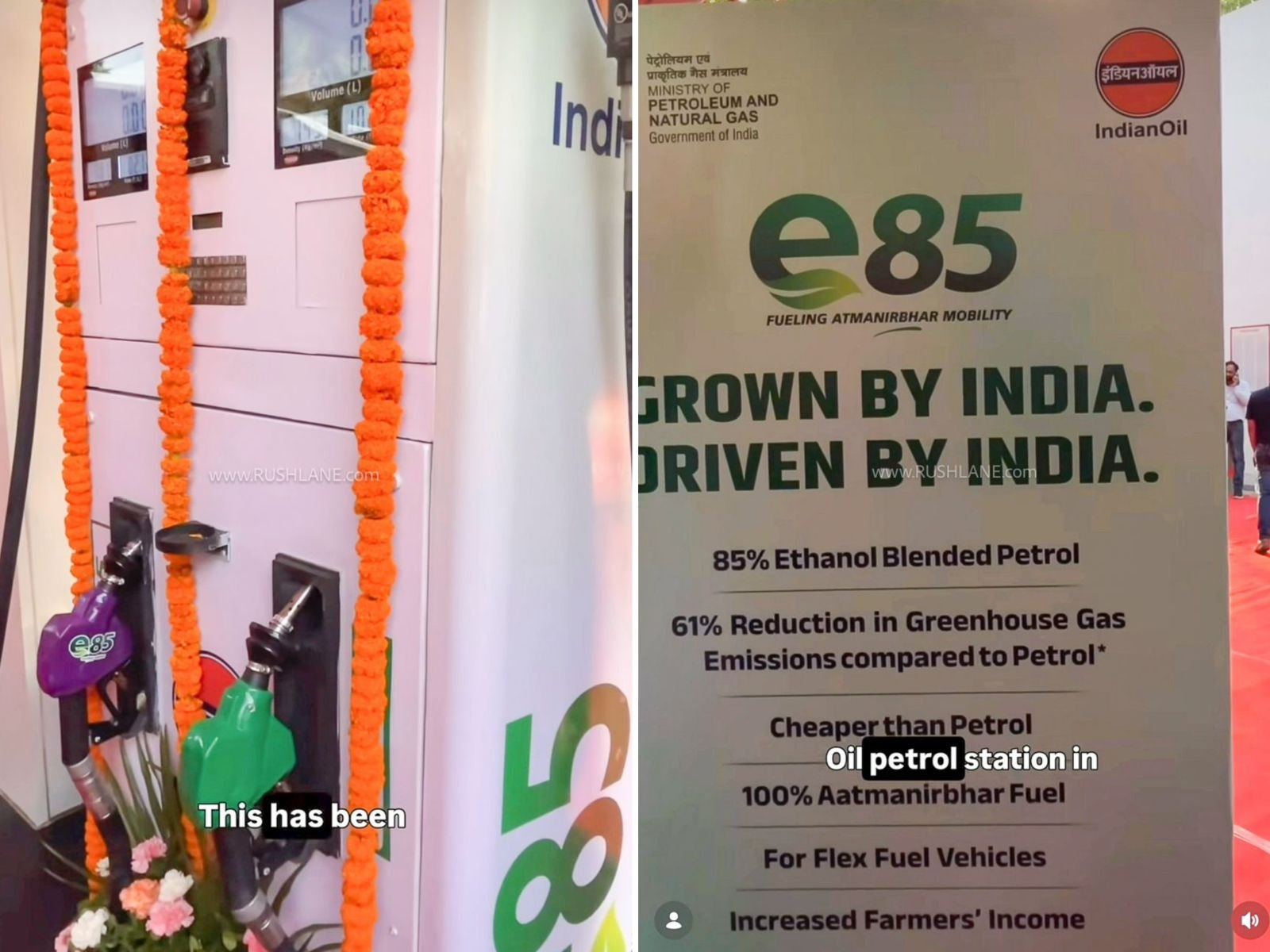
The lower pump price of E85 is also expected to encourage consumers to move toward flex-fuel vehicles in the future. The minister clarified that E20 fuel will remain available alongside E85 fuel, and will be clearly labeled at E85 pumps to avoid accidental refueling in incompatible vehicles.
Major infrastructure advances planned
The government appears to be committed to creating an ecosystem for higher ethanol blending before flex-fuel vehicles become mainstream. Officials have outlined a plan to rapidly expand the availability of E85 over the next 18 months. However, the strategy raises an important question – Who will actually use these pumps?
Currently, there are virtually no E85-compatible passenger vehicles on sale in India. Hero MotoCorp recently launched flex-fuel versions of the Splendor Plus and HF Deluxe motorcycles, but deliveries are expected to begin from July 2026. Maruti Suzuki has showcased the Wagon R Flex Fuel, becoming the first carmaker to publicly display a flex-fuel passenger vehicle, but the company Launch timeline has not been announced. As a result, many early E85 stations may see very limited use until a wider range of compatible vehicles reaches the market.
Cheap fuel, but high consumption
While the price of E85 is Rs 20 per liter less than E20 petrol, consumers should also Another Important Factor to Consider – Fuel economy. Ethanol contains less energy per liter than petrol. This means that vehicles running on E85 generally consume more fuel to travel the same distance. Depending on engine calibration and driving conditions, fuel efficiency may drop by 20-30% compared to regular petrol. This may partially offset the benefit of lower pump price. So real-world running costs will depend on the final efficiency figures delivered by flex-fuel vehicles sold in India.
Industry is following government pressure
The launch of the E85 infrastructure comes amid growing efforts by automakers to align with the government’s ethanol roadmap. Just 2 days before the inauguration of the Delhi E85 station, Hero MotoCorp unveiled flex-fuel variants of the Splendor Plus and HF Deluxe. Maruti Suzuki has taken its first obvious step by showcasing the Wagon R Flex Fuel, indicating that more manufacturers are likely to follow.
While the government’s ethanol ambitions are clear, large-scale adoption of E85 fuel will depend on several factors. These include availability of compatible vehicles, expansion of fuel infrastructure, customer awareness and real-world running costs. The low fuel price is certainly attractive on paper, but until a meaningful number of flex-fuel cars and two-wheelers become available, E85 will remain more of a policy-driven initiative than a mainstream mobility solution. The coming 12-24 months will therefore be crucial in determining whether flex-fuel technology can emerge as a meaningful option in India’s evolving mobility landscape alongside EV, hybrid and CNG vehicles.