
Kathmandu:
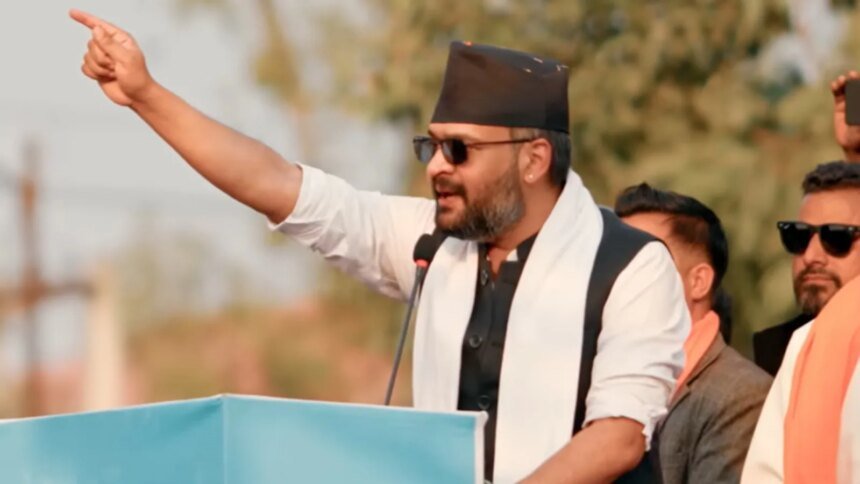
Nepal’s Prime Minister Balen Shah has sparked a political storm at home after claiming that the Himalayan nation has also encroached on Indian territory, despite Kathmandu’s repeated complaints about alleged Indian encroachment. Shah made the claims during his first address to the Nepali Parliament after becoming the South Asian country’s youngest prime minister earlier this year.
Acknowledging that the border dispute involving Lipulekh, Limpiyadhura and Kalapani areas remains a serious issue in bilateral relations, he said both countries should take the help of historians, surveyors and experts to resolve the issue, adding that Kathmandu has also raised the issue with China and the United Kingdom.
Nepal and India share a long and open border, much of which was defined by the Treaty of Sugauli of 1816. However, mapping is incomplete in areas like Susta and Limpiyadhura-Lipulekh-Kalapani. The long-running border dispute remains one of the major problems in bilateral relations.
Although Nepal has consistently complained about Indian encroachment on Nepalese land, Prime Minister Shah’s comments appear to indicate that encroachment has taken place from both sides.
Meanwhile, India has maintained that these areas are part of Uttarakhand and said the issue should be resolved through bilateral talks.
Shah’s statement quickly drew backlash, with opposition political parties, foreign affairs experts and border analysts criticizing his comments, saying they weakened Nepal’s long-standing position on the border dispute with India and weakened Nepal’s stance in future talks with New Delhi on border issues.
What did Nepal’s PM say?
In his first appearance in the current Parliament session that began on May 11, 35-year-old Shah said, “You will be surprised to know a fact which I have learned only recently after becoming the Prime Minister. India has not only encroached on Nepali territory, but Nepal has also encroached on Indian territory at many places.”
“Now both the countries should study the facts and sit together as friends and resolve the issue,” he said.
However, Shah did not give any details on where Nepal allegedly encroached on Indian land. He told Parliament that Nepali MPs have raised the matter with China and the United Kingdom because of their colonial legacy in the region.
Controversy
Shah’s comments about encroachment on Indian territories by Nepal soon sparked controversy, with opposition MPs including Nepali Congress’s Basana Thapa and Nepali Communist Party’s Ramesh Malla objecting to the PM’s comments and demanding their expungement from parliamentary records.
He said the Prime Minister should either provide evidence to support his claim that Nepal has encroached on Indian territory or withdraw the statement.
Nepal’s former ambassador to India Nilambara Acharya told KantipurOnline media portal that Shah “has no knowledge about the encroachment on Indian territories by Nepal.”
According to Acharya, 97 percent of the border disputes between the two sides have already been resolved. “There are reports of some Nepalese using land in India and some Indians using land in Nepal due to the disappearance of border pillars in some border areas,” he said, “but the Government of Nepal has not encroached on Indian territory.”
Deep Kumar Upadhyay, another former Nepalese ambassador to India, said that Nepal’s encroachment on Indian territory is not recorded in any record.
“India has also not raised this issue on record… Till now, we have studied, but this issue never came up… I don’t know in what context the Prime Minister talked about such a serious matter,” he told NepalPress online news portal.
Many Nepali social media users also criticized the Prime Minister’s comments, while many experts dismissed them.
Nepal’s clarification
After a controversy arose over Shah’s comments, the Nepal government went into damage control mode and claimed that the Prime Minister was talking about “cross-border occupation” and encroachment into the no-man’s land along the border with India. In a statement, the country’s Foreign Ministry said Shah’s comments were linked to technical studies conducted in border areas, where citizens of one country are using or occupying land that technically falls under the territory of another country.
“The matter mentioned by the Prime Minister in Parliament was primarily related to encroachment and cross-border occupation in the no-man’s land area,” the statement said.
The ministry said that due to the “fixed border principle” adopted in the riverine border areas, situations have emerged in some places where Nepali citizens cultivate or reside on land technically located in Indian territory, while Indian citizens use land falling within Nepal’s territory.
The Ministry of External Affairs reiterated that Nepal’s official position with respect to the disputed border areas including Limpiyadhura, Lipulekh and Kalapani remains unchanged and the unresolved border issues will be addressed through diplomatic dialogue and mutual understanding with India.
According to the ministry, technical committees and border mechanisms of both the countries are currently engaged in repairing border pillars, addressing encroachments in no-man’s land and collecting records of cross-border occupation in areas mapped along the border.
situation of india
There was no immediate reaction from the Indian side on Shah’s comments, but earlier this month, while rejecting Nepal’s objection to the upcoming Kailash Mansarovar Yatra through the long-established Lipulekh Pass, India had dismissed Kathmandu’s territorial claims on the region as “unilateral artificial expansion”, which New Delhi considers “untenable”.
India says the disputed areas are part of Uttarakhand and has said the issue should be resolved through bilateral talks. In fact, there is no known instance of India formally accusing Nepal of encroaching on Indian territory.