
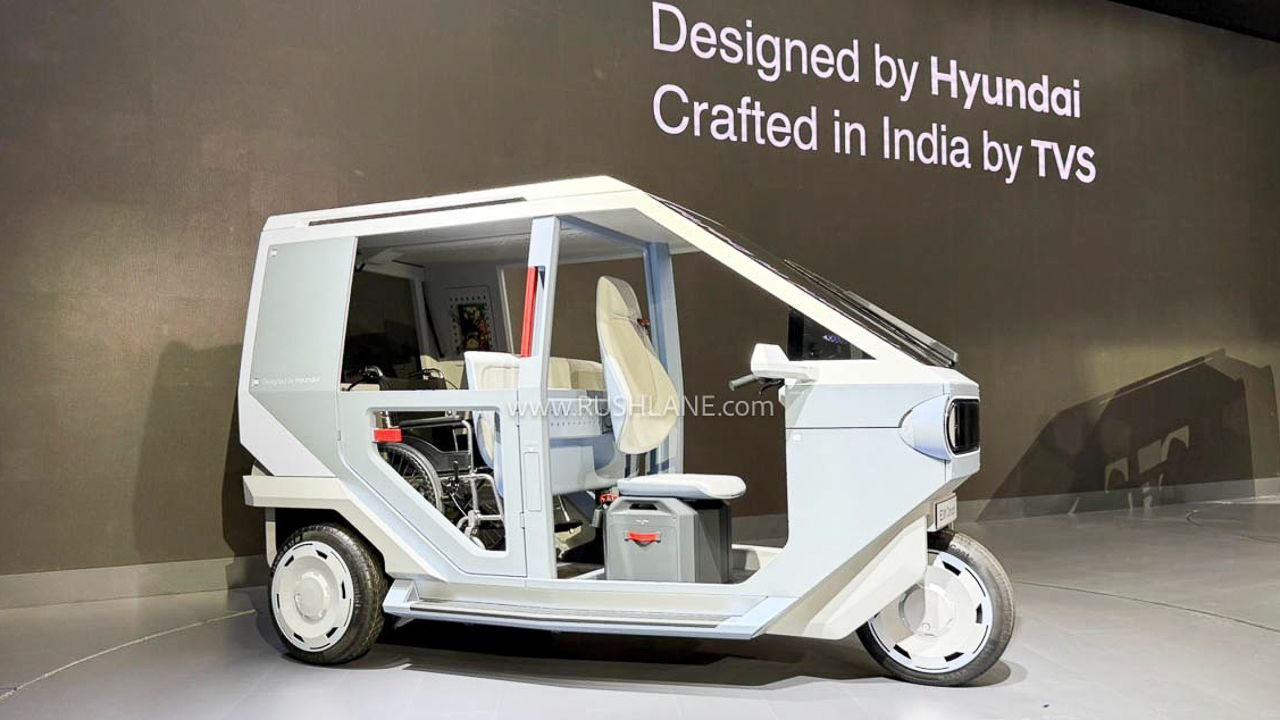
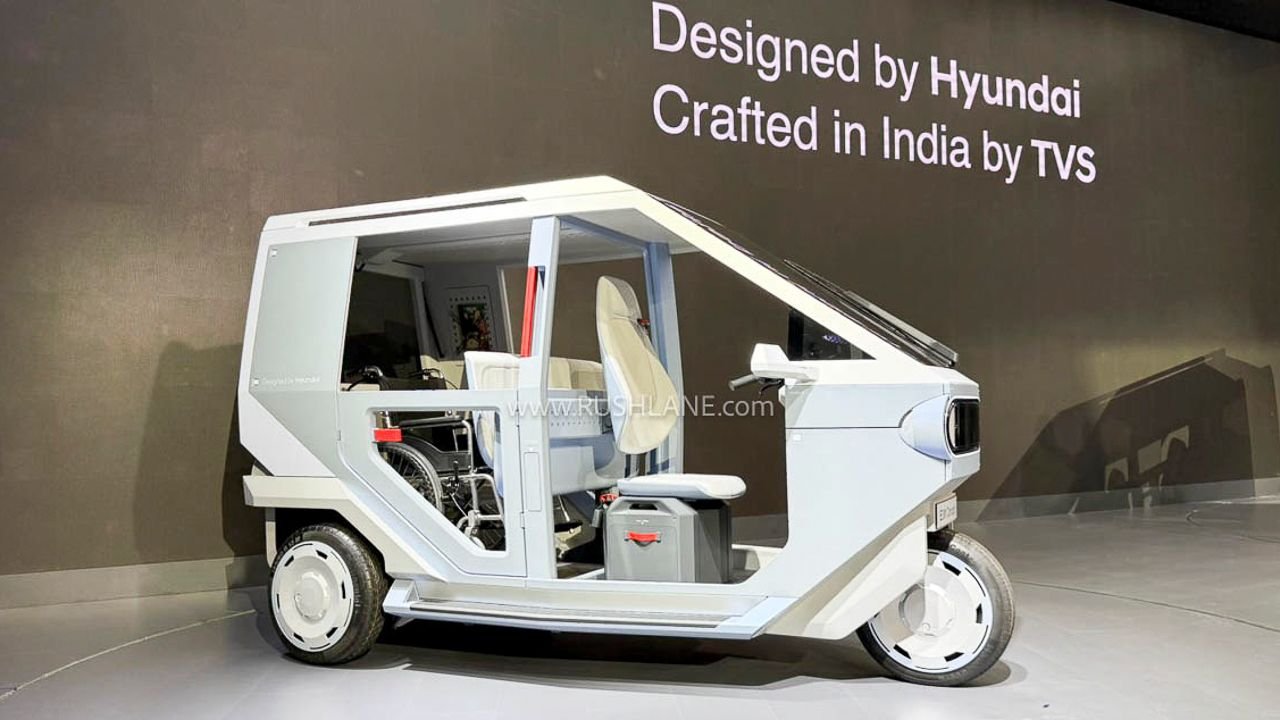
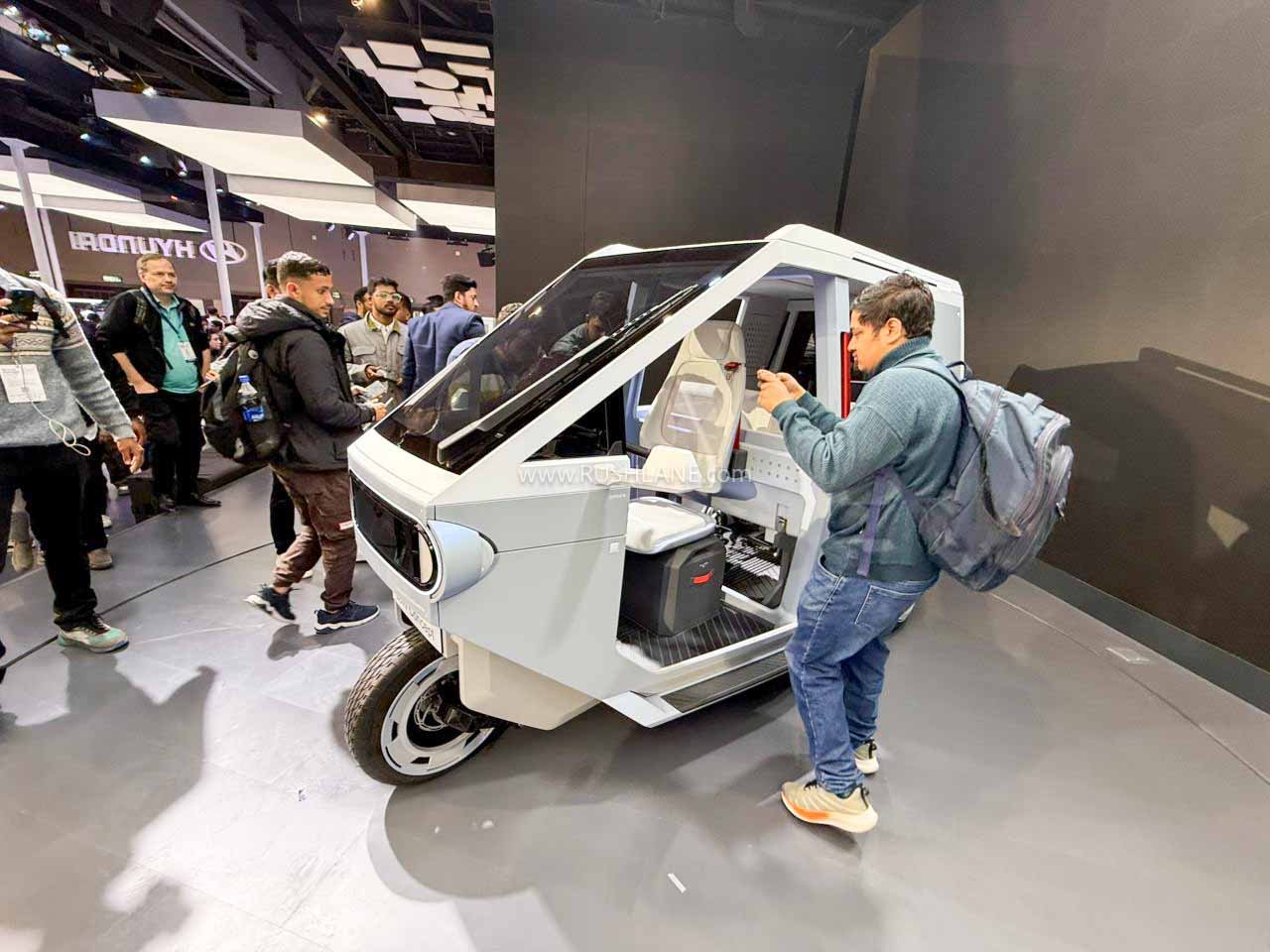
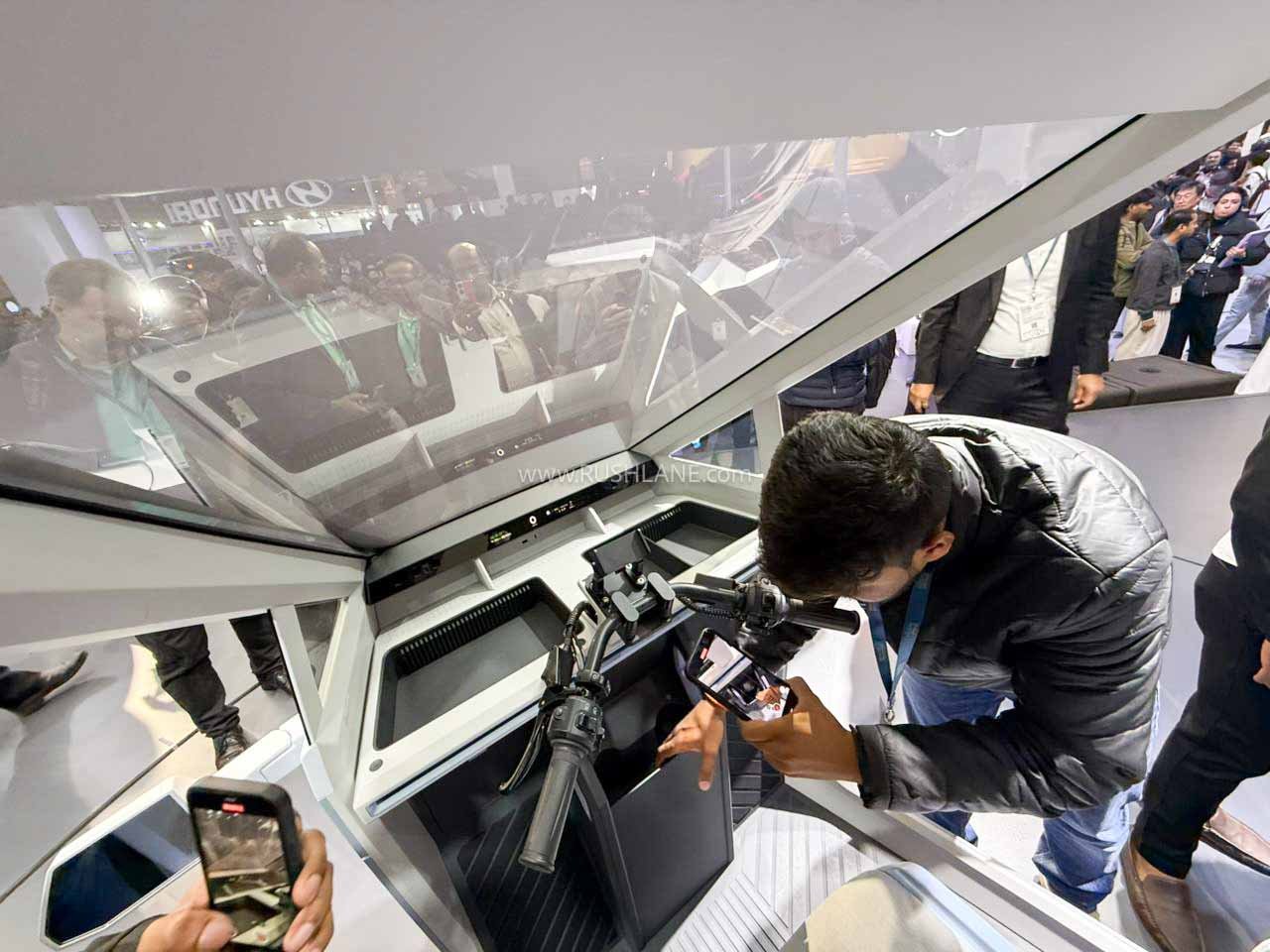
Hyundai Motor Company and TVS Motor Company have signed a Joint Development Agreement (JDA) for the development and commercialization of electric three-wheelers (E3W) in India. The move marks Hyundai’s formal entry into the country’s fast-growing last-mile mobility sector, in partnership with an established domestic player. This collaboration follows the unveiling of the E3W concept at the India Mobility Global Expo 2025 and has now moved into the product development phase.
Hyundai will lead the design, TVS will handle execution
As part of the agreement, Hyundai will take charge of design and advanced engineering, while TVS Motor will handle development, manufacturing and market execution. This split reflects the strengths of both companies.
Hyundai Motor and TVS Motor formalize partnership to boost electric three-wheeler commercialization in India pic.twitter.com/cTbkxHsj03
– Rushlane (@rushlane) 20 April 2026
Hyundai brings global EV expertise and design capabilities, while TVS contributes with its existing electric platform, three-wheeler experience and strong domestic network. Production will take place in India, with TVS also taking the lead in sales and distribution for both domestic markets and exports.
Targeting India’s growing electric 3W segment
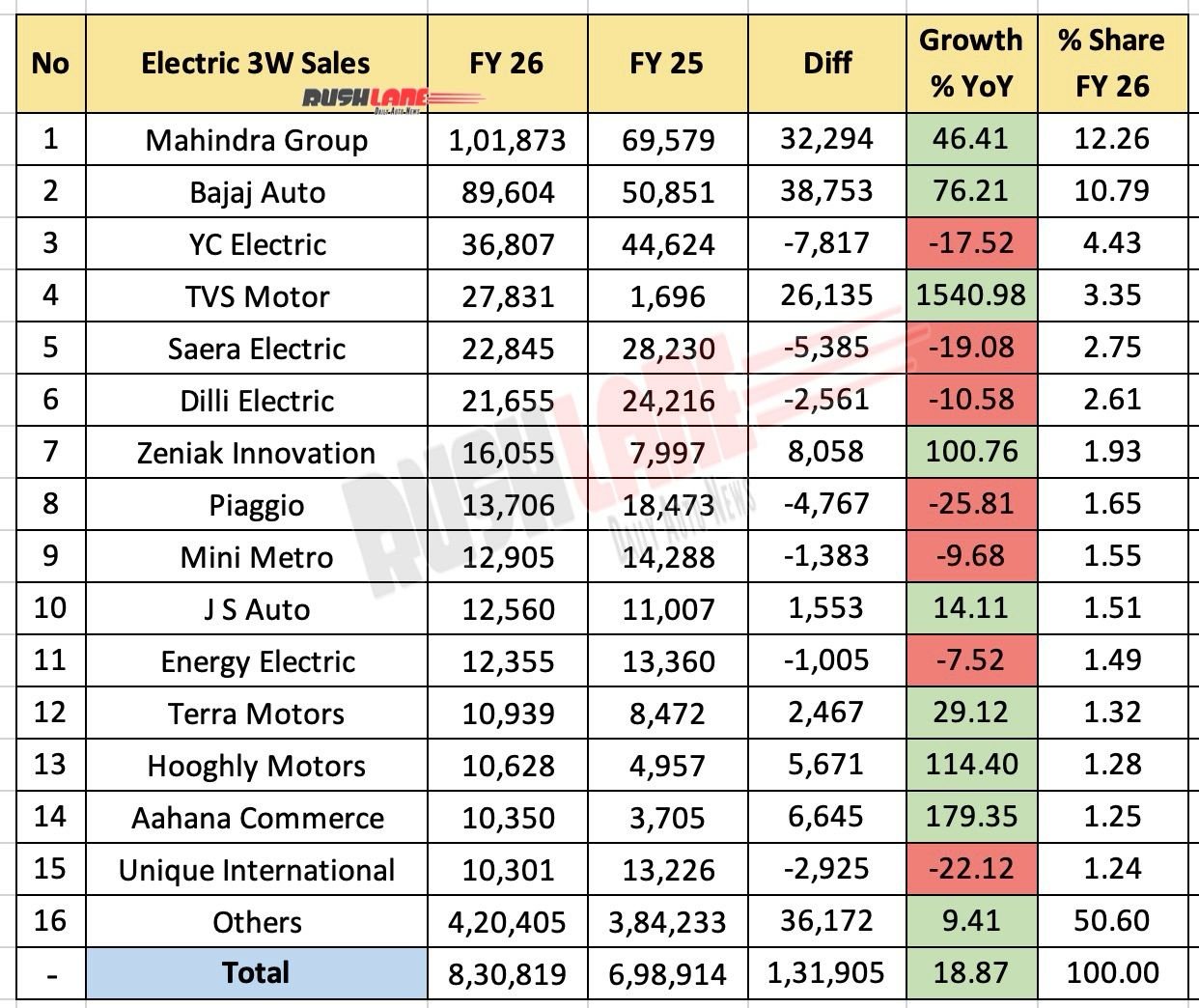
The electric three-wheeler segment in India is witnessing rapid growth, driven by last-mile connectivity, e-commerce delivery and fleet electrification. Currently dominated by players like Mahindra and Bajaj, the segment is now attracting global OEM interest. Hyundai’s entry through the partnership route allows it to take advantage of this opportunity with lower risk and faster market preparation.
Product designed to suit Indian conditions
The upcoming E3W will be specifically designed keeping in mind the Indian operating conditions. The vehicle is expected to cater to a range of use cases including passenger transportation, freight movement and commercial fleet operations. Key focus areas include:
– Adaptability to rough roads and monsoon conditions
– Better security and stability
– Thermal management optimized for hot climates
– Ergonomic design for long daily use
– Flexible layout for passenger and cargo use
Special focus on localization
Both companies have confirmed a high level of localisation, with key components to be sourced and manufactured in India. Local production will also support export opportunities, thereby establishing India as a manufacturing hub for these products. This will help:
– Keep costs competitive
– Improve service and spare parts availability
– Strengthen the supplier ecosystem
From concept to production
With the agreement now formalised, the project is moving towards full-scale development. The product will be tested, validated and certified before launch. Dedicated teams from both companies are already working to accelerate the timelines and bring the vehicle to market. For Hyundai, it marks its entry into a new segment beyond passenger vehicles in India, while for TVS, it strengthens its position in the emerging electric mobility sector.
Jongsun Ko, Senior Vice President of Corporate Strategy and Planning Hyundai Motor Company said, “Hyundai Motor Company has long explored ways to contribute to improving the transportation environment of India as a major market, and our collaboration with TVS Motor is a strategic decision rooted in that effort. We hope the co-developed e3W enables broader access to safer and more sustainable transportation for people across the country.”
Sharad Mishra, President, Group Strategy, TVS Motor Company said, “At TVS Motor Company, we aim to transform the quality of life through sustainable and accessible mobility. The joint development agreement is an important step in our partnership with Hyundai Motor Company and furthers our shared ambition to develop electric three-wheeler solutions. By bringing together complementary strengths – including our electric three-wheeler platform, engineering expertise and a deep understanding of customer needs – we are well-positioned to deliver purpose-built products for India and additional markets.” This collaboration reinforces our commitment to scalable, sustainable last-mile mobility while setting new standards in technology, quality, customer experience and trust.