As GWM looks to strengthen its domestic and global presence, it is imperative that the brand acts responsibly to build trust and confidence.
Chinese automaker Great Wall Motor (GWM) is facing some problems with its marketing materials. In early 2025, allegations of plagiarism were made for promotional footage of the Gaoshan MPV. Netizens had pointed out similarities with Lexus advertisements. More recently, GWM’s premium Wey brand has again been embroiled in plagiarism controversy. Let’s see the details.
Plagiarism allegation against Wey V9X ad
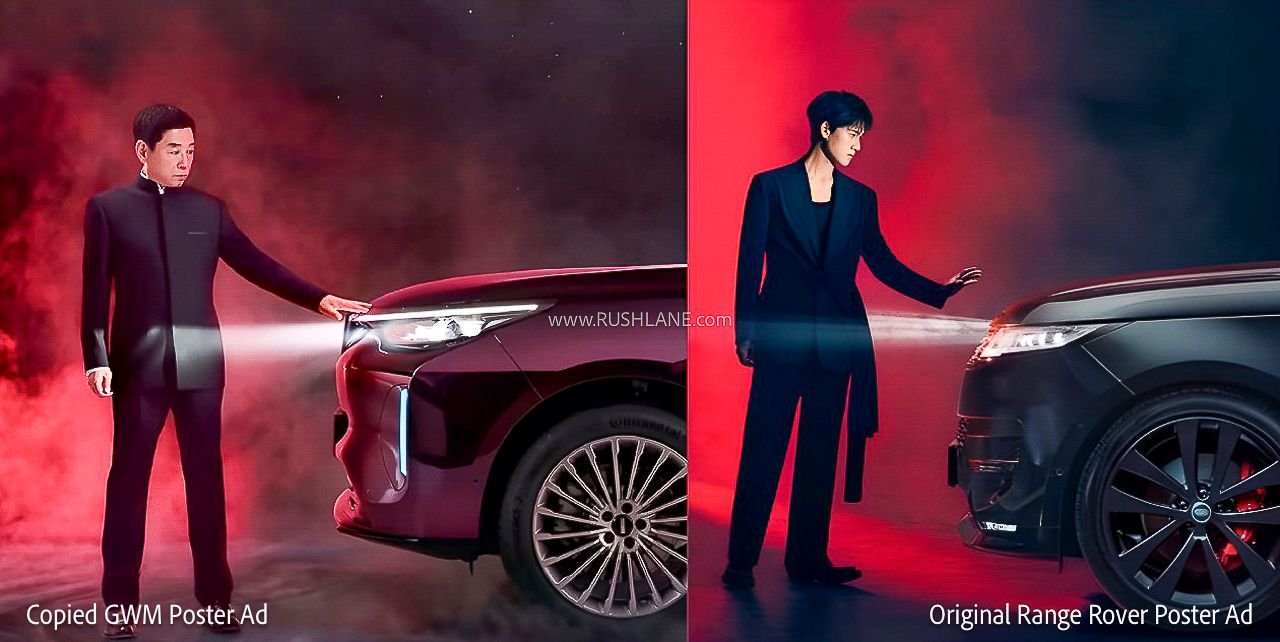
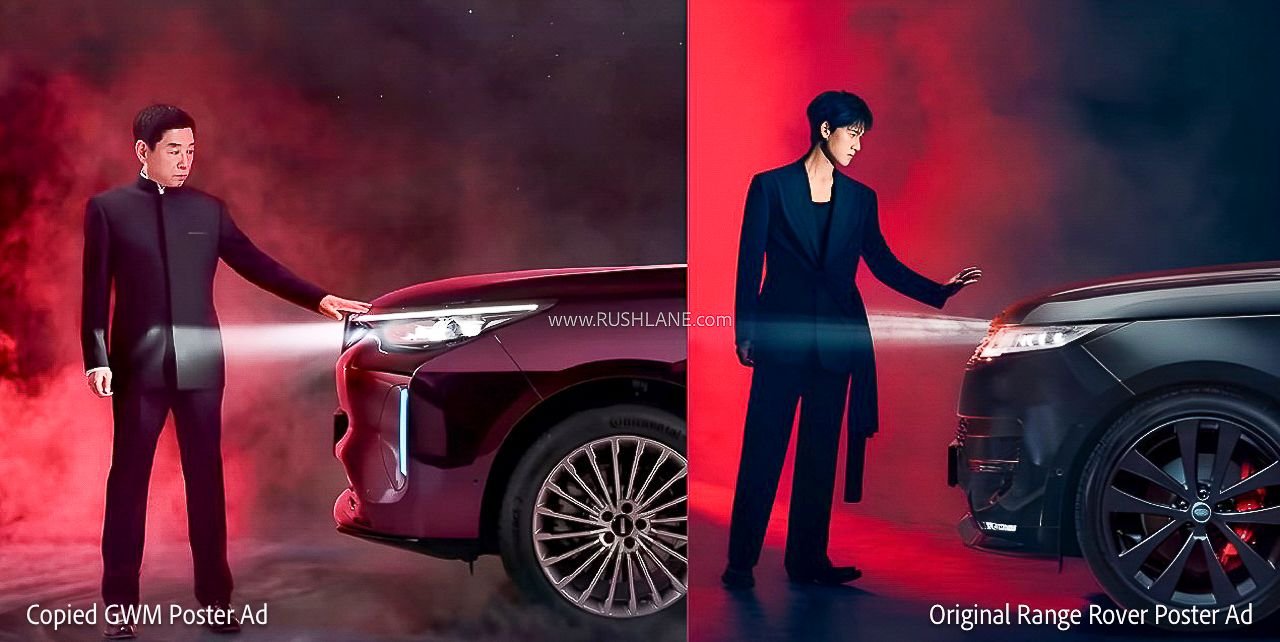
GWM had released a promotional poster for the flagship 6-seater SUV, the Wey V9X. The advertisement shows GWM Chairman Wei Jianjun standing in front of the Wei V9X with his hands touching the vehicle. Following the release of the advertisement, similarities were noted with the largely identical setup used for the first promotion of the Range Rover Sport.
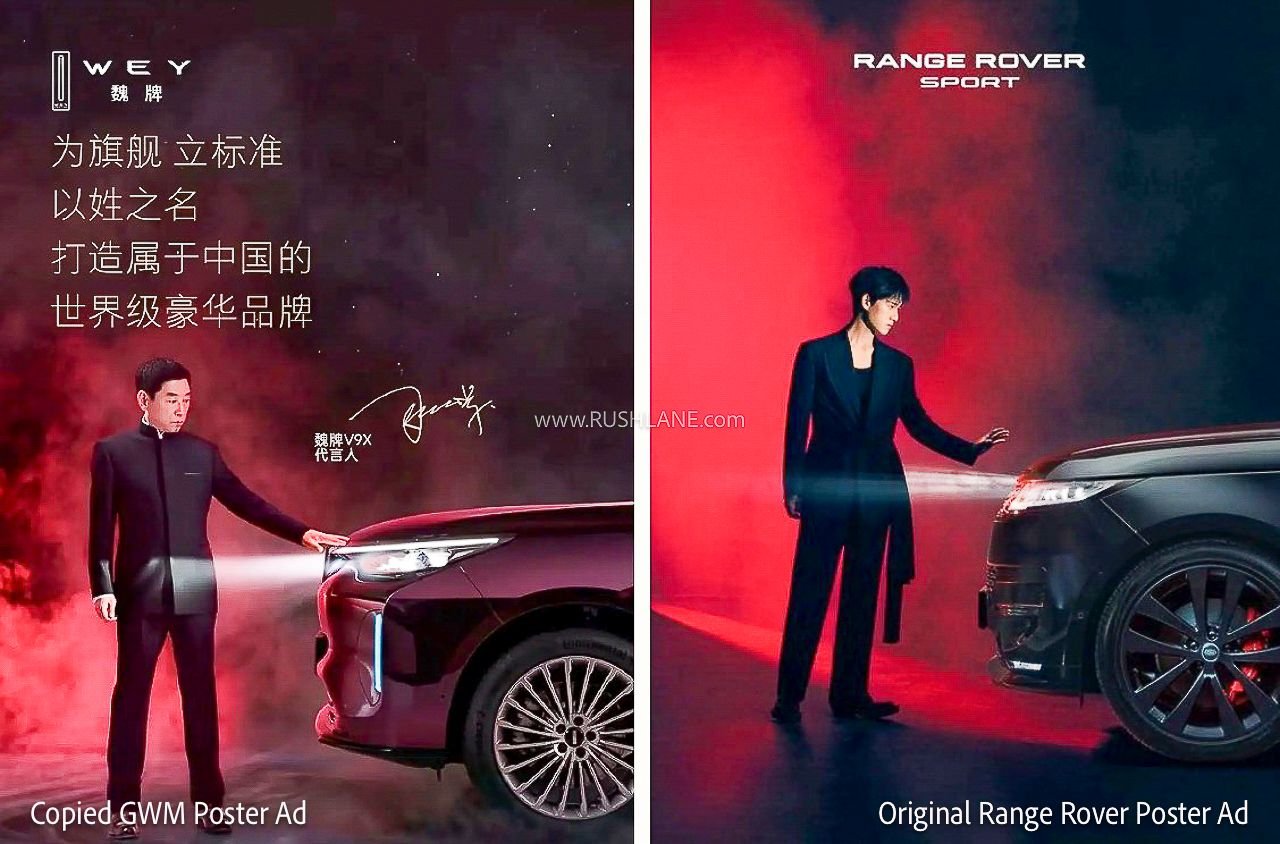
The latter was part of the “Hidden Force” campaign and the original creator himself pointed out the similarities with the poster released for the V V9X. A side by side comparison picture of both the posters has gone viral on social media. Similarities such as a similar dark red background, matching effects and light clusters and similar subject position and composition can be seen.
As the apparent plagiarism was heavily criticized, GWM ordered an internal investigation into the matter. The unauthorized 1:1 duplication was later confirmed by GWM. This has prompted GWM Chairman Wei Jianjun to issue a public apology. In his video apology, Wei Jianjun admitted that the promotional poster was in fact stolen.

Wei has apologized to all stakeholders, including Land Rover, the designer of the original poster, and to netizens. Wei said that he was primarily responsible for this issue, as he should have reviewed it more thoroughly. He said that he will review the internal process to prevent plagiarism in future. He also asked netizens to keep reporting such shortcomings, which will help in making improvements and making the brand better.
Creative similarities in auto ads spark online investigation
Incidents related to creative likeness in automotive advertising are not uncommon throughout the industry. In a recent example from India, Tata Motors faced criticism on social media after the first advertisement of the new Sierra SUV.
Some viewers pointed out similarities between a scene from a Sierra advertisement and a promotional film previously used by Ford for the Bronco, where a vehicle runs alongside horses before transitioning from the older generation model to the latest version. Although the company did not release any formal statement on the matter, the incident highlighted how closely automotive marketing campaigns are scrutinized by enthusiasts and the broader public.
Impact on sales?
Wei’s apology shows that the brand is willing to review its actions and take corrective measures where necessary. An apology from top leadership is rare and can go a long way in portraying the brand in a positive light. It is also commendable that GWM conducted a prompt investigation to address the concerns of the stakeholders.
It is unlikely that the advertising poster glitch will have an impact on sales of the Wey V9X or any other GWM cars. A video apology has already been issued by the chairman himself. In China, the Wey V9X competes against rivals like the Aito M9 and Li L9. Aito M9 is currently the leader in the large luxury SUV segment in China. In January, Aito M9 sales (insurance registrations) were 31,021 units. This makes the Aito M9 the leader in the 500,000 yuan (Rs 67 lakh) and above segment.