
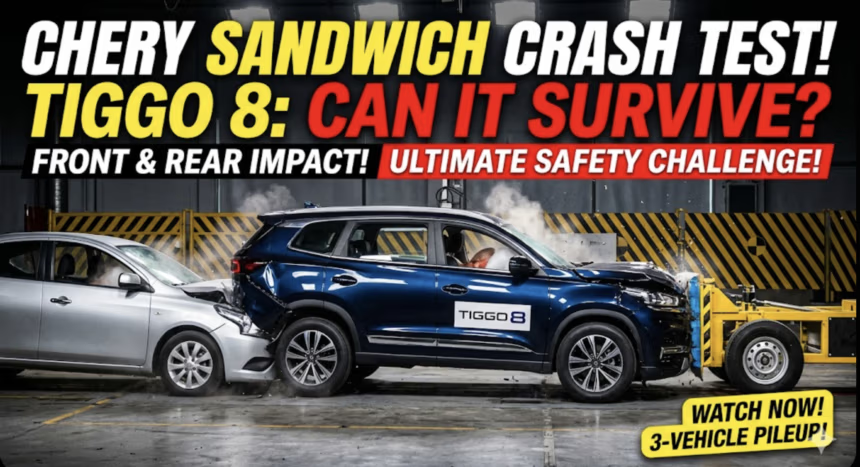
Chery’s High-Stakes “Three-Vehicle Composite” Crash Test
Chery recently conducted a grueling safety demonstration known as the Three-Vehicle Composite Crash Test. Unlike standard tests that measure a single point of impact, this experiment simulated a complex pile-up scenario to prove the structural integrity of their Tiggo 8 series.
The Test Scenario
The test was designed to replicate a chain-reaction collision, which is one of the most dangerous types of accidents on highways:
- Frontal Impact: A bullet vehicle struck the stationary target vehicle from behind.
- Rear Impact: Almost simultaneously, a third heavy impactor struck the line of vehicles from the rear.
- The “Sandwich” Effect: The middle vehicle was subjected to massive energy forces from both the front and the back at the same time.
Key Performance Results
Despite the violent nature of the double impact, the Chery Tiggo 8 showed impressive resilience in several critical areas:
- Structural Integrity: The A, B, and C pillars remained intact. The passenger cabin (survival zone) did not collapse, ensuring the occupants weren’t crushed.
- Post-Crash Accessibility: Even after the dual deformation, the doors could still be opened manually. This is vital for allowing passengers to escape or rescuers to reach them.
- Restraint Systems: The airbags deployed with precise timing, and the seatbelt pretensioners successfully locked the crash test dummies in place.
- Fire Safety: There were no leaks found in the fuel system, significantly reducing the risk of a post-collision fire.
Why This Matters
By going beyond standard regulatory requirements, Chery is aiming to position itself as a leader in global safety standards. This “sandwich” test proves that their high-strength steel cages and energy-absorbing crumple zones are effective even in “worst-case” multi-vehicle pileups.
Summary: The test confirms that Chery’s latest engineering focus is on 360-degree protection, ensuring that a car remains a protective shell regardless of where the impact originates.