
Passenger vehicle sales in India continued to grow in FY2025-26, with total domestic volume reaching 46,83,208 units, a year-on-year growth of 8.39% compared to 43.2 lakh units in FY2026. While the market continues to expand, the bigger story is how the market share dynamics are changing among OEMs.
car sales fiscal year 2026
Maruti Suzuki retained its leadership position by a wide margin by selling 18,23,130 units in FY26, a growth of 3.54%. However, despite the increase in volume, its Market share declined It slipped below the 40% mark to 38.93%. This is a significant decline from 51.30% market share in FY2020, indicating a steady decline in dominance over the past few years. While Maruti remains the leader in absolute volumes, competitors are growing rapidly and eating into its share.
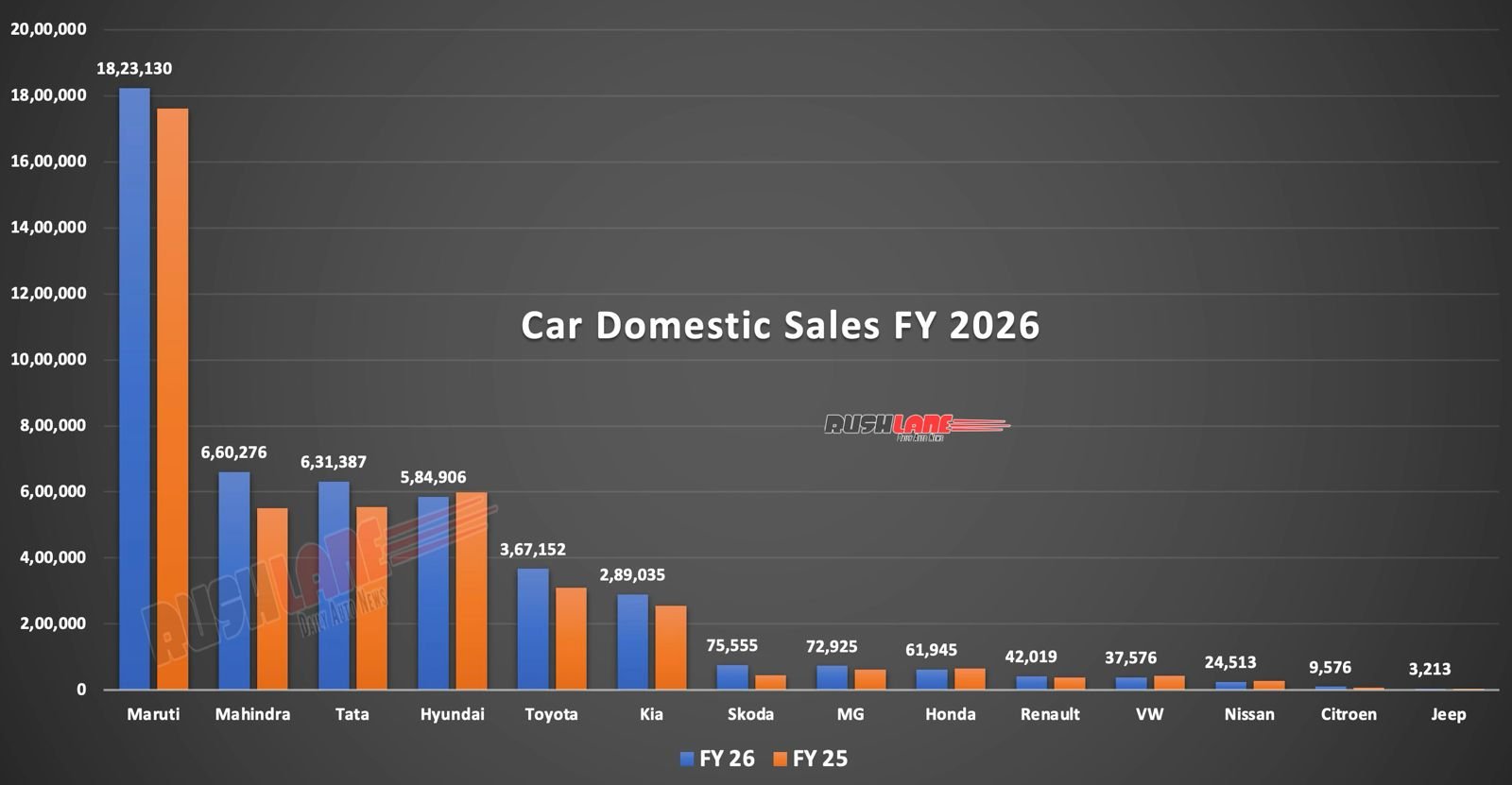
Biggest profit in FY26 There were Mahindra and Tata Motors, both of which have significantly expanded their presence in the market. Mahindra recorded a 19.73% YoY growth at 6,60,276 units, taking its market share to 14.10%, compared to just 6.54% in FY20. This sharp growth has been driven by strong SUV demand across models like the Scorpio, Thar and the XUV lineup.
Tata Motors stood second with 6,31,387 units, up 14.05%. Its market share increased to 13.48%, a huge jump from 4.76% in FY20, supported by both ICE and EV offerings. Hyundai saw a marginal decline in volumes, selling 5,84,906 units (-2.30% YoY), reducing its market share from 17.60% in FY20 to 12.49% in FY26.
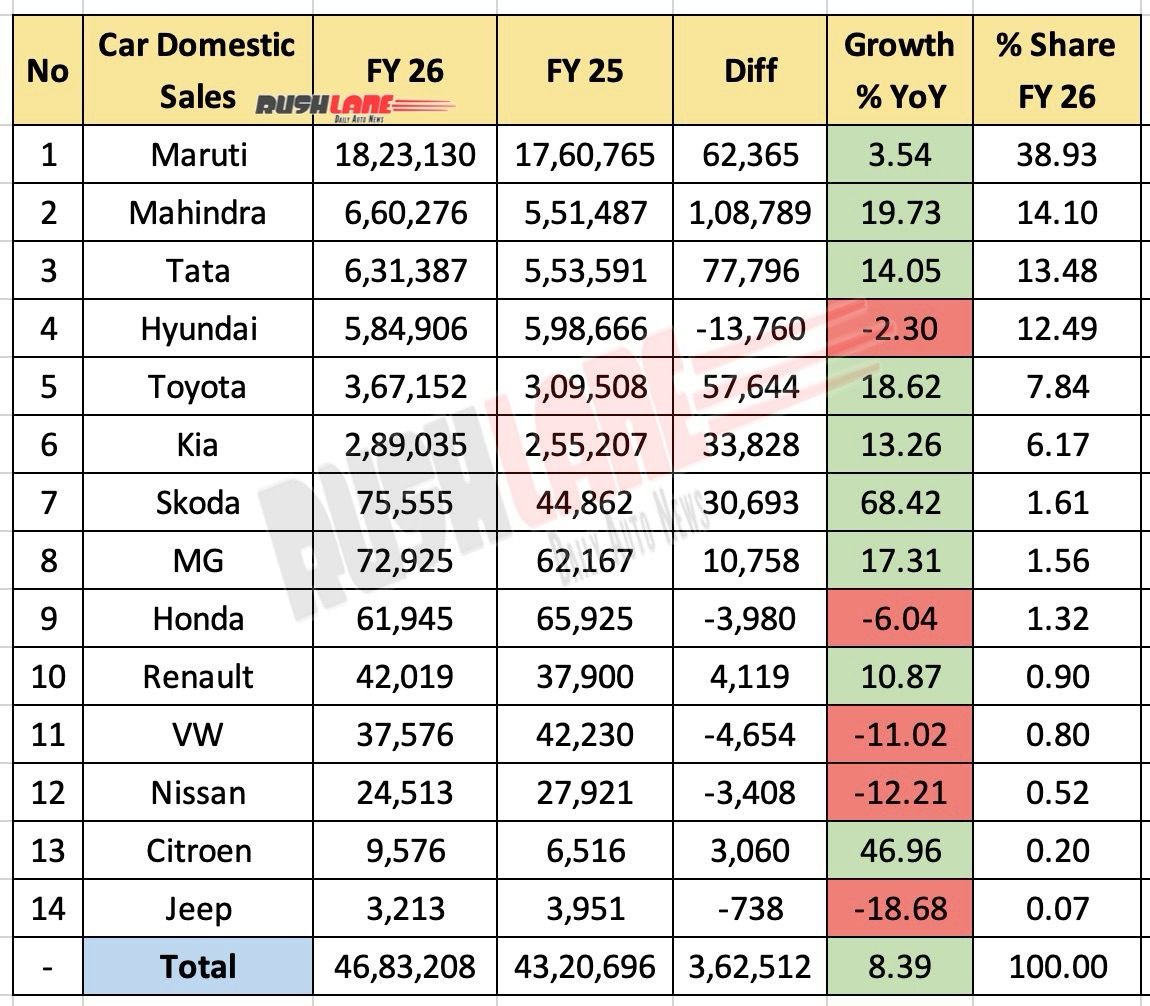
In contrast, Toyota recorded a strong growth of 18.62% year-on-year, reaching 3,67,152 units, while its market share increased from 4.14% to 7.84%. Kia also continued its upward trend, growing 13.26% YoY to 2,89,035 units, with market share rising to 6.17%, almost doubling from 3.09% in FY20.
At the bottom, Skoda recorded the highest growth of 68.42% YoY, albeit on a smaller base, to 75,555 units. MG Motor also saw a good growth of 17.31% YoY. On the other hand, Honda (-6.04%), Volkswagen (-11.02%), and Nissan (-12.21%) saw a decline in sales. Renault recorded marginal growth, while Citroën expanded its presence with a growth of 46.96% despite lower volumes.
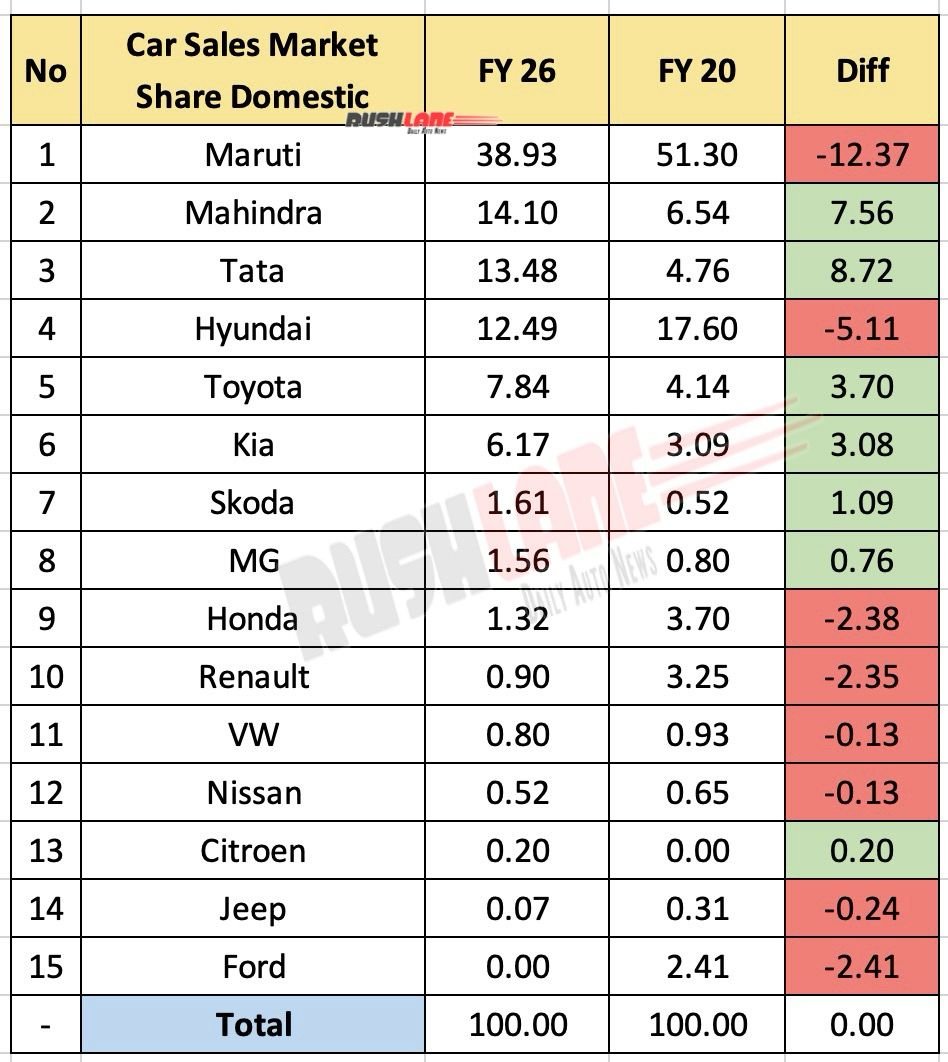
Market share changes – a changing scenario
Comparing FY26 with FY2020 clearly highlights how India’s automotive landscape has evolved over the last few years. Maruti Suzuki’s market share declined by 12.37 percentage points, while Mahindra and Tata emerged as major beneficiaries, with their share increasing by 7.56 and 8.72 percentage points respectively.
Toyota and Kia have also made steady gains during this period, strengthening their presence in the market. On the other hand, the shares of Hyundai, Honda and Renault have seen a decline. This overall shift reflects a broader shift towards SUVs and more premium offerings, segments where brands like Mahindra and Tata have significantly strengthened their portfolios.