
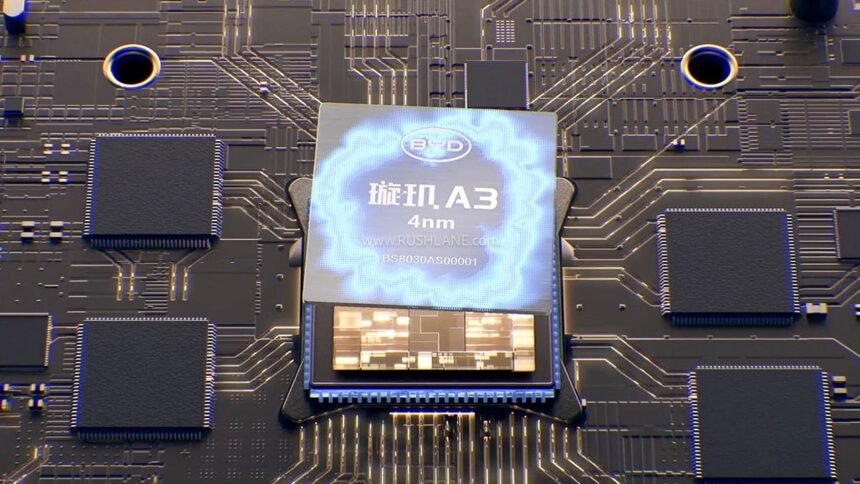
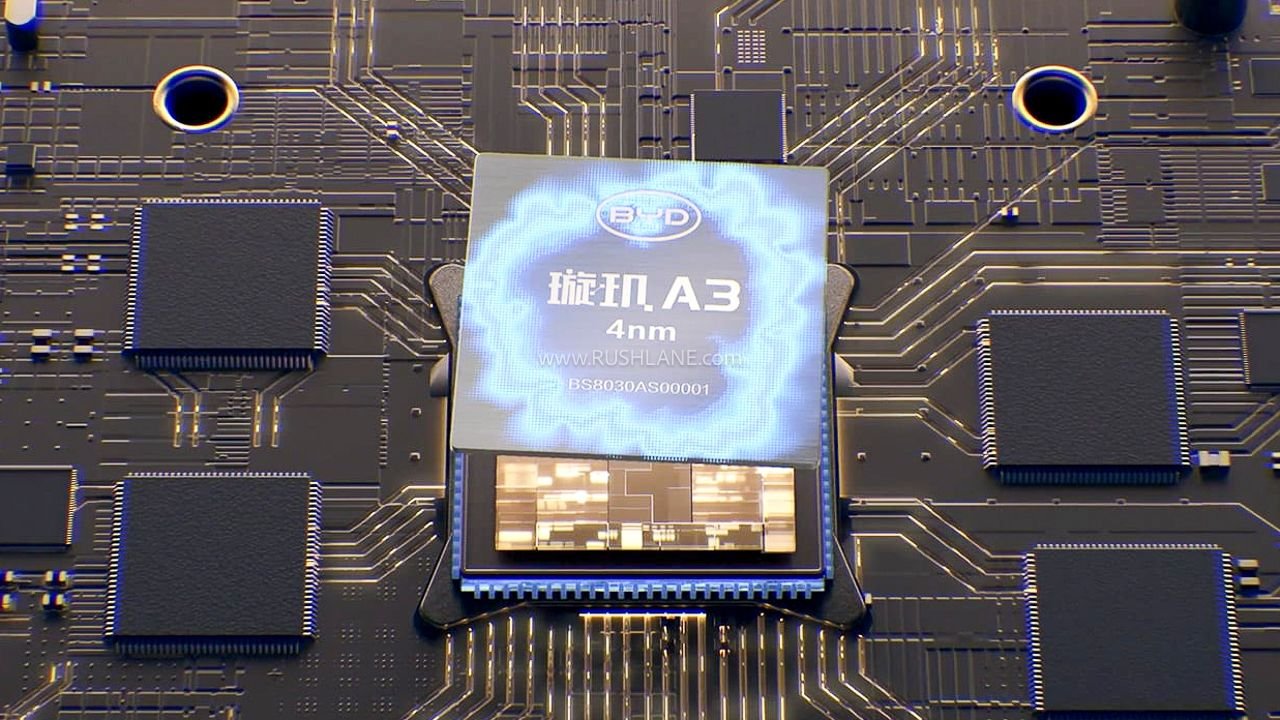
BYD, the world’s largest electric vehicle maker, has unveiled a series of new technology innovations, including its first in-house automotive-grade 4nm smart driving chip. New processor named Xuanji A3 has been developed Power Next-Generation Assisted and Autonomous Driving Systems and represents an important step in BYD’s efforts to strengthen its capabilities in both software and semiconductor technologies.
BYD’s first 4nm smart driving chip
The newly unveiled Xuanji A3 is designed to support advanced driver assistance systems as well as future Level 3 (L3) and Level 4 (L4) autonomous driving applications. Manufactured using a 4-nanometer fabrication process, the chip is One of the most advanced automotive processors Currently announced by a Chinese automaker.
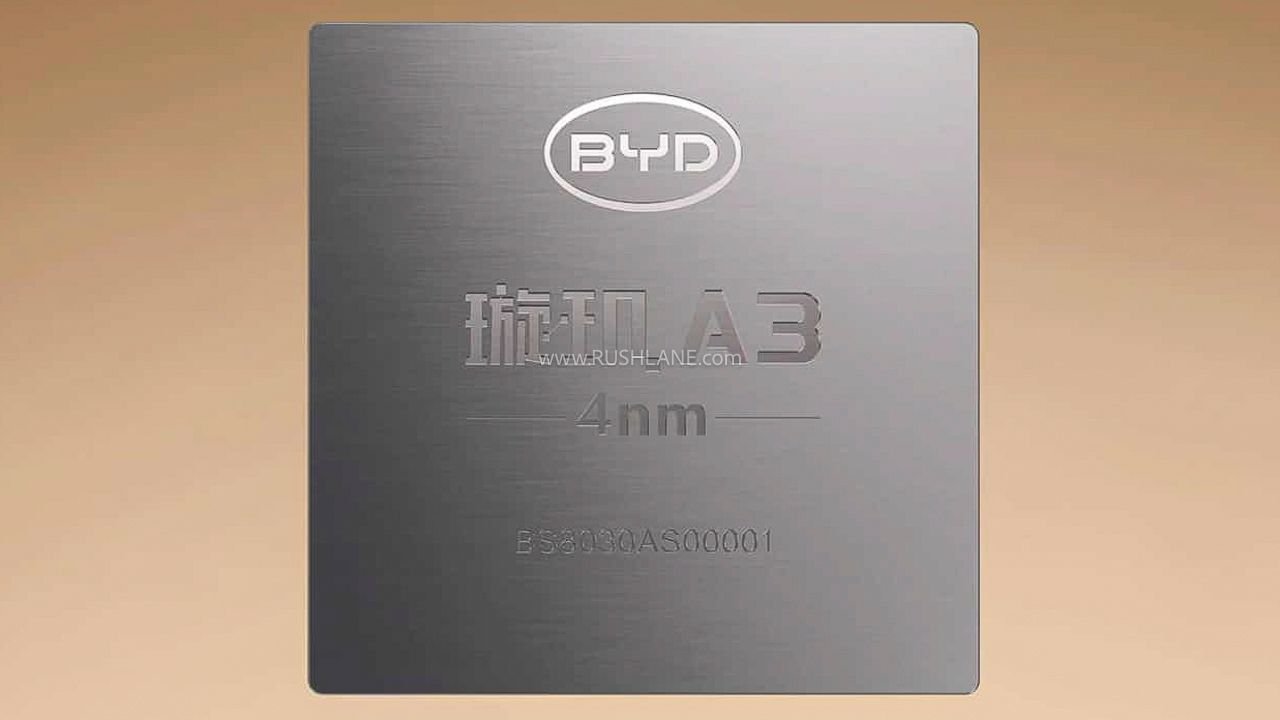
According to BYD, the Xuanji A3 forms the core of a new central computing architecture that integrates multiple vehicle domains, including smart cockpit, advanced driver assistance systems (ADAS) and core vehicle control functions. By consolidating these functions into a high-performance platform, BYD aims to improve computing efficiency while reducing power consumption.
The announcement highlights BYD’s increasing focus on vertical integration. Speaking at the launch event, BYD Chairman Wang Chuanfu said the company There are more than 7,000 engineers working in semiconductor research and development. BYD has been involved in semiconductor manufacturing for many years through its subsidiary businesses and is now expanding its capabilities into high-performance autonomous driving processors.
Xuanji A3 Specifications and Performance
The launch also puts BYD in line with other Chinese automakers that have recently introduced their own custom chips, including Li Auto’s Mach 100, Xpeng’s Turing AI chip and Nio’s NX9031. BYD claims the Xuanji A3 is China’s first mass-produced automotive-grade 4nm smart driving chip. In a three-chip configuration, the system is called Provides over 2,100 TOPS (trillion operations per second) computing powerEquivalent to approximately 700 TOPS per chip.
This level of performance puts it in the same league as some of the most powerful automotive computing platforms currently available. For comparison, Li Auto’s MAC 100 chip delivers up to 1,280 TOPS, while Xpeng’s Turing AI processor is rated at around 750 TOPS.
BYD also claims that Xuanji A3 delivers industry leading energy efficiencyProvides low power consumption per unit of computing performance. The platform is designed to support next-generation sensors including high-resolution LiDAR systems and will be integrated with BYD’s DiPilot 300 (“God’s Eye Bee”) assisted driving package.
The company plans to deploy the technology in a wider range of vehicles, with advanced assisted driving features expected to become increasingly accessible across its lineup. While fully autonomous driving capabilities will depend on future regulatory approval, BYD sees the Xuanji A3 as an important building block for itself. Long-term goal of improving road safety and reducing traffic accidents.