
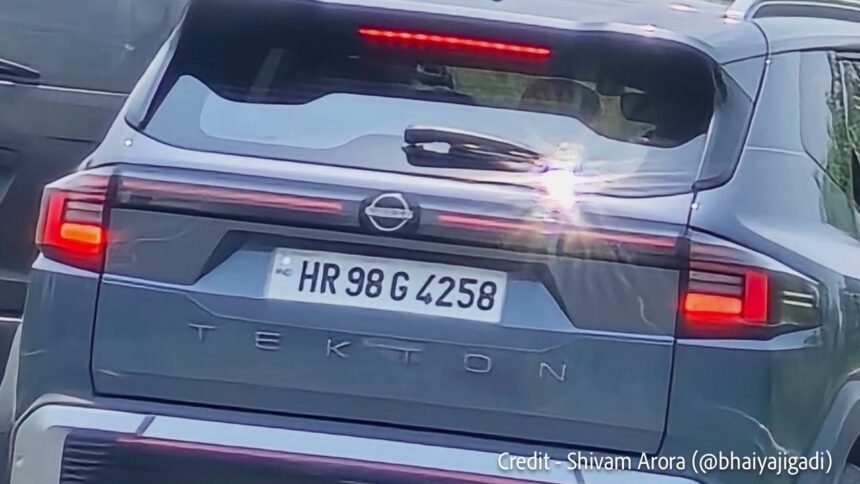
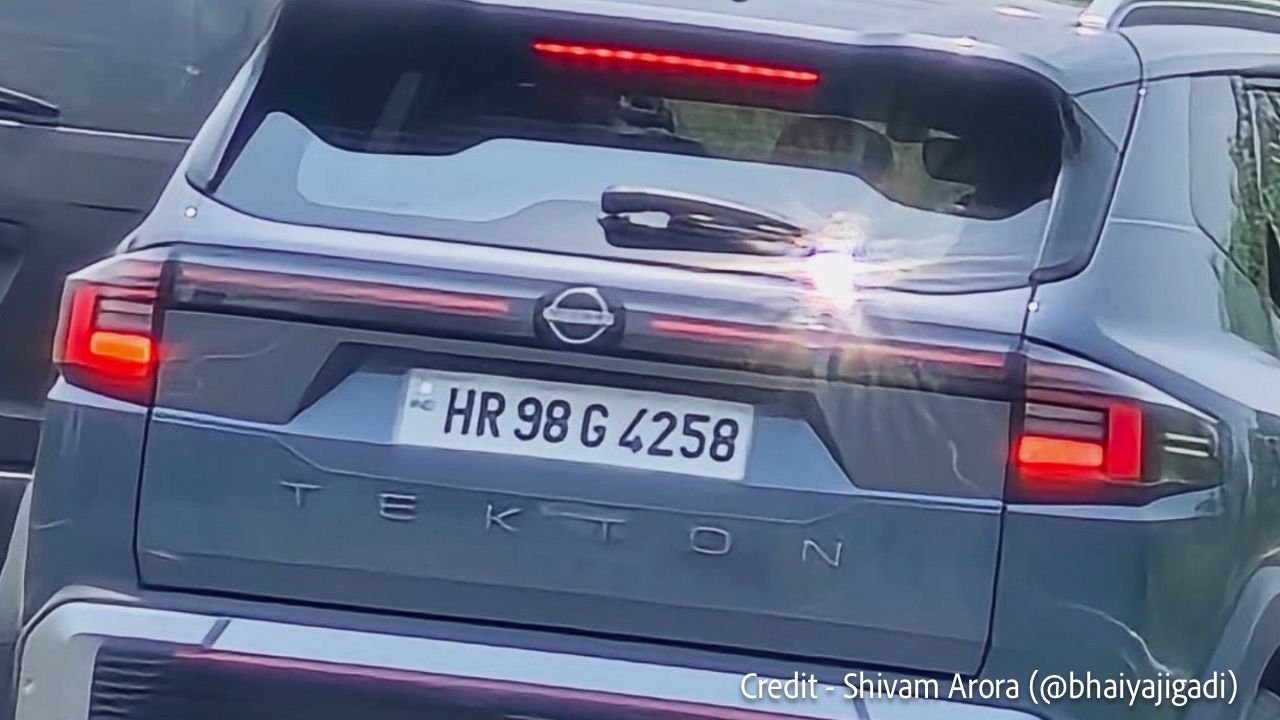
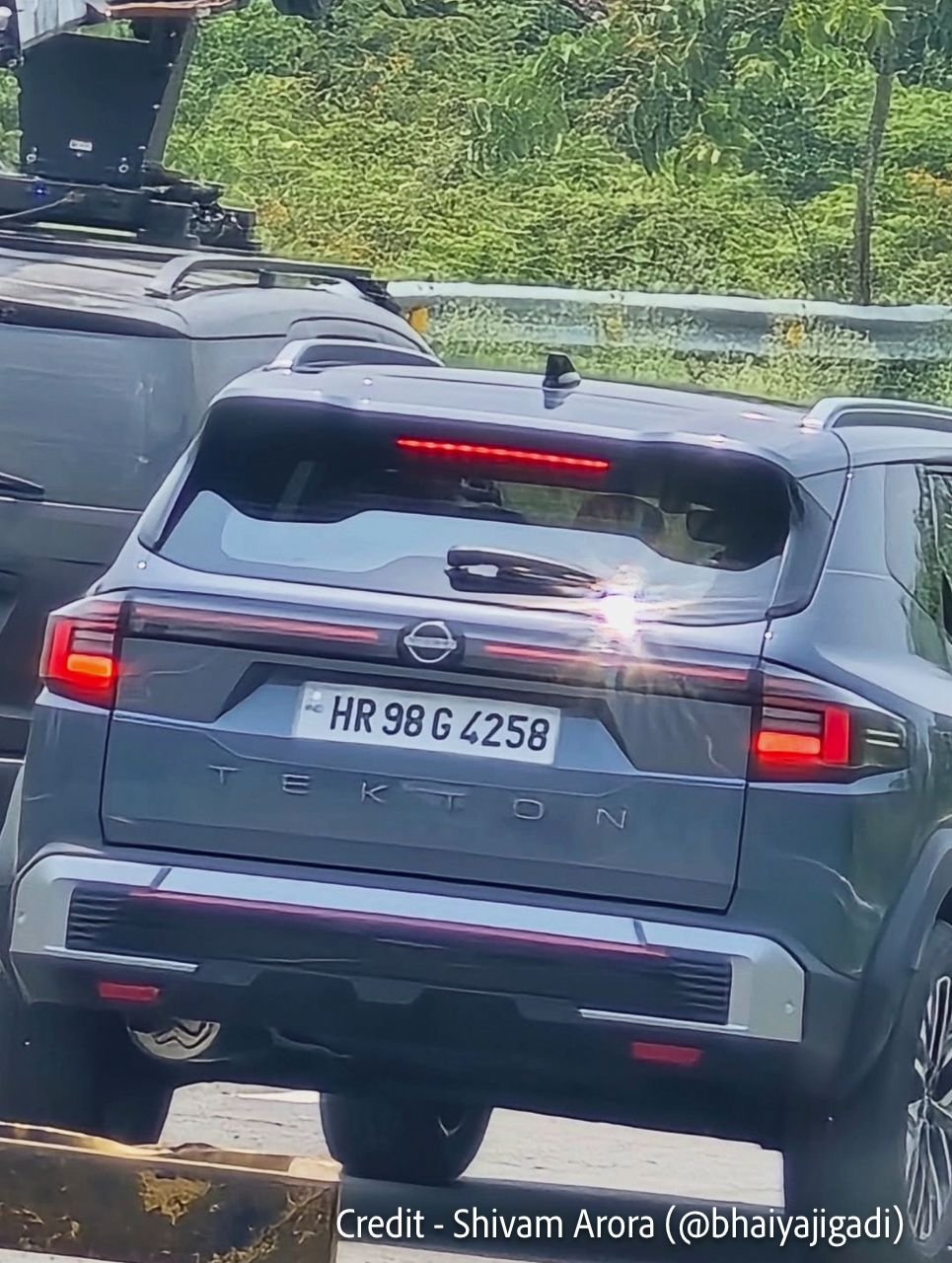
After Nissan officially introduced the upcoming Tecton SUV as Baby Patrol, a new image circulating online seems to reveal the rear design of the SUV in full detail. While the image appears to have undergone AI-based sharpening or enhancement, many details of the design closely match Nissan’s official sketches, suggesting that it may actually be from a real TVC shoot.
Nissan Tecton rear design leaked ahead of July 9 debut?
At first glance, the image looks unusually sharp for a typical spy shot, indicating that AI enhancements may have been used to improve clarity. However, several elements point to the image being genuine. Most notably, another vehicle equipped with a camera rig can be seen in the background. Such rigs are commonly used when filming automotive television commercials, which supports the claim that the SUV was photographed during a TVC shoot.
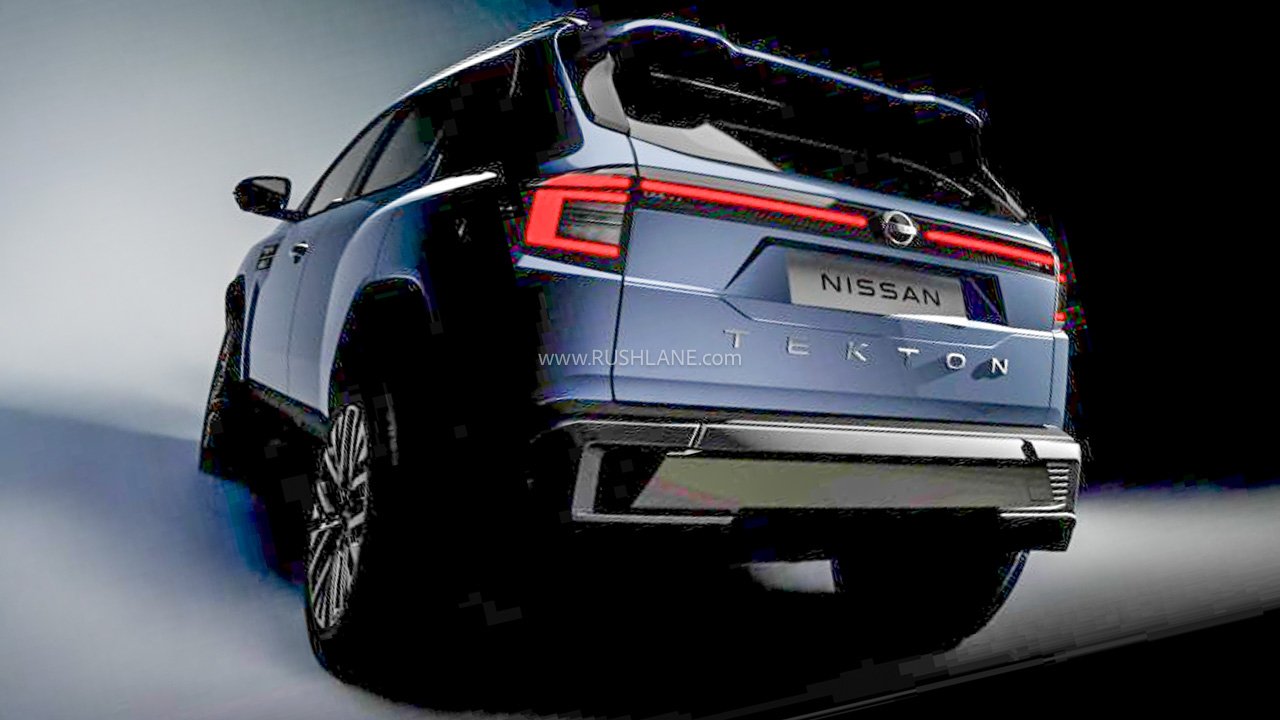
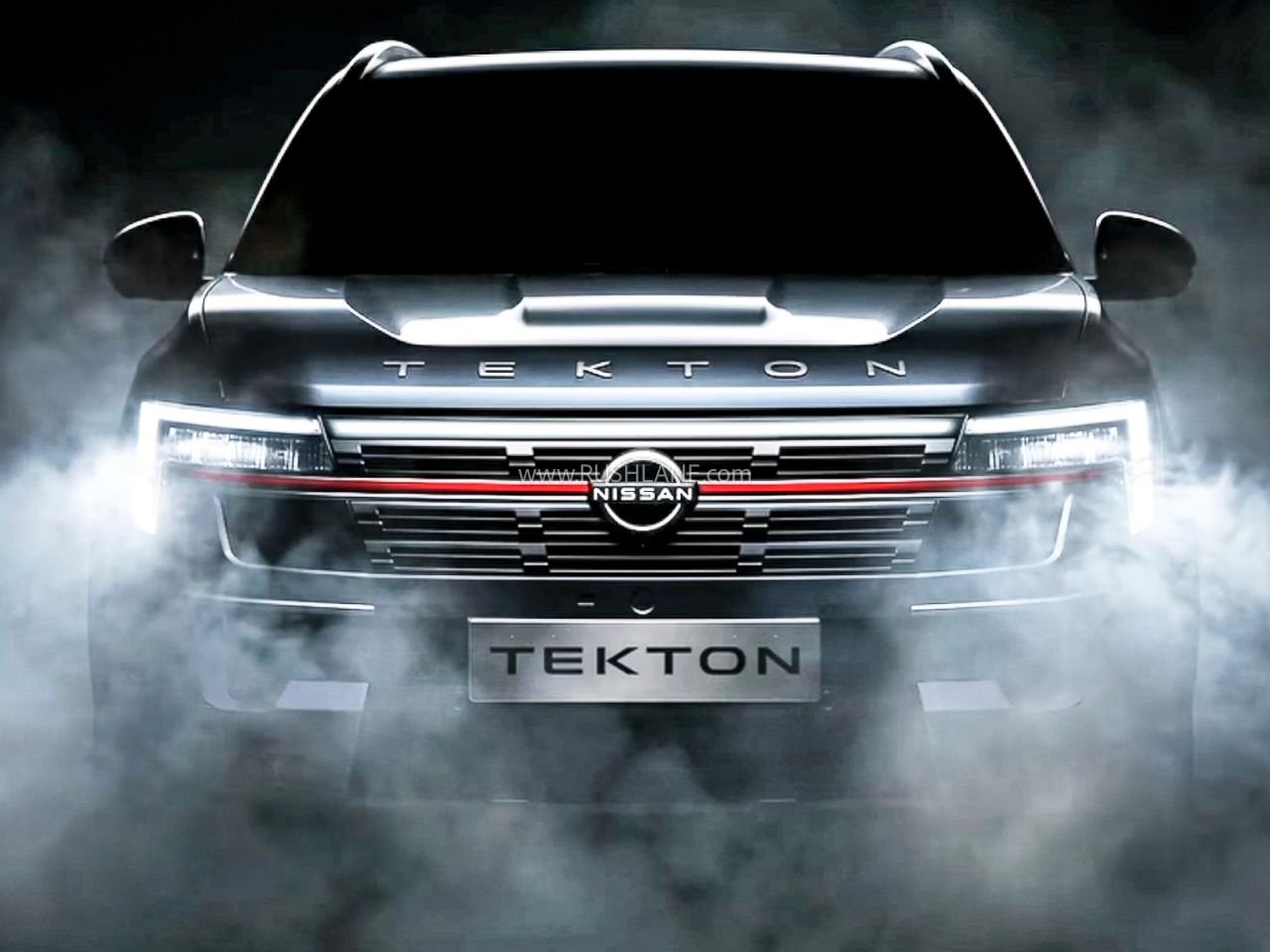
The design matches the official teaser
The rear styling closely matches the teaser images released earlier by Nissan. A full-width LED light bar extends across the tailgate, seamlessly connecting the LED tail lamps on either side. The lighting signature looks similar to what Nissan previewed in its official teaser campaign. There is a Nissan logo in the center, while the TEKTON lettering is prominently placed at the bottom of the tailgate.
The SUV also features a roof-mounted spoiler with integrated high-mounted stop lamp, rear wiper below the spoiler, shark-fin antenna and a chunky silver skid plate integrated into the rear bumper. The vertical reflectors located near the bumper corners further enhance its strong SUV stance. The overall design looks straightforward and muscular, cementing Nissan’s positioning of the Tecton as a proper mid-size SUV.
Shares underpinnings with Renault Duster
The Tecton is based on the same platform as the new Renault Duster. While both SUVs share underpinnings, Nissan has given the Tecton a completely different exterior design with unique front and rear styling. The cabin is also expected to feature Nissan-specific themes and equipment levels.
Powertrain options are expected to mirror the Renault Duster lineup. The range is likely to start with a 1.0-litre turbo petrol engine producing around 100 PS and 160 Nm, paired with a manual gearbox. The higher variants are expected to get a 1.3-litre turbo petrol engine that delivers around 163 PS and 280 Nm, offered with both manual and 7-speed DCT transmission options.
Nissan is also expected to introduce a strong hybrid version after the initial launch. The hybrid setup is likely to use a 1.8-litre naturally aspirated petrol engine paired with an electric motor, similar to Renault’s E-Tech 160 system. Local production of hybrid components through the horsepower powertrain could help Nissan price hybrids competitively while reducing reliance on imported parts.