In a significant step towards improving railway passenger safety, the Research Design and Standards Organization (RDSO) of Indian Railways in collaboration with the Automotive Research Association of India (ARAI) has successfully conducted full-scale crashworthiness testing of LHB (Linke Hofmann Busch) coaches. Controlled crash test was conducted at RDSO on June 24, 2026 Dedicated crash test facility in Lucknow.
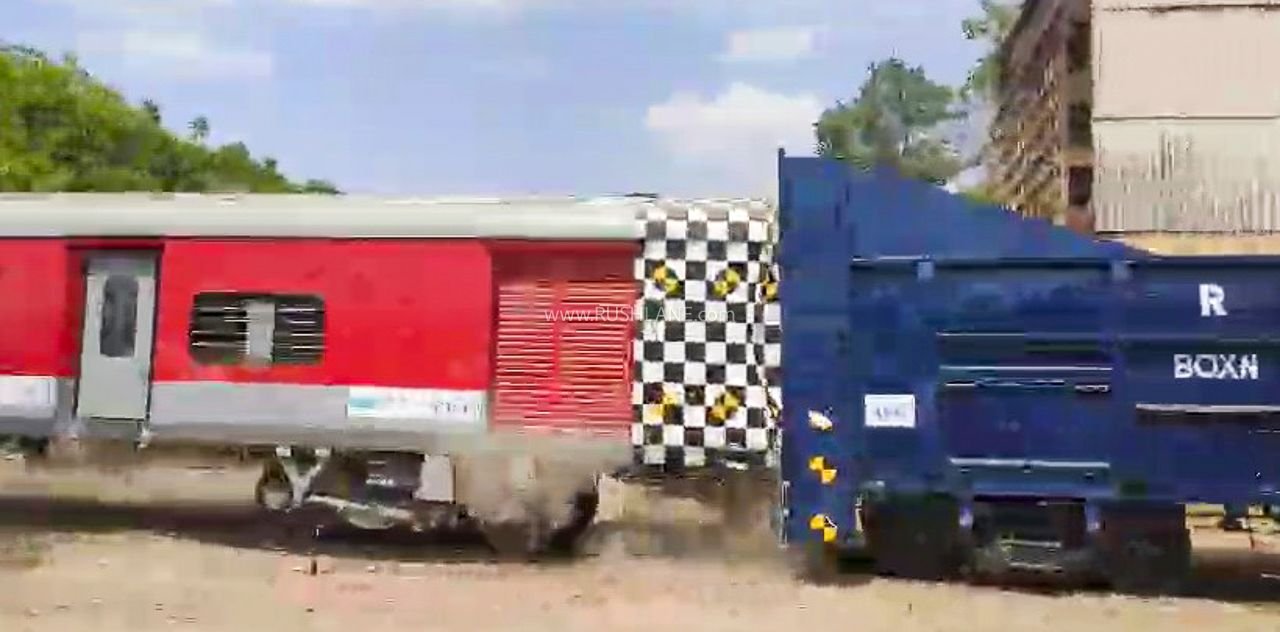
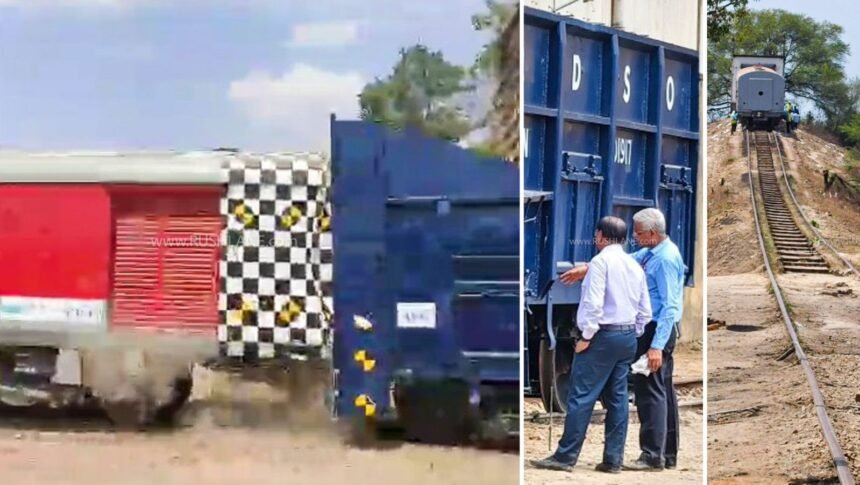
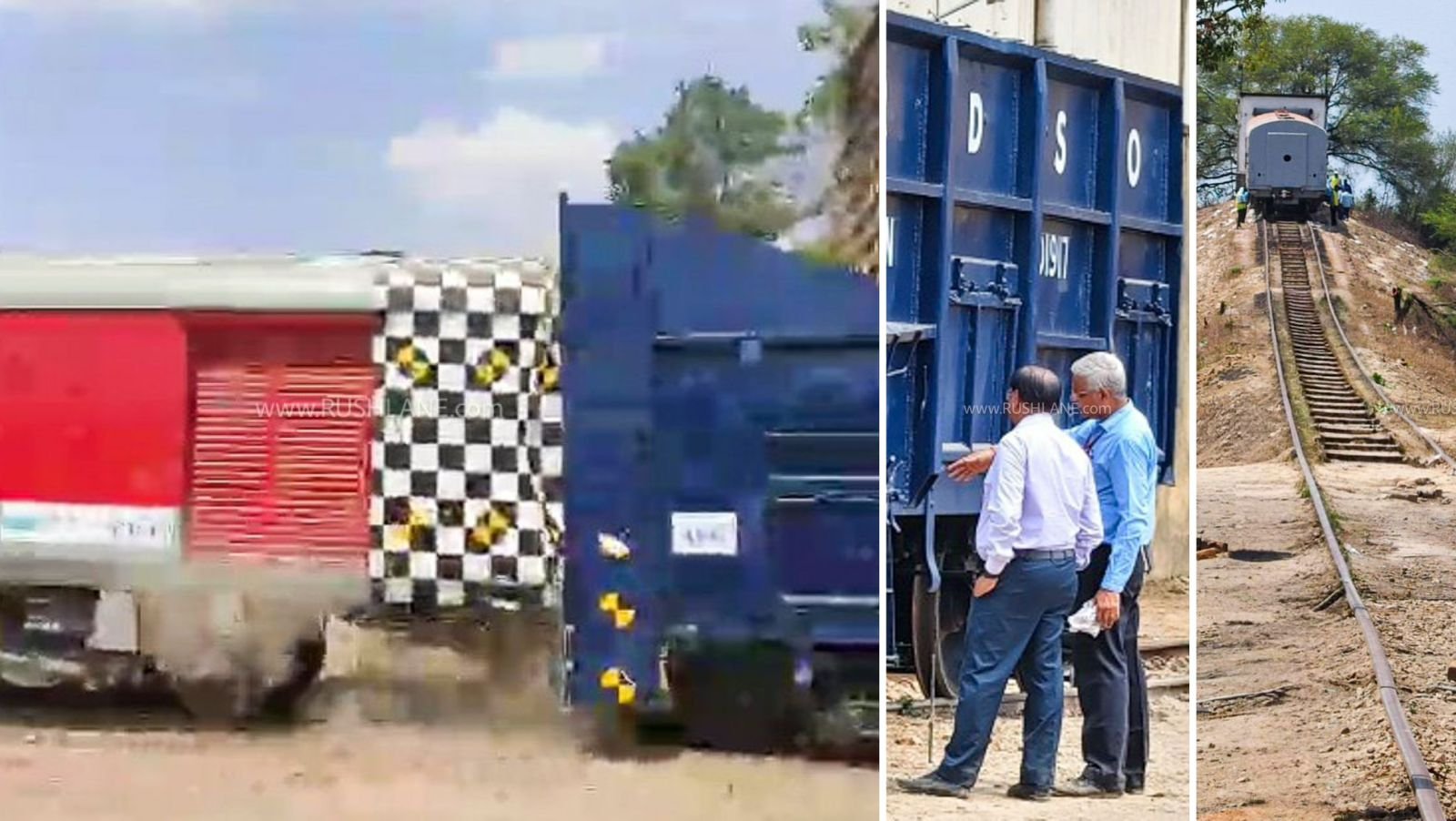
LHB coach collides with parked wagon
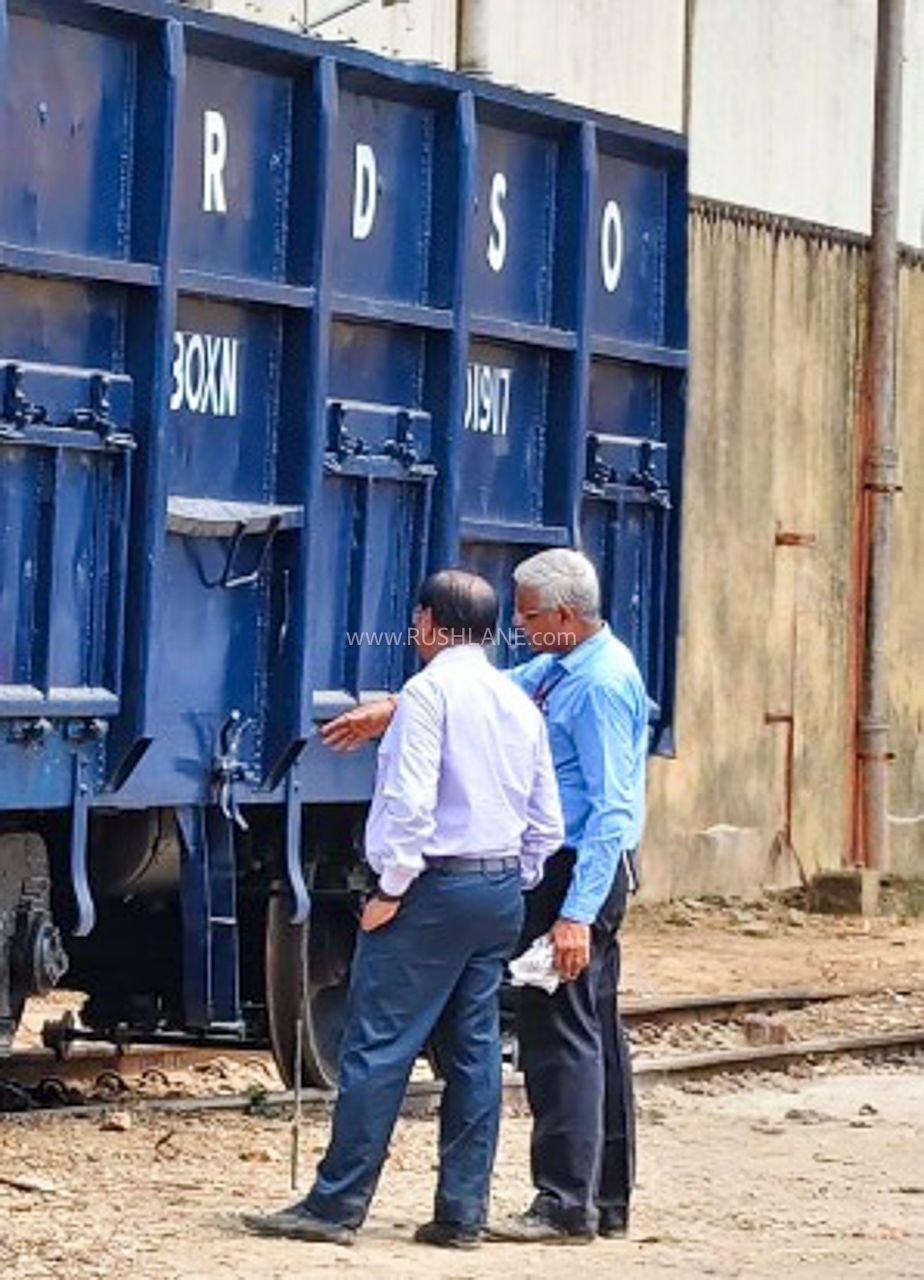
Unlike computer simulations or laboratory component tests, this was a full-scale physical crash test. Two LHB coaches—one LSLRD (luggage, guard and disabled) coach and one LWSPP (LHB Wheel Slide Protection Passenger) coach—were released from a specially designed ramp and allowed to roll freely before colliding with a stationary ballast wagon.
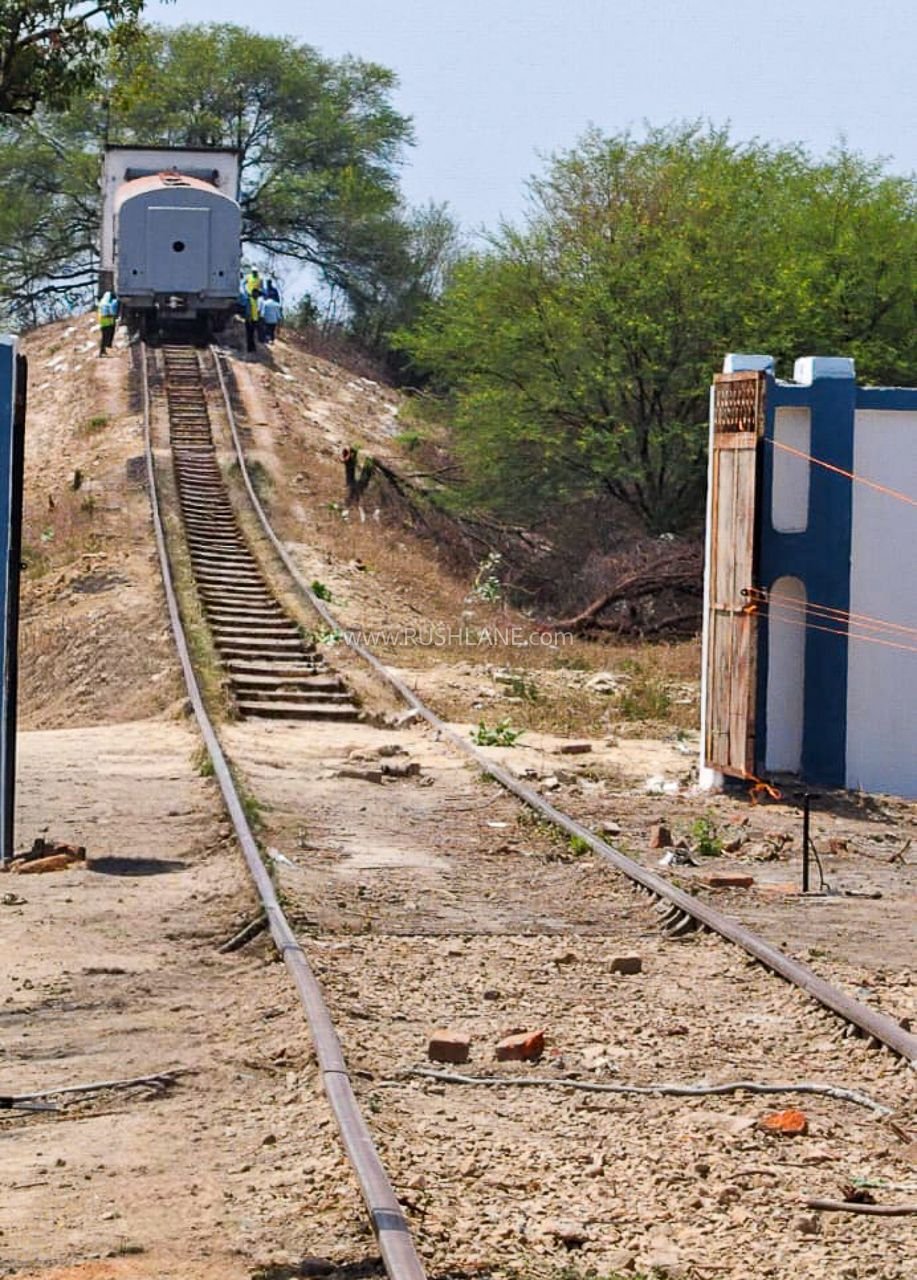
impact on one Speed around 43-44 km/hAccording to international crashworthiness standard EN 15227. The test was designed to evaluate how the coach structure absorbs crash energy, deforms under impact and protects passenger survivability during a collision. The objective of the exercise was to validate the crashworthy design of modern railway coaches and generate real-world data that can be used to further strengthen passenger safety and future coach development.
Hundreds of sensors record every millisecond
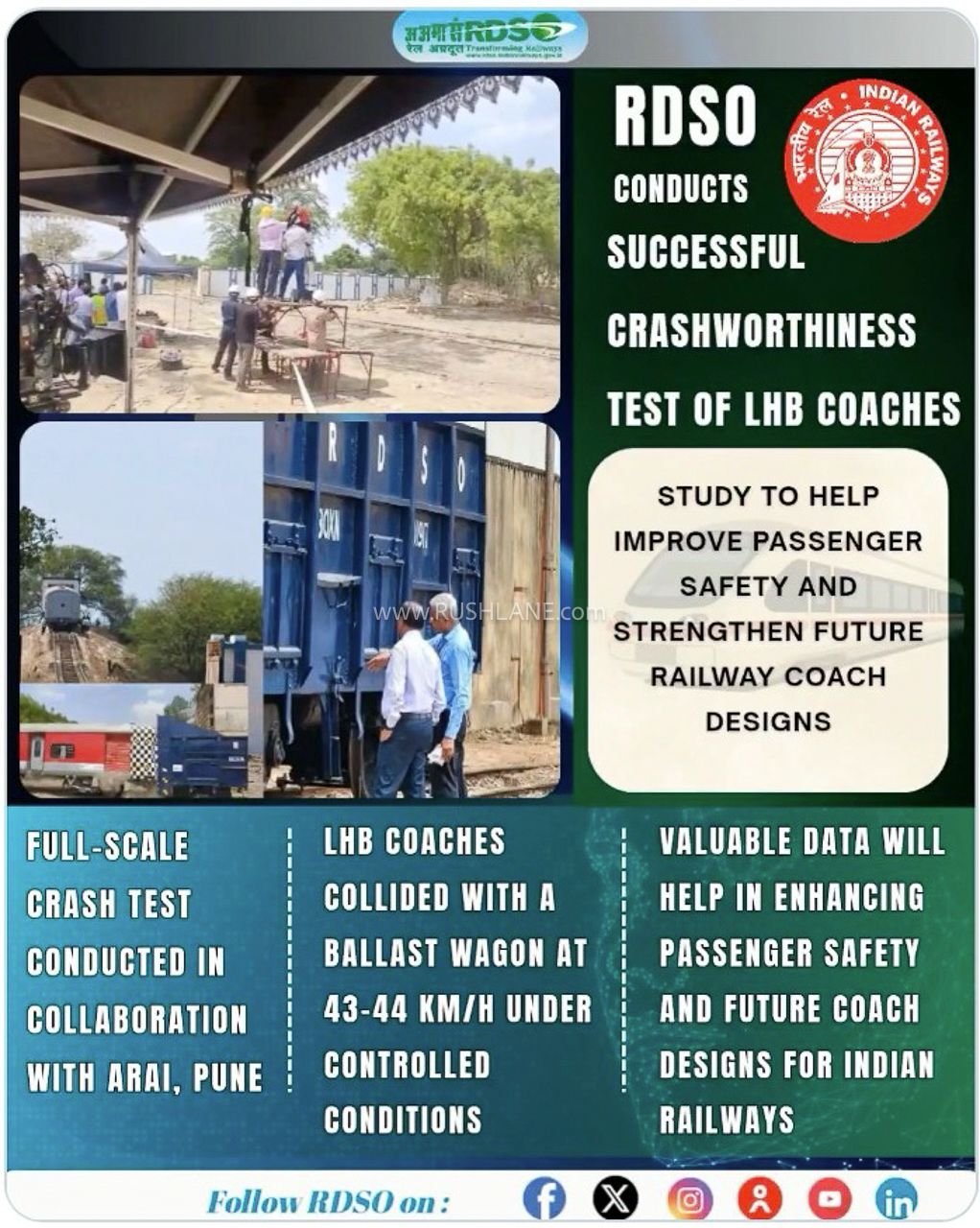
The crash test involved extensive equipment, with numerous sensors and high-speed cameras installed on the coaches and at the test facility. These systems recorded structural deformations, impact forces, and coach behavior during a collision.
The data collected will help engineers validate simulation models, refine crashworthy structures, and improve future railway coach designs. Officials said the findings Will contribute to enhancing passenger safety and to develop safe rolling stock for Indian Railways.
ARAI brings automotive crash testing expertise
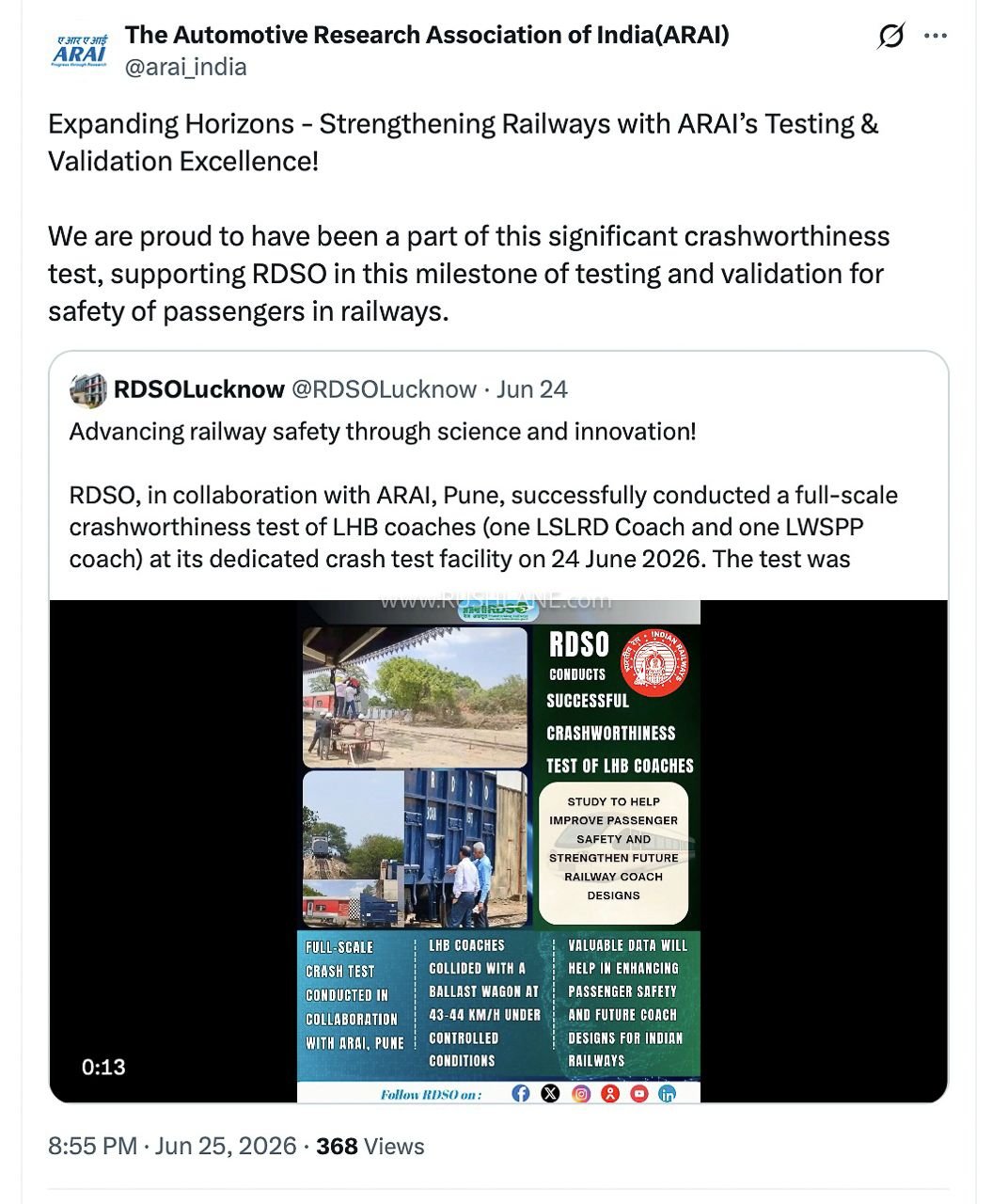
While ARAI is best known for automotive homologation and vehicle crash testing, its expertise was leveraged for this railway safety program. The collaboration highlights how Knowledge gained from automotive accident analysis (India NCAP) can also be applied to rail transport safety. ARAI confirmed that it is proud to support RDSO in this important project, calling it an important step towards strengthening railway safety through scientific testing and validation.
Why does this test matter
Modern LHB coaches are already considered significantly safer than older ICF coaches due to their anti-climbing design and better structural integrity. However, real-world crash testing provides valuable validation beyond computer simulation. The insights gained from this exercise are expected to help Indian Railways further optimize coach structures, improve crash energy management and enhance passenger safety in future generations of passenger coaches.
As Indian Railways continues to modernize its rolling stock and expand high-speed and semi-high-speed operations, such crashworthiness verification programs are likely to become increasingly important. ensuring high safety standards For millions of passengers traveling across the country every day.