
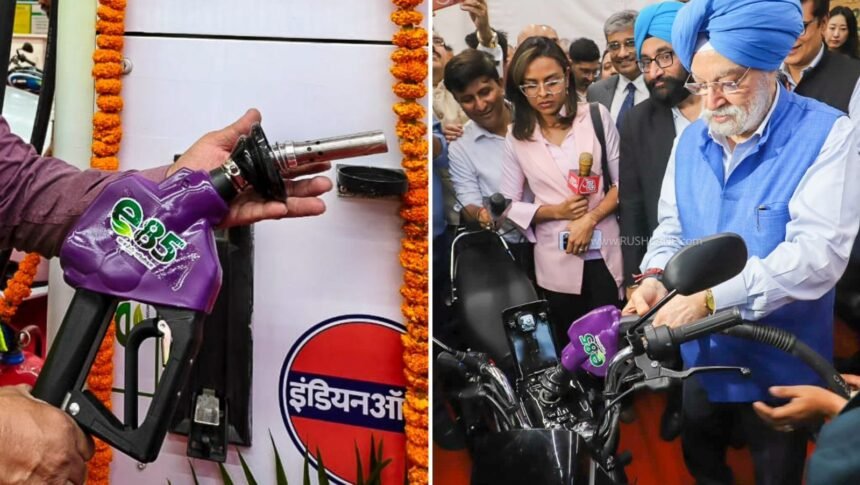
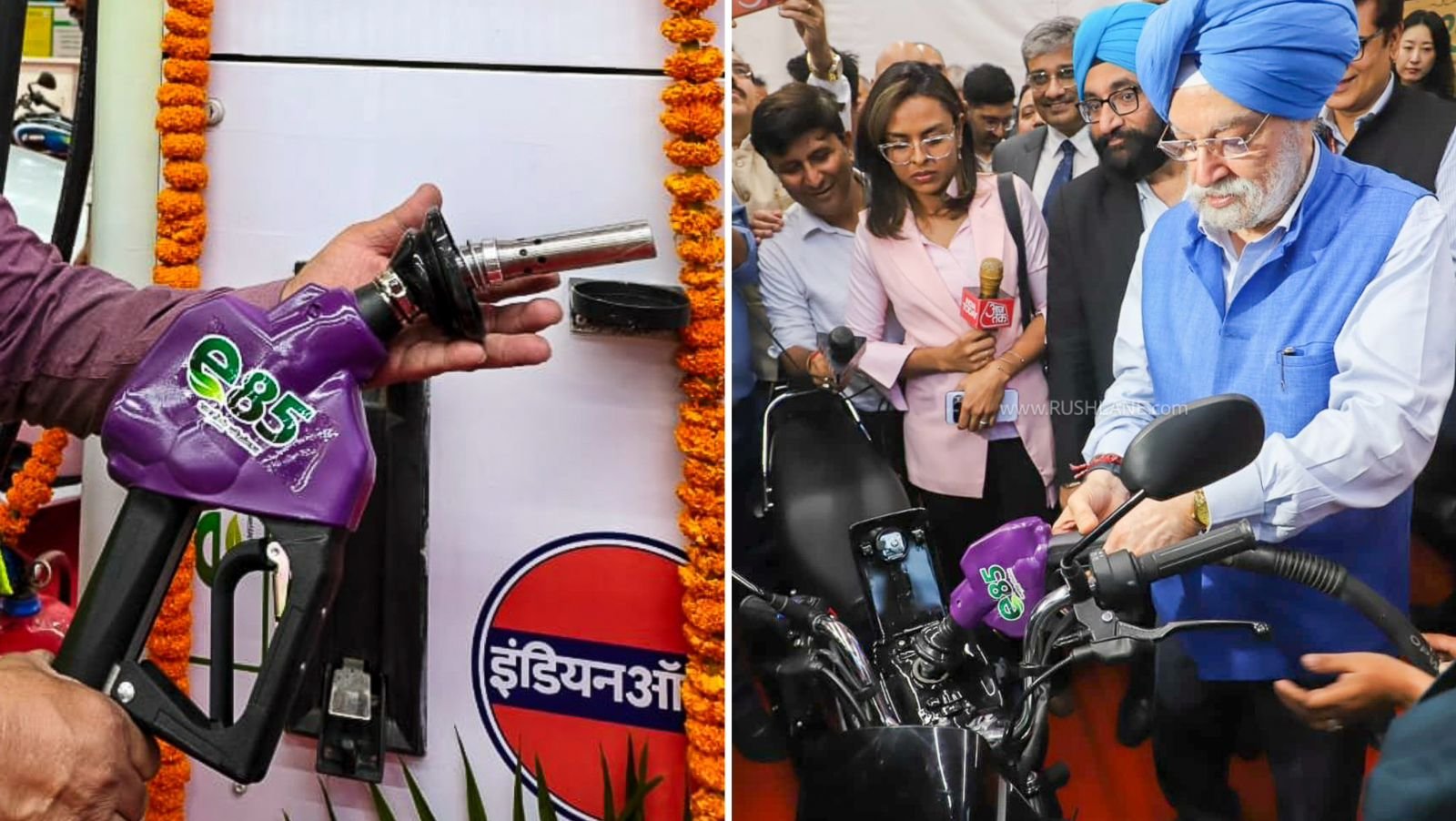
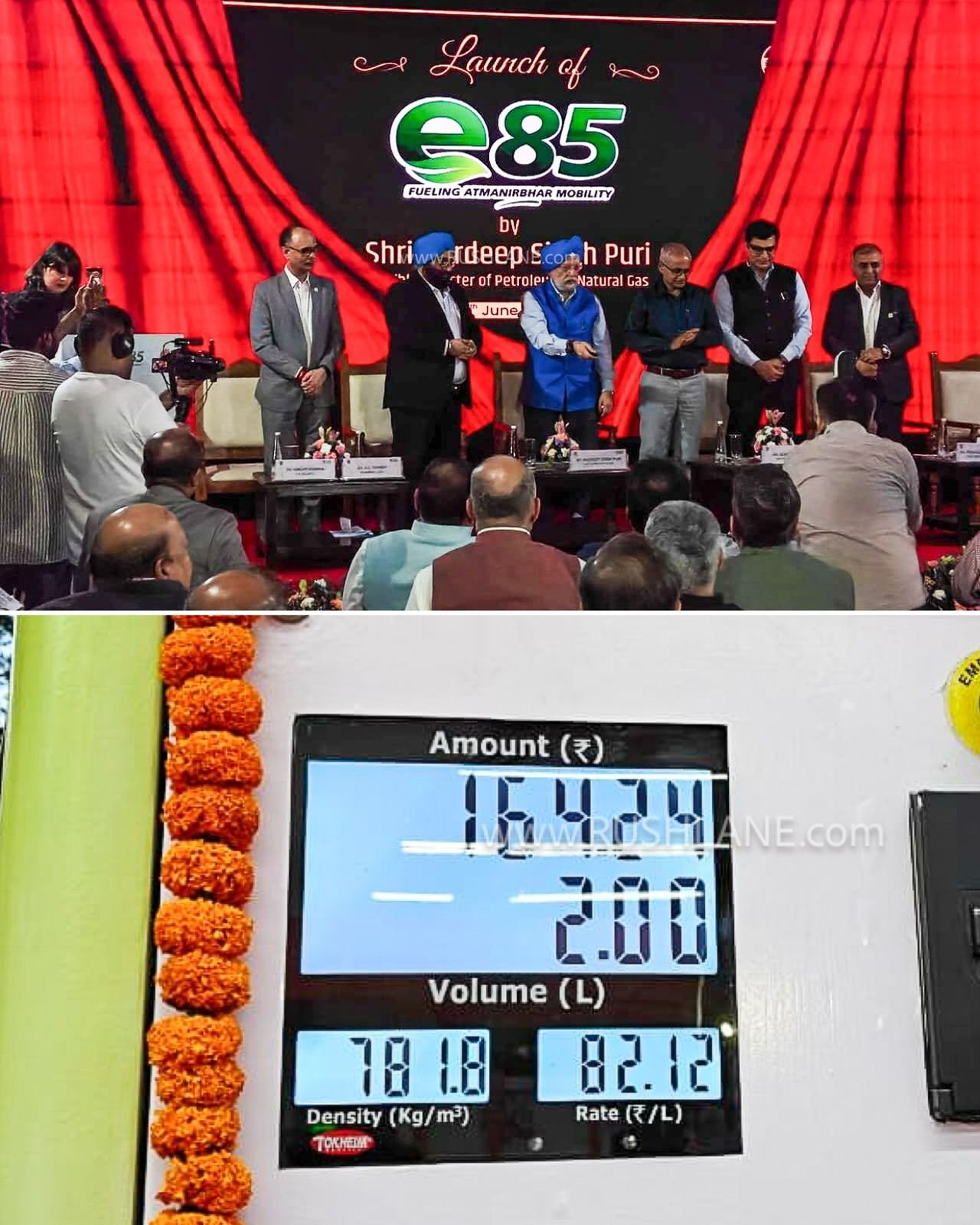
India’s first E85 fuel station is now open in Delhi. Hero MotoCorp has launched E85-compatible versions of the Splendor+ and HF Deluxe. Maruti Suzuki has showcased WagonR Flex Fuel. The government’s ethanol promotion is clearly entering a new phase.
The headline numbers look attractive. E85 fuel costs Rs 82.12 per liter in Delhi, which is about Rs 20 cheaper than E20 petrol. At first glance, this appears to be a big win for consumers. However, the conversation becomes more complex when one looks beyond pump price.
India’s ethanol push has entered a new phase
The Government of India has deployed ethanol blending as a strategic tool to reduce dependence on imported crude oil. Given that India imports about 85% of its crude oil requirement, the objective makes sense. Each liter of ethanol blended into petrol reduces the amount of fuel derived from crude oil that needs to be imported.
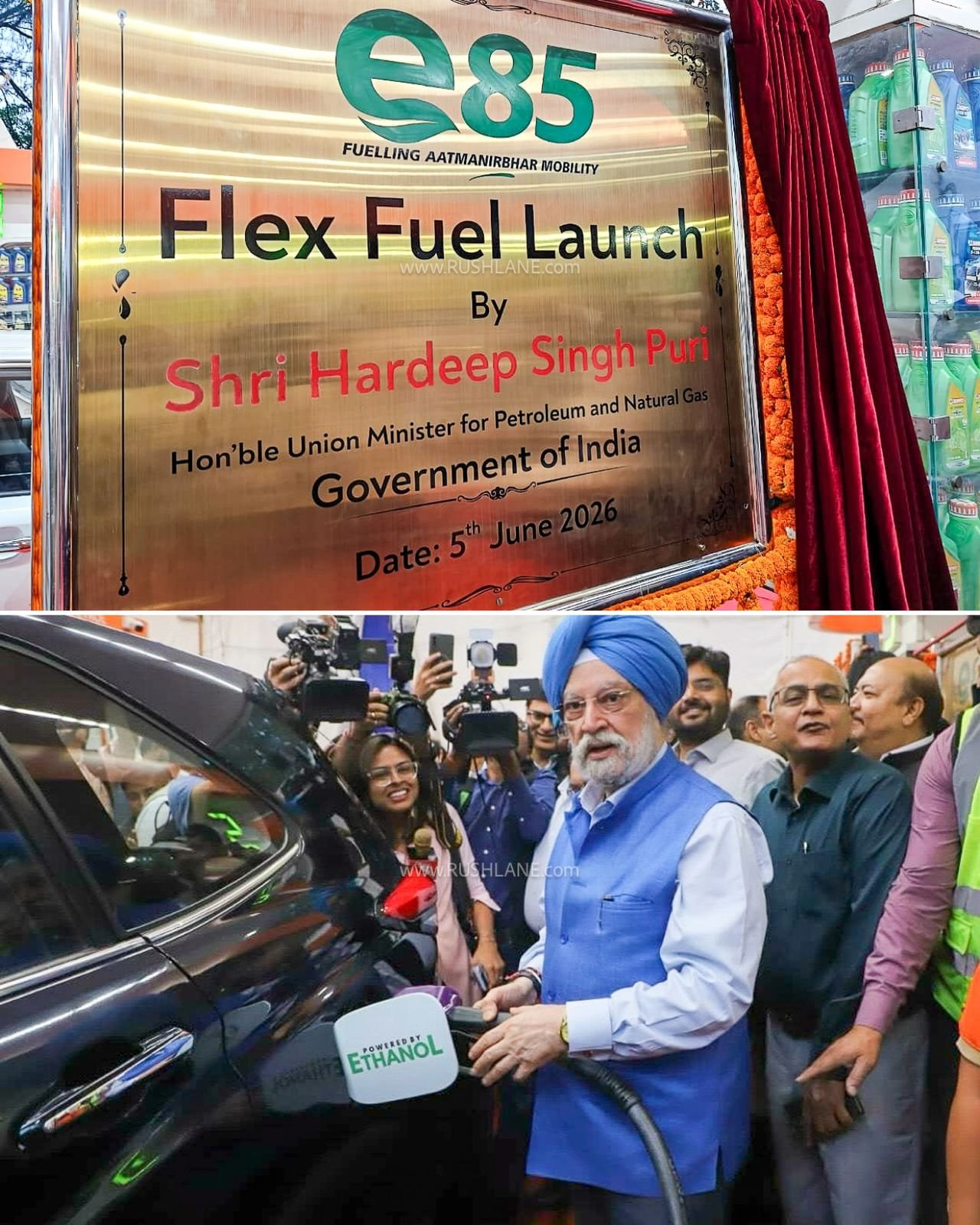
With E20 now the standard fuel across the country and E85 infrastructure beginning to emerge, policymakers are clearly preparing for higher ethanol adoption in the coming years. Hero MotoCorp’s launch of flex-fuel motorcycles and Maruti Suzuki’s Wagon R flex fuel launch are early indicators of that direction.
No one is talking about the question of mileage
There is an important caveat that is often missing from the discussion. Ethanol has very little energy Compared to petrol. As a result, vehicles generally require more fuel to travel the same distance. While E20 generally results in a small reduction in fuel economy, with E85 the effect is much larger.
This means consumers can buy more liters of fuel than before. The government may indeed reduce crude oil imports, but motorists may see lower mileage figures in their vehicles. So real-world savings depend on whether lower fuel prices offset the increase in consumption.
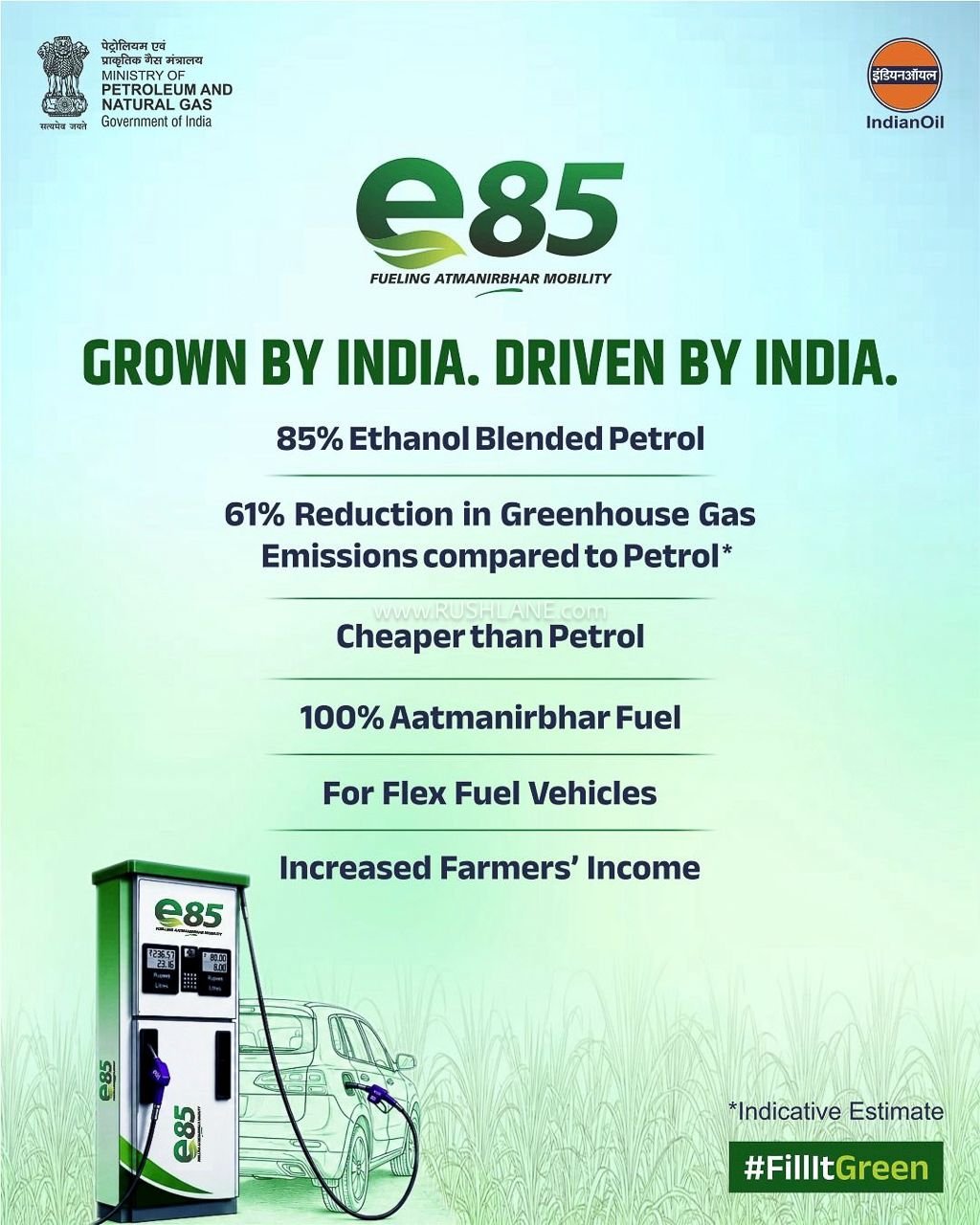
Cheap fuel, but high consumption
This challenge becomes even more interesting when viewed from the consumer’s perspective. If a vehicle running on E85 consumes 20–30% more fuel to travel the same distance, the effective cost benefit is significantly reduced. Fuel may be cheaper per liter, but more liters are required.
For example, a vehicle requiring 100 liters of pure petrol to travel a specific distance may require 120-130 liters of E85 to achieve the same result. While the amount of petrol derived from crude oil declines rapidly, the total fuel consumption increases. This is where the debate shifts from fuel price cost per kilometer.
Fuel saving or just crude oil saving?
The government argues that the primary objective is not to reduce total fuel consumption, but to reduce crude oil consumption. From a policy perspective, the logic works. Even though motorists consume more liters of E85, the amount of that fuel is significantly lower than that of imported gasoline. This improves energy security, reduces the risk of volatile global oil prices and reduces foreign exchange outflows.
However, from a consumer perspective, the main concern is often simple: how much does it cost to travel a kilometer? The answer may not always be in line with the government’s broader energy goals.
Why can’t consumers choose E0 or E10?
A question often raised by enthusiasts and industry observers is why India does not offer multiple fuel options like E0, E10, E20 and E85 simultaneously. Countries such as Brazil and the United States generally allow consumers to choose between different ethanol blends depending on their vehicle, budget, and driving needs.
India has adopted a different approach. Instead of providing many options, the country is moving forward Higher mandatory blending level. The government’s argument is simple: if fewer blends remain widely available, many consumers may continue to use them, limiting the effectiveness of the ethanol program.
There is also a practical challenge. Offering multiple fuel grades will require additional storage tanks, distribution infrastructure and logistics investments at fuel stations across the country.
the other side of the story
Proponents of ethanol argue that the benefits go beyond fuel imports. Ethanol production creates additional demand for agricultural products such as sugarcane and maize, creating income opportunities for farmers and strengthening the rural economy.
However, critics point to concerns about water use, land use, and the overall efficiency of converting agricultural production into transportation fuel. Sugarcane, one of India’s primary ethanol feedstocks, is one of the most water-intensive crops grown in the country. As demand for ethanol increases, these concerns are likely to become increasingly relevant.
the way forward
The advent of E85 fuel raises a big question. Is the objective to reduce fuel consumption, or merely to reduce crude oil consumption? The two are not the same.
There is no doubt that higher ethanol blending can reduce crude oil imports. The larger debate is whether the economic, environmental and consumer tradeoffs justify the change. As flex-fuel vehicles become more common and E85 infrastructure expands across India, this is a conversation that needs far more attention than it currently does.
For now, E85 may be cheaper at the pump. Whether this is actually cheaper in the long run remains a question that only large-scale real-world use can answer.