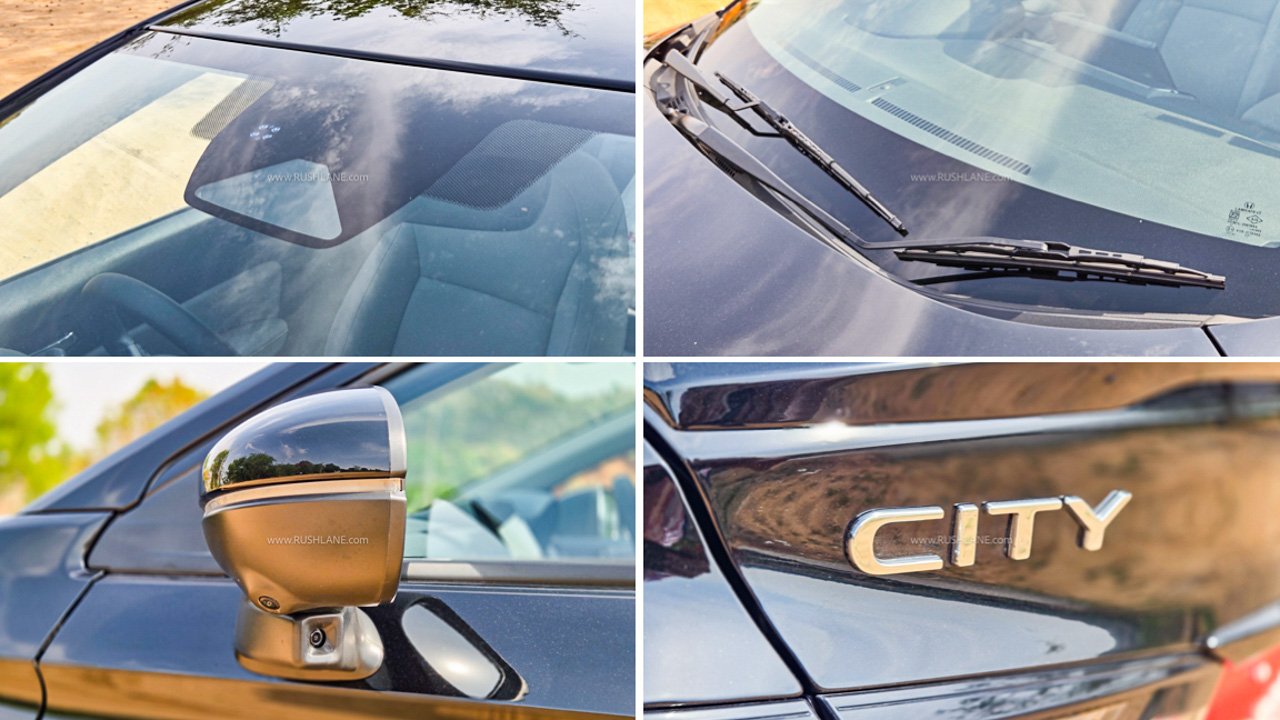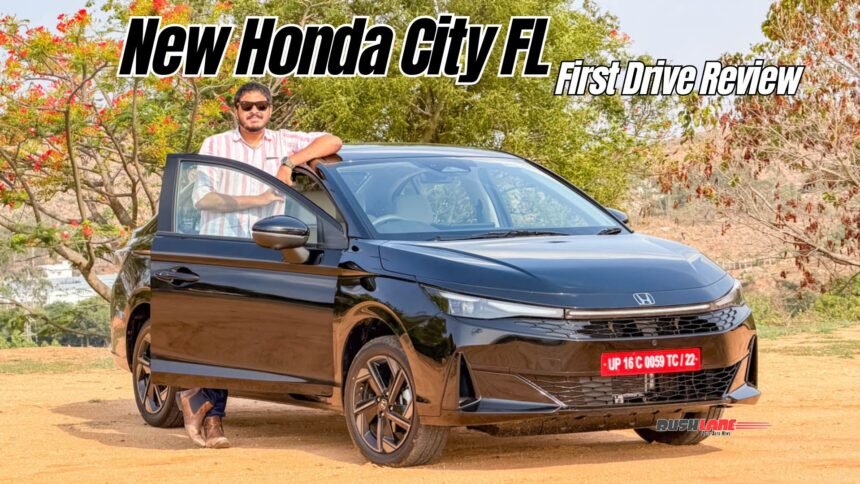
Honda Cars India Limited recently launched the updated City facelift in the country which has been one of the most awaited sedan launches of 2026. It competes with other C segment sedans like Volkswagen Virtus, Skoda Slavia and Hyundai Verna. For MY26, Honda has given the City a brand new fascia and a slightly updated cabin.
If you were looking for updates to its mechanicals or powertrain, this is not the case. We drove the new City facelift in its e:HEV (strong hybrid) avatar in Bengaluru. Honda made all media releases available in black colour, which is new with the City facelift. After driving it in multiple scenarios, this is what we think about the new Honda City facelift.
Honda City Facelift Review
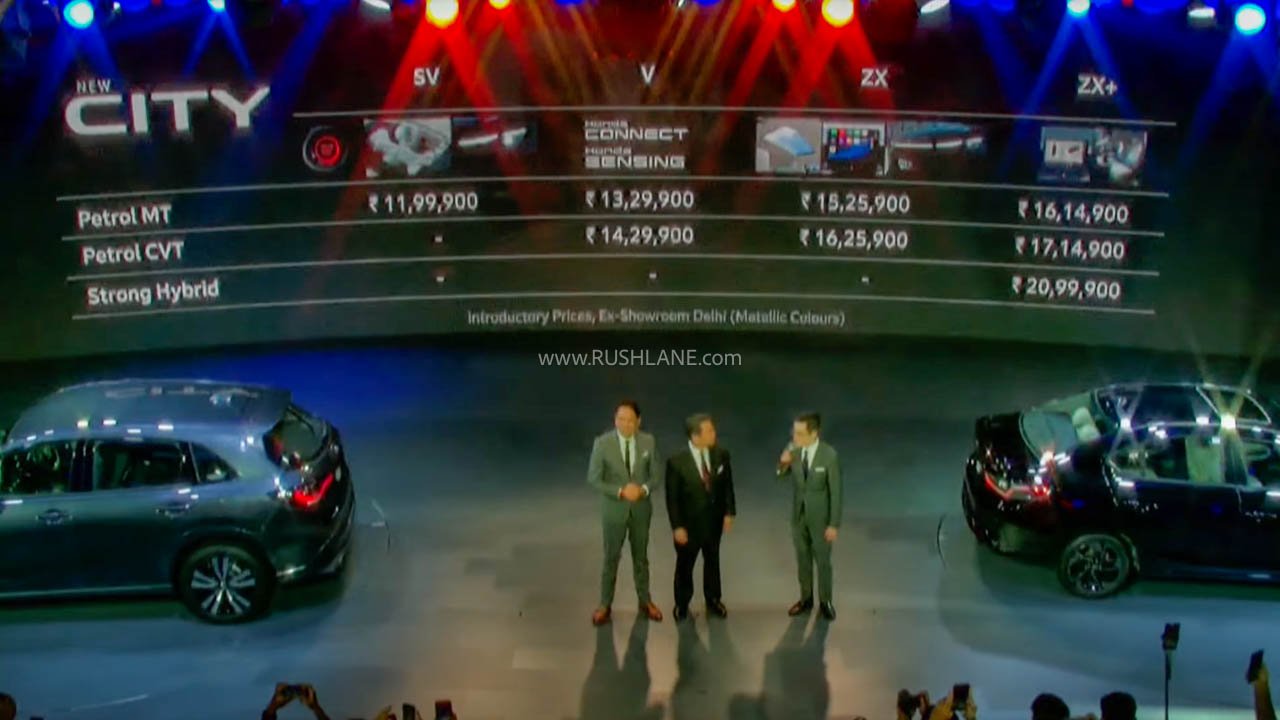
The Honda City facelift is one of the easiest reviews to summarize as the updates are relatively limited. Some rival brands have launched an update with major sheet metal changes to their vehicles without any launch or press release. In terms of pricing, there is no change as the City facelift remains priced between Rs 12 lakh and Rs 21 lakh (ex-sh).
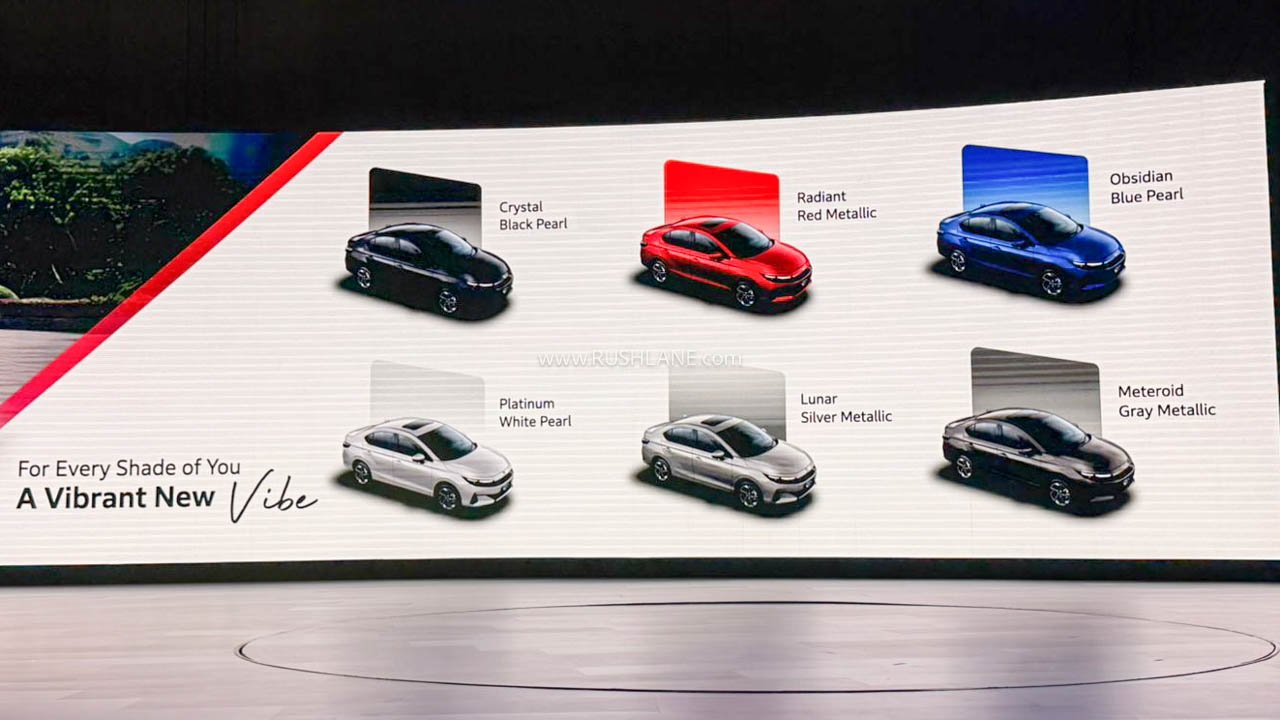
The color palette now gets a Crystal Black Pearl shade, with an all-black vibe on the exterior. Seeing it in person, it looks stealthy and extremely attractive. Other color options to choose from include Radiant Red Metallic, Obsidian Blue Pearl, Platinum White Pearl, Lunar Silver Metallic, and Meteoroid Gray Metallic.
The trim levels have also been retained from the pre-facelift model. The variant lineup starts with SV, followed by V, ZX and ZX+. The e:HEV Strong hybrid model is offered only with the top-spec ZX+ trim and gets dedicated features and equipment that the non-hybrid ZX+ does not have, just like the pre-facelift model. The powertrain, mechanicals and overall quality and fit and finish are similar to the pre-facelift City.
new sporty design
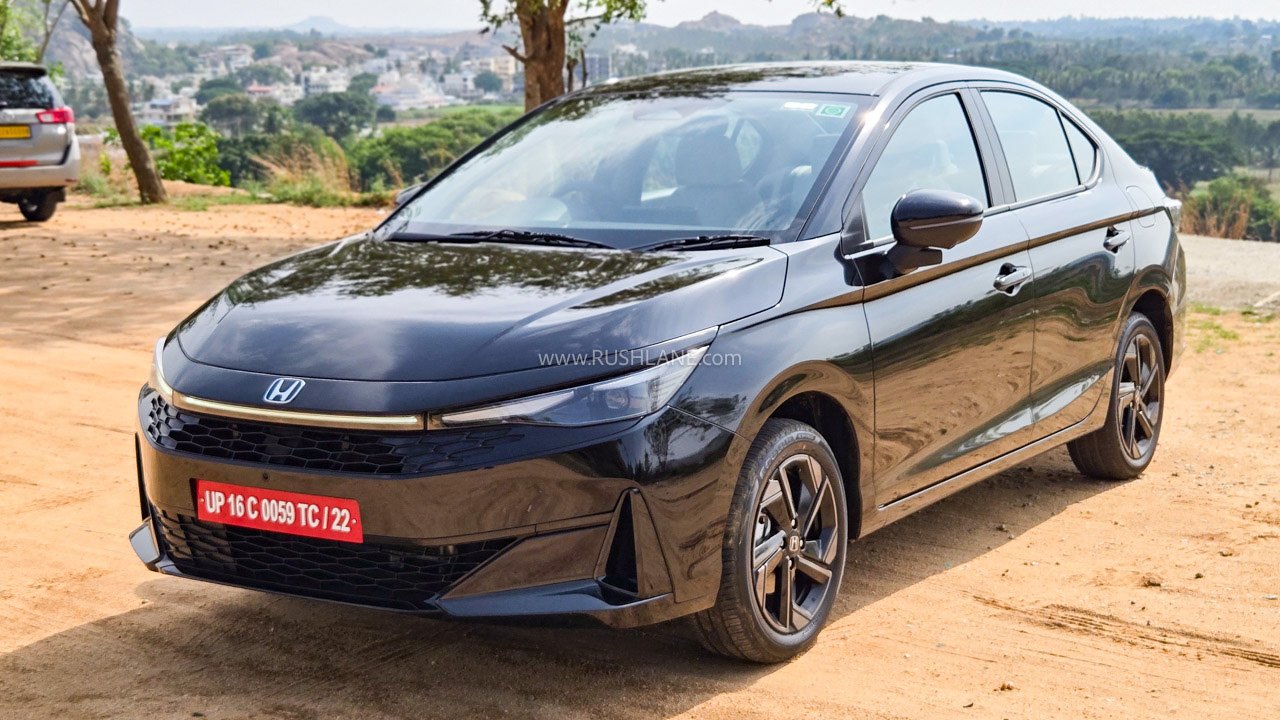
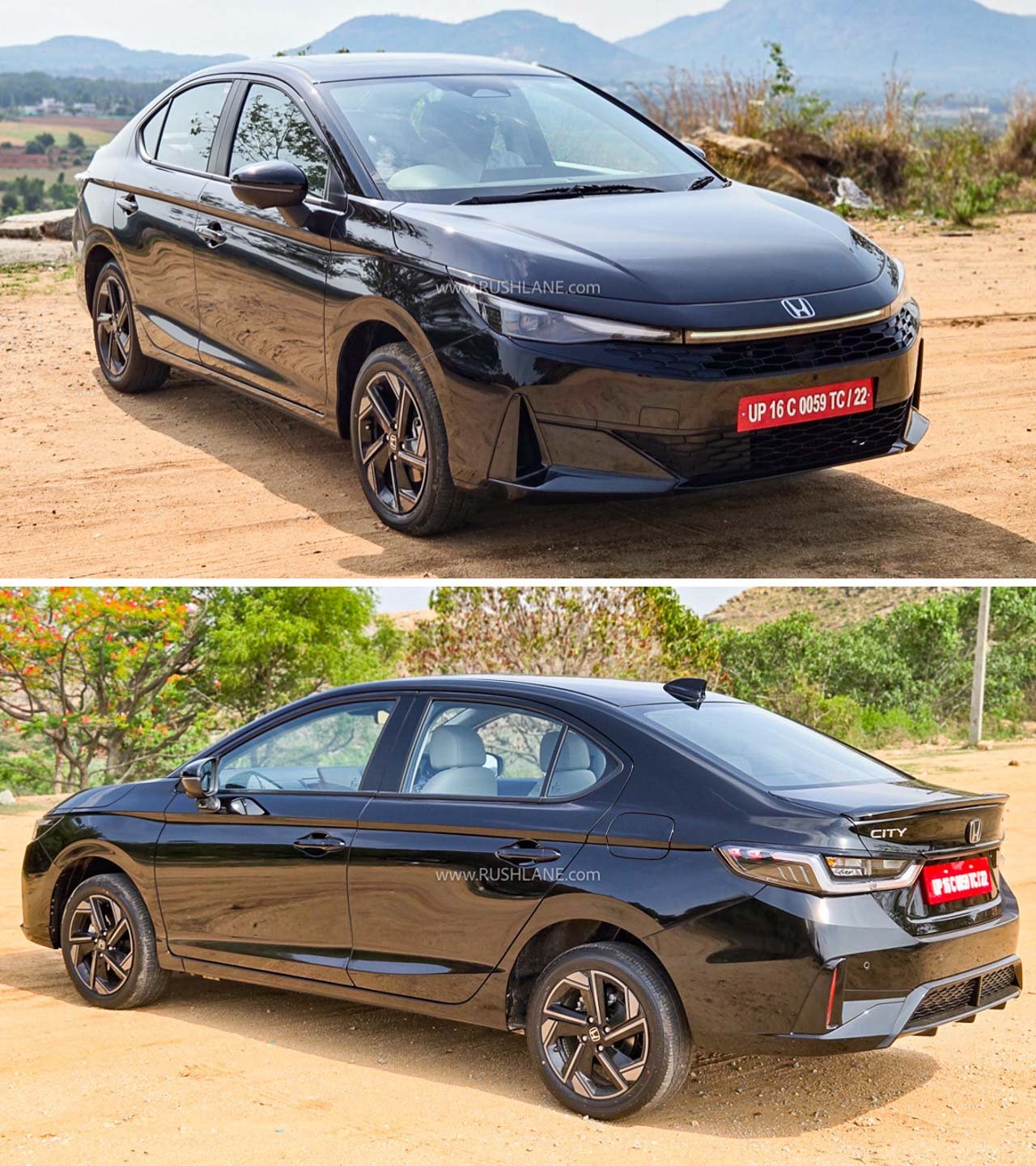
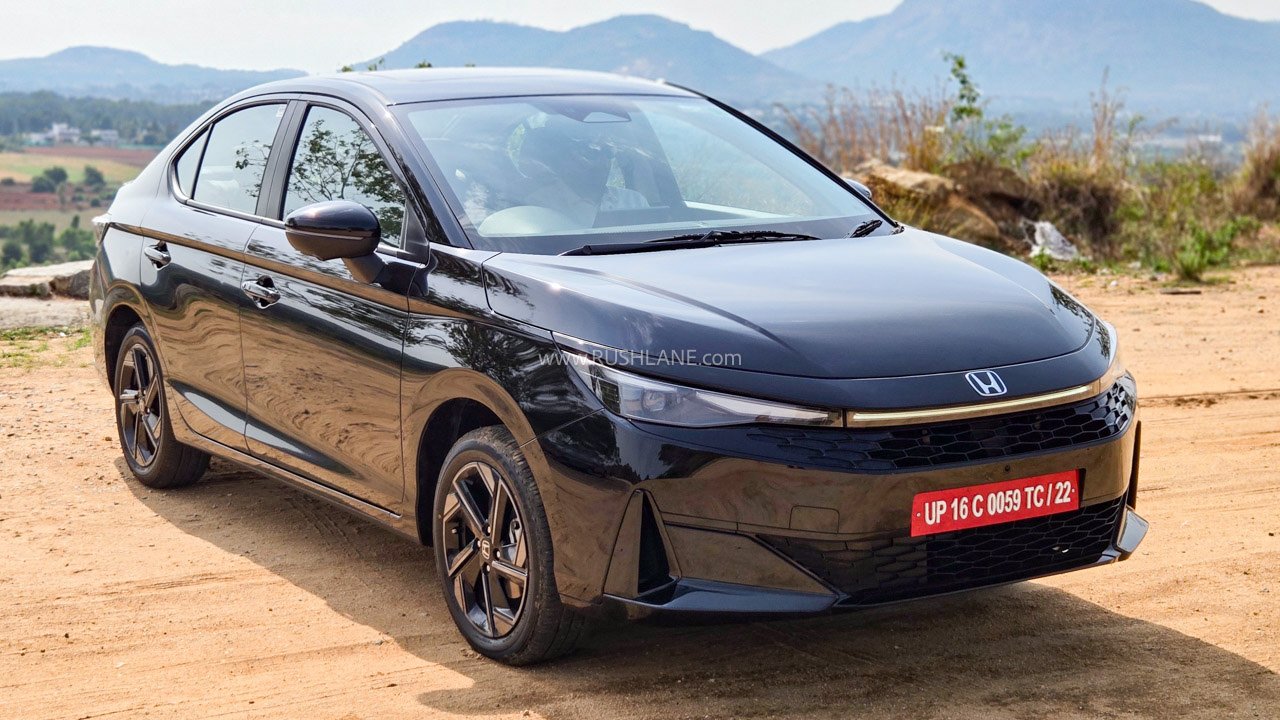
What’s new in the 2026 City facelift is its fascia. From being one of those non-aggressive vehicles that is loved by almost everyone, the City has undergone a radical transformation. For starters, we now get a sporty vibe with the City facelift, which gives it a completely new aesthetic. It doesn’t even look like the pre-facelift model in any way.
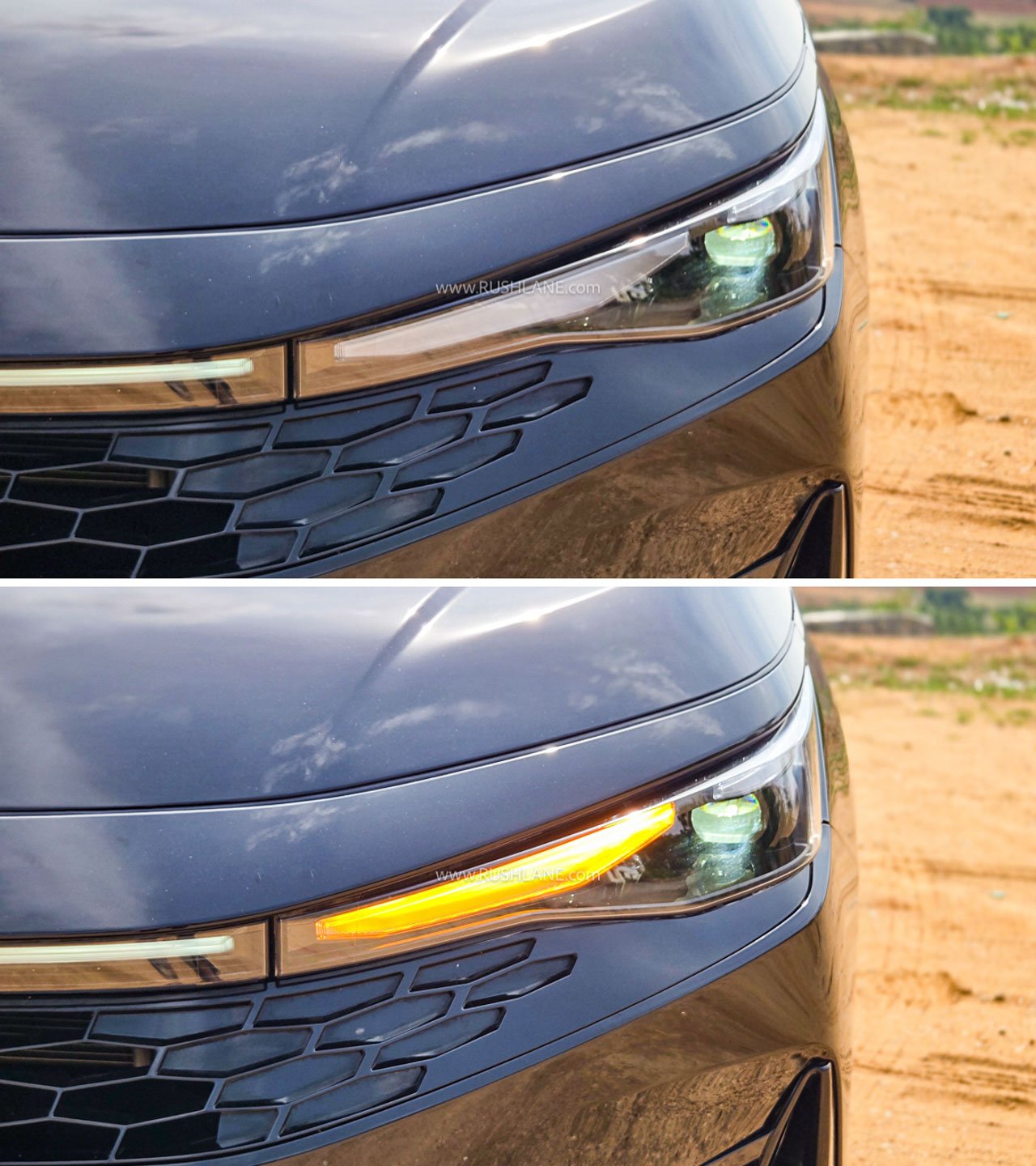
The reflective LED headlights in the pre-facelift City have given way to bi-LED projector headlights which are much sleeker in comparison. They get a sharp LED DRL signature that is split into two elements and also doubles up as turn indicators. For the first time, the City gets LED DRLs integrated with a light bar in the middle above the new grille.
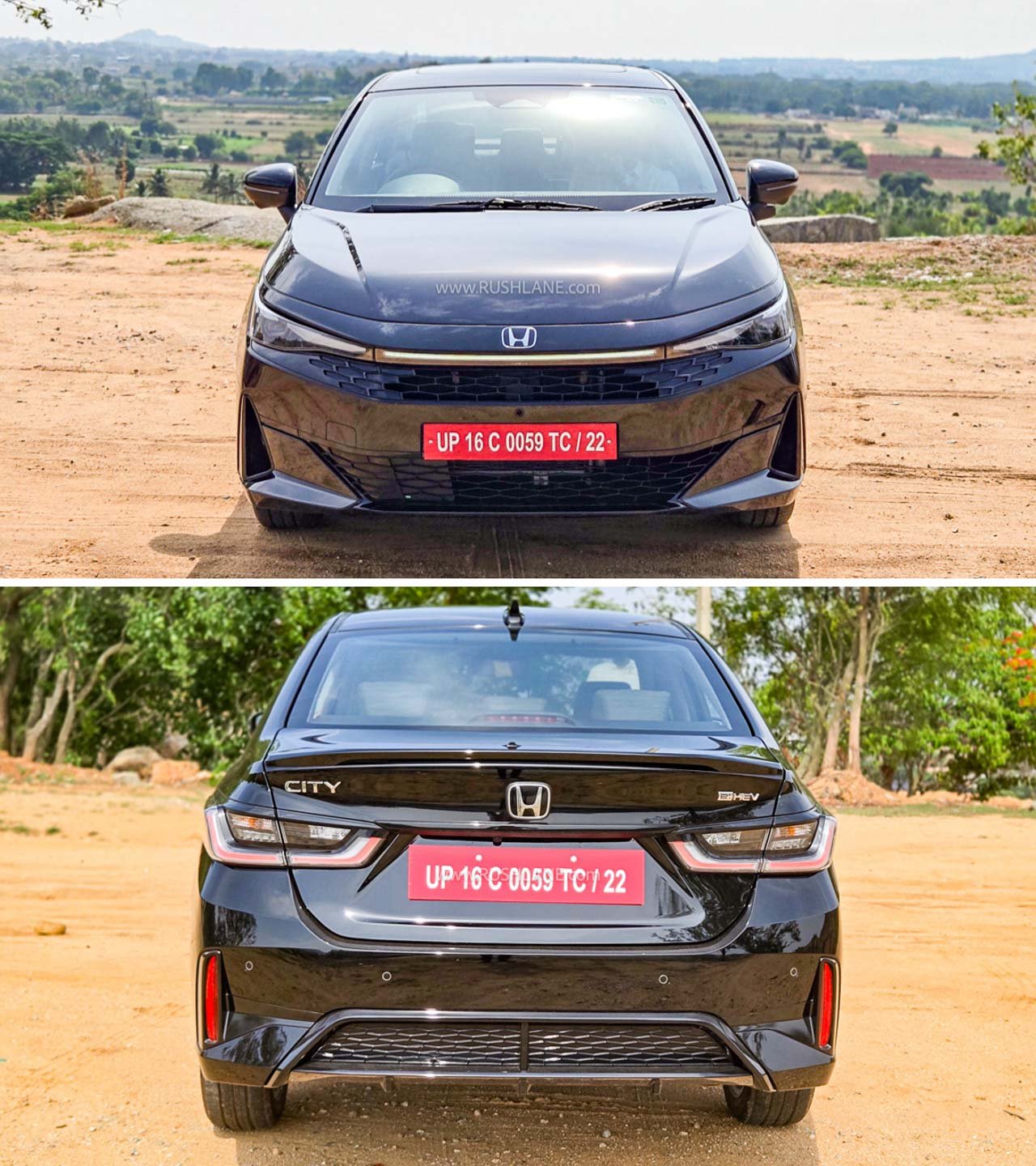
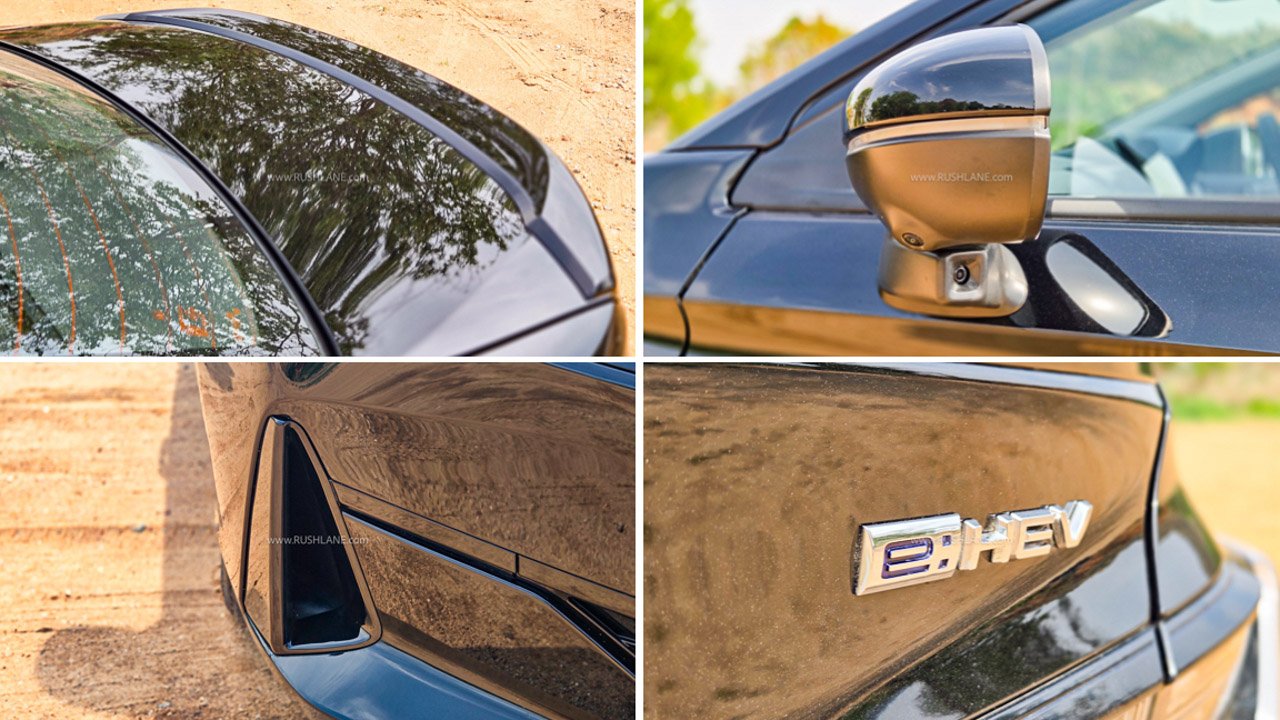
The City facelift has said goodbye to the fog lights and in their place we now get aerodynamic air channels. Unlike every other city, the Honda logo is no longer in the grille. Instead, it has been moved up into the bumper element below the bonnet. If you have OCD, the City’s front grille might bother you as it has an opaque element on the left side, which is missing on the right.
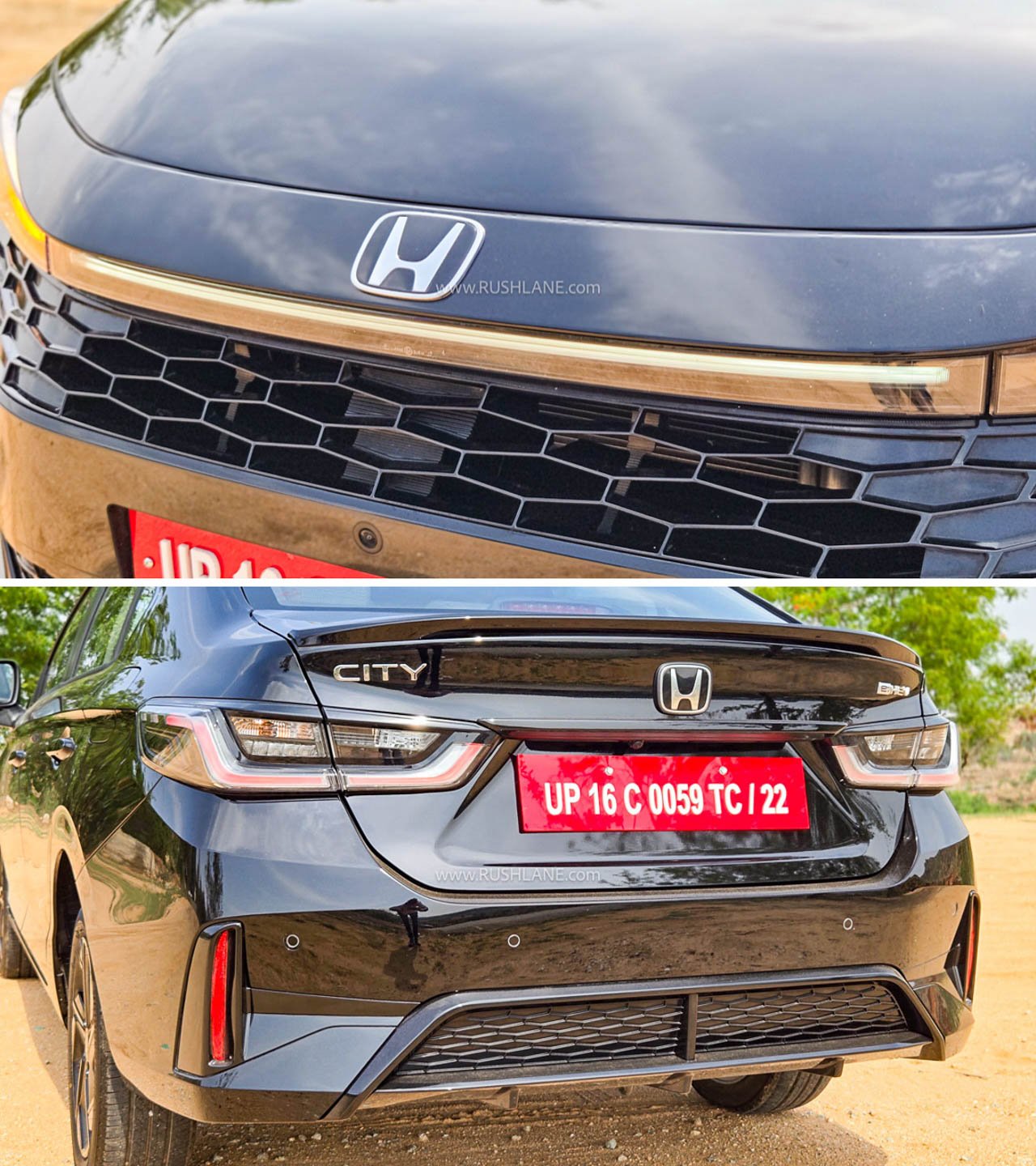
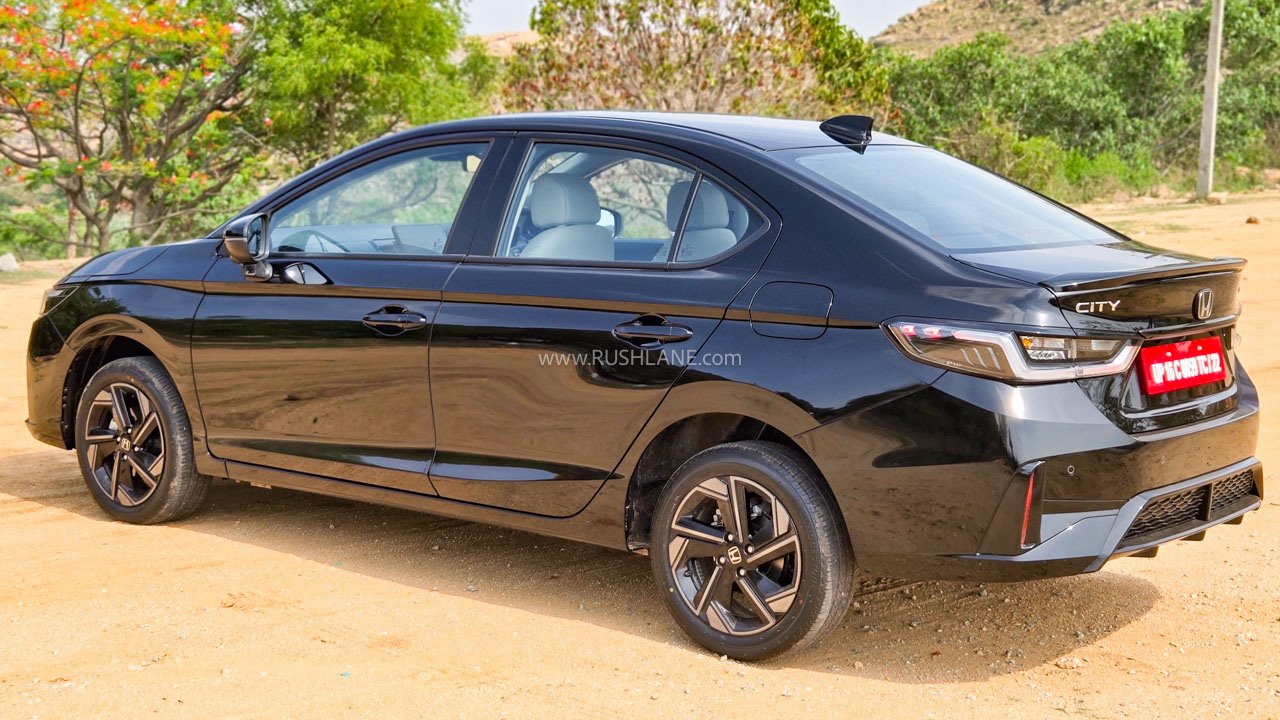
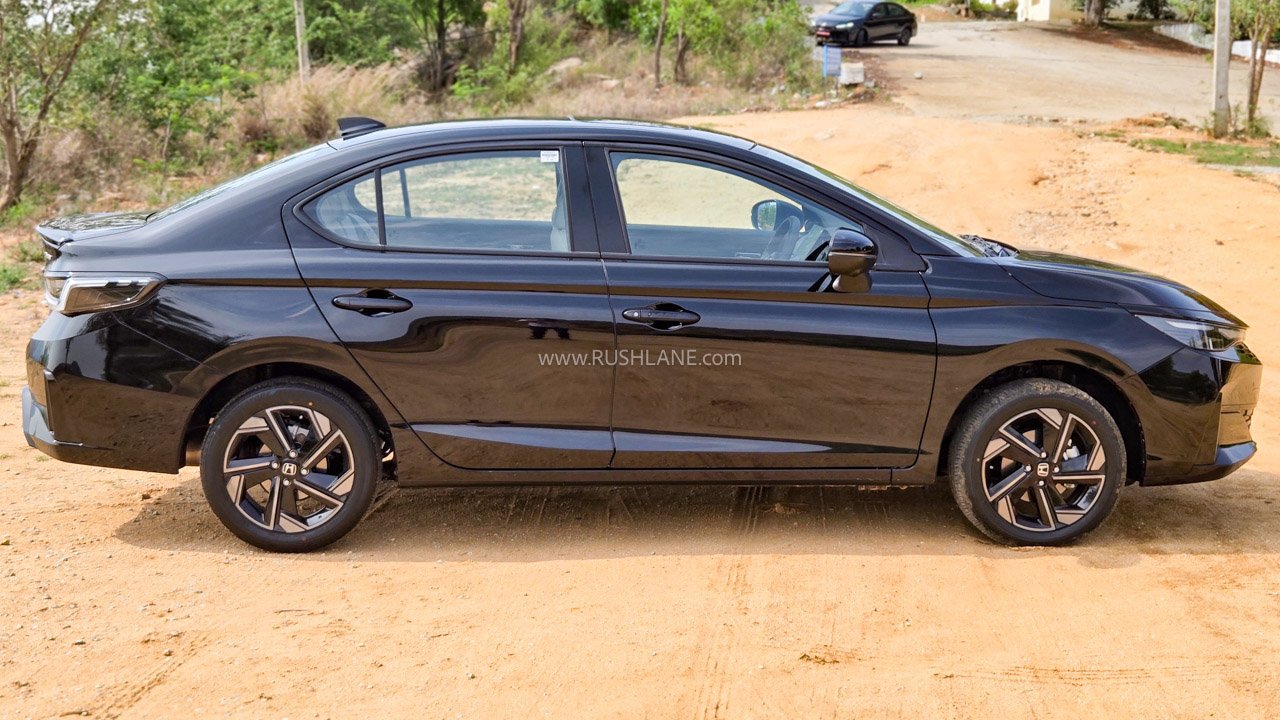
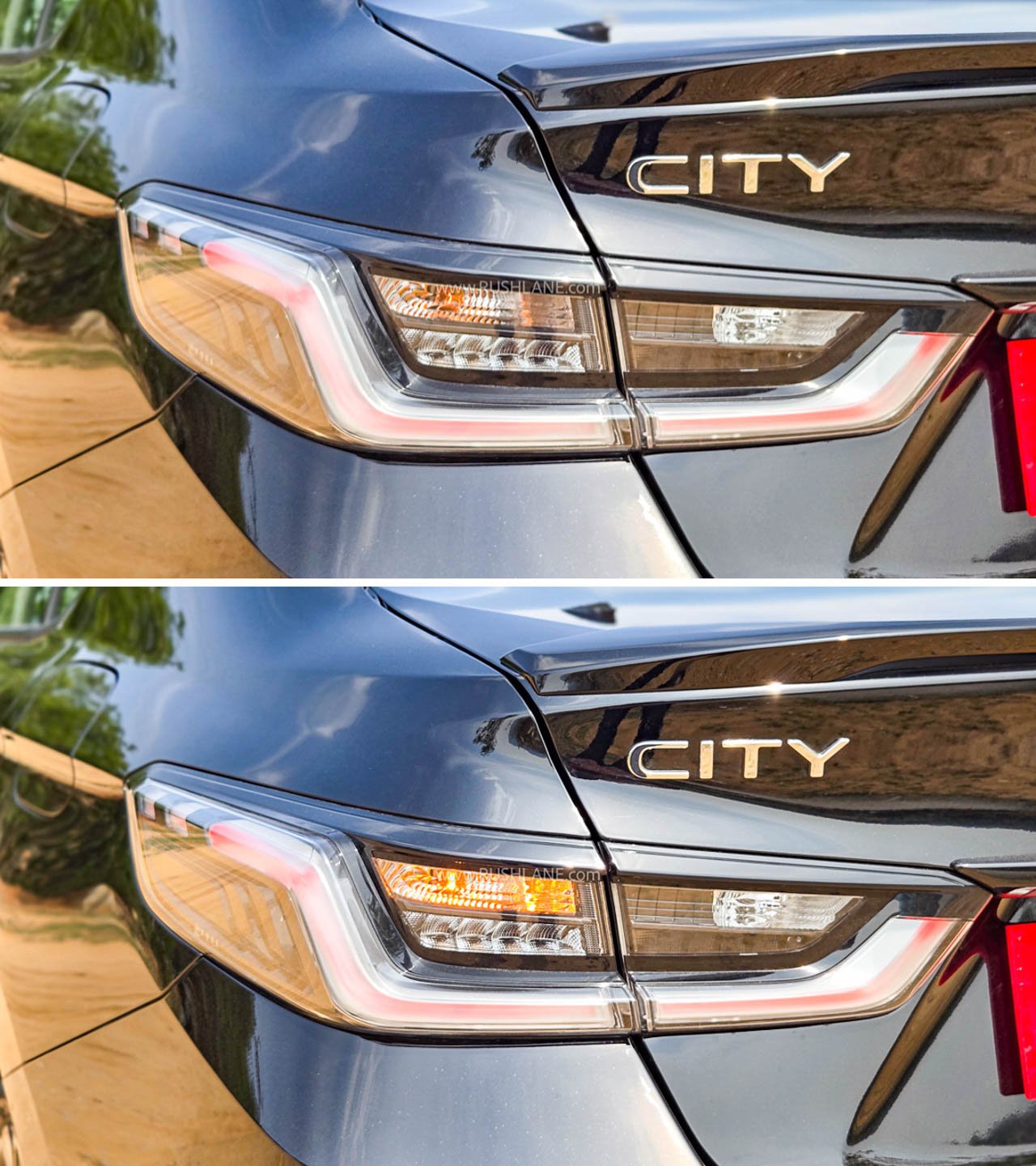
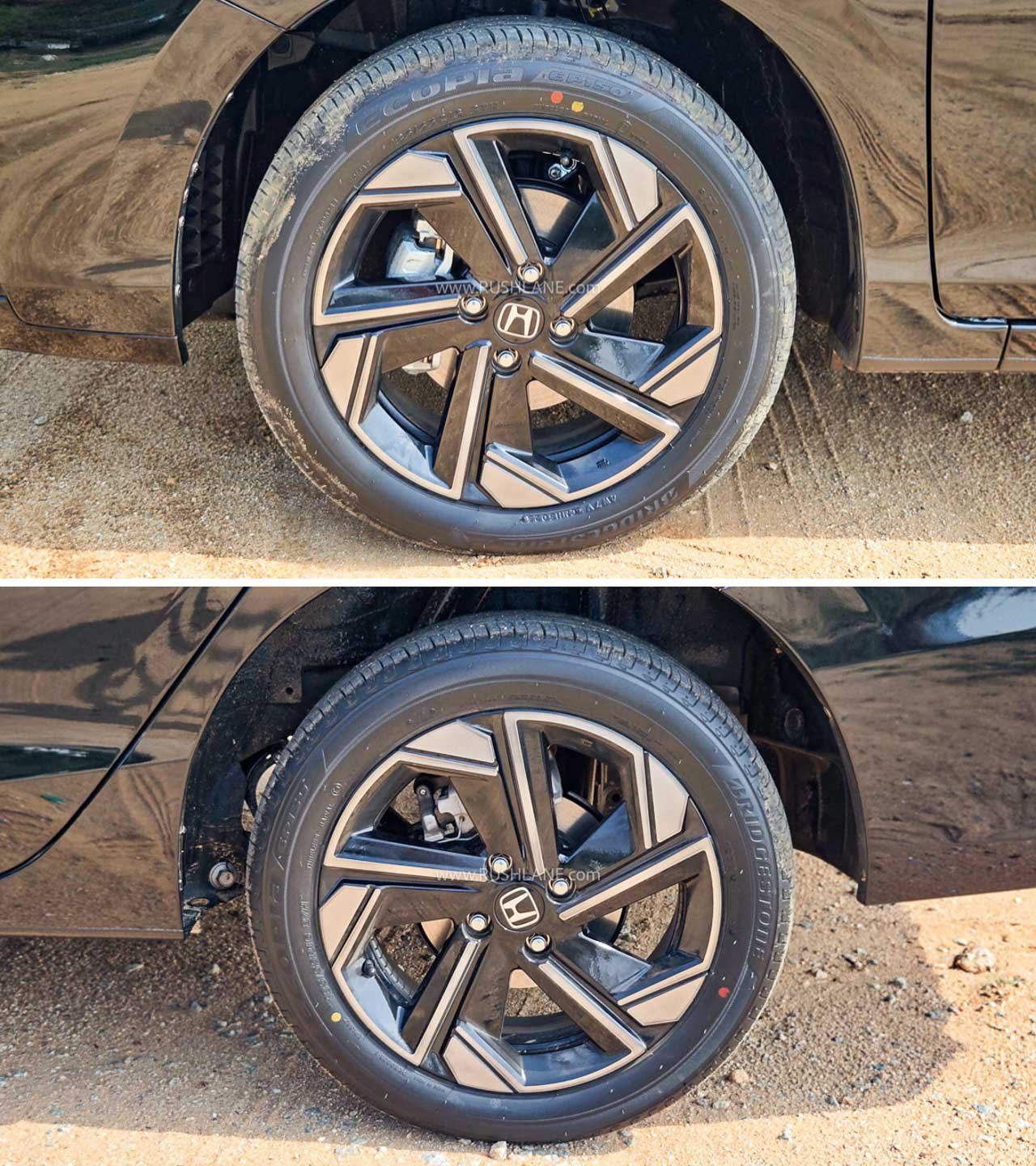
On the sides, we now get a new design for the 16-inch alloy wheels, which are finished in a dual-tone theme. Apart from these wheels, there are no real changes in the side profile of the City facelift. At the rear, we now get reworked tail lights with clear housings for a smoked effect, while the actual lighting elements inside remain the same. The rear bumper is now sportier with a faux diffuser and a subtle rear spoiler adds more sportiness.
updated interior design
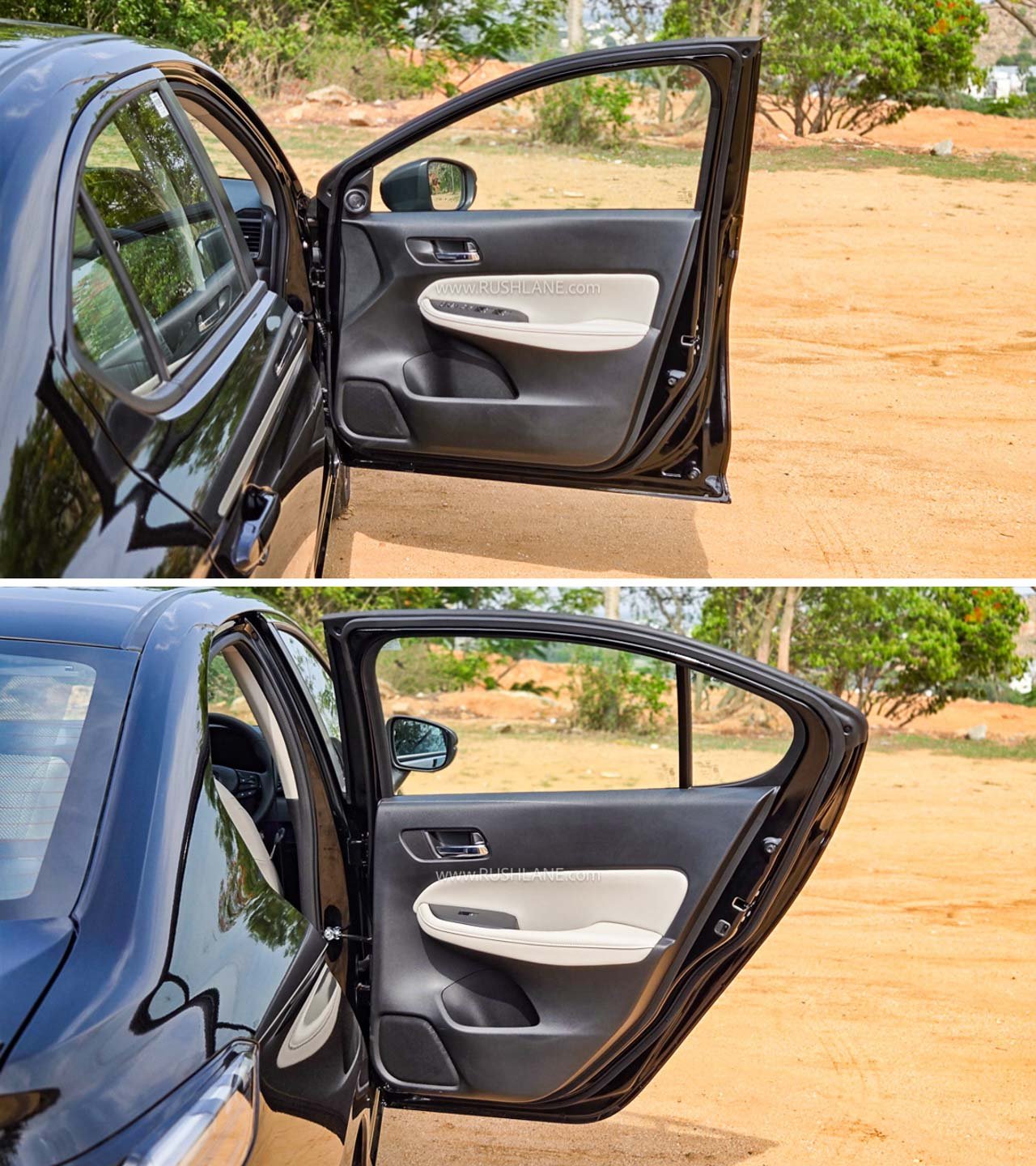
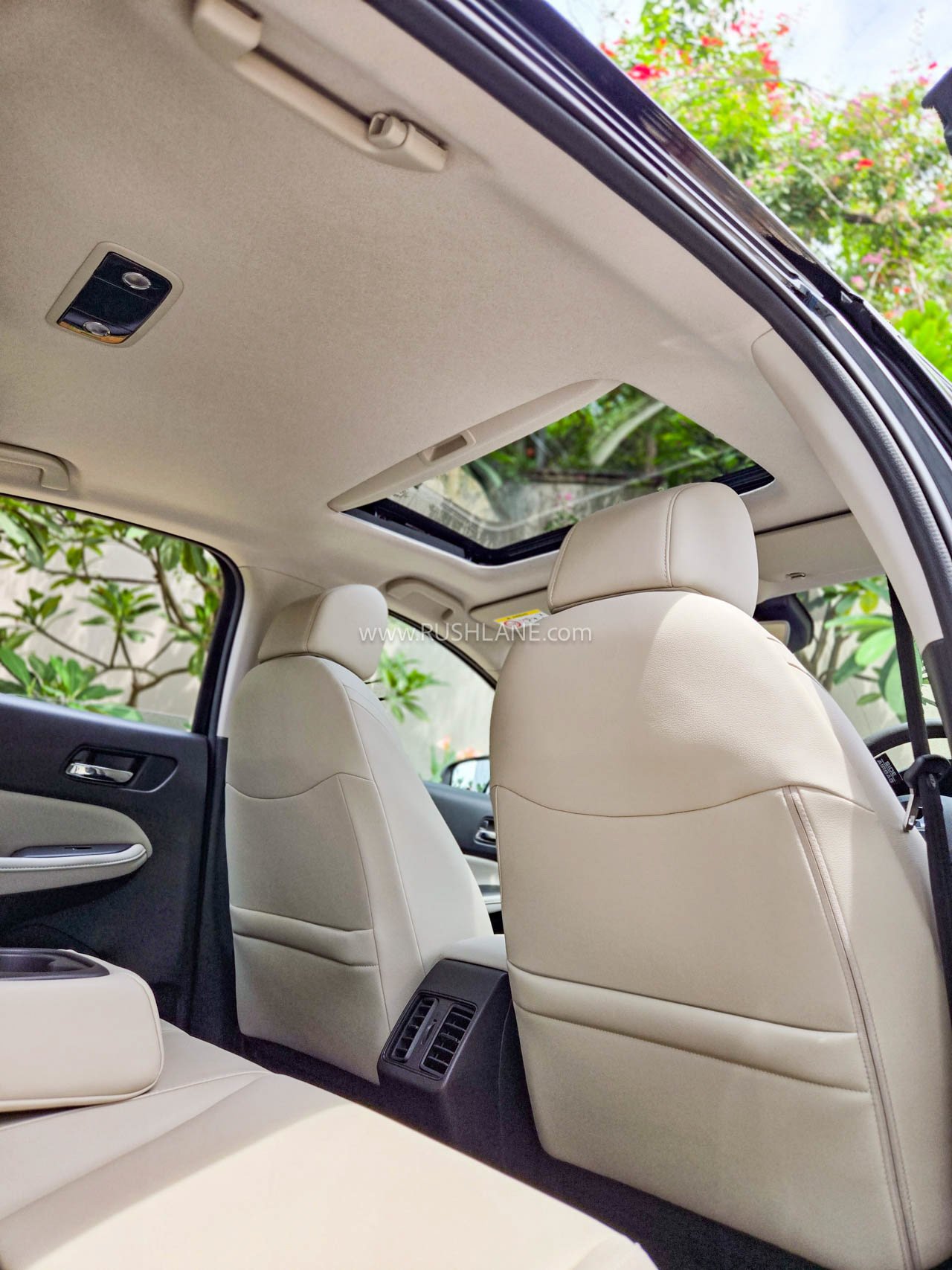
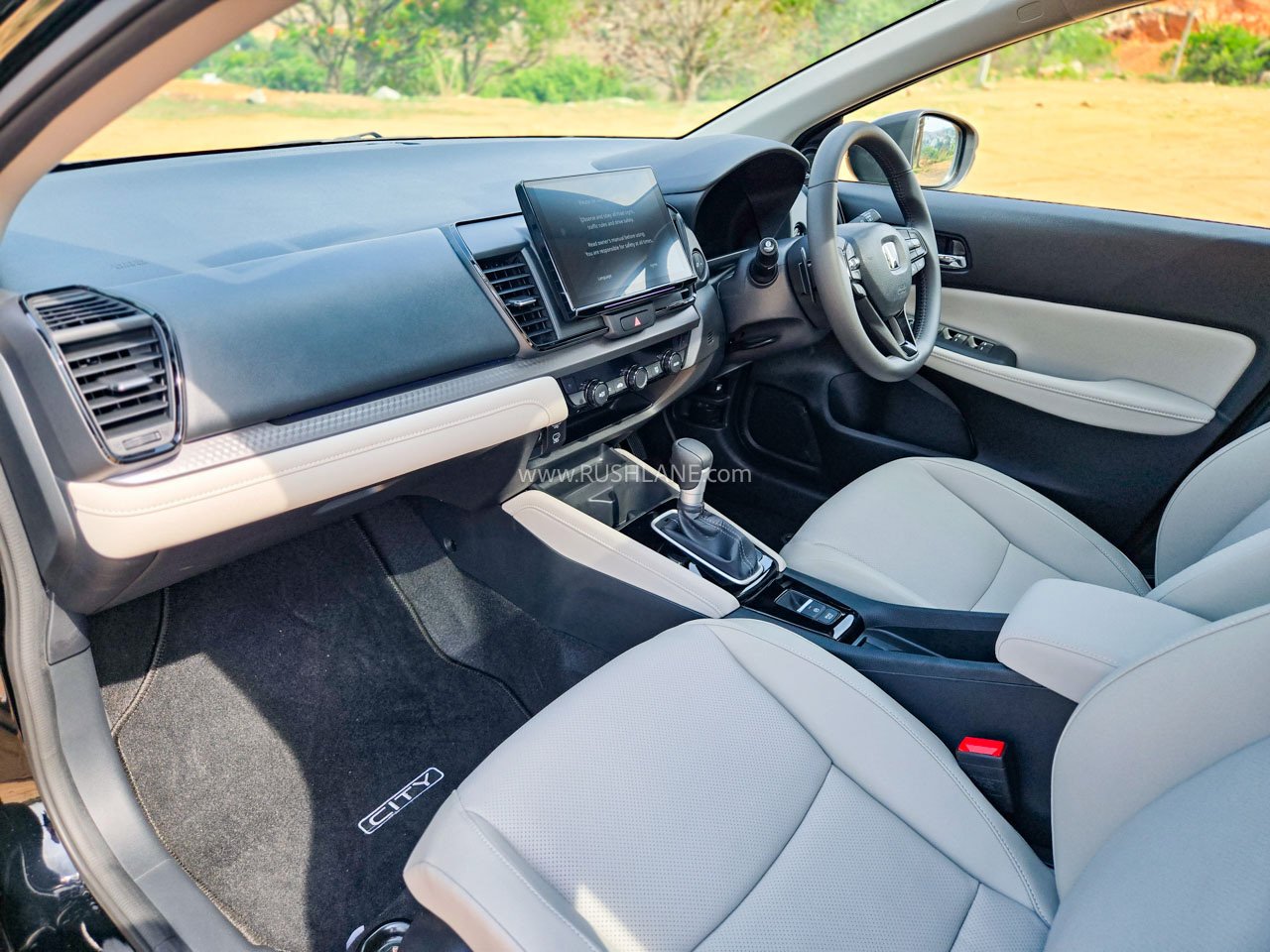
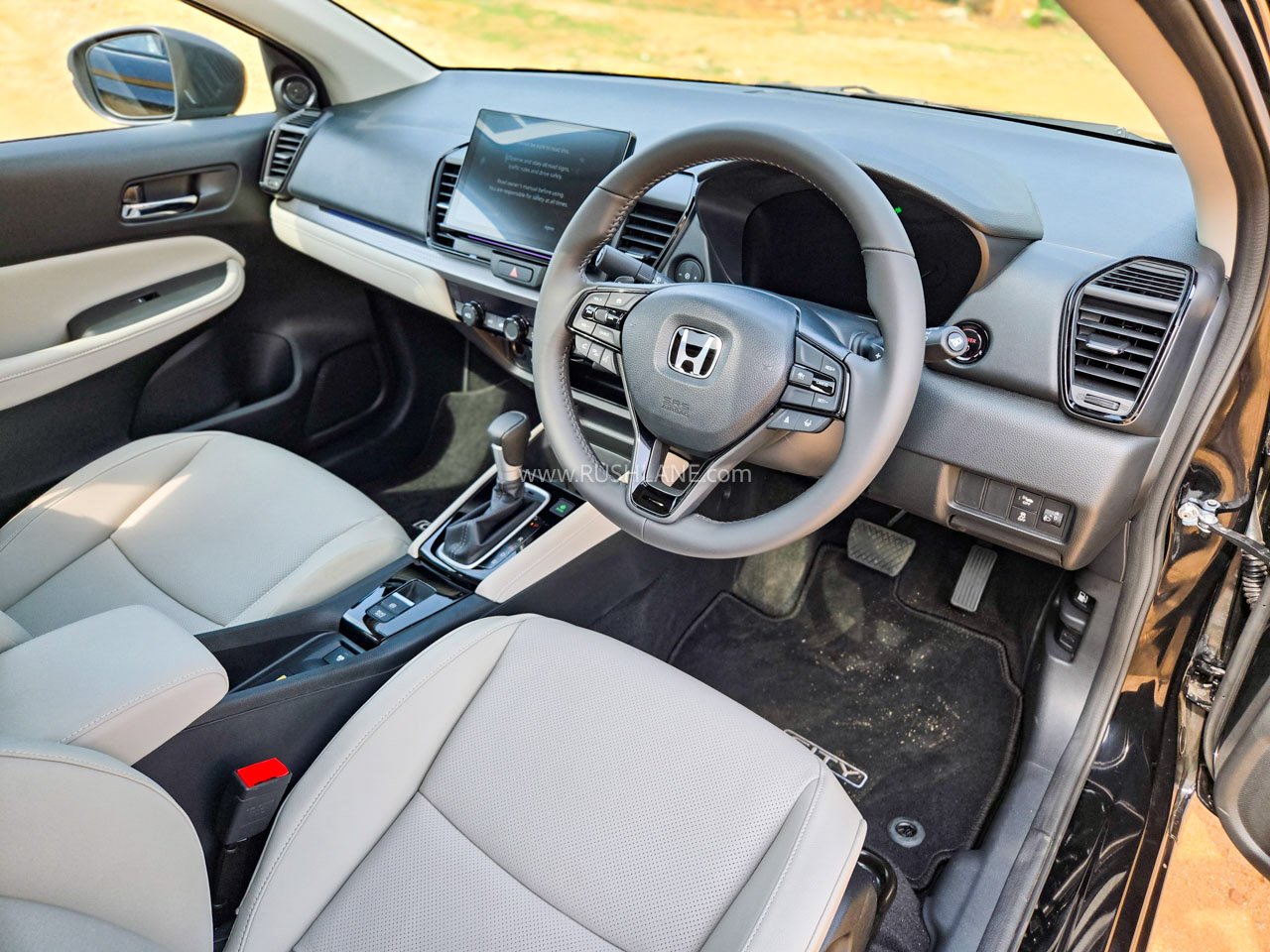
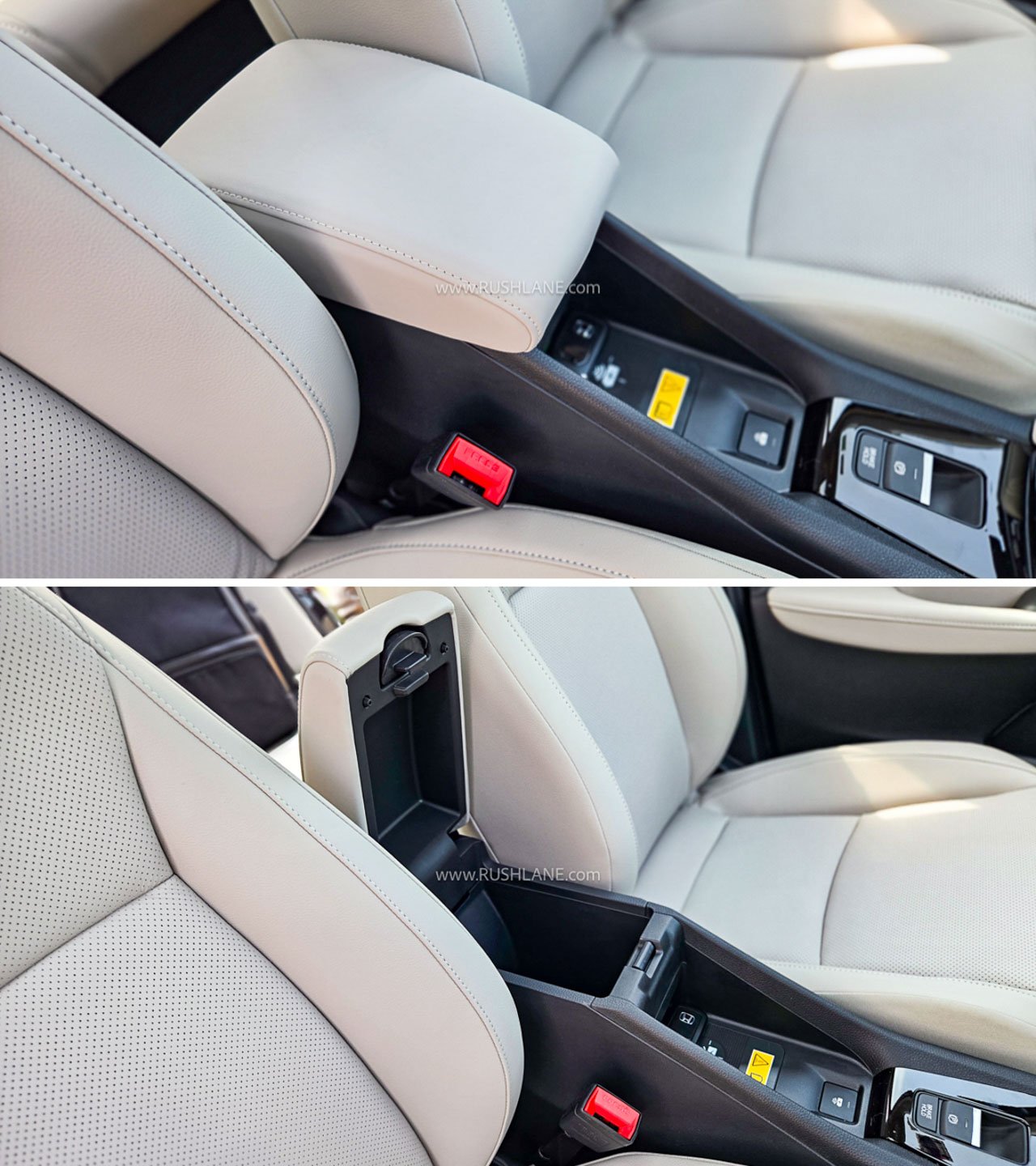
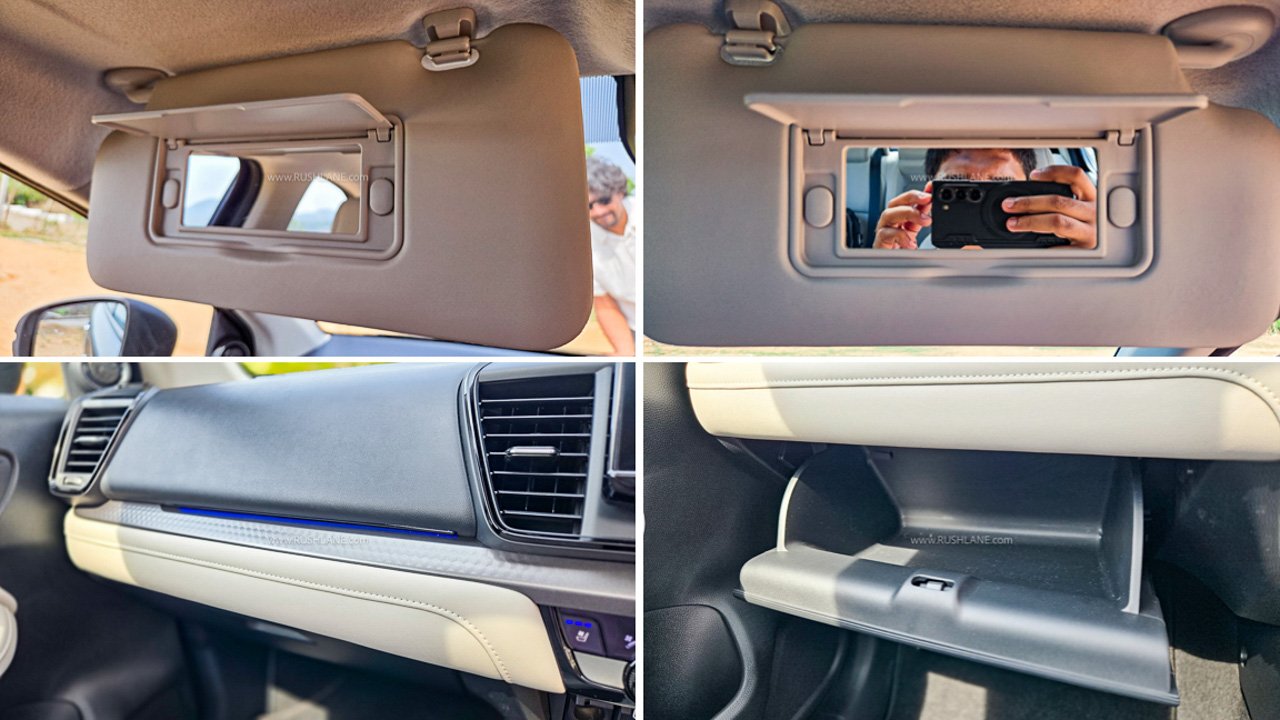
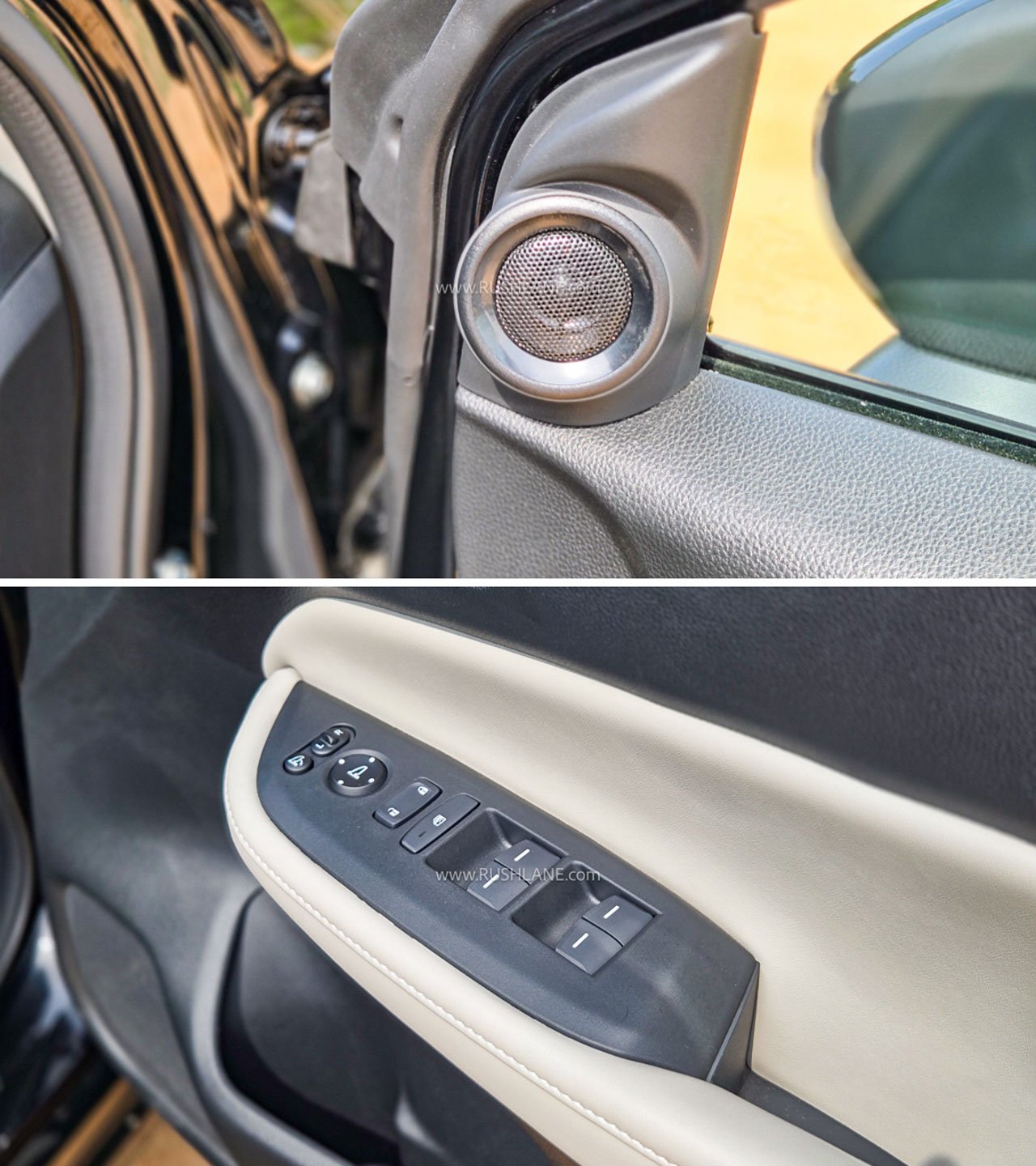
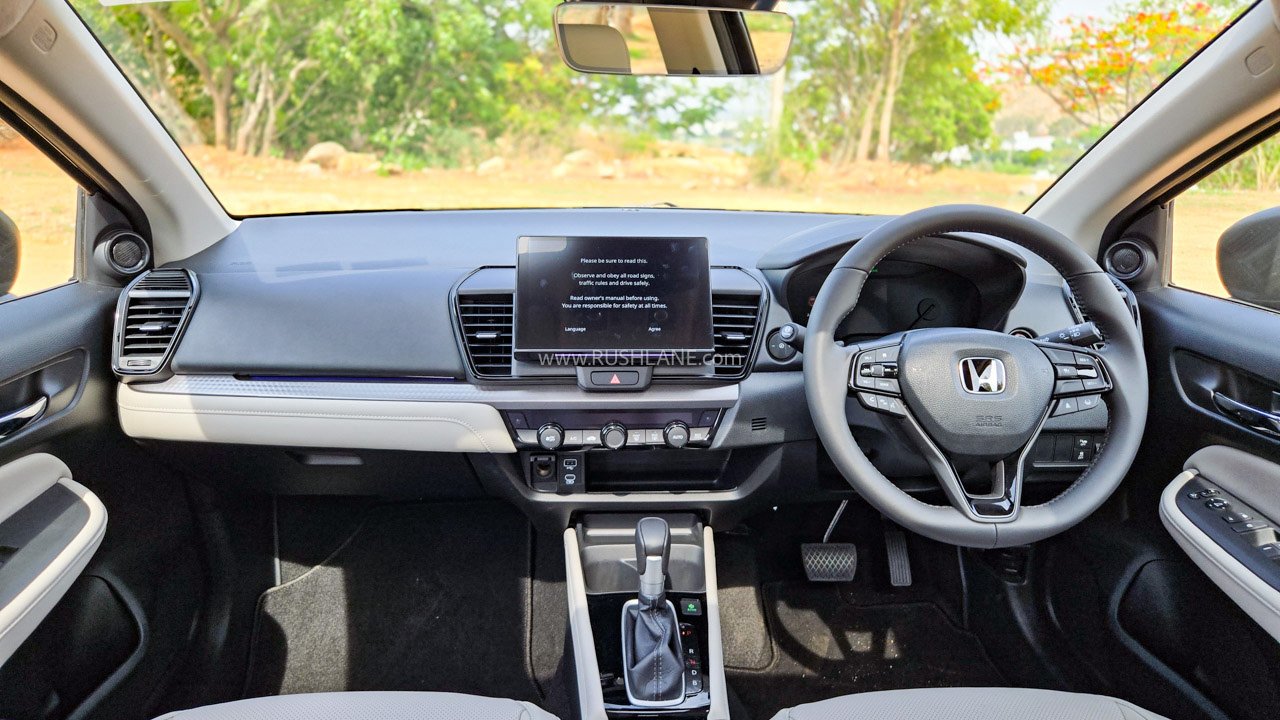
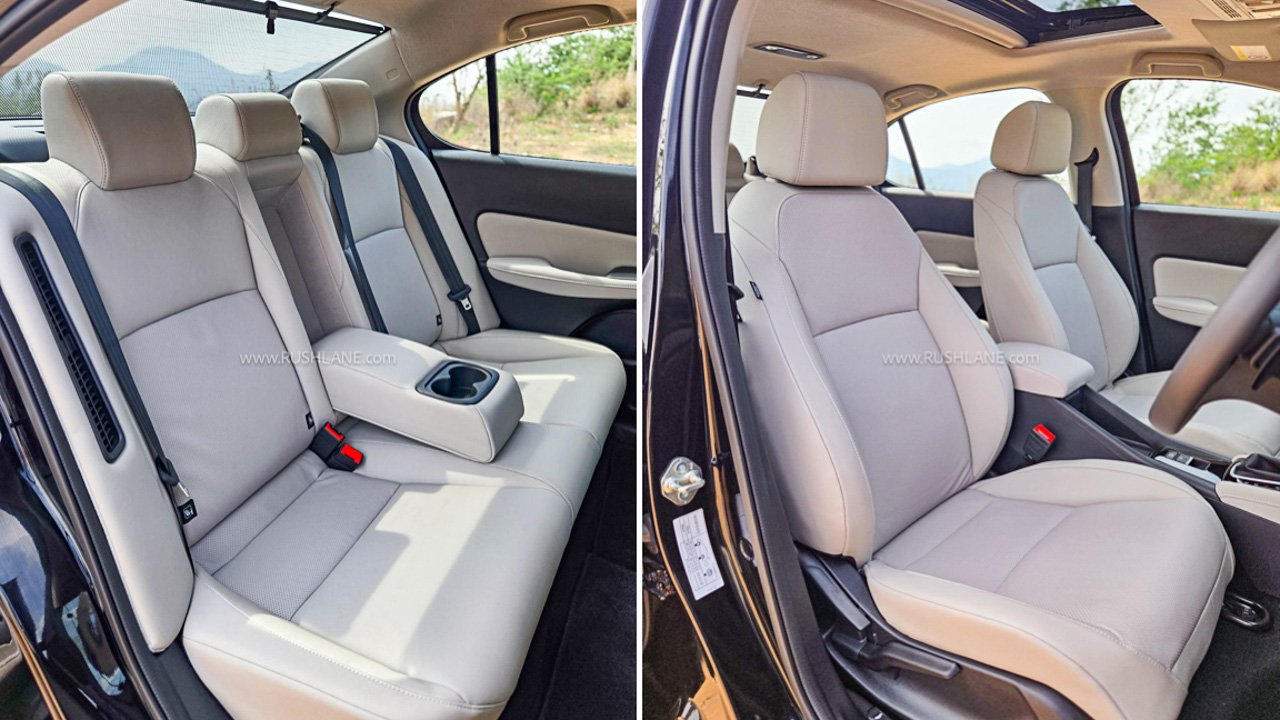
The interior of the City facelift has also been slightly updated and the equipment has also increased. For starters, Honda is introducing a new black and ivory dual-tone theme, which used to be black and beige earlier. These ivory elements can be seen on the dashboard trims and seat upholstery and armrests.
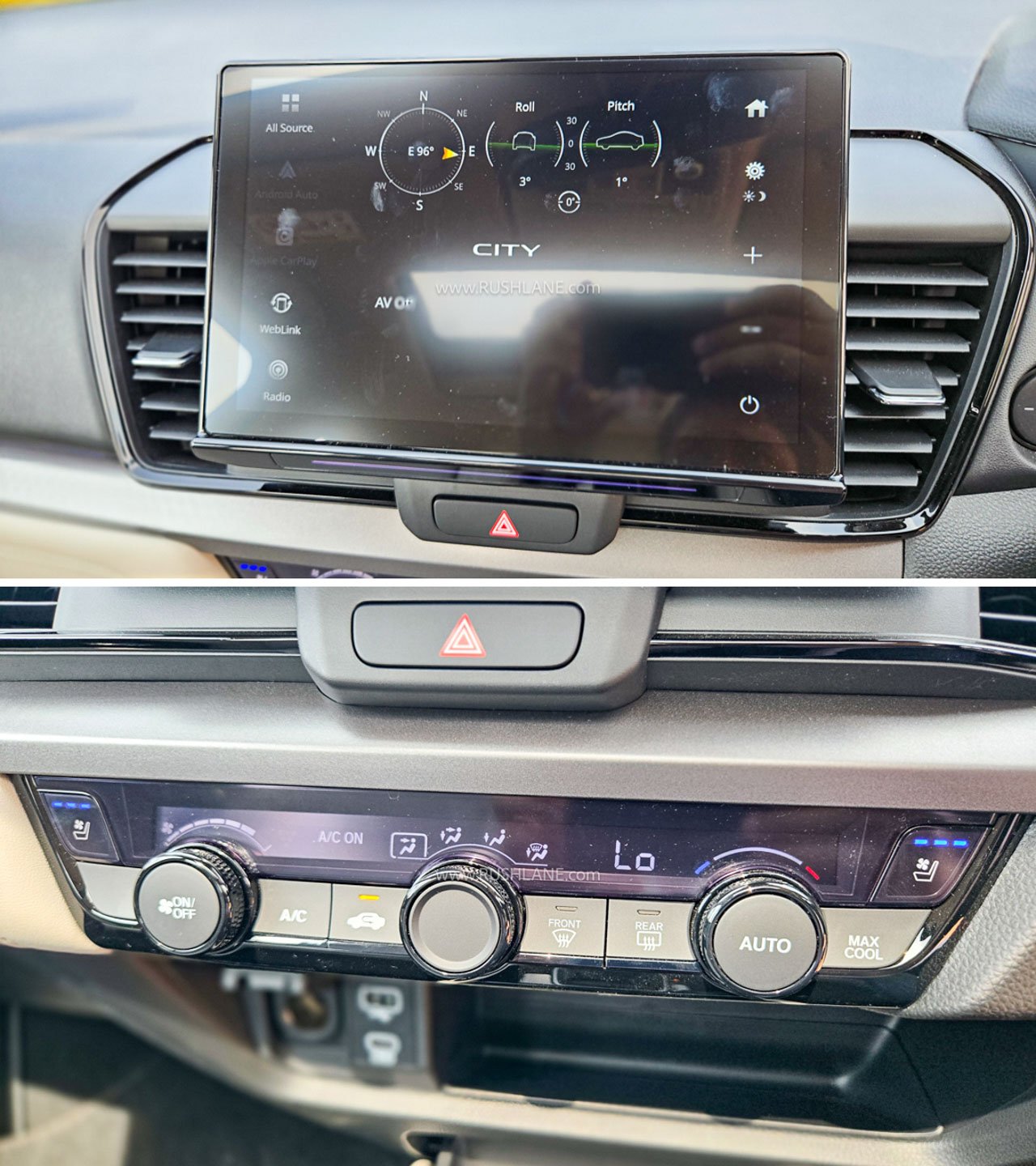
What immediately catches the eye is the new 10.1-inch infotainment screen that supports wireless Android Auto and Apple CarPlay. This screen actually looks different and kind of looks like an afterthought. The tilt angle of this display brings in a lot of glare and the display itself is not bright enough to overcome this glare. The UI is quick, but the software feels like it’s aftermarket.
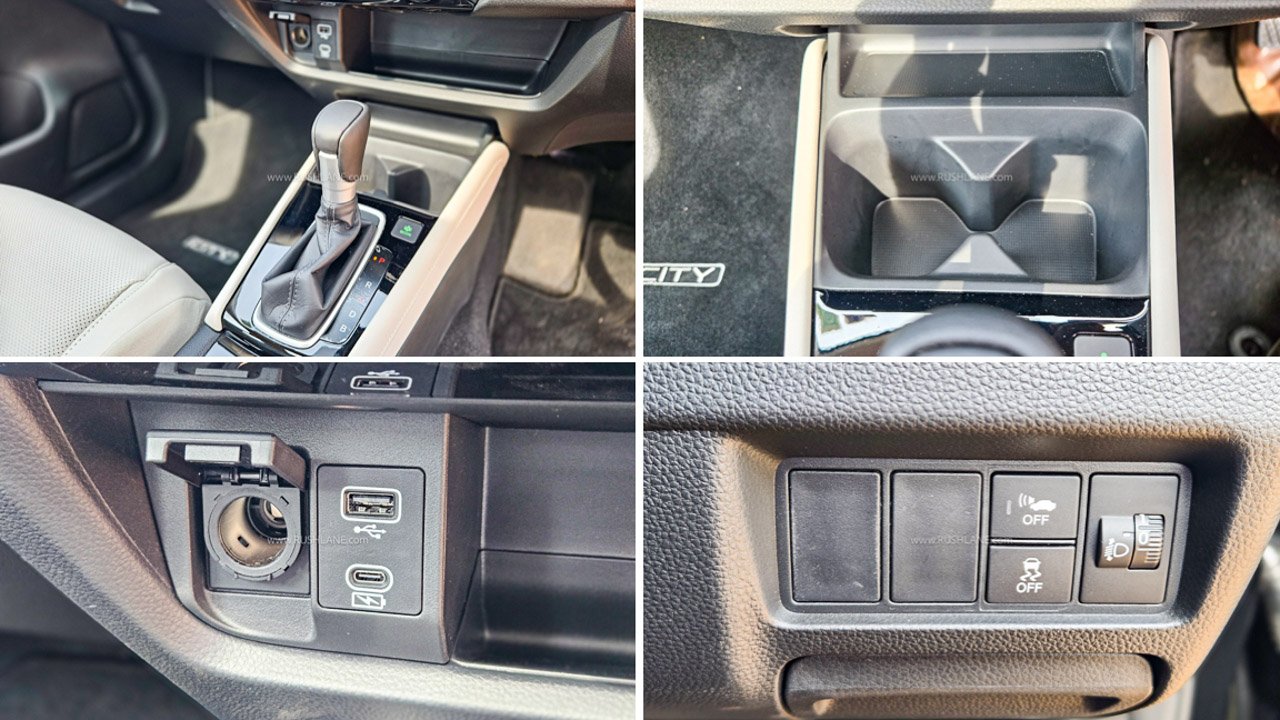
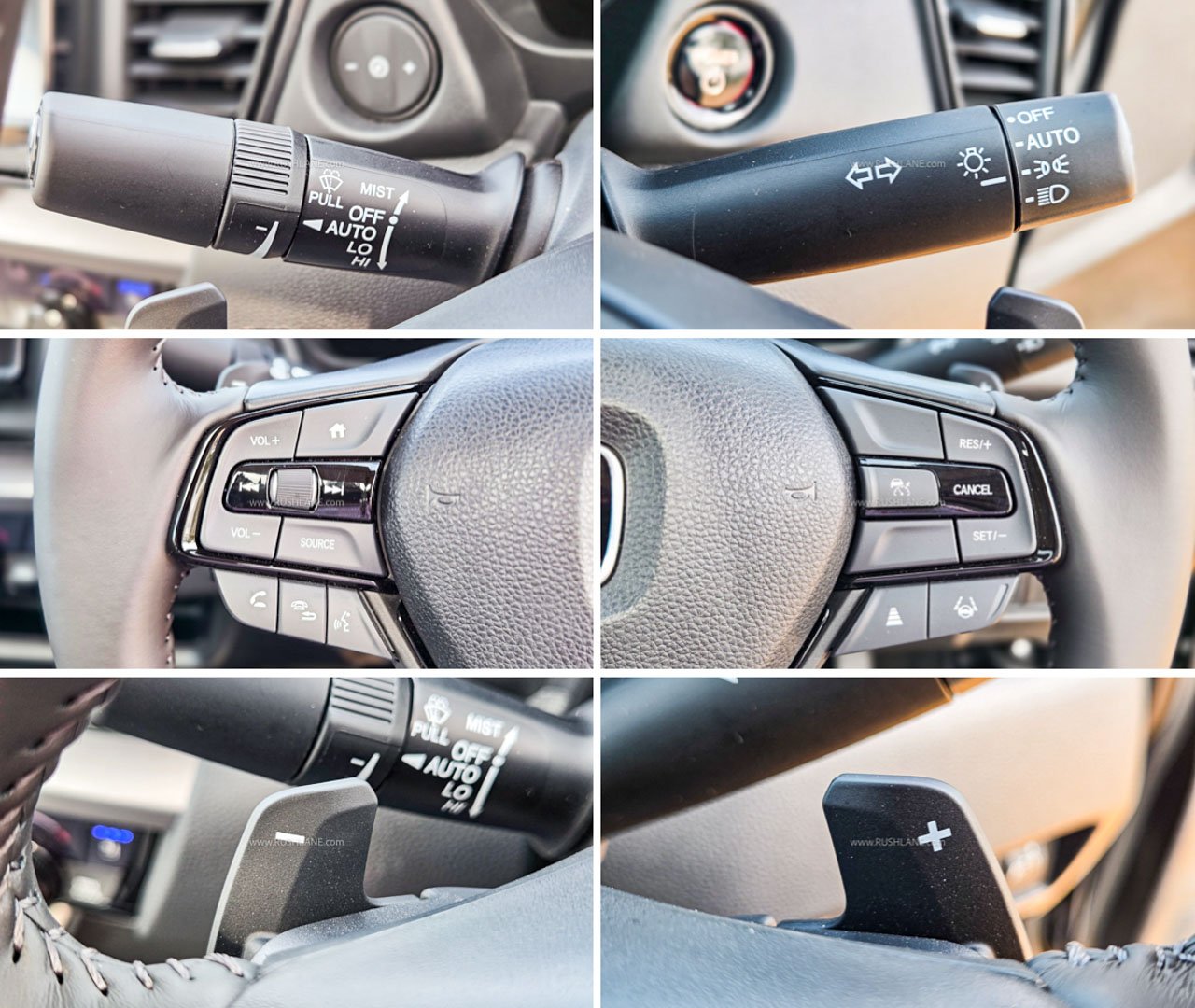
The audio system is good with acceptable levels of low, mid and high frequencies, but we wished the sound was a little fuller than before. The instrument cluster remains the same with a semi-digital layout. The TFT MID features a number of informatics, including ADAS-related functions. The inclusion of a 360-degree camera is welcome, but the resolution and execution of this system leaves a lot to be desired. We liked the tactile and clickable buttons on the steering wheel and center console.
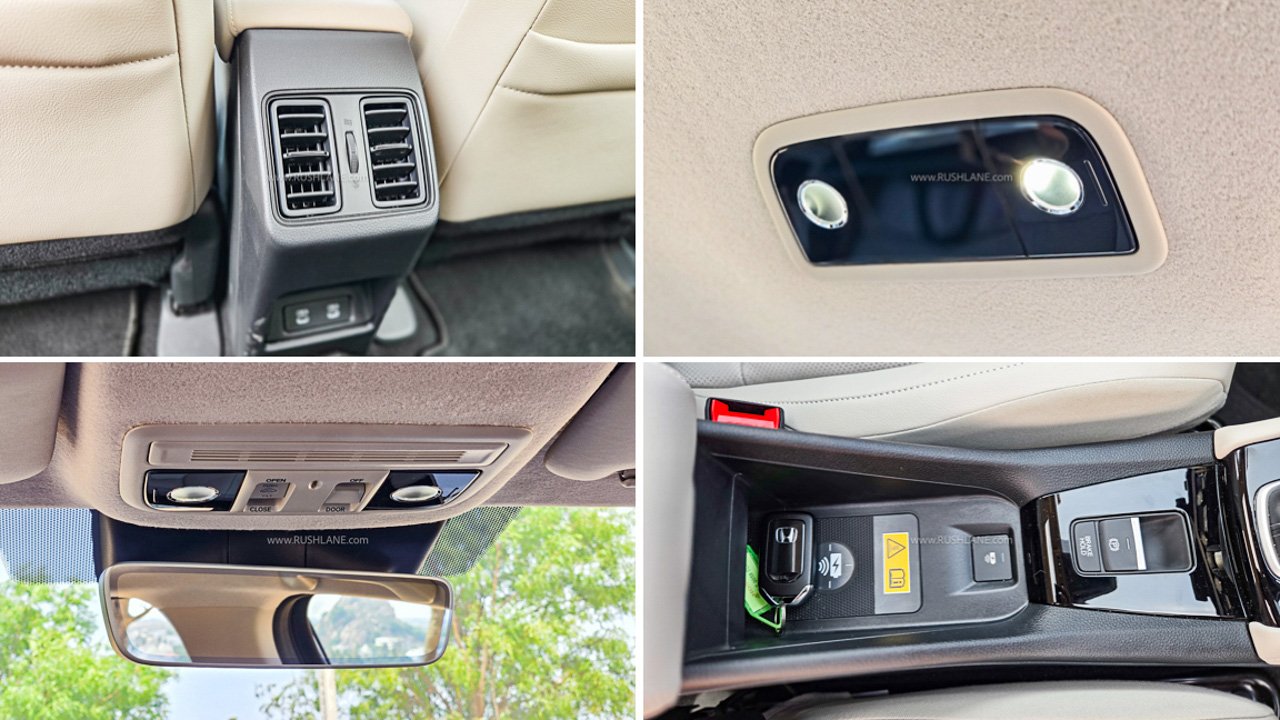
Talking about the center console, we now get a ventilated seat function on the side of the climate control panel. It is the first mainstream Honda to get this feature and has three blower speeds. Blower sound is well controlled and doesn’t sound like the car is flying, but this is matched by weak cooling performance, leaving us wishing for a louder but noisier blower. A wireless charging pad and paddle shifters, auto headlights and wipers are also present.
back seat experience
At the back, things are much the same for the chauffeur-driven spectators. That’s a good thing as far as space and comfort is concerned, but a bad thing as all the negative aspects carry over. So, the headrests are still not adjustable and the center armrest is still not supported and flops down making for an uncomfortable arm position.
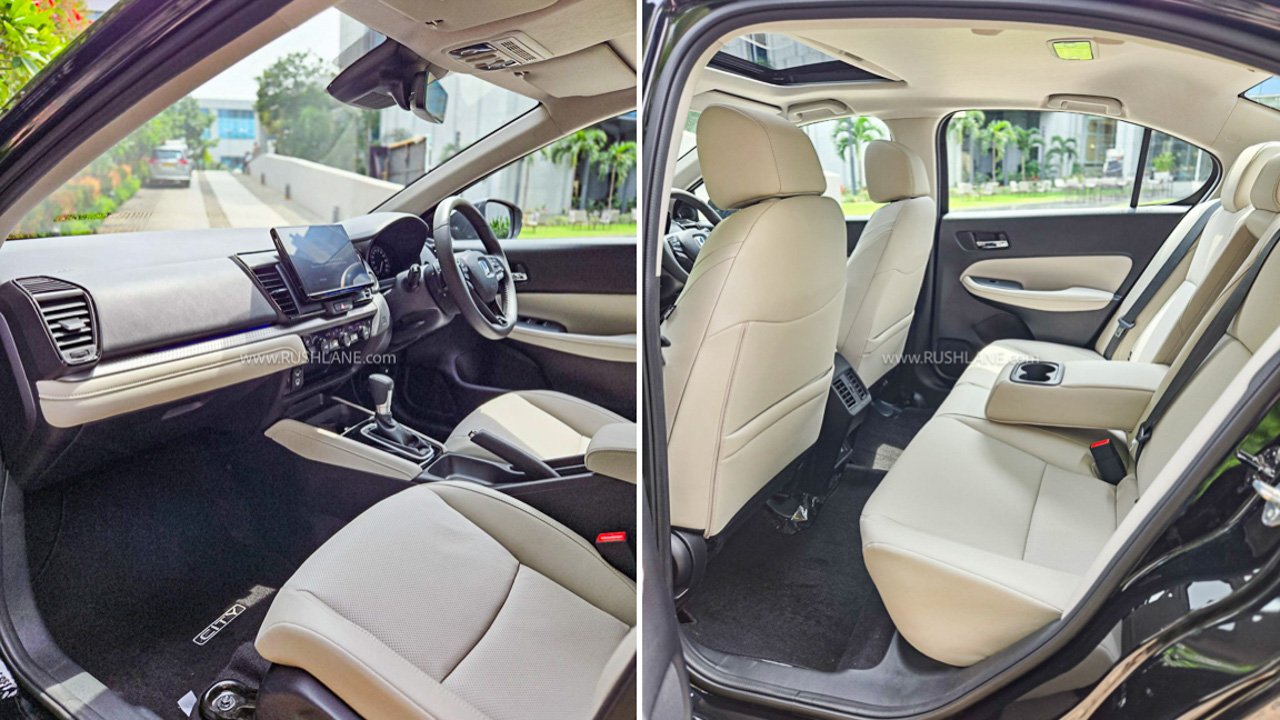
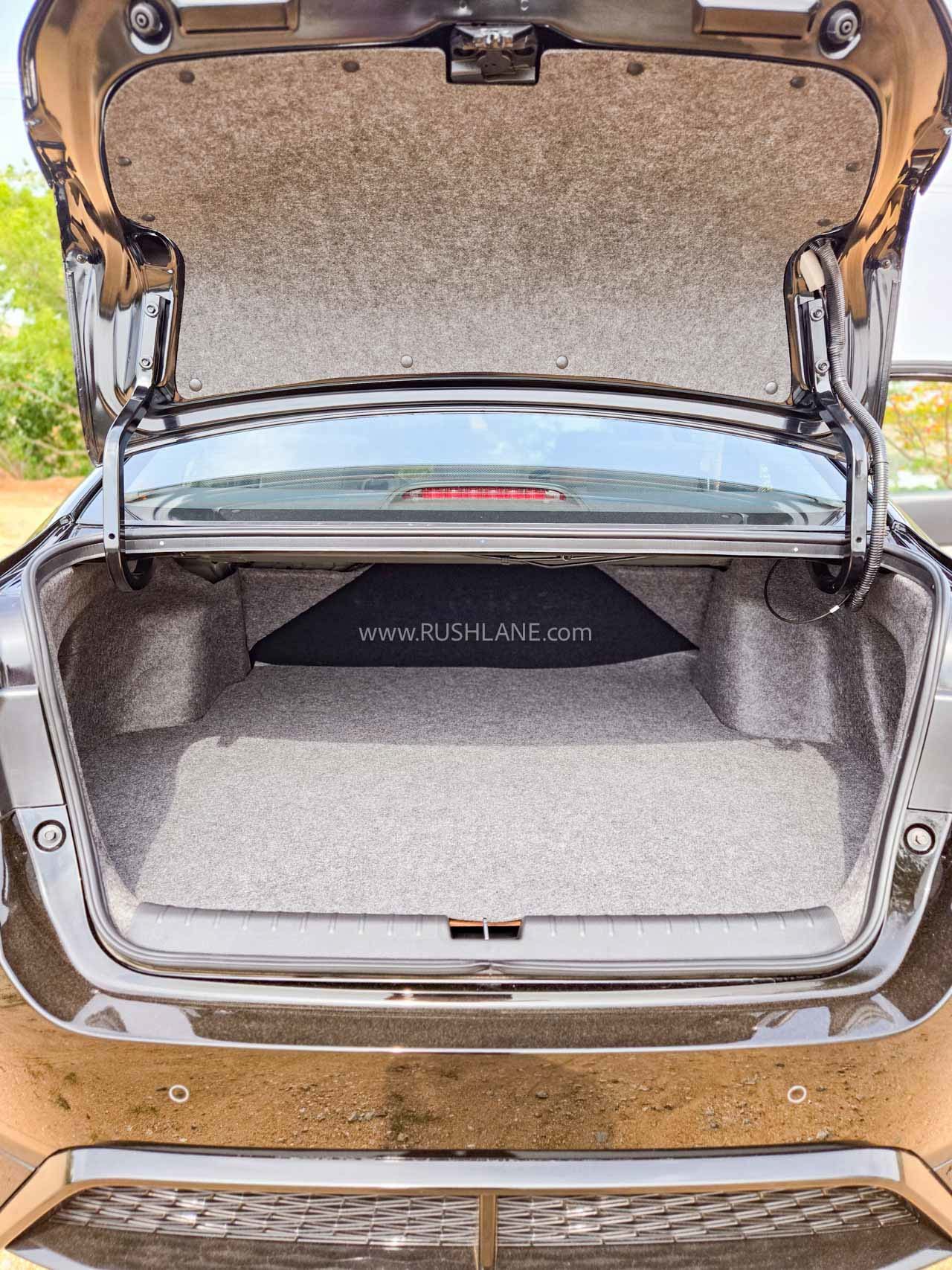
We wish Honda had offered rear window shades instead of a rear sunshade. The City facelifts offer two Type-C charging ports for the rear spectators. Boot space remains the same as before, with a capacity of 506L. Being a sedan, the City facelift does not have a high load lip and the loading aperture is also quite wide. However, the hybrid e:HEV variant gets a smaller boot, making room for the EV components.
Powertrain and driving experience
As far as the powertrain is concerned, Honda has carried forward the same 1.5L i-VTEC 4-cylinder engine with around 119 bhp of peak power and 145 Nm of peak torque, mated to 6-speed manual or 7-step CVT gearbox options. It is a smooth, refined and vibe-free engine with a raspy sound at high revs.
The e:HEV hybrid version combines EV components such as battery packs and motors. The engine in the e:HEV version is rated at 98 bhp and 131 Nm and the electric motors are rated at 108 bhp and 253 Nm. This involves pure electric driving at low speeds for a short distance and then the system also provides a boost to the engine when required.
With the hybrid version, the promised fuel efficiency is up to 27.26 km/l and can go above this in optimal hypermiling and city driving conditions. However, real-world speeds and driving patterns ensure that the engine is running all the time, making efficiency much lower than advertised. The non-hybrid version promises 17.97 km/l with the CVT and 17.77 km/l with the manual.
The City has also retained all its mechanicals, which means its ride is exactly the same as before. The ride quality is composed and bump absorption is quite good. Honda hasn’t disclosed ground clearance, but it is lower than its European rivals. Braking in the city is quite good, especially with the hybrid version we drove, which comes with all-wheel disc brakes. The non-hybrid version gets drum brakes at the rear.
Should you buy one?
Honda City has always been a non-aggressive, non-polarizing and easily recommended sedan in India. But the new City facelift has a sporty design which may divide opinions among some buyers. Prices still start at Rs 12 lakh and go up to Rs 21 lakh (ex-sh). It is commendable that Honda offers Level-2 ADAS (Honda Sensing) from the V variant onwards. During our drive around Bengaluru, lane keep assist intervention was inconsistent despite well-marked roads. Further testing over a longer period of time will be required to reach any definitive conclusions.
The interior seems to be a notch below rivals in terms of quality while the fit and finish was up to par. Infotainment and instrumentation are a few notches below rivals. The overall equipment is also a notch or two below rivals. Rivals offer turbo petrol engine options (most as standard). Even the comfort level is not that good as rivals are offering ventilated seats, powered seats, electric boss mode, better audio systems, infotainment, instrumentation and more.
Rivals are also cheaper by up to Rs 2 lakh at the base and up to Rs 3 lakh at the top. He said, Honda City is the only company to offer a strong hybrid powertrain. Even with its sporty fascia, it’s mostly non-offensive. There are no known major issues and it is a tried and tested machine with dependability. If these ethos drive your purchasing decisions, then the Honda City facelift should be at the top of your wish list. If you were already in the market for the City, the City facelift costs the same as its predecessor with the added equipment.