
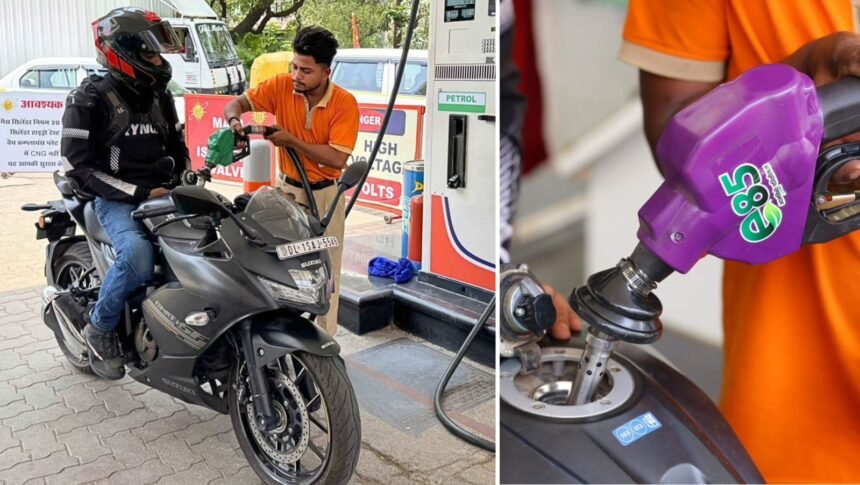
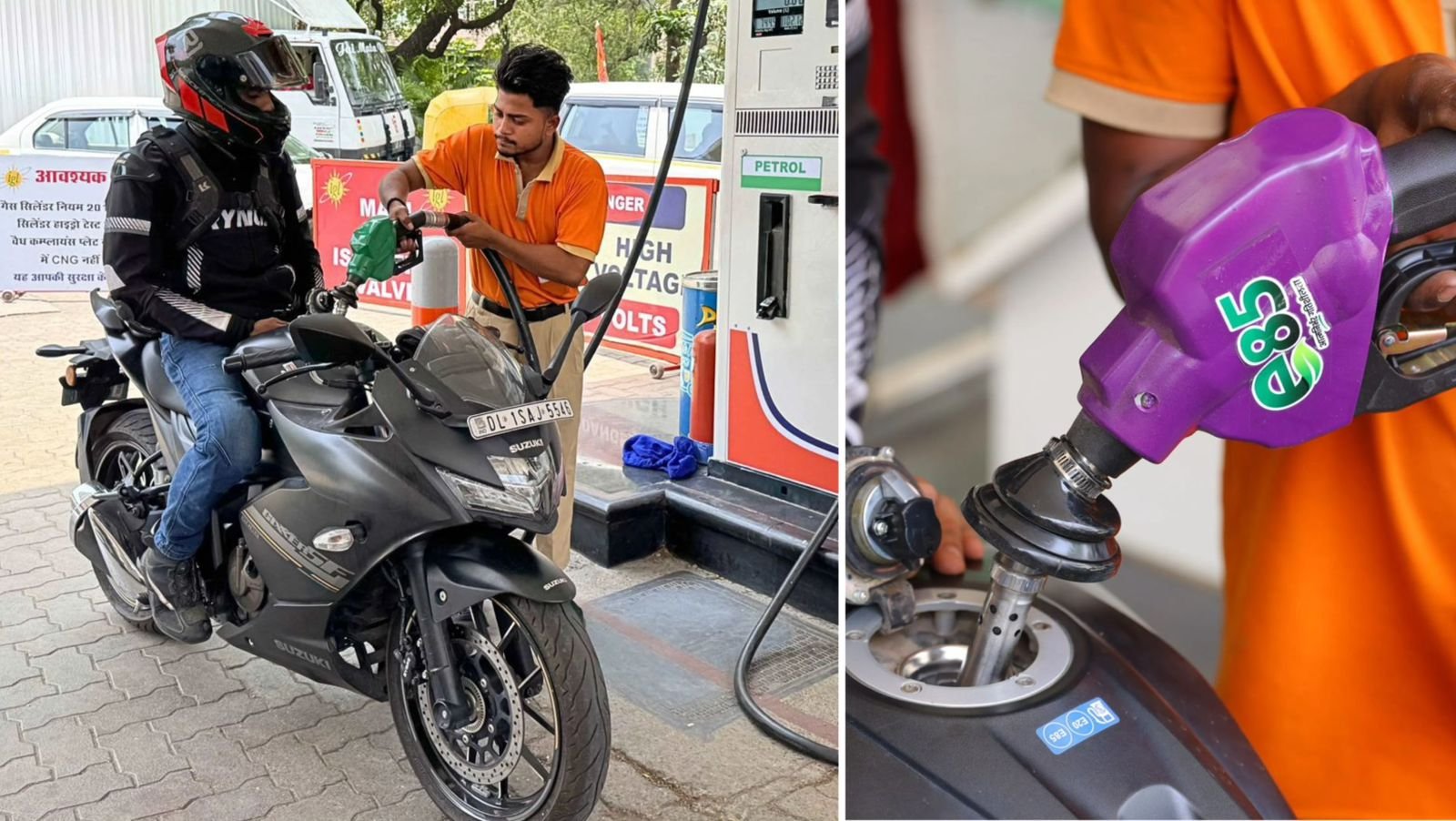
Despite being cheaper by Rs 20 per litre, in real-world testing of E85 fuel its operating costs remained about 17 paise per km higher due to significantly lower fuel efficiency than E20.
reducing dependence on oil importsE85 ethanol blend fuel has been launched. The auto industry is also responding with the launch of E85 versions of its existing models. To promote the use of E85 fuel, the price has been kept as low as Rs 82.12 per litre. In comparison, E20 fuel costs Rs 102.12 per litre. A recent mileage test conducted by Autocar India on the Suzuki Gixxer SF 250 FFV (Flex Fuel Vehicle) reveals the fuel efficiency and running costs of E85 vs E20.
E85 fuel economics doesn’t add up
For optimum accuracy, Mileage tests conducted Same 80 km distance to the city for both E85 and E20. To ensure that traffic conditions remained largely the same, the timing of the tests was also the same. With E85, fuel efficiency was measured at 28.81 km/l. In comparison, fuel efficiency with E20 was 38.1 km/l. This is a difference of approximately 24.40% in fuel efficiency.
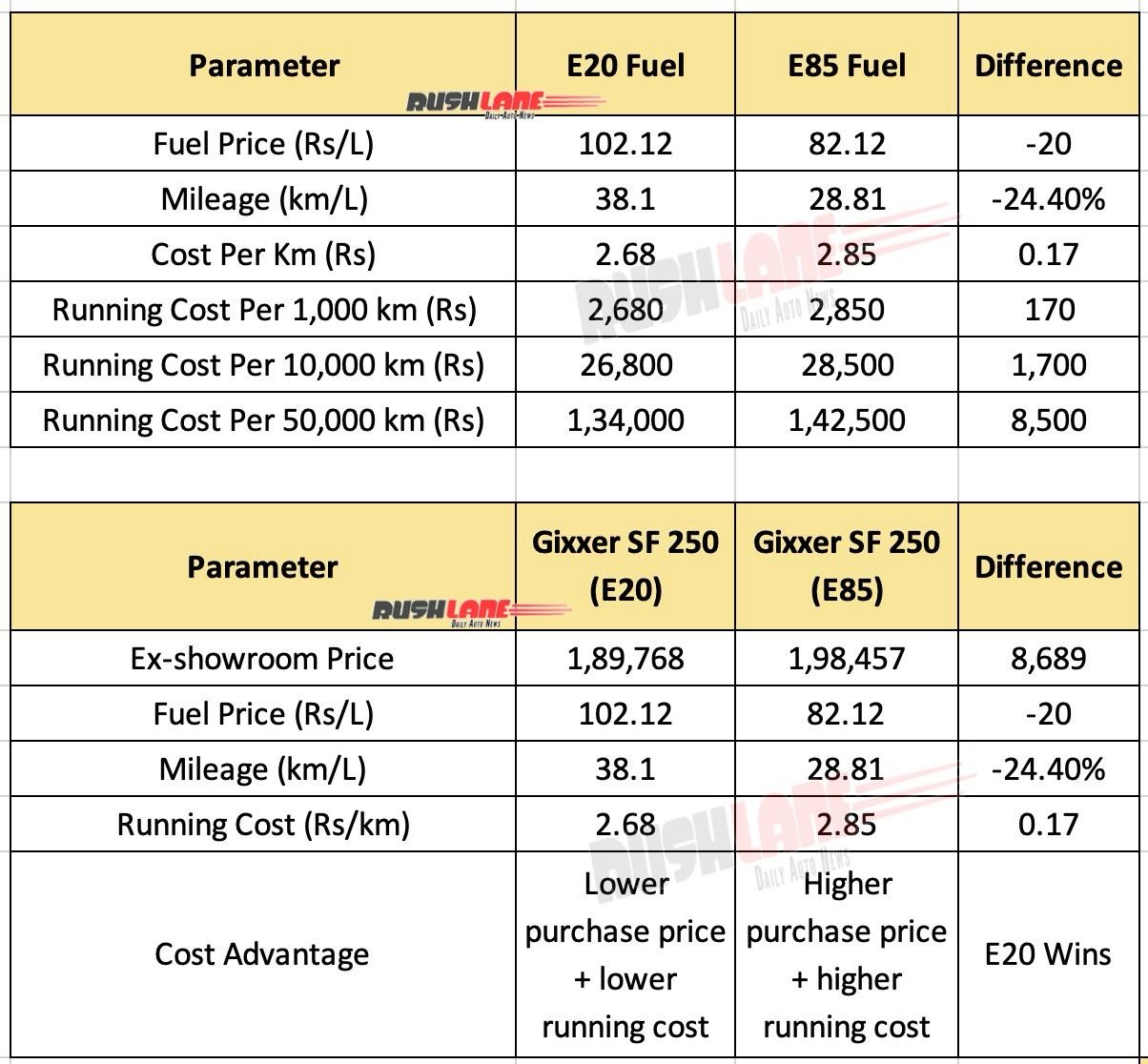
The price per km can be calculated based on the above numbers. Using simple maths, the running cost on E20 works out to be around Rs 2.68 per km. With E85 fuel, the cost is Rs 2.85 per km. As is obvious, the actual cost of running an E85 is higher than an E20, even though the E85 is being offered at a lower price. In this specific scenario, Users will have to pay about 17 paise more for every kilometer With E85 compared to E20.
Another thing that doesn’t seem right is the relatively high price of E85 two-wheelers. E85 bikes are about 5% more expensive Compared to standard E20 versions. This means users will not only have to pay a premium when purchasing the bike, but will also have to bear higher running costs. These factors may actually discourage buyers from purchasing an E85 vehicle.
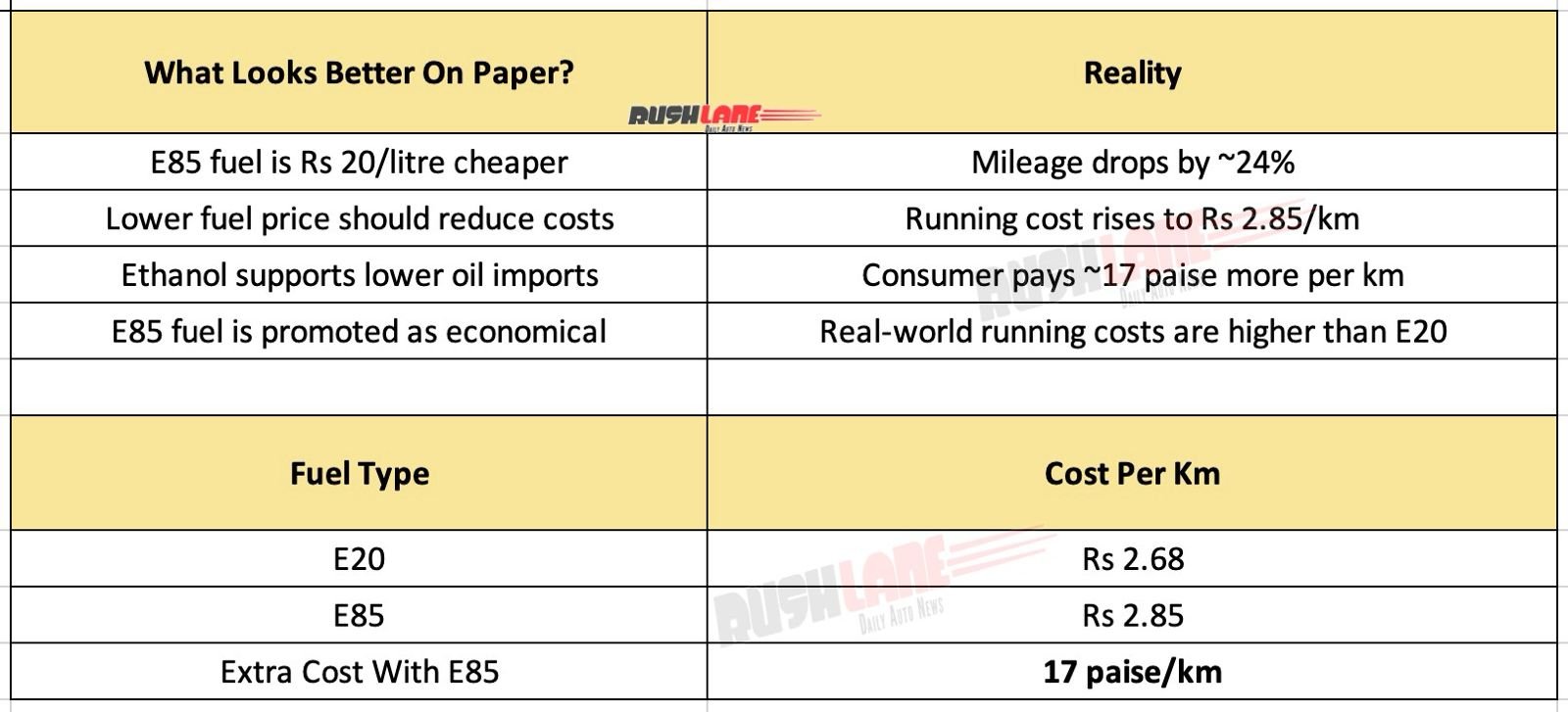
Flex Fuel Reality Check – Cheap Fuel, High Operating Costs
The mileage test results are not surprising as it is widely known that ethanol has a lower energy density than petrol. Pure gasoline (E0) contains about 32 to 34 MJ/L (megajoules per liter) of energy. In comparison, E100 has about 21 MJ/L of energy. Ethanol contains about 33% less energy per liter than gasoline.
With E20, the energy content is approximately 93% to 94% compared to pure gasoline. This results in a mileage drop of approximately 6% to 8% compared to pure gasoline. With E85, the mileage loss is about 25% to 30% greater. Buyers currently pay double the premium with E85 – a higher purchase price for the vehicle and higher on-the-road costs. The only obvious beneficiary is the reduction in crude oil imports, not the end consumer..