
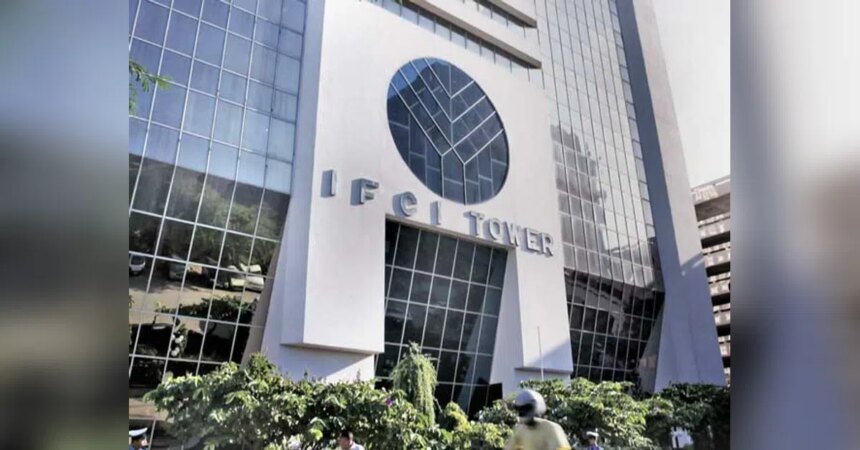
ifci share price
ifci share price
In the last seven trading days, the financial institution’s share price increased by 35 percent. Since April 2026, the stock has gained 71 per cent from its high of ₹47.88 on the BSE.
03:13 pm; IFCI was trading 13 per cent higher at Rs 80.75, compared to 0.5 per cent fall in BSE Sensex. The average trading volume on the counter surged more than six times, with a combined 319.56 million equity shares exchanged hands on the NSE and BSE.
What is IFCI’s share price trending?
What is IFCI’s share price trending?
The country’s largest stock exchange National Stock Exchange (NSE) is likely to file its draft red herring prospectus (DRHP) by the second week of June.
NSE has asked its bankers to expedite the filing of DRHP, setting a target of June 15. business standard The news has been given quoting people familiar with the matter.
Meeting the proposed deadline will pave the way for the long-awaited initial public offering (IPO) of India’s top exchange later this calendar year. After submitting the DRHP, the exchange will wait for final comments from the Securities and Exchange Board of India (SEBI), a process that usually takes two to three months.
According to the report, the proposed issue will be an outright offer for sale (OFS), in which existing investors are expected to dilute 4.5-5 per cent of their stake.
IFCI holds indirect stake in NSE through its subsidiary Stock Holding Corporation of India (SHCIL). IFCI holds 52.86 percent stake in SHCIL. As per NSE’s shareholding pattern for March 2026 quarter, SHCIL holds 4.4 per cent stake in the exchange.
SHCIL, a subsidiary of IFCI, apart from being the premier custodian of the country, is one of the largest depository participants in the country and provides post trading and custodial services to institutional investors, mutual funds, banks, insurance companies etc. It also acts as the Central Record Keeping Agency (CRA) for collection of stamp duty, e-Court fees and e-Registration in various states and Union Territories (UTs).
IFCI’s financing activities included a wide variety of projects spanning airports, roads, telecommunications, power, real estate, manufacturing, services and other such allied industries. However, IFCI ceased loan operations in FY2012 due to lack of capital and liquidity.
As a majority owned government entity, IFCI’s credit profile continues to receive significant strength from the availability of regular and timely support from the Government of India in the form of capital investment, resource mobilization facilities and regulatory support. Continued financial and strategic support from the Government of India remains a key rating sensitivity.