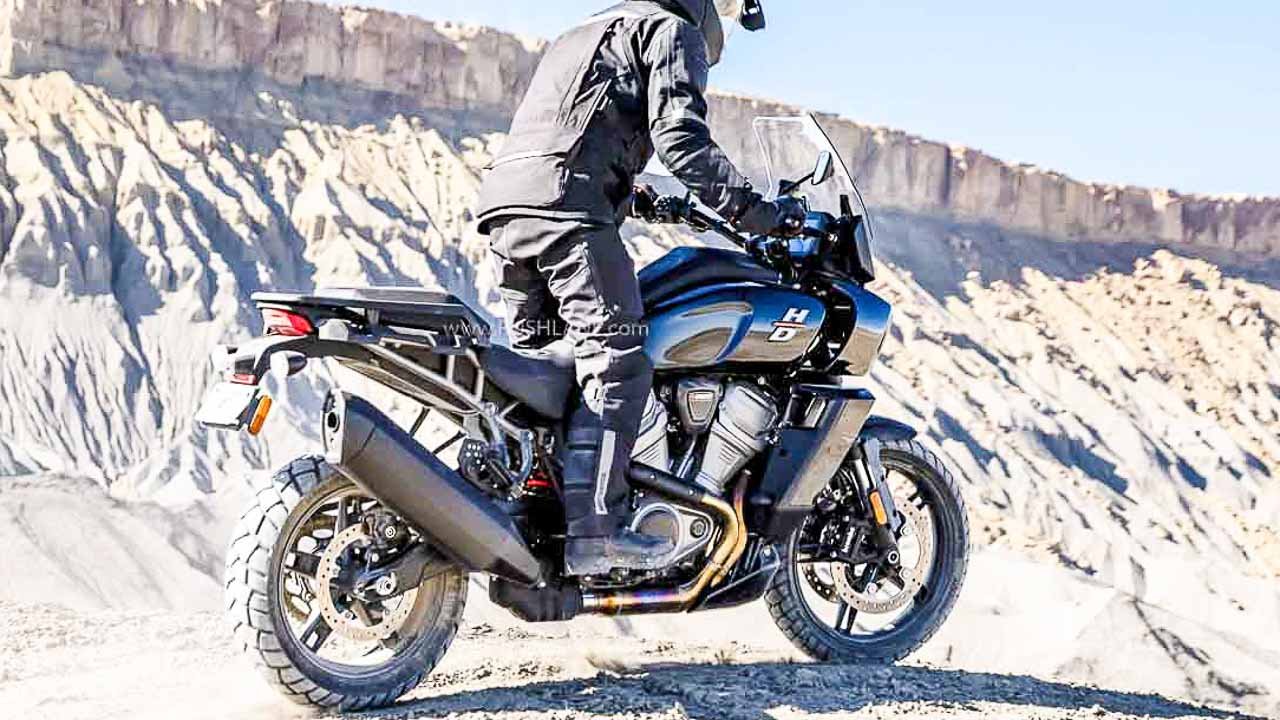
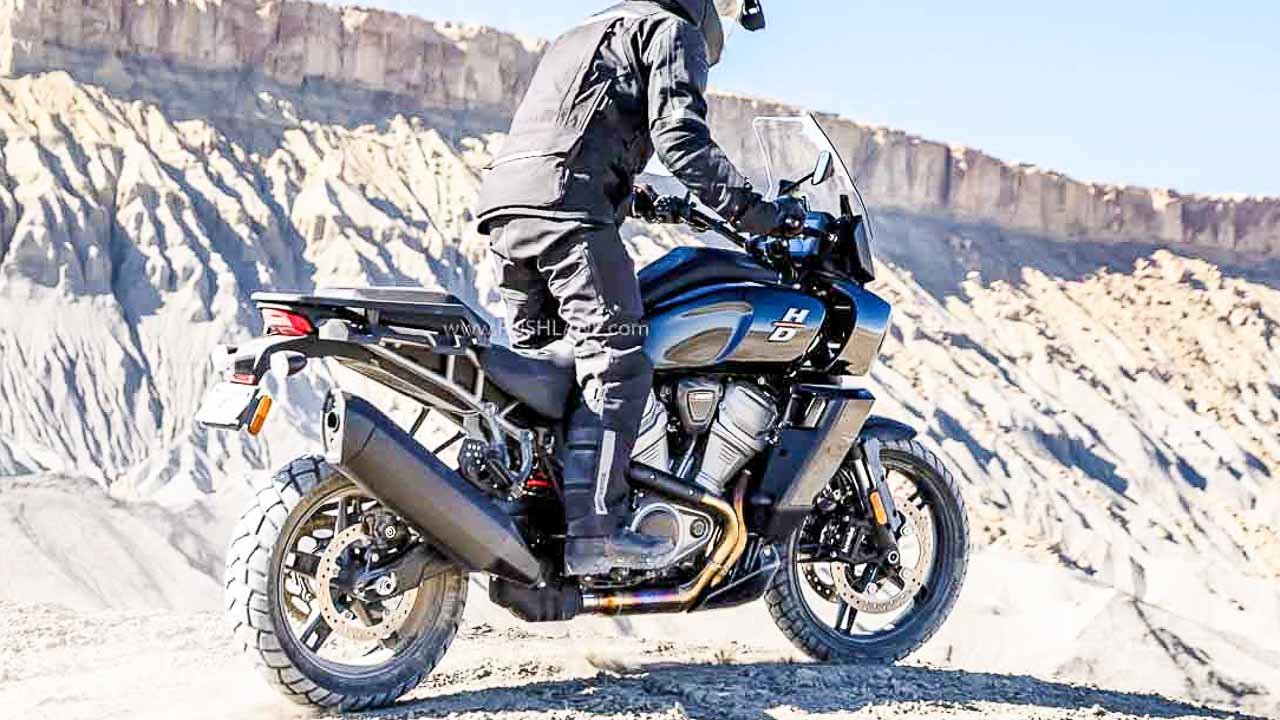
Motorcycles completely manufactured from the United States, including Harley-Davidson models, may soon get duty-free access to the Indian market under the newly announced interim trade agreement between India and the US. Although official details of the agreement have not been released yet, reports quoting government officials suggest that import duties on motorcycles with engine capacity between 800cc and 1,600cc will be completely removed.
Currently, motorcycles in this displacement bracket attract a total import duty of around 44% including basic customs duty and social welfare surcharge. If implemented, this move could significantly reduce prices for select premium motorcycles, although the real-world impact may be more subtle than actual sales data suggests.
Overall 800cc+ motorcycle market: still good, slightly shrunk
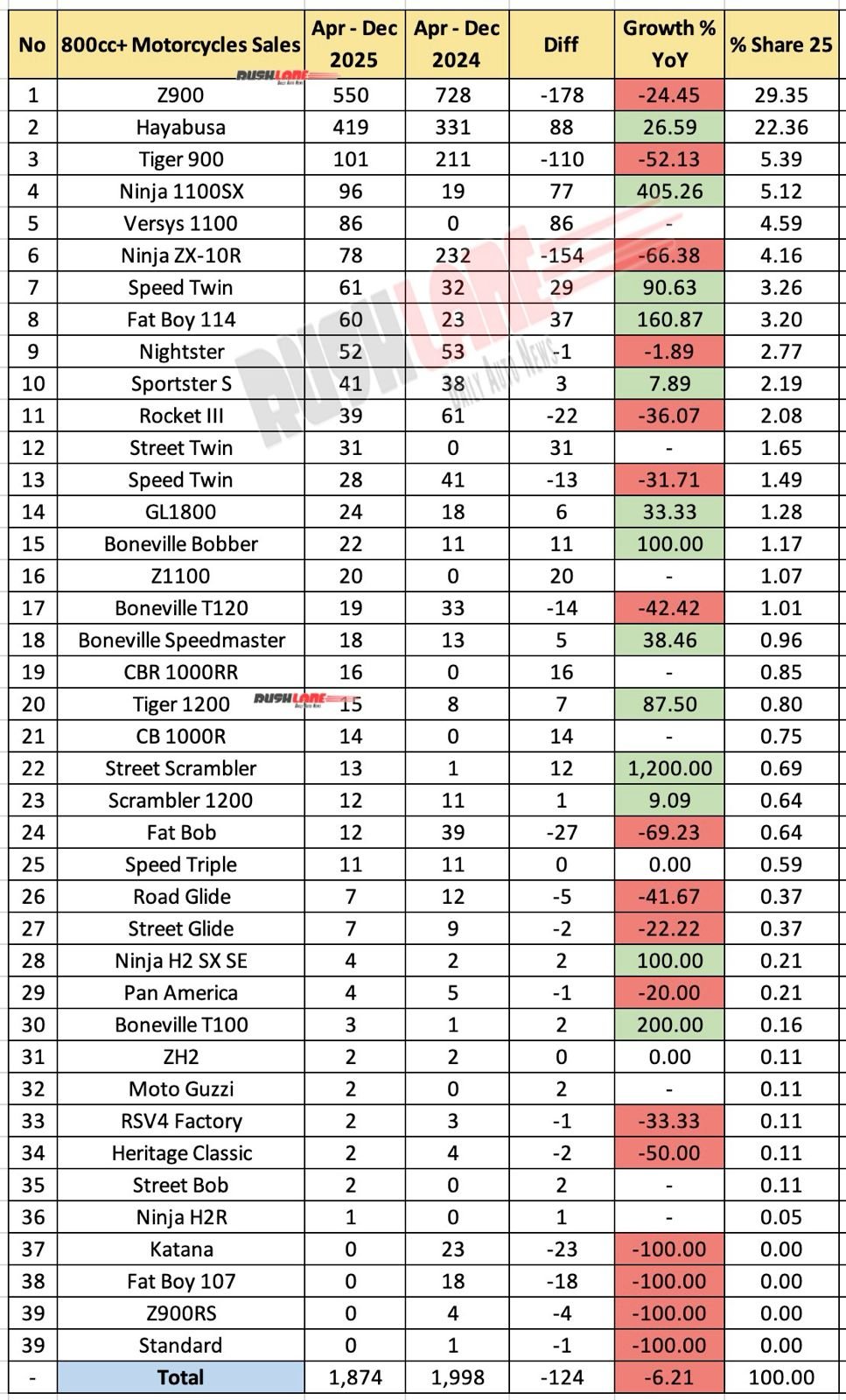
Sales data for motorcycles above 800 cc shows that India remains a niche market for large capacity bikes. Between April and December 2025, total sales in the 800cc+ segment stood at 1,874 units, down 6.2% year-on-year from 1,998 units in the same period last year.
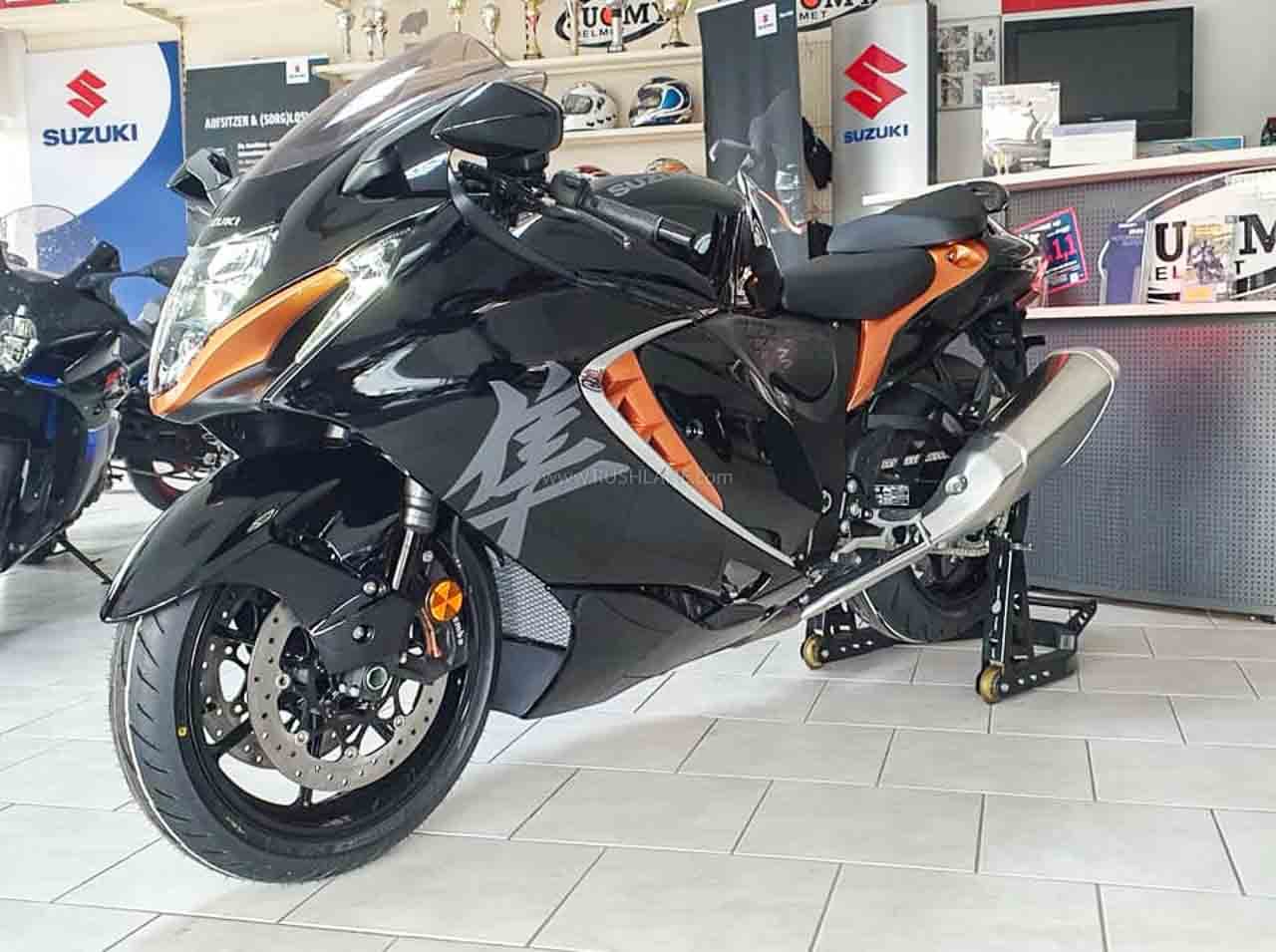
While some models like the Kawasaki Ninja 1100SX, Suzuki Hayabusa and Triumph Speed Twin registered healthy growth, several leading superbikes and adventure tourers registered sharp declines. This underlines the fact that high prices, limited riding infrastructure and ownership costs continue to restrict sales, even as interest in premium motorcycles is growing.
Harley-Davidson 800-1600 cc models (eligible for duty-free entry)
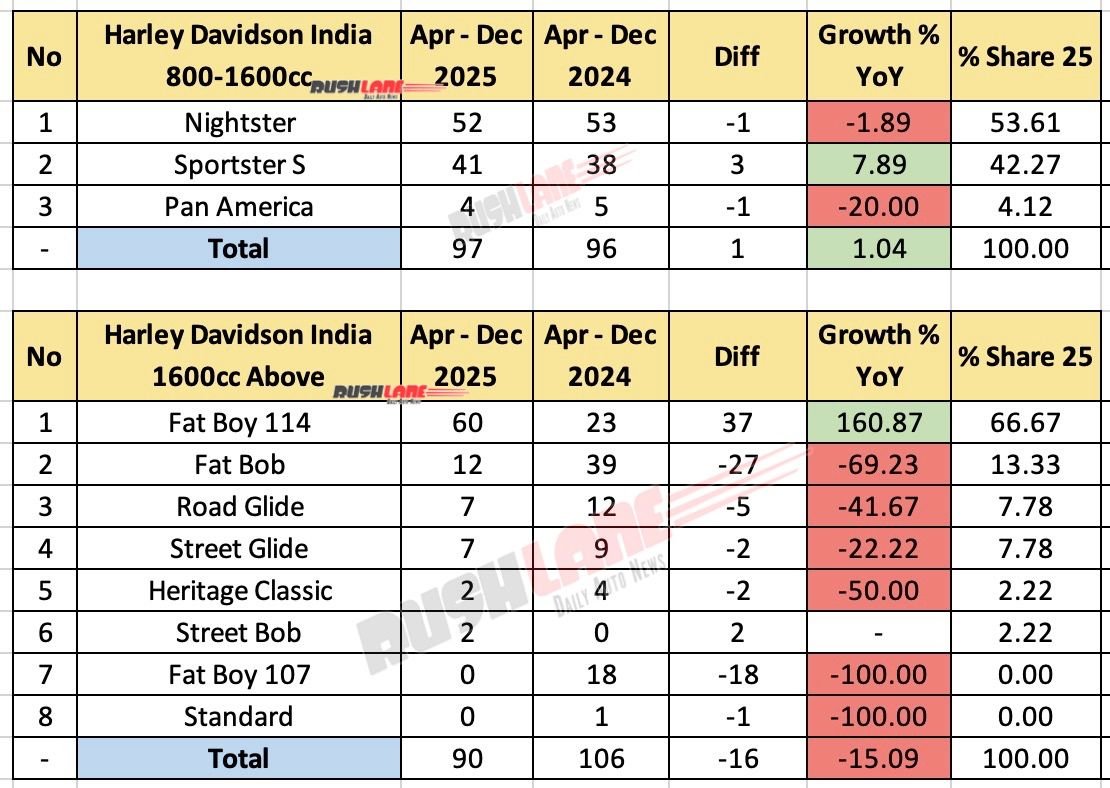
Between April and December 2025, Harley-Davidson sold 97 units in the duty-free eligible 800-1600cc bracket, a marginal increase of 1% year-on-year. This includes the Nightster, Sportster S and Pan America. These models represent Harley’s new, globally relevant lineup for younger and more urban riders, but volumes remain modest.
Harley-Davidson above 1600cc (not included in deal)
In contrast, Harley-Davidson sold 90 units of motorcycles above 1600 cc in the same period, down 15% year-on-year. Demand for traditional heavyweight cruisers like the Fat Bob, Road Glide and Street Glide continues to decline, highlighting the move away from large-displacement cruisers in India.
What does a trade deal really change?
The proposed duty-free access primarily benefits Harley-Davidson’s mid-capacity global models, not its iconic large cruisers. While the volume impact may be limited in the short term, the move could help correct the pricing distortions that have long plagued Harley’s CBU offerings in India.
Harley-Davidson exited manufacturing in India in 2019 due to weak demand due to high import duties. The brand later re-entered the market through its partnership with Hero MotoCorp, and focused on locally produced sub-500cc models like the X440. If duty relief is implemented, it will complement rather than replace this strategy.
Premium motorcycles: Strategic signals, no sales boom
Industry watchers see the tariff cut as a strategic and diplomatic gesture rather than a volume game-changer. India remains a highly protected auto market, where import duties on fully built cars and two-wheelers range between 70% and 110%. The relaxation in duty on select American-made motorcycles signals openness, but it will not fundamentally change the premium two-wheeler landscape overnight.
Electric vehicles are left out of the deal, ruling out low-tariff entry for companies like Tesla. During this time, Reuters report Tariffs on large internal-combustion engine cars above 3,000 cc could be gradually reduced over a decade.
the way forward
For Harley-Davidson and other premium motorcycle brands, duty-free access could improve price positioning, dealer viability and brand visibility. However, sales data makes it clear that India’s 800cc+ motorcycle market is small and sensitive to pricing, infrastructure and ownership economics.
Trade agreements may reduce barriers, but continued growth in the sector will depend on a wider range of factors – from road conditions and financing to after-sales support and rider culture – beyond import duties alone.