
15 June 2026
New Delhi – The Indian Army has introduced a number of changes to its uniform regulations, aimed at moving away from colonial-era symbols and practices while aligning military traditions with India’s national ethos.
The reforms are detailed in the newly released Army Uniform-2026 pamphlet, which introduces new dress elements, revises ceremonial practices, and removes some legacy terms.
The Army said the changes represented a “deliberate move away from residual colonial-era symbols and terminology”.
Major similar changes introduced
Bandi jacket becomes part of formal civil dress: The Indian Army has introduced the indigenous Bandi jacket as part of civil formal attire for officers. The closed-neck coat will be worn over a full-sleeved shirt with matching formal trousers and closed footwear. The manual states, "In keeping with the nation's sentiments and evolving sovereign identity, a number of deliberate refinements have been incorporated in this edition of Army Uniforms Pamphlet."
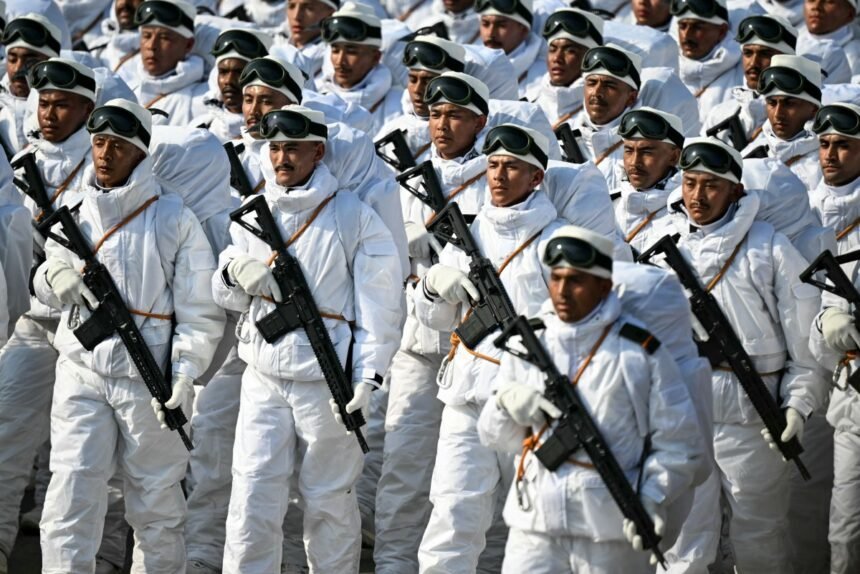
Battle Jacket replaces winter jersey-based uniform: The Army has introduced a new winter working dress featuring the Battle Jacket. The Battle Jacket will gradually replace the existing jersey-based winter uniform (Dress 3A), with the transition expected to be completed by June 2029. The jacket has been reintroduced as the standard winter outerwear for all ranks.
Sword carriage rules changed: The Army has revised ceremonial sword rules, making sword carriage optional for Reviewing Officers. Swords will now be carried only by parade commanders, contingent commanders, and designated personnel during major ceremonial events such as Republic Day, Independence Day, Army Day parades and Guards of Honour. The regulations state, "Reviewing Officers will not carry a sword on parade."
Pouch belts removed from mess dresses: The Army has removed pouch belts from Mess Dress Nos. 5 and 6 as part of the uniform reforms. The manual states that the changes include "removal of the pouch belt from Mess Dress Nos. 5 and 6, the stipulation that sword carriage by Reviewing Officer is optional, and discontinuation of archaic terminology such as 'Royal'."
Colonial era terminology removed
The military has discontinued the use of some archaic terminology, including “Royal”, which remains part of traditions inherited from the colonial period.
The move is described in the manual as a review of legacy practices while maintaining military dignity and traditions.
It said, “Collectively, these refinements represent a progressive review of residual colonial era vestiges while preserving the dignity, functionality and enduring traditions of the Indian Army.”
Renaming of military roads, buildings and facilities
The move away from colonial legacies extends beyond uniforms. Earlier, the Indian Army had renamed 246 streets, buildings and facilities across its establishments to strengthen India’s identity rooted in its history, military traditions and values.
The exercise covered 124 roads, 77 colonies, 27 buildings and other military facilities and 18 miscellaneous facilities including parks, training areas, sports grounds, gates and helipads.
Many British era names were replaced with names honoring Indian soldiers, commanders and gallantry award winners.
In Delhi Cantonment, Kirby Place was renamed Kenugurusay Vihar, while Mall Road became Arun Khetarpal Marg. In Ambala Cantonment, Patterson Road Quarter was renamed Dhan Singh Thapa Enclave, and in Mathura Cantonment, the New Horn Line became Abdul Hamid Lines.
In Kolkata, Fort William was renamed Vijay Durg, while other military stations also adopted names associated with Indian military heroes.
The Army said the latest reforms are part of a broader effort to ensure that military positions, traditions and uniforms reflect India’s own heritage and evolving identity.