
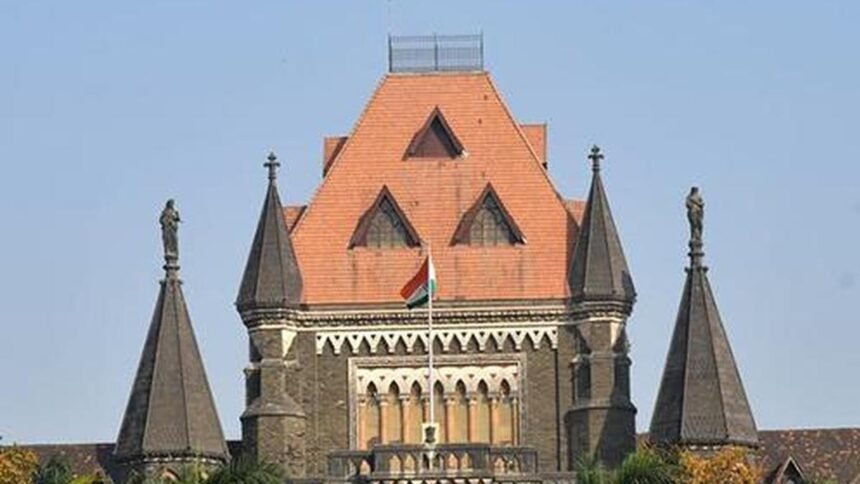

The Bombay High Court said the ICC cannot entertain a complaint if the alleged harassment did not occur at the ‘workplace’. file | Photo courtesy: The Hindu
The Bombay High Court has ruled that a shared auto-rickshaw used by an employee to commute to work is not a ‘workplace’ under the Sexual Harassment of Women at Workplace (Prevention, Prohibition and Redressal) Act, 2013 (POSH), unless the transport is provided by the employer.
The High Court, in its order dated June 22, rejected the findings of the Internal Complaints Committee (ICC), which had held a State Bank of India (SBI) employee guilty of sexual harassment on the basis of an incident that occurred during such a visit.
The petitioner, an employee of SBI, was traveling to his office in a shared auto-rickshaw on March 24, 2023. Defendant 3 was also a passenger in the vehicle. The petitioner stated that any physical contact with respondent 3 was due to overcrowding in the vehicle. Respondent 3 described this contact as intentional, which led to the dispute. He used pepper spray on the petitioner and called the police.
The police detained the petitioner and registered a First Information Report (FIR) under Section 354-A of the Indian Penal Code, 1860. Respondent 3 also filed a complaint under the POSH Act with the ICC.
The ICC found the petitioner guilty and recommended disciplinary action. The petitioner filed an appeal against this order. The court had earlier directed that no final order would be passed in the appeal without its permission.
A division bench of Justices Firdosh P. Pooniwala and Suman Shyam examined whether the incident took place at a ‘workplace’ under Section 2(o) of the POSH Act. The court said that the petitioner was going to his office. However, the transportation was not provided by her employer or the employer of defendant 3. The court further held that such transportation does not fall within the definition of ‘workplace’ as per Section 2(o)(v) of the POSH Act.

The bench held that the alleged incident did not take place at the ‘workplace’. The court said that the ICC cannot consider a complaint if the alleged harassment did not occur at the ‘workplace’.
As a result, the ICC did not have jurisdiction to consider Respondent 3’s complaint. The court rejected the ICC order and termed it sustainable.
The court clarified that it has not taken any decision on whether the petitioner has sexually harassed respondent 3 or not. The matter is open for decision in appropriate proceedings.
The bench said the ICC should first find whether any alleged incident had taken place at a ‘workplace’ under Section 2(o) of the POSH Act. Only a positive answer would give the ICC jurisdiction to investigate further.
published – June 24, 2026 07:31 am IST