
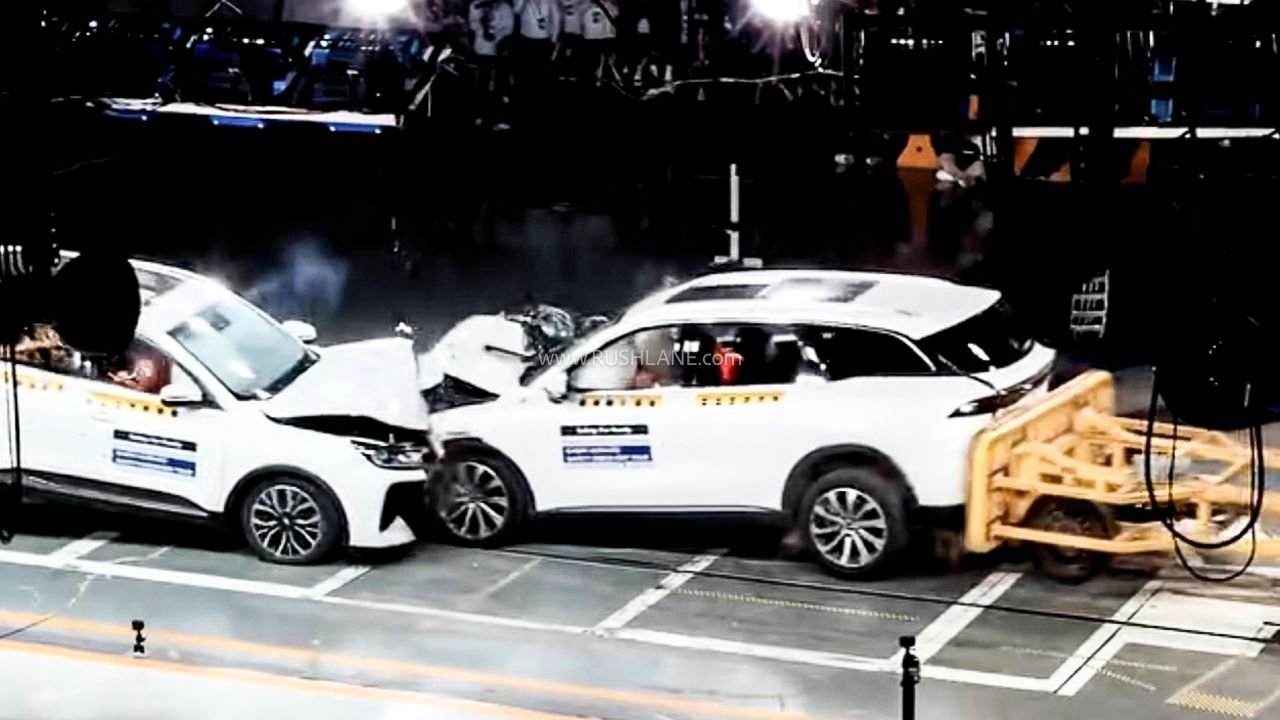
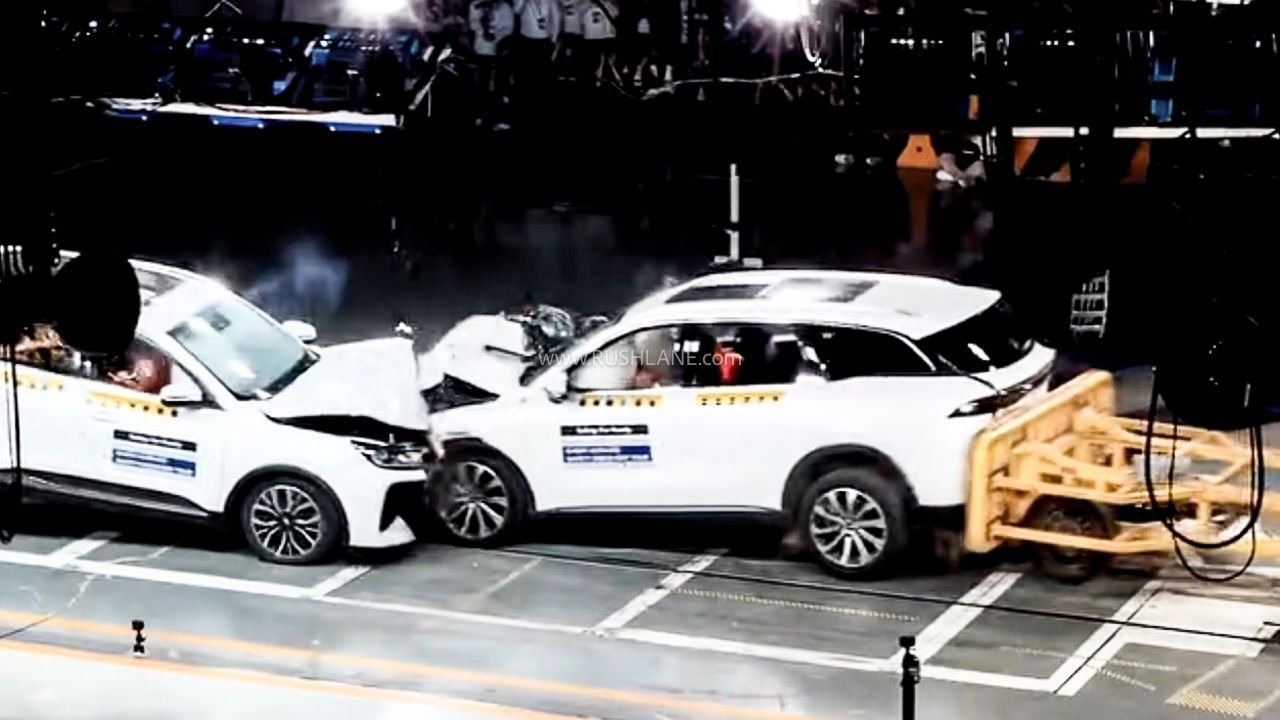
Chery has demonstrated the safety capabilities of its flagship Tiggo 9 PHEV SUV through a multi-vehicle composite crash test conducted at its Longshan test facility in Wuhu, China. The test was part of the company’s 2026 International Business Summit and was conducted in the presence of global dealers and international media.
Unlike traditional crash tests that focus on a single impact, this evaluation was designed Simulate real-world multi-vehicle collision scenariosWhere a car is constantly impacted from multiple directions. Such scenarios are commonly seen in pile-ups on the highway or situations where a stationary vehicle is hit from both the front and rear.
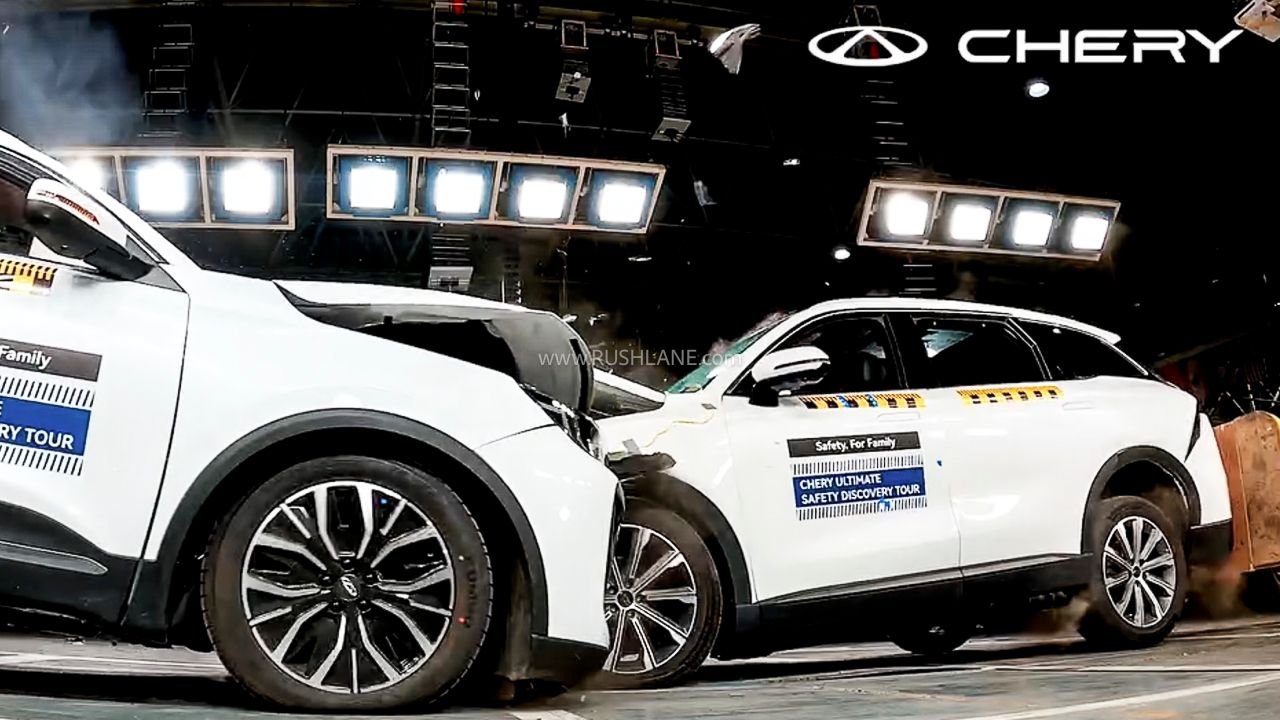
Three-vehicle composite crash simulation
In this test, the Tiggo 9 served as the main vehicle and the Tiggo 7 was subjected to a frontal impact at 50 km/h. Additionally, it was rear-ended at 40 km/h by a moving barrier calibrated to emulate another Tiggo 7 in terms of weight.
This setup replicates complex crash situations involving simultaneous front and rear impacts, placing significantly greater stress on the vehicle’s structure and safety systems than standard crash protocols. The objective was to assess not only impact absorption, but also how well the vehicle maintains cabin integrity and coordinates its restraint systems under mixed loads.
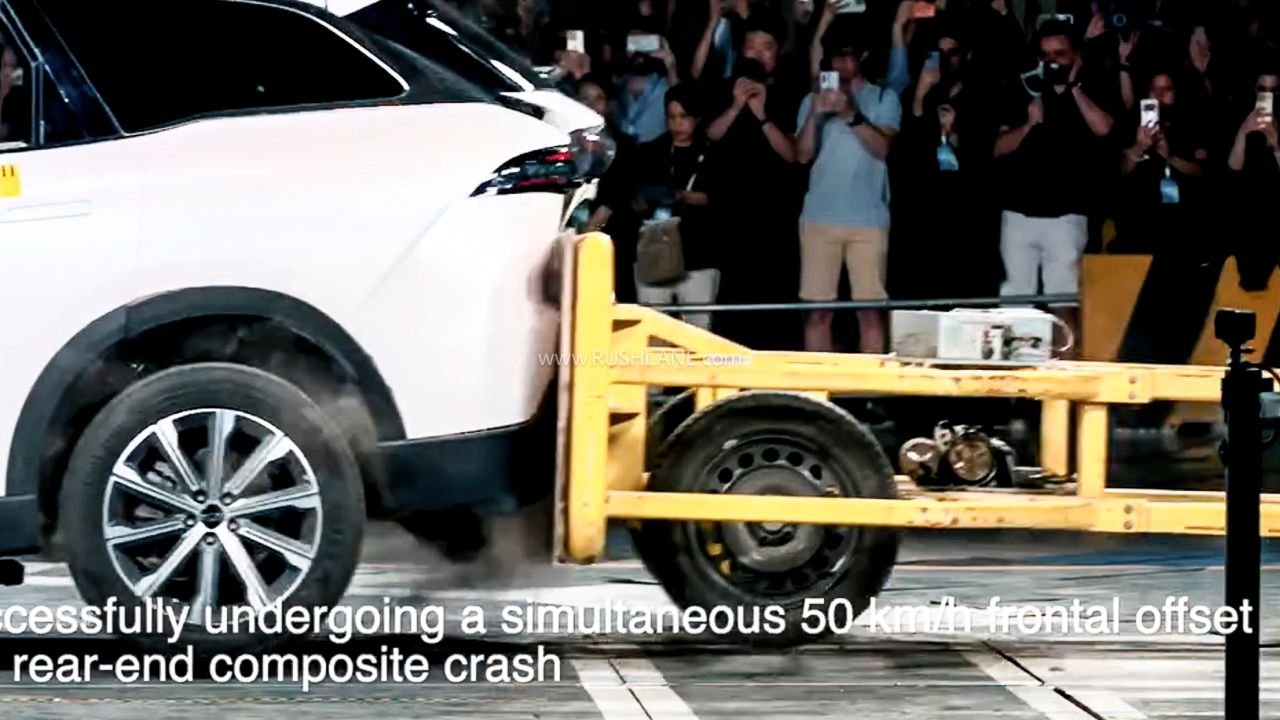
Structural integrity and occupant safety
After testing, the passenger compartment of the Tiggo 9 remained structurally intact, with no major deformation observed in the A, B, C and D pillars. Importantly, ample living space for the occupants was preserved, indicating effective energy distribution in the vehicle structure.
All primary safety systems continued to function as intended. Front, side and curtain airbags deployed correctly, while seatbelt pretensioners activated in sync with impact forces. These systems are critical in reducing occupant injury during high-impact collisions.
Post-accident access was also maintained. All four doors were automatically unlocked and could be opened normally, ensuring easy access for rescue operations. Additionally, no fuel leakage was found, and hazard warning lights activated immediately after the collision.
Part of comprehensive security verification program
The Tiggo 7, which played a role in the crash simulation, also demonstrated solid structural performance. Chery said the test highlights consistent safety engineering not just in flagship models like the Tiggo 9, but across the entire Tiggo lineup.
This comprehensive crash test is part of Cherry’s broader global safety validation strategy. The company is conducting a number of tests in international markets, including battery fire resistance testing, sea water immersion testing, desert heat exposure validation and underbody durability assessment.
Real-world crash verification is becoming common
Similar crash performances in the real world have also been seen in India. For example, Tata Motors has demonstrated high-impact crash scenarios during major product unveilings. At the Sierra showcase, the company demonstrated a car-to-car frontal crash, where one Sierra was driven into another to highlight structural strength and passenger safety. Recently, during the Punch update, Tata also introduced a frontal crash test involving a truck to simulate severe real-world conditions.
With an increasing focus on real-world safety scenarios, automakers are going beyond standard crash tests to verify performance in complex conditions. Such demonstrations also reflect the growing competition among global manufacturers to demonstrate safety capabilities, especially as buyers become more conscious of crash performance and real-world safety.