Mercedes dominates overall, but BMW and Land Rover models are seeing a strong hold – SUVs continue to rule the luxury space
Luxury car sales in India for 2025 reveal a clear trend – SUVs continue to dominate buyers’ preferences, while Mercedes-Benz maintains its leadership position in the segment. Based on retail sales data obtained from the Vehicle and Telangana Open Data Portal, the top 20 best-selling luxury cars highlight a mix of traditional sedans and fast-growing premium SUVs.
Top 10 Best Selling Luxury Cars – 2025
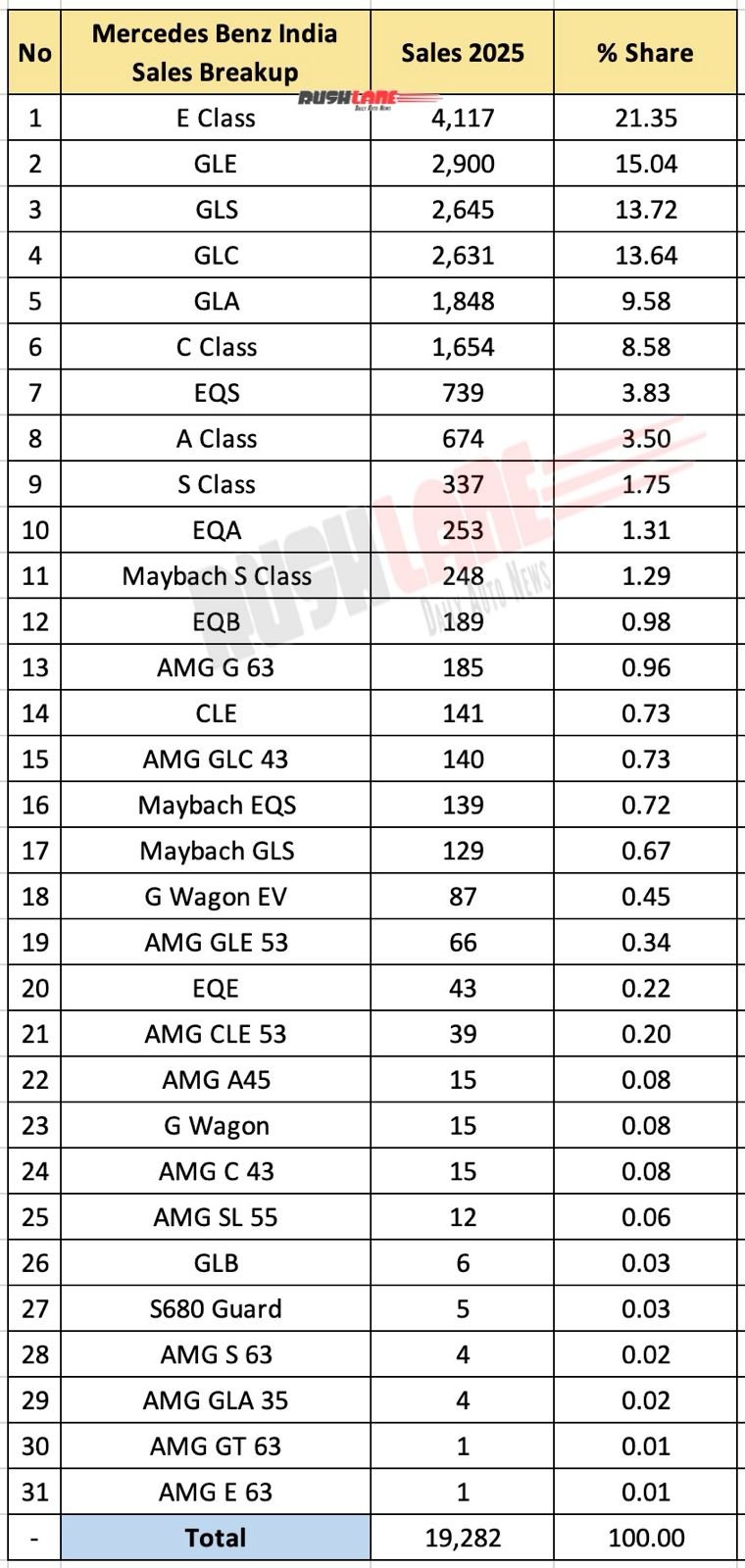
Leading the charts is the Mercedes E-Class with 4,117 units, confirming its popularity among buyers looking for a comfortable luxury sedan. It is followed by the Mercedes GLE (2,900 units) and BMW ix1 (2,786 units), indicating strong demand for both ICE and electric SUVs.
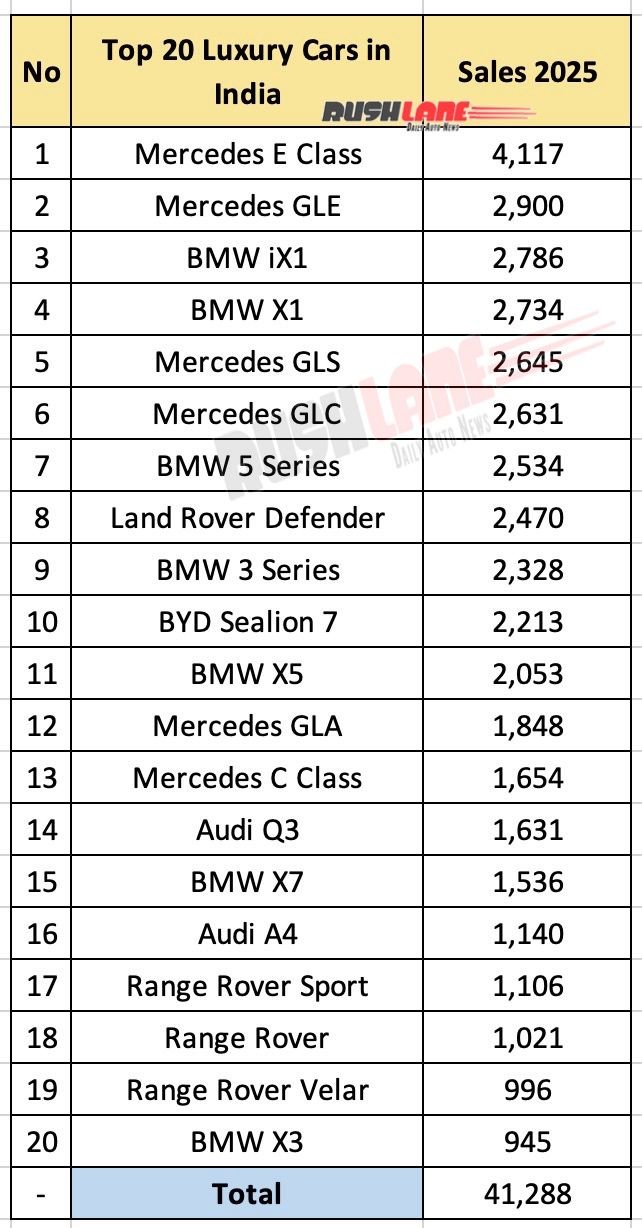
The BMW X1 (2,734 units), Mercedes GLS (2,645 units) and Mercedes GLC (2,631 units) continue the trend of premium SUVs dominating the list. The BMW 5 Series (2,534 units) remains the second best-selling sedan, while the Land Rover Defender (2,470 units) is the most popular off-road luxury SUV. The BMW 3 Series (2,328 units) also maintains steady demand, while the BYD Cialis 7 (2,213 units) emerges as a surprise entrant, highlighting the growing interest in EVs in the luxury segment.
SUV vs Sedan Split
SUVs accounted for almost three-fourth of total luxury car sales in the top 20 list, clearly highlighting the dominance of this segment in India. With over 74% share, high-riding vehicles remain the preferred choice among luxury buyers, driven by road presence, practicality and growing buyer preferences. Sedans, though still relevant, now contribute around 26%, indicating a steady shift in demand towards SUVs even in the premium segment.
SUVs Drive Volume, Sedans Hold Ground
Most of the top 20 models are SUVs, clearly reflecting a shift in buyer preference towards high-riding vehicles. Models like the BMW X5 (2,053 units), Mercedes GLA (1,848 units), Audi Q3 (1,631 units) and BMW
However, sedans are still relevant, with the Mercedes C-Class (1,654 units) and Audi A4 (1,140 units) continuing to find buyers. This shows that while SUVs dominate the market, there is still a strong demand for traditional luxury sedans.
Brand-wise performance
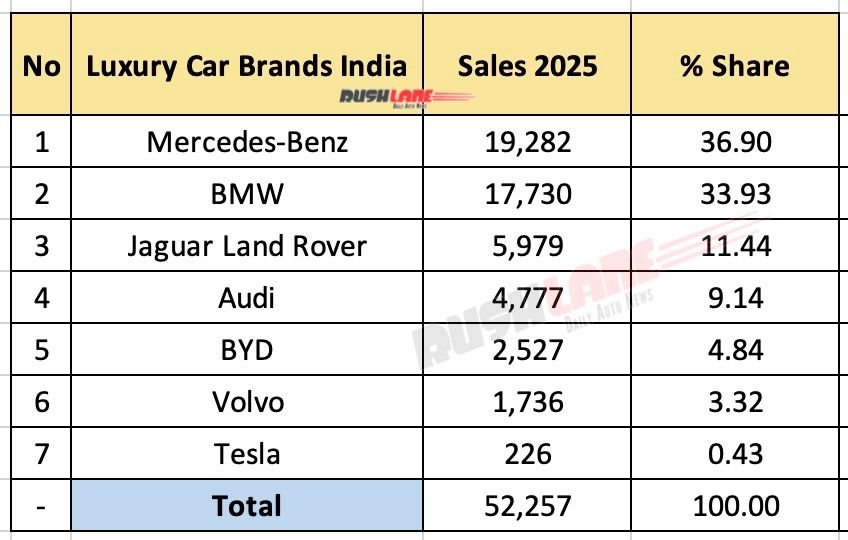
Mercedes-Benz is leading the luxury car market with total retail sales of 19,282 units in 2025. Its portfolio has strong contributions from the E-Class, GLE, GLS and GLC, effectively covering both the sedan and SUV segments.
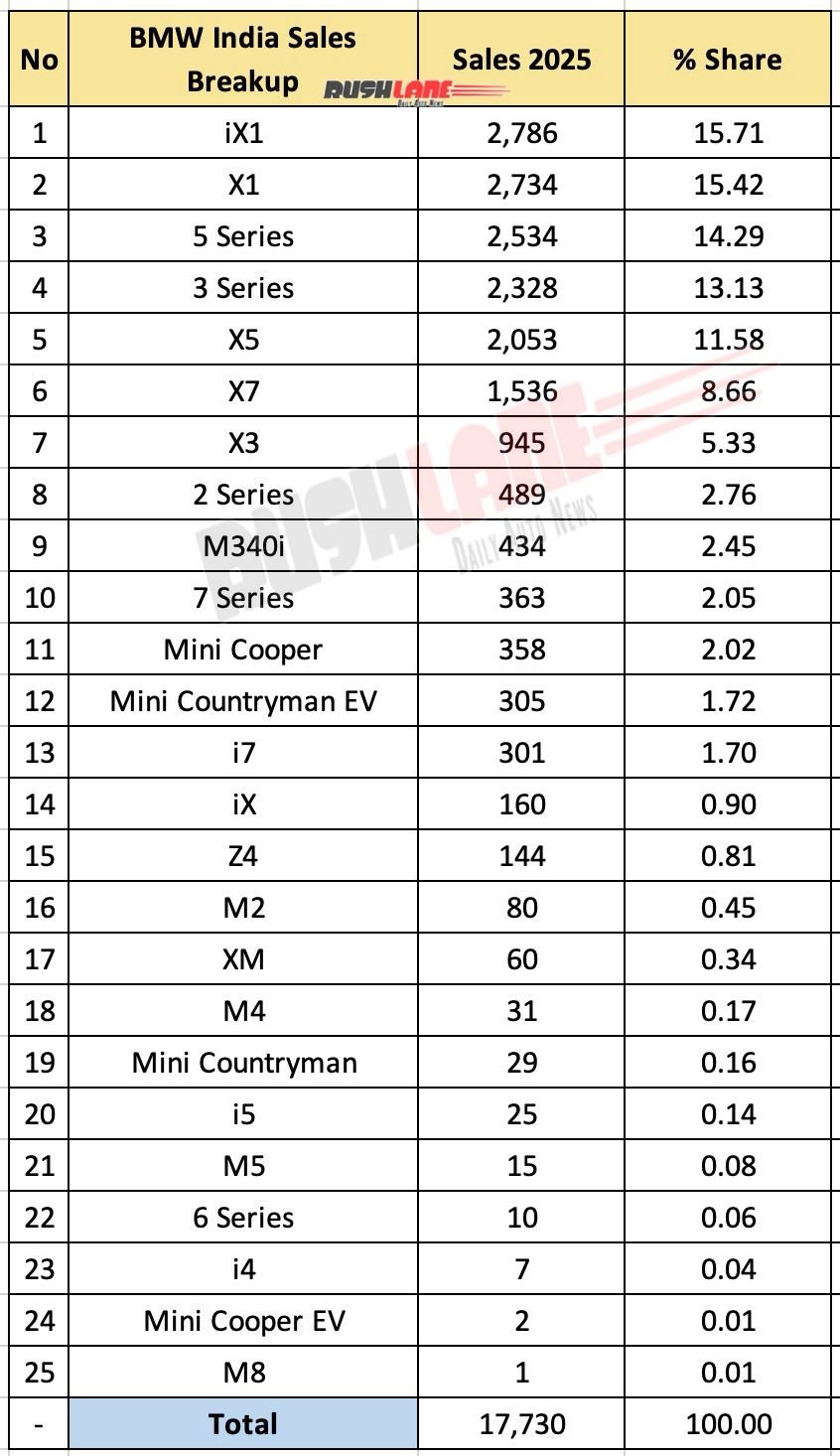
BMW is at the second position with 17,730 units due to high demand for models like iX1, X1, 5 Series and 3 Series. Notably, BMW’s EV lineup, including the iX1 and i7, is also gaining popularity.
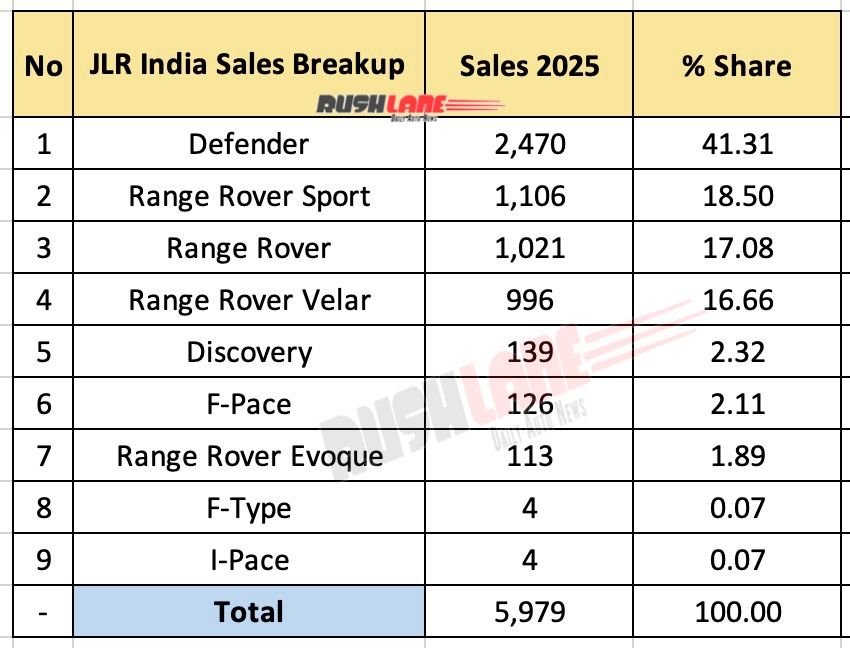
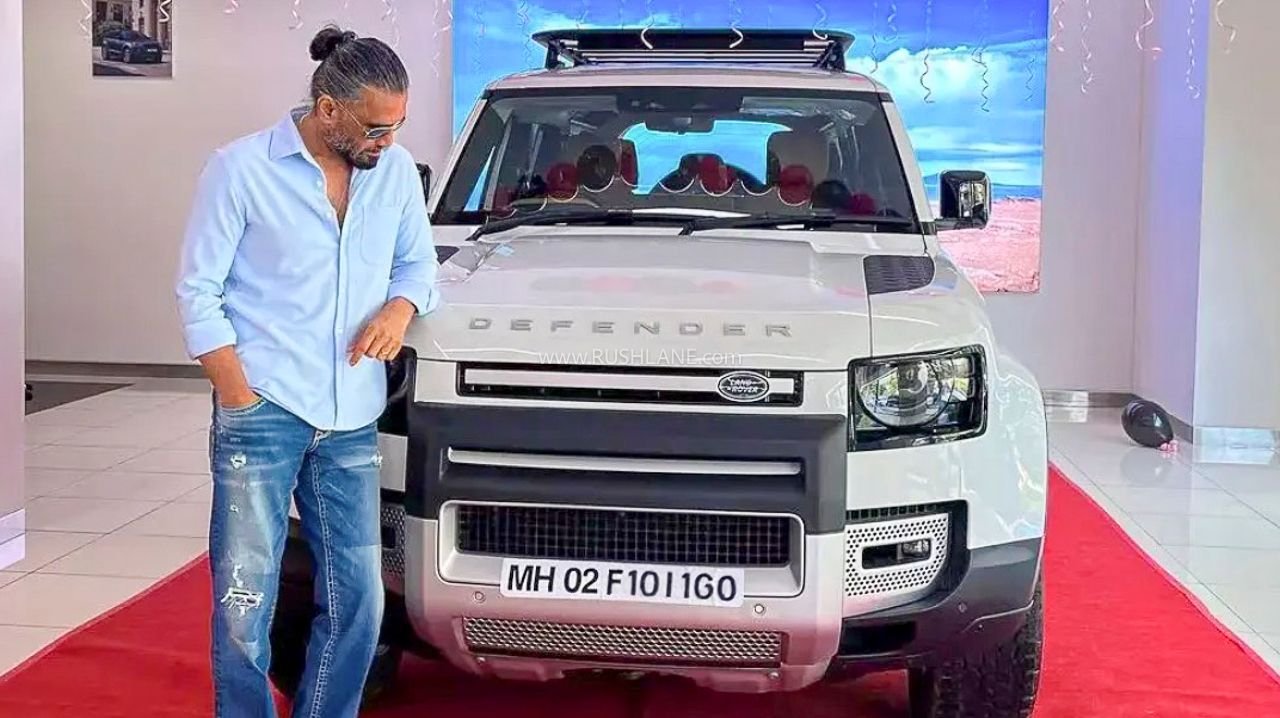
Jaguar Land Rover has registered 5,979 units, with the Defender alone contributing 2,470 units, making it the brand’s best-seller by a wide margin. Audi hit a record 4,777 units, led by the Q3 (1,631 units) and A4 (1,140 units), while its higher-end models saw relatively lower volumes.
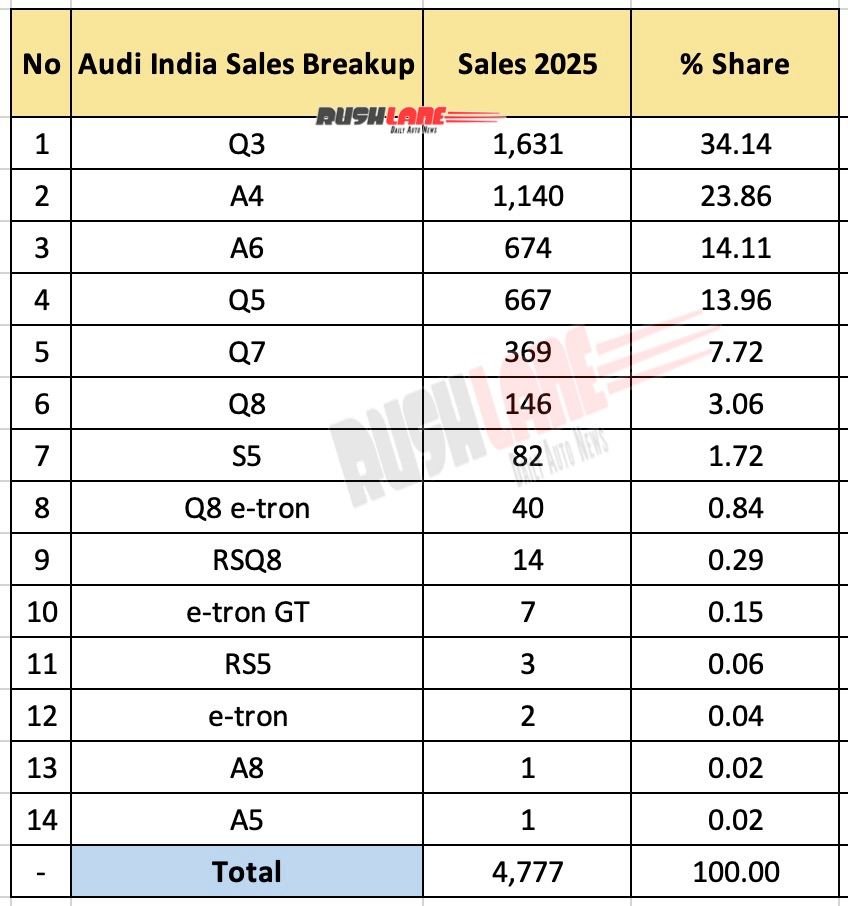
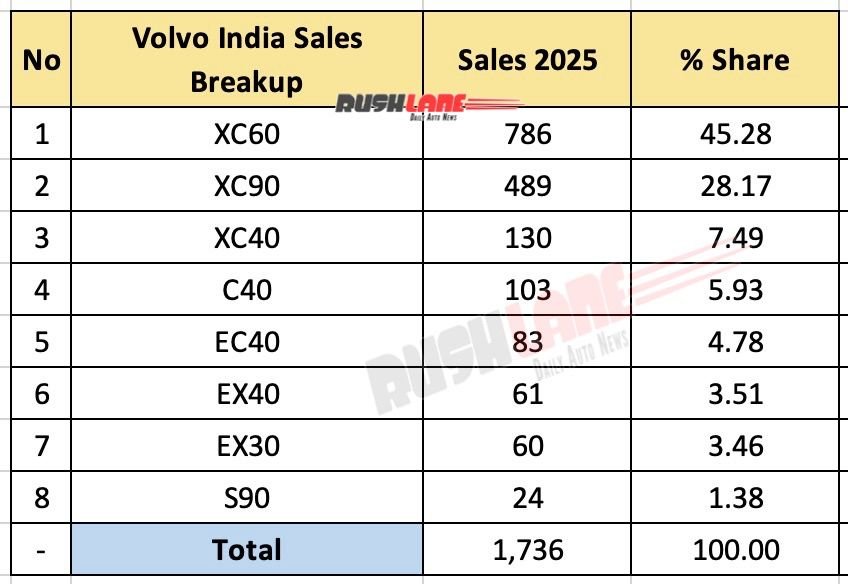
Among new entrants, BYD managed 2,527 units, mainly driven by the Sealion 7 (2,213 units), highlighting strong early acceptance of premium EVs. Volvo sold 1,736 units, with the XC60 (786 units) and XC90 (489 units) leading its portfolio. Tesla, with limited attendance, recorded 226 units, all of which came from the Model Y.
What does it mean
2025 luxury car sales data reinforces some clear trends. SUVs are now the backbone of the luxury market in India, contributing the majority of the volume. At the same time, EV adoption is gradually increasing, with models like the BMW iX1 and BYD Celion 7 making a strong impact.
Mercedes-Benz remains ahead thanks to its broad portfolio, while BMW is closing the gap with a strong mix of ICE and EV offerings. Going forward, increasing competition in electric luxury vehicles and new SUV launches are expected to further shape this segment.