
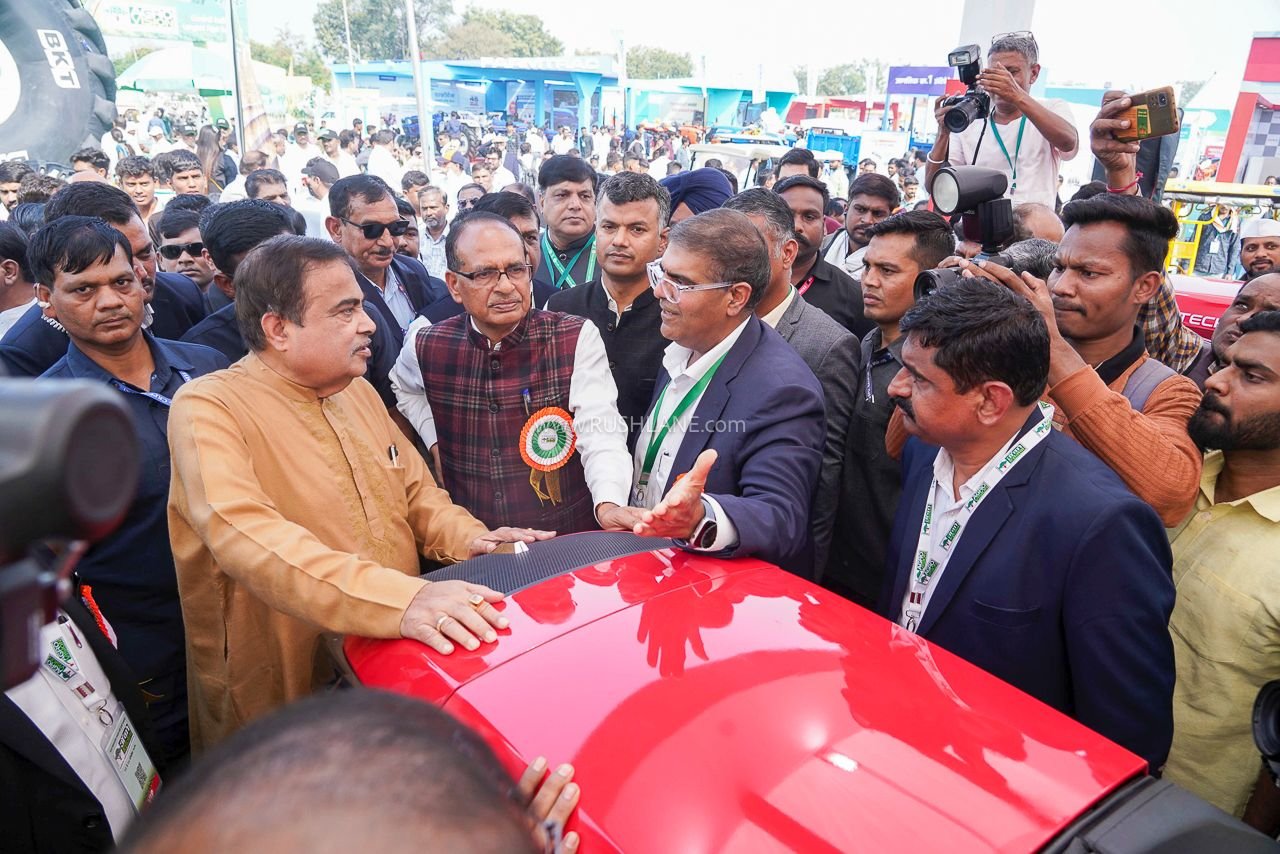
The Ministry of Road Transport and Highways (MoRTH) has issued a draft notification proposing major amendments to the Central Motor Vehicles Rules (CMVR), 1989. The move aims to update fuel classification and emission norms in line with I.India’s focus on ethanol blending increasing and alternative fuels.
The draft introduces provisions to formally include higher ethanol blends such as E85 and E100 within the regulatory framework. These changes are currently in place Open for public feedback for 30 daysAfter which the final decision will be taken.
E85, E100 fuels included in draft framework
One of the most notable updates is the inclusion of E85 (85% ethanol) and E100 (almost pure ethanol) fuels in the emissions and type-approval standards. While India has already achieved its E20 (20% ethanol blending) target in 2025, this draft signals the initial groundwork for even greater ethanol adoption in the future.
It is important to note that this is not an immediate rollout of E85 or E100 fuel. Instead, it is a regulatory step that allows testing, evaluation, and future preparation for flex-fuel vehicles and supporting infrastructure.
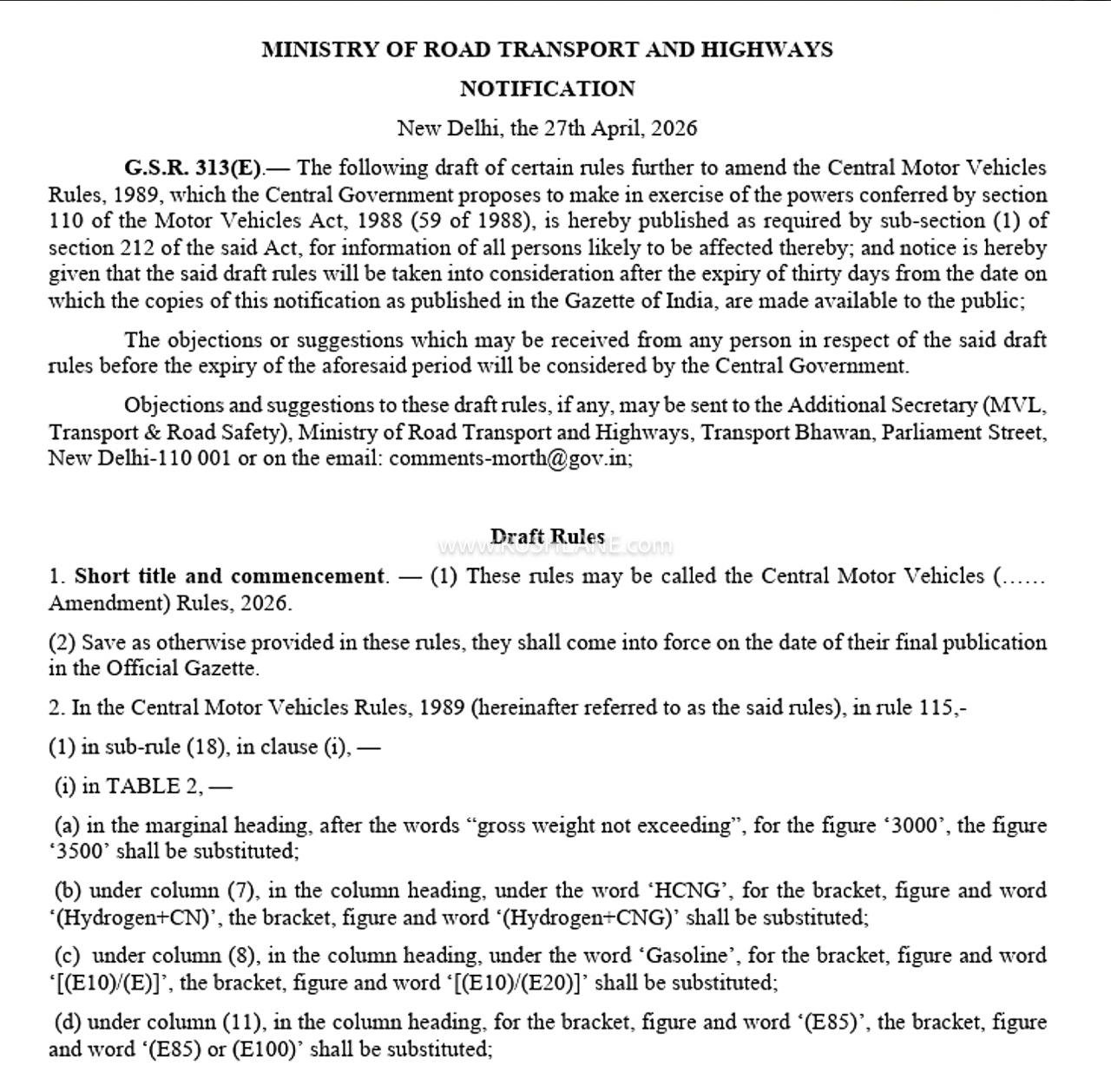
Updated fuel terminology, emission norms
The draft notification also proposes amendments to the technical fuel classification in the emission tables. For petrol vehicles, the fuel description will first be updated from ((E10)/(E)) format to ((E10)/(E20)), in line with the current nationwide fuel standards.
The hydrogen fuel classification has also been revised from “Hydrogen + CN” to “Hydrogen + CNG”, reflecting the updated terminology. Additionally, there is a proposal to expand biodiesel references from B10 to B100, indicating support for higher biofuel blends. Another change includes increasing the gross vehicle weight limit from 3,000 kg to 3,500 kg in select categories under emission norms.
Focus on future flex-fuel ecosystem
The draft rules indicate a broad policy direction aimed at reducing dependence on fossil fuel imports and promoting alternative fuels. Higher ethanol blends such as E85 and E100 are already in use in markets such as Brazil and parts of the United States, primarily in flex-fuel vehicles.
In India, discussions are underway between government bodies, automakers and oil companies to assess readiness for such fuels. This includes evaluating engine compatibility, fuel delivery infrastructure and long-term feasibility. Road Transport Minister Nitin Gadkari He has previously advocated for increased use of ethanol, even suggesting that India should aim for 100% ethanol blending in the future to increase energy security.
What does this mean for car buyers?
These proposed changes for car buyers There will be no immediate effectBecause E20 remains the current standard across India. However, this draft hints at a future where flex-fuel vehicles could become more common. Buyers may eventually have more fuel options, but it will also mean paying more attention to fuel compatibility when purchasing a vehicle.
Until the infrastructure for higher ethanol blends like E85 or E100 becomes widely available, most users are unlikely to see any changes in the real world. in the long runThis shift may reduce dependence on petrol, but factors such as fuel efficiency, pricing and vehicle compatibility will ultimately determine its success among everyday buyers.