
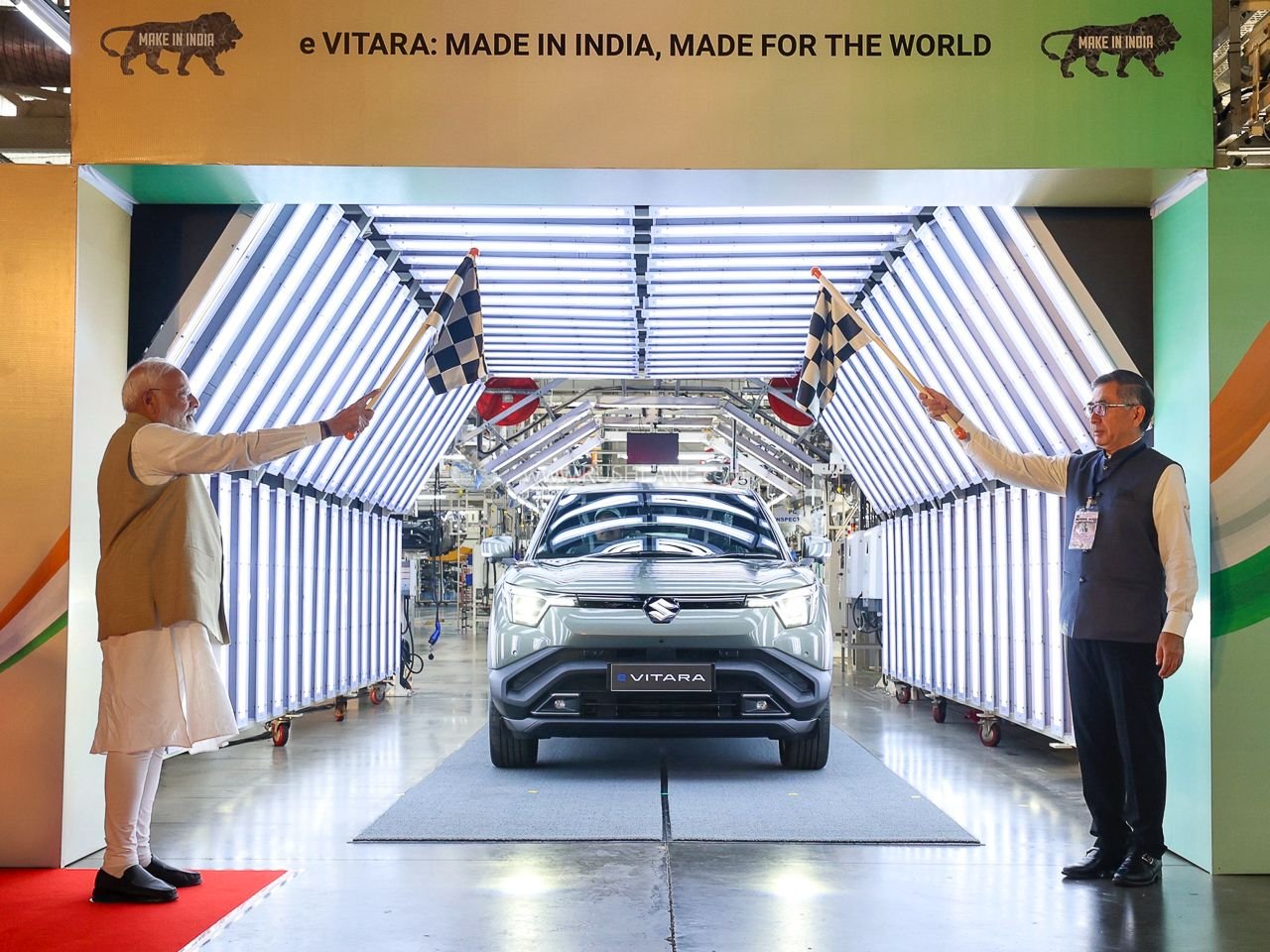
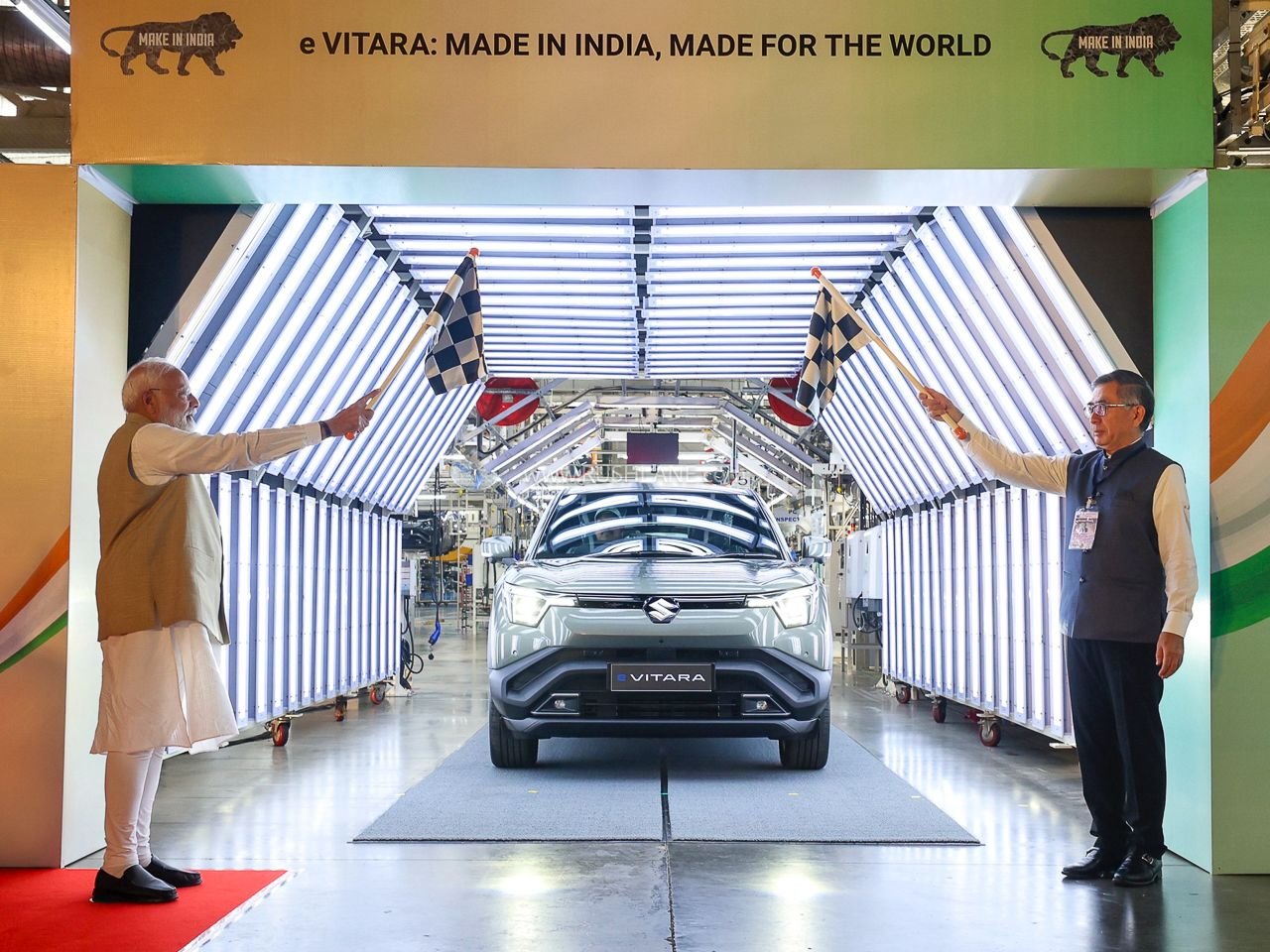
While its EV exports are already on the rise, Maruti expects further demand from the domestic market
Although it is a bit late to the EV game, Maruti is working on a measured, long-term strategy for this segment. The prices of Maruti’s first EV Evitara were recently announced for the domestic market. Maruti will also manufacture the Toyota Abella EV, which is a rebadged version of the Evitara. To meet the increased demand expected from the domestic and export markets, Maruti is building a special EV production line at its existing Gujarat plant. Let’s see the details.
Fine tuning the ICE-EV mixture
At its Hansalpur plant in Gujarat, Maruti is using one production line for both ICE and EV models. The annual capacity of this typical production line is approximately 1 lakh units per year. ICE cars like Frontex and EVs like Evitara and Toyota Abella are being manufactured on this production line. This mixed use is creating bottlenecks. Related issues may further increase as production lines ramp up to full capacity in the near future.
To fix such issues, Maruti is building a dedicated production line for its electric cars. Maruti’s existing plant in Hansalpur has a production capacity of 7.5 lakh units per annum. The new production line being developed is internally referred to as the ‘Production D’ line. Once operational, the total capacity of the plant will increase to 10 lakh units per year. With this approach, Maruti can also free up space for its popular ICE cars produced at the facility.
During a conference call, Maruti Suzuki senior executive officer (marketing and sales) Partho Banerjee said they are trying to achieve a balance between producing ICE cars and EVs on the shared production line. He said that the issues will be resolved soon and production will become much easier for both ICE cars and EVs after July. Maruti is also building a completely new second plant in Khoraj in Gujarat, which will add an additional capacity of 10 lakh units per annum.
Focus on reducing latency
Banerjee said the company is working to ensure low waiting periods, which has been one of the USPs of the brand. Car sales have increased dramatically after the implementation of GST reforms. Maruti is among those auto companies that have benefited greatly from lower GST rates.
In January, Maruti’s bookings registered an increase of about 25% year-on-year. Compared to the normal waiting period of up to a month for Maruti cars, pending bookings have increased to 1.75 lakh units. This is putting pressure on production lines, making it necessary to boost efficiency and expand capacity.
The demand for Maruti cars is continuously increasing. Wholesale sales in January stood at 2,36,962 units, an increase of 11.6% year-on-year. This is the highest monthly dispatch ever in the history of the carmaker. Domestic wholesales in January stood at 1,78,300 units, while export numbers increased to 51,020 units, a growth of 88%. Dealer stock in transit is around 6-7 days, indicating continued high demand for Maruti cars.