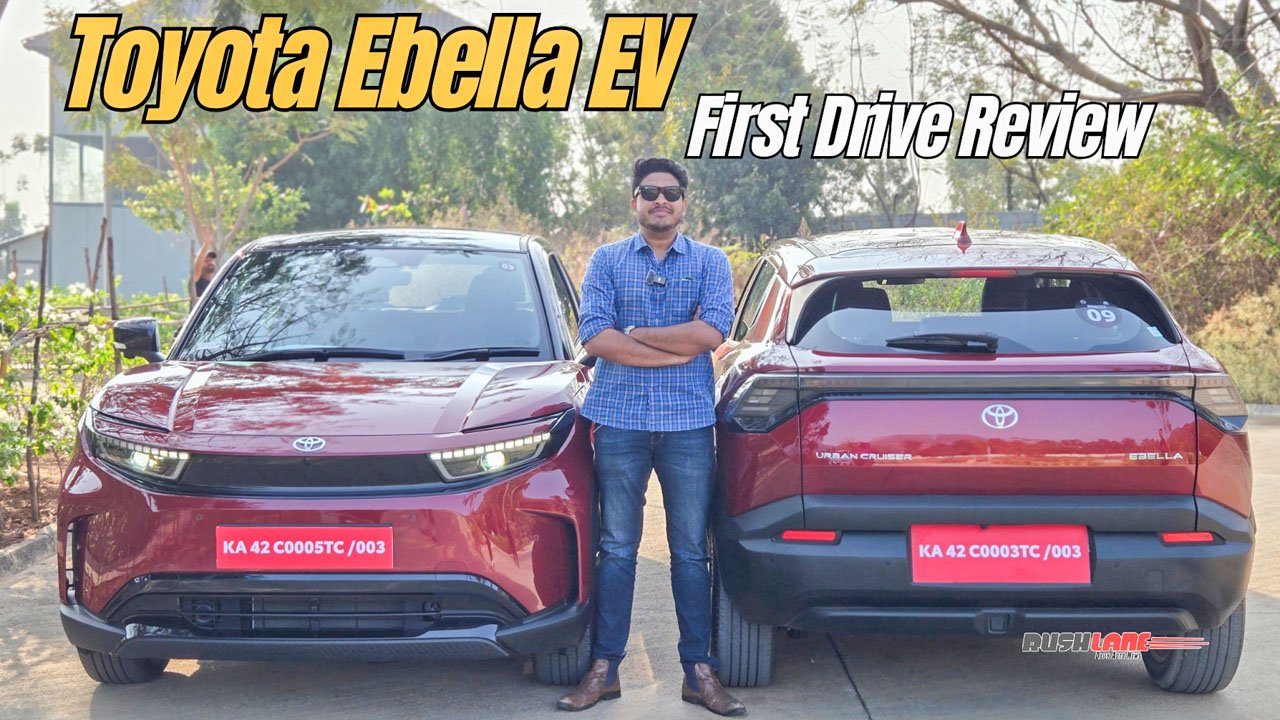
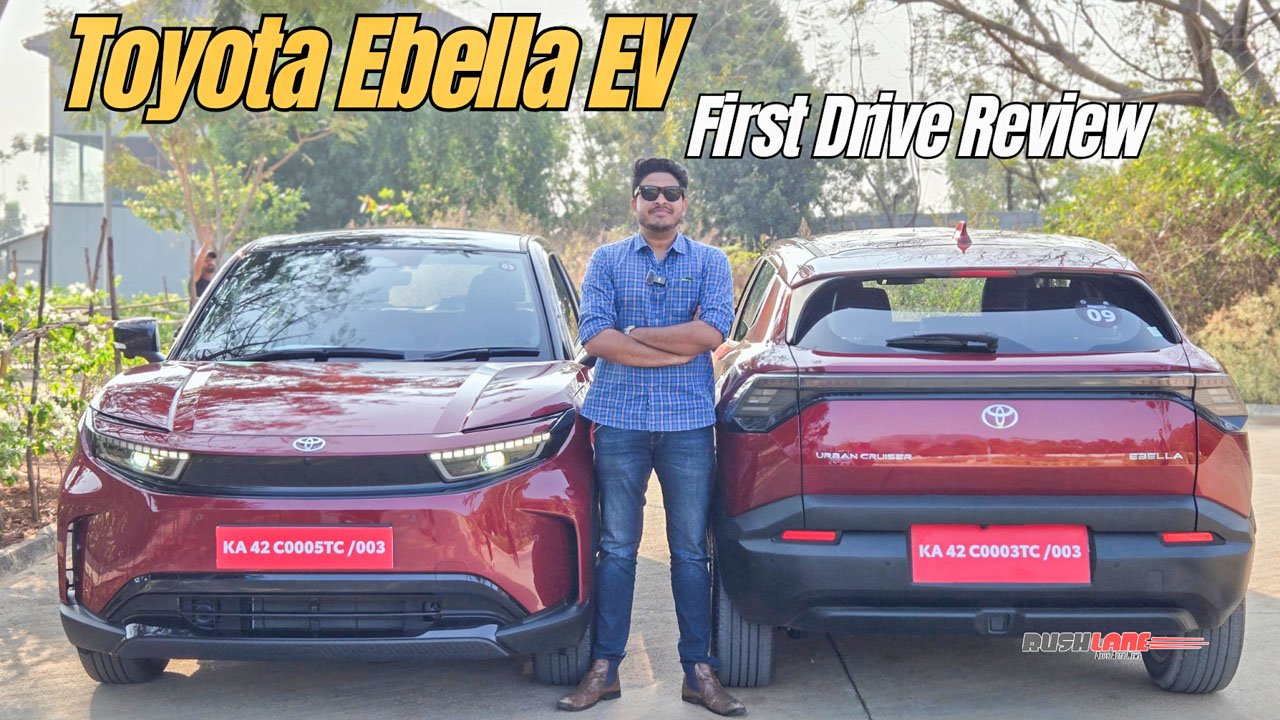
After driving the Maruti Suzuki Evitara in Gurugram, we recently drove the Toyota Abella in Bengaluru. This is a direct result of the strategic partnership between the two brands. Like the Evitara, we did not know the prices of the urban cruiser Abella during the drive, which is becoming quite a trend among Indian automotive OEMs these days. We wanted this not to happen because it makes it difficult for us to approach and draw conclusions.
Anyway, we experienced the Toyota Abella on good roads, some bad roads and highways in Bengaluru to understand this vehicle. You don’t need to be a genius to realize that the Toyota Abella is quite late to the party. But now that it’s here, what do we think about this C segment EV.
Toyota Abella First Drive Review – Design and Appearance
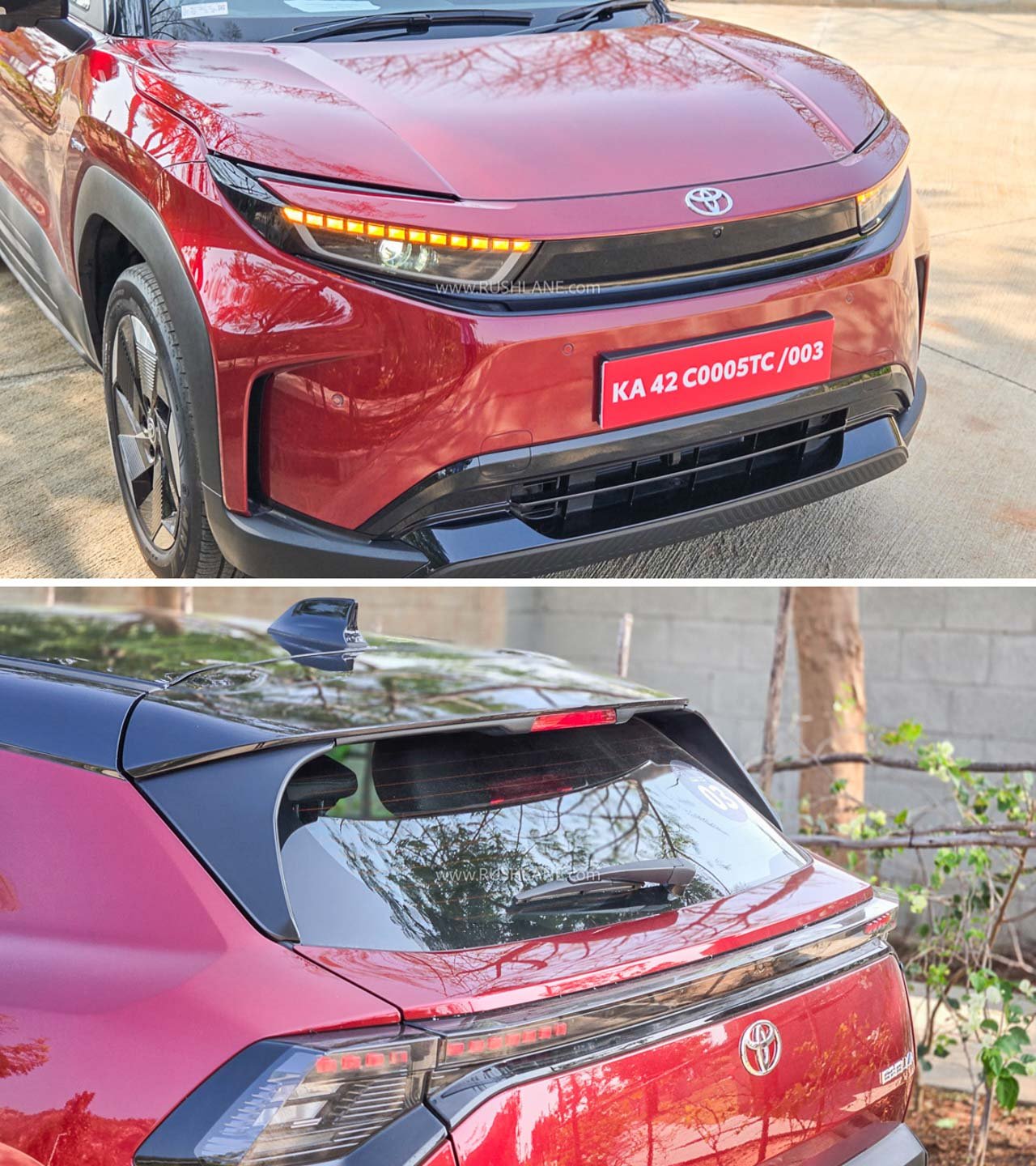
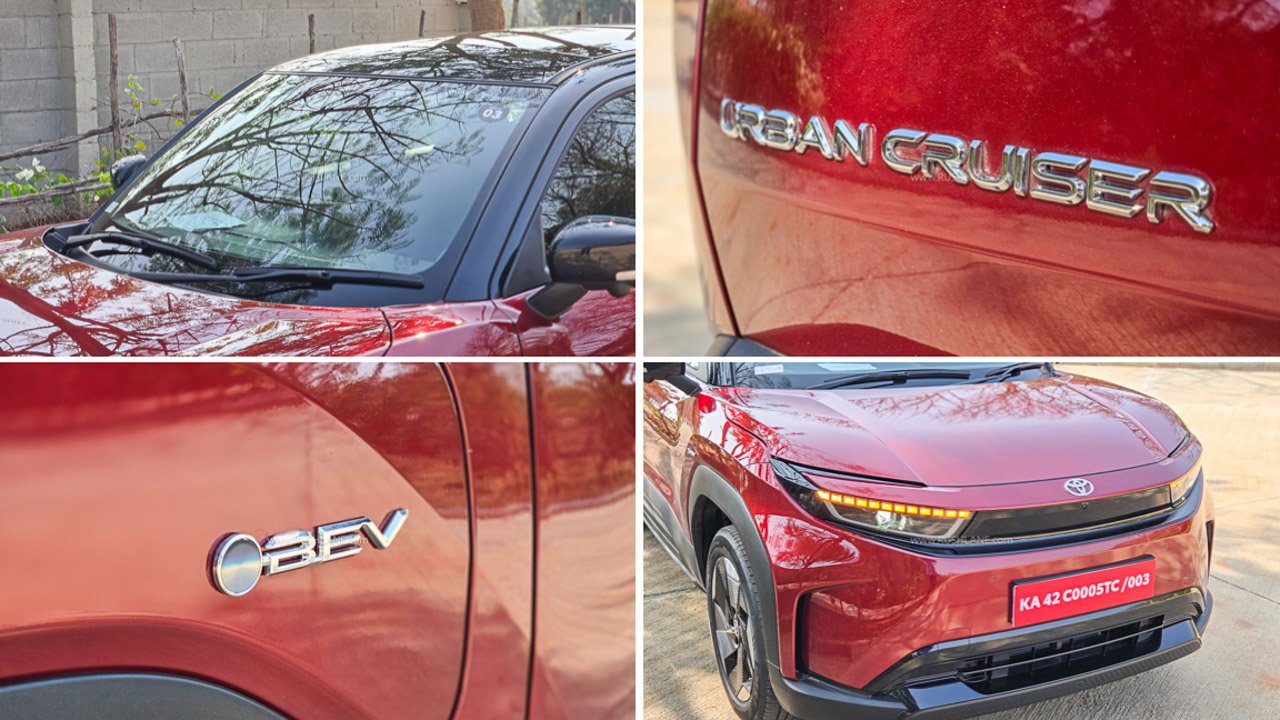
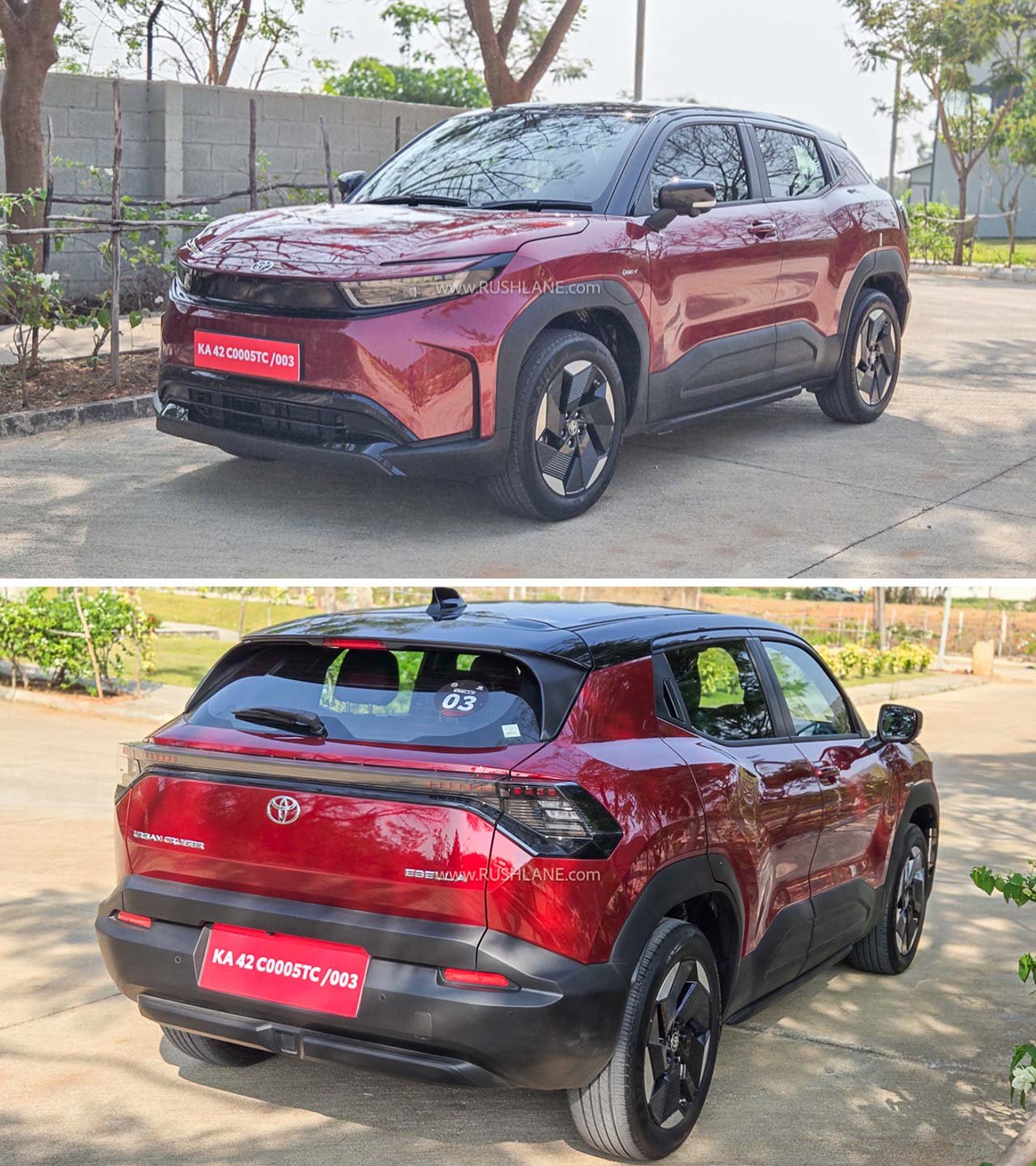
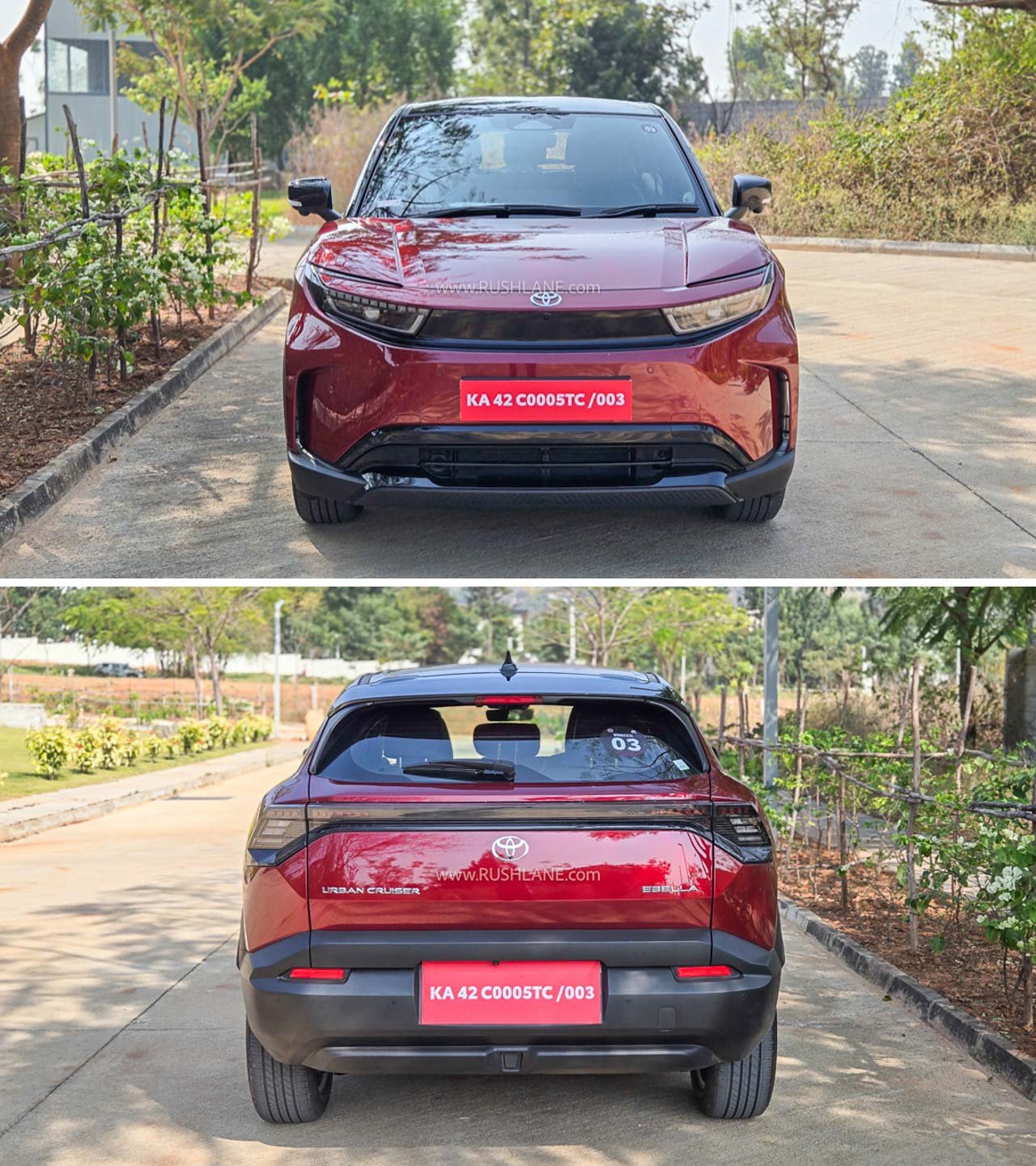
Starting with the way it looks, the Toyota Abella reminded us of the Mahindra KUV100 (pre-facelift model) for some reason. However, only from the front. Which is not a bad thing in our opinion. Even though it is a badge-engineered version of the Maruti Suzuki Evitara, Toyota designers have done a great job in creating a unique identity for the Abella. We can see this in the front and rear designs where all the changes lie.
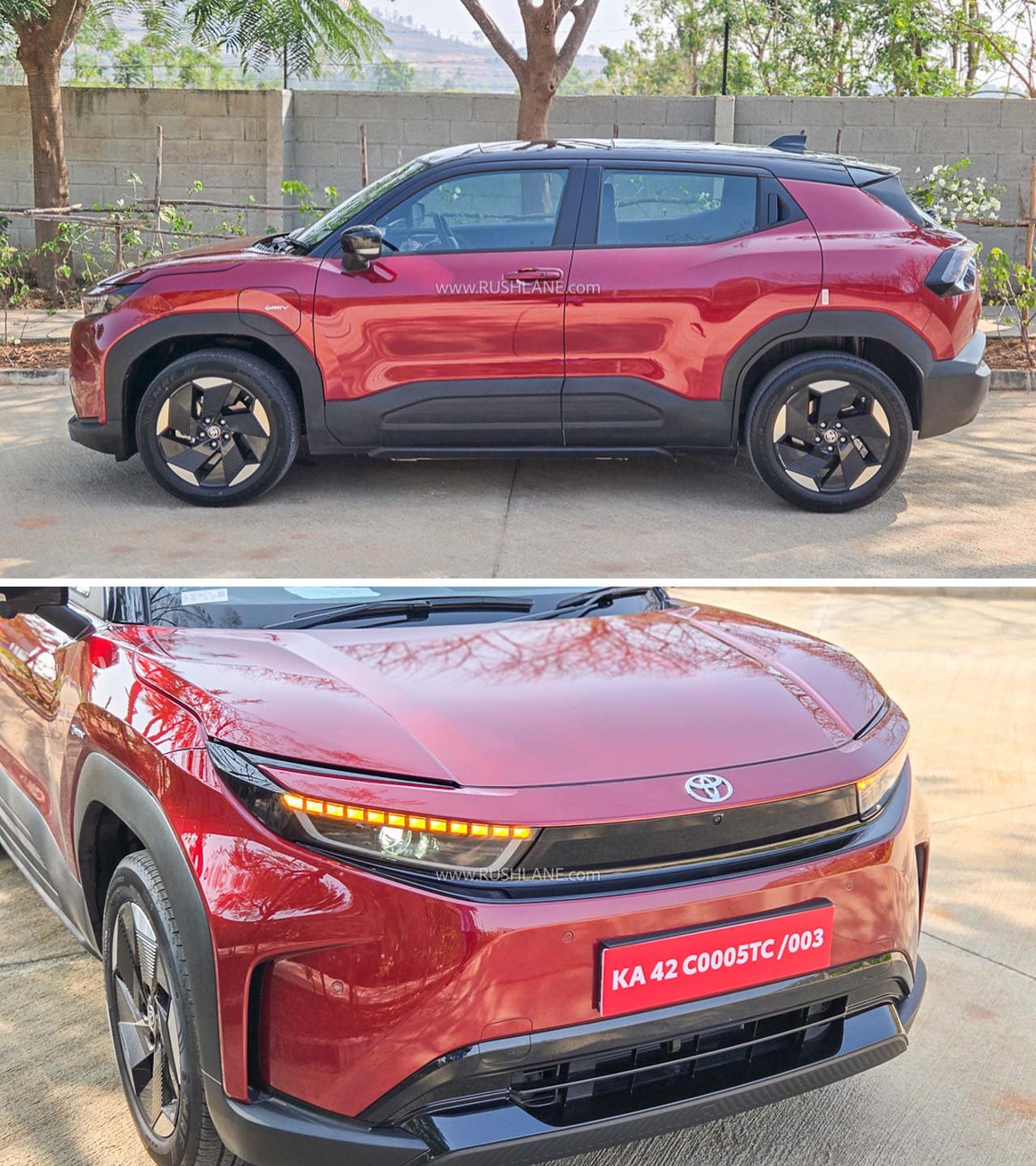
At the front, Toyota has given the Abela a new fascia with its signature Hammerhead design language, inspired by other Toyota cars in its global lineup. We get a projector LED headlight setup in a sleeker housing. There is a pixel like LED DRL signature and we can also see a glossy black element connecting both the headlight units. The bumper is unique with the Abella, it includes aerodynamic slits that are also functional.
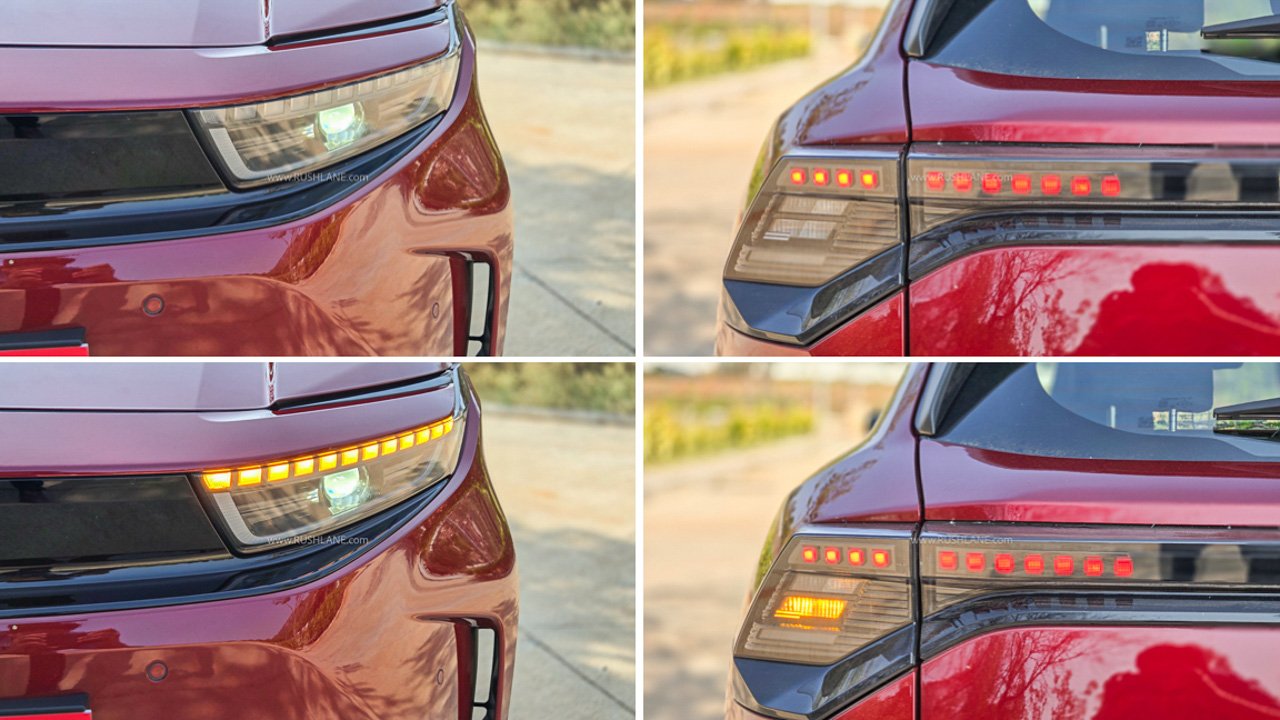
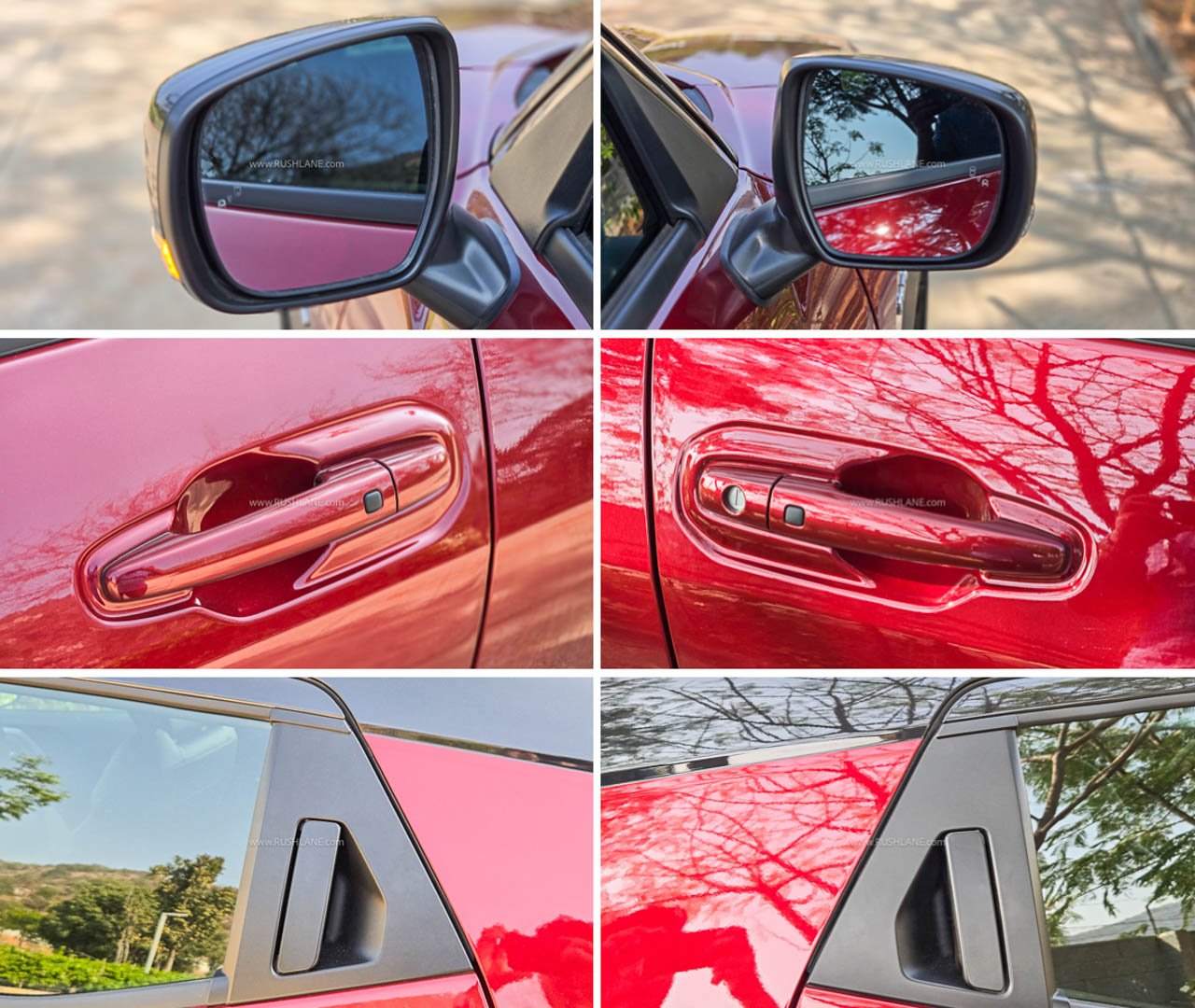
At the rear, we get a unique pixel design LED tail light signature that gives the Abella its identity. Additionally, the rear bumper, side silhouette, UV-cut glass, 18-inch alloy wheels, 225-section tires and body cladding are shared with the Maruti Suzuki Evitara. The only feature the Evitara doesn’t get in the Abel is the LED fog lights, which is quite interesting. The Abella measures 4,285 mm in length, 1,800 mm in width, 1,640 mm in height and has a long wheelbase of 2,700 mm and 210 mm of ground clearance.
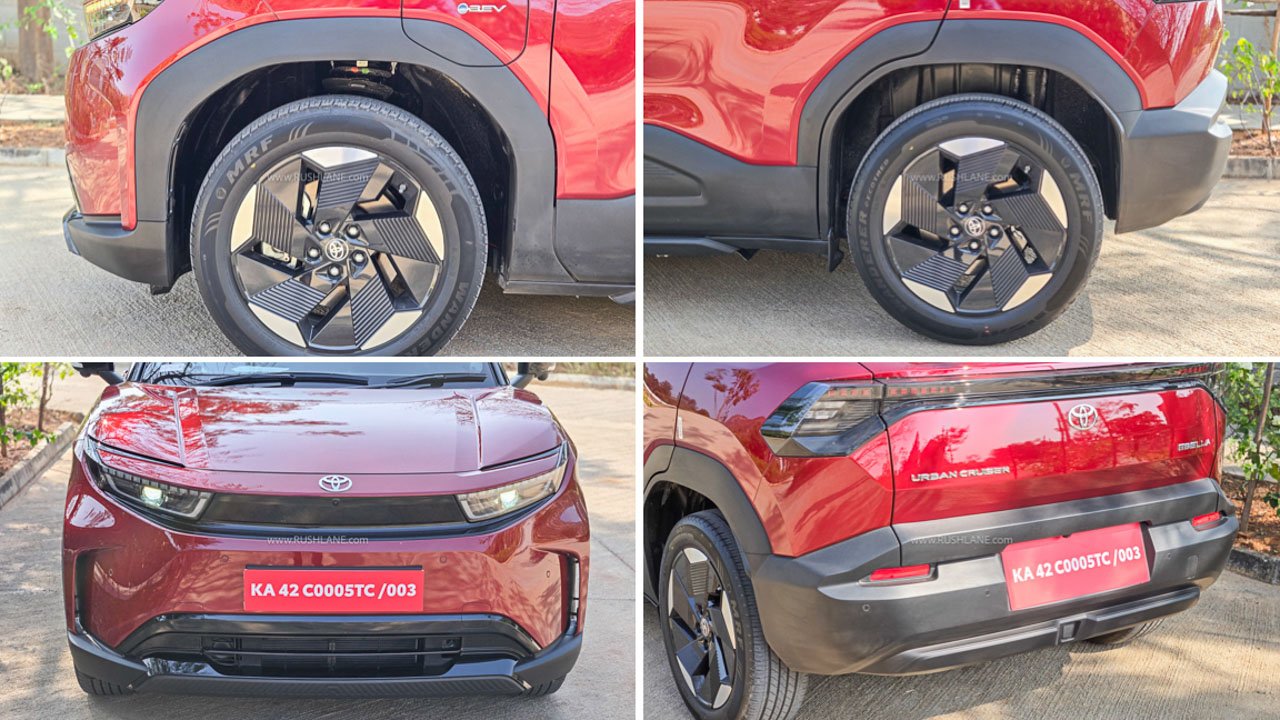
Even though the Abella is one of the smaller offerings in its segment, it has a great stance thanks to its large 18-inch alloy wheels and wide 225-section tyres. We would have liked if Toyota had carved out some storage under its muscular bonnet (frunk), which is a missed opportunity. Like the Evitara, the Toyota Abella has a small boot, but a proper full-size alloy wheel has been kept as an extra, which is a trend we wish other manufacturers would copy.
internal characteristics
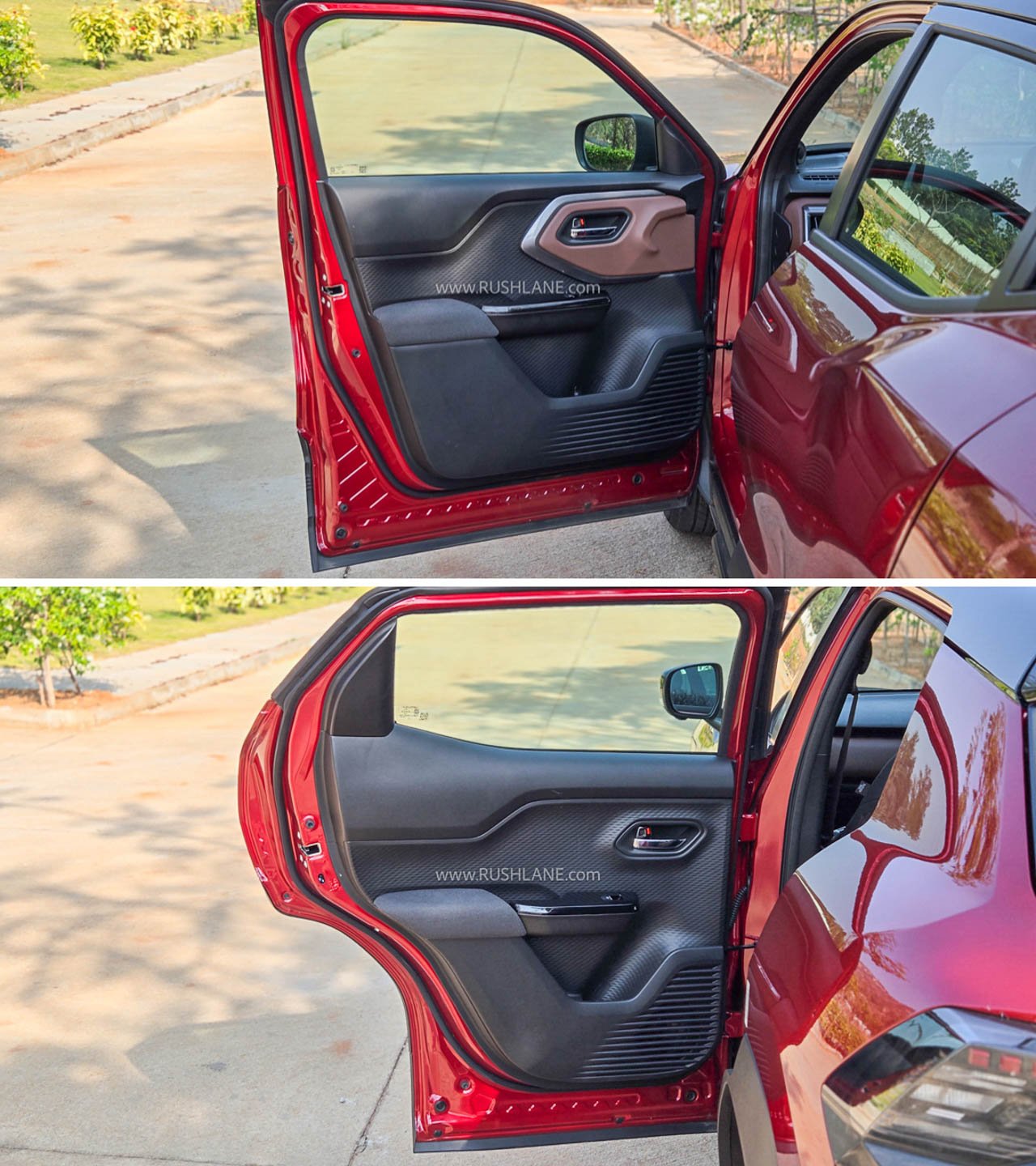
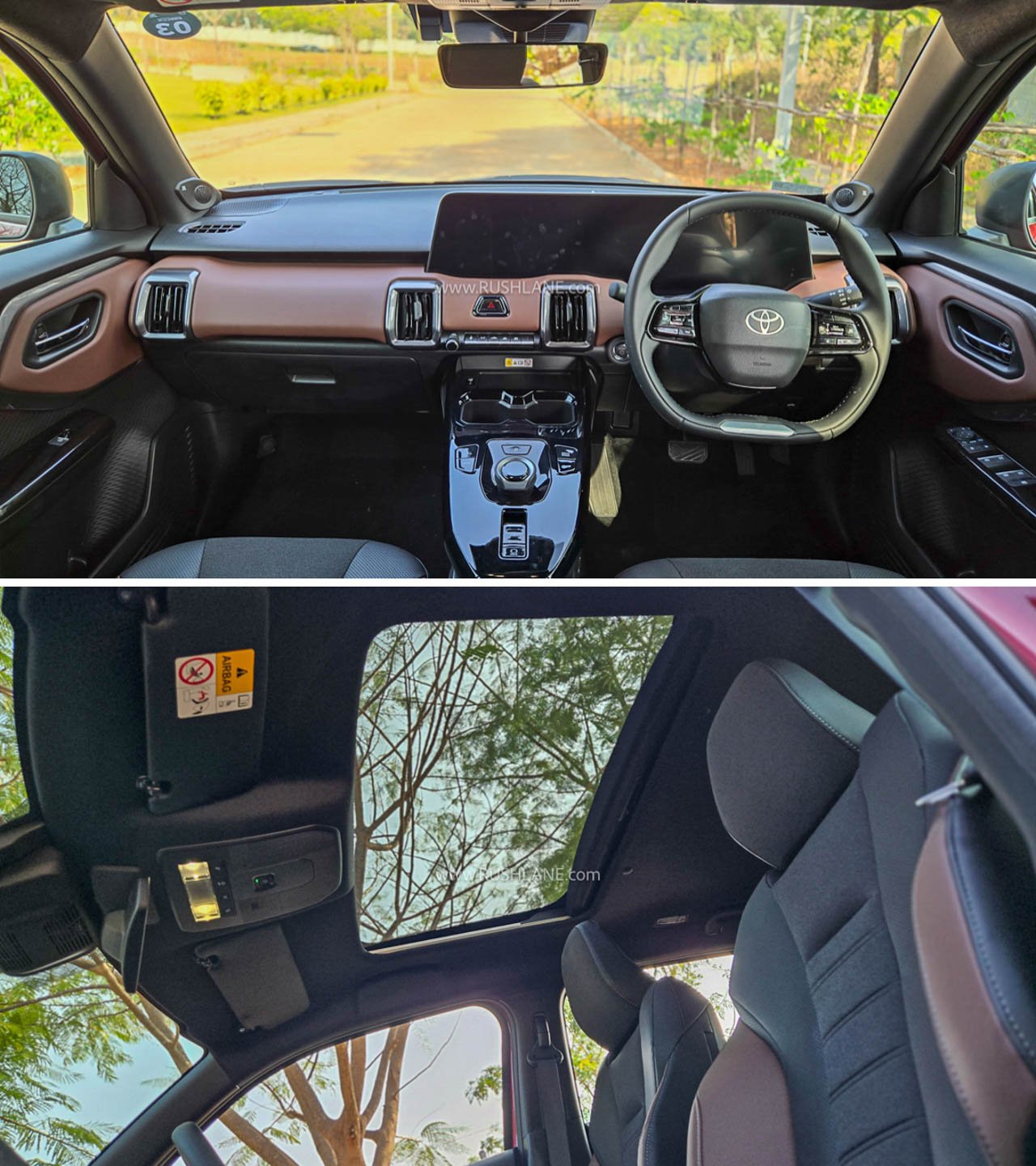
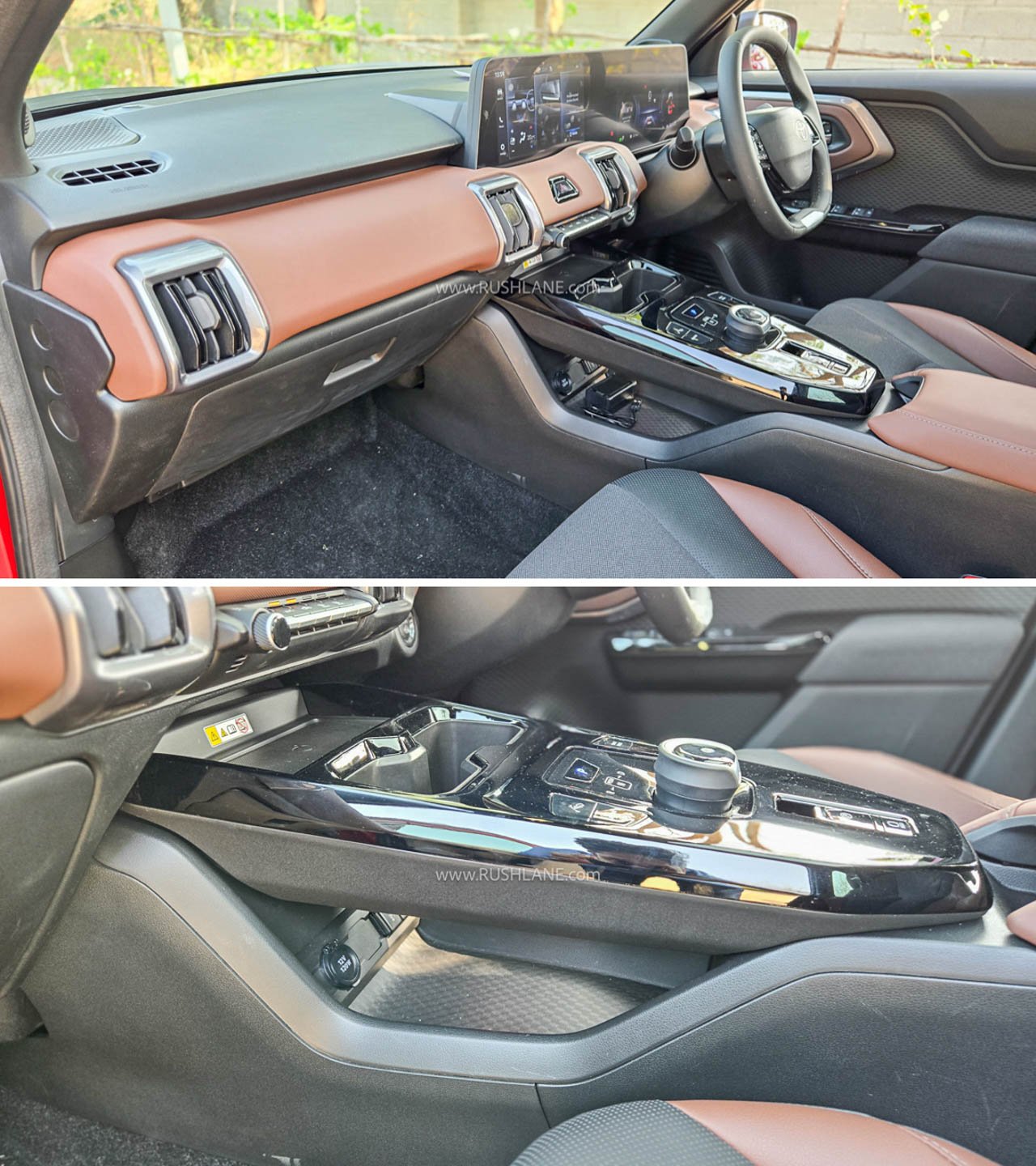
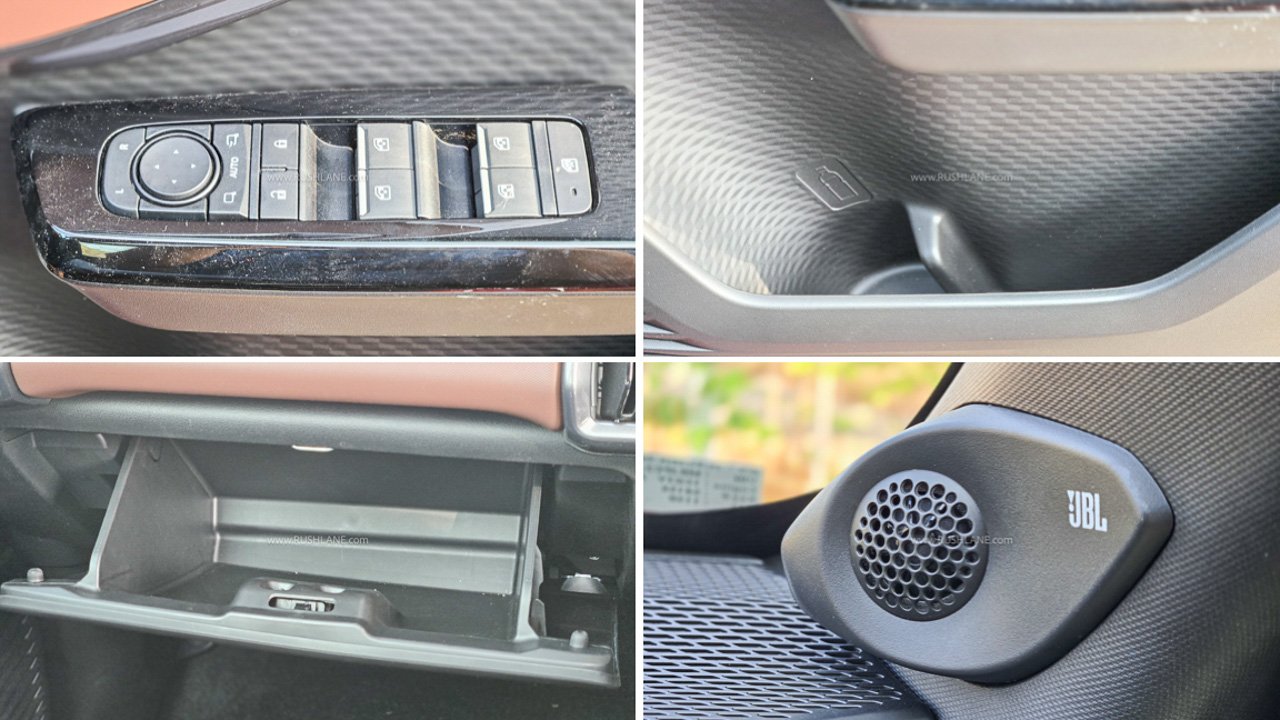
On the inside, there is nothing unique about the Abella compared to the Evitara apart from the Toyota badge, which replaces the Suzuki badge. The dual tone brown and black theme looks contemporary and there are plenty of soft touch elements on the dashboard and door trims. The seats are partly leatherette and partly cloth and only the front seats are ventilated and only the driver’s seat is 10-way electrically adjustable, including under the thigh, which we liked.
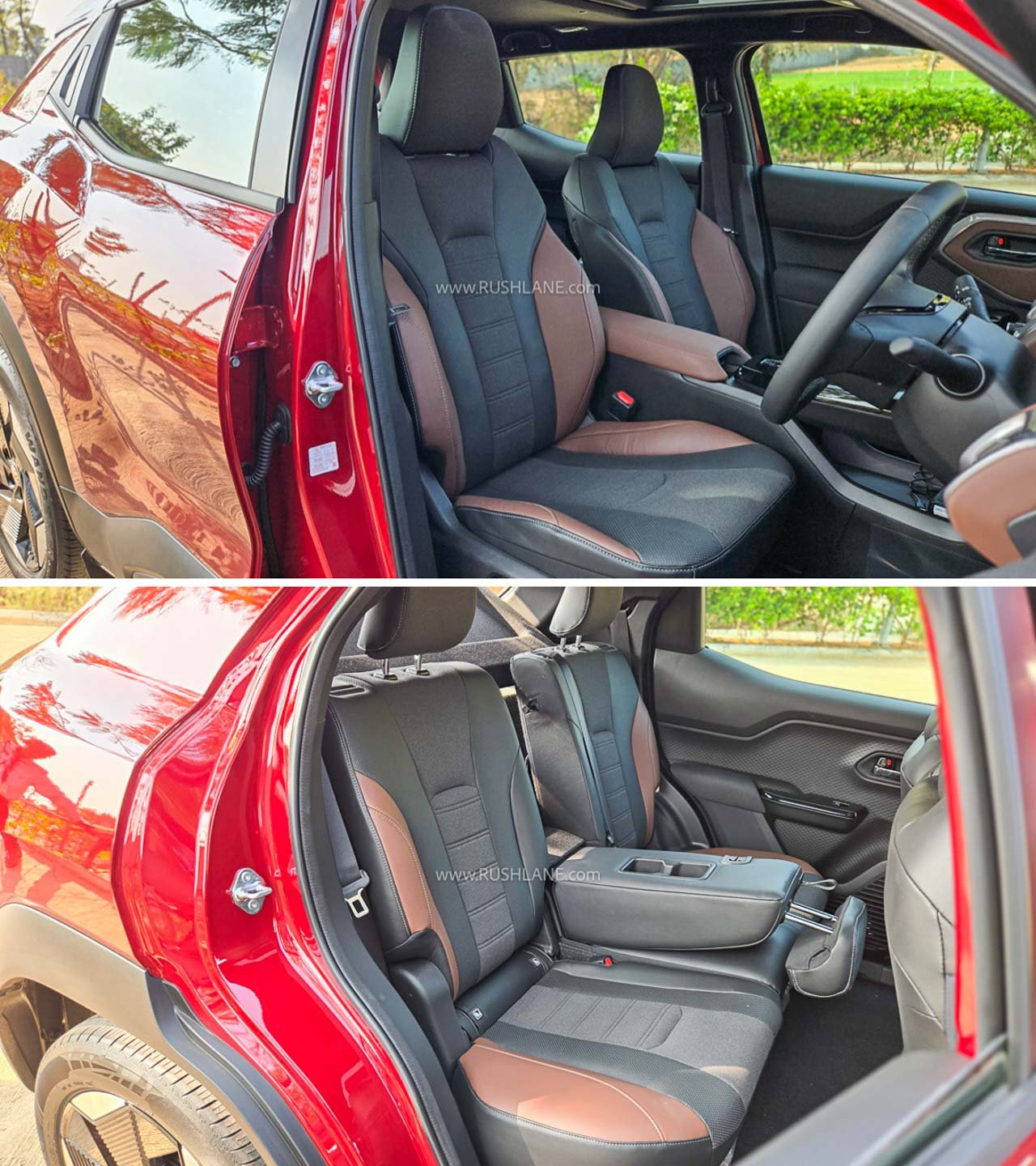
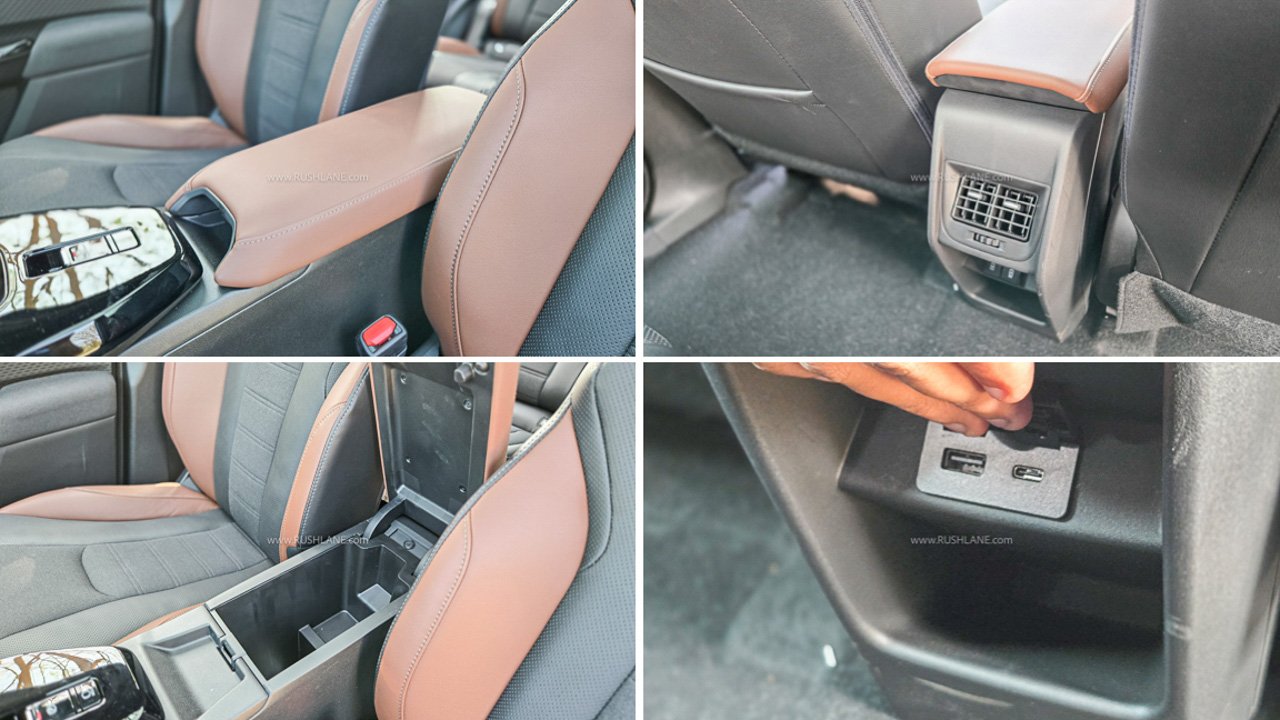
The rear seats of the Abella can be reclined and can also be slid fore and aft. There are three adjustable head rests, although there’s no real room for three adults. Also, the middle head rest is a major nuisance for the driver to view the small rear windshield through the IRVM. The rear bench splits 40:20:40 like a European car, allowing the middle section to load longer items while seating four people. It also serves as a center armrest that brings cup holders for convenience.
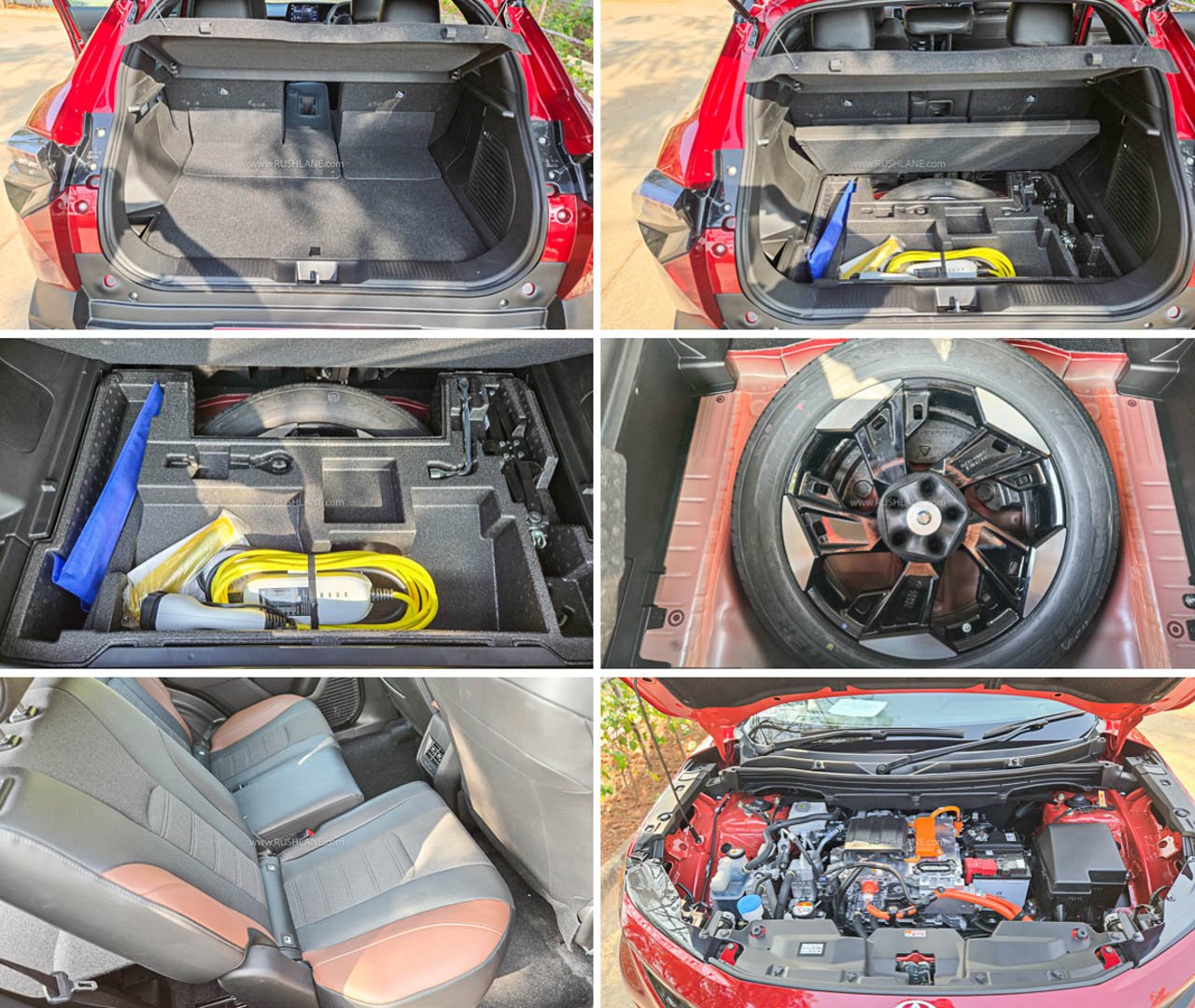
Rear seat occupants get dedicated AC vents, an almost flat floorboard, one Type-A and one Type-C USB port and reading lights, but there is no sun shade at the back. UV-cut glass works, but isn’t good enough to replace physical sun shades. At the front, there is a 10.1-inch touchscreen infotainment screen on the dashboard and a 10.2-inch TFT instrument screen in the same housing, but it is not aligned with the infotainment screen, it looks like it is in a different time zone altogether.
The infotainment screen shows a slight delay in responding to touch inputs and the overall UI needs some redesign and rethinking to make it more intuitive. For example, the ventilated seat controls require multiple screen taps and waiting, which shouldn’t happen. Additionally, the screen ratio is square rather than being a wide rectangle, which means it’s nearly impossible to use two apps simultaneously in Android Auto.
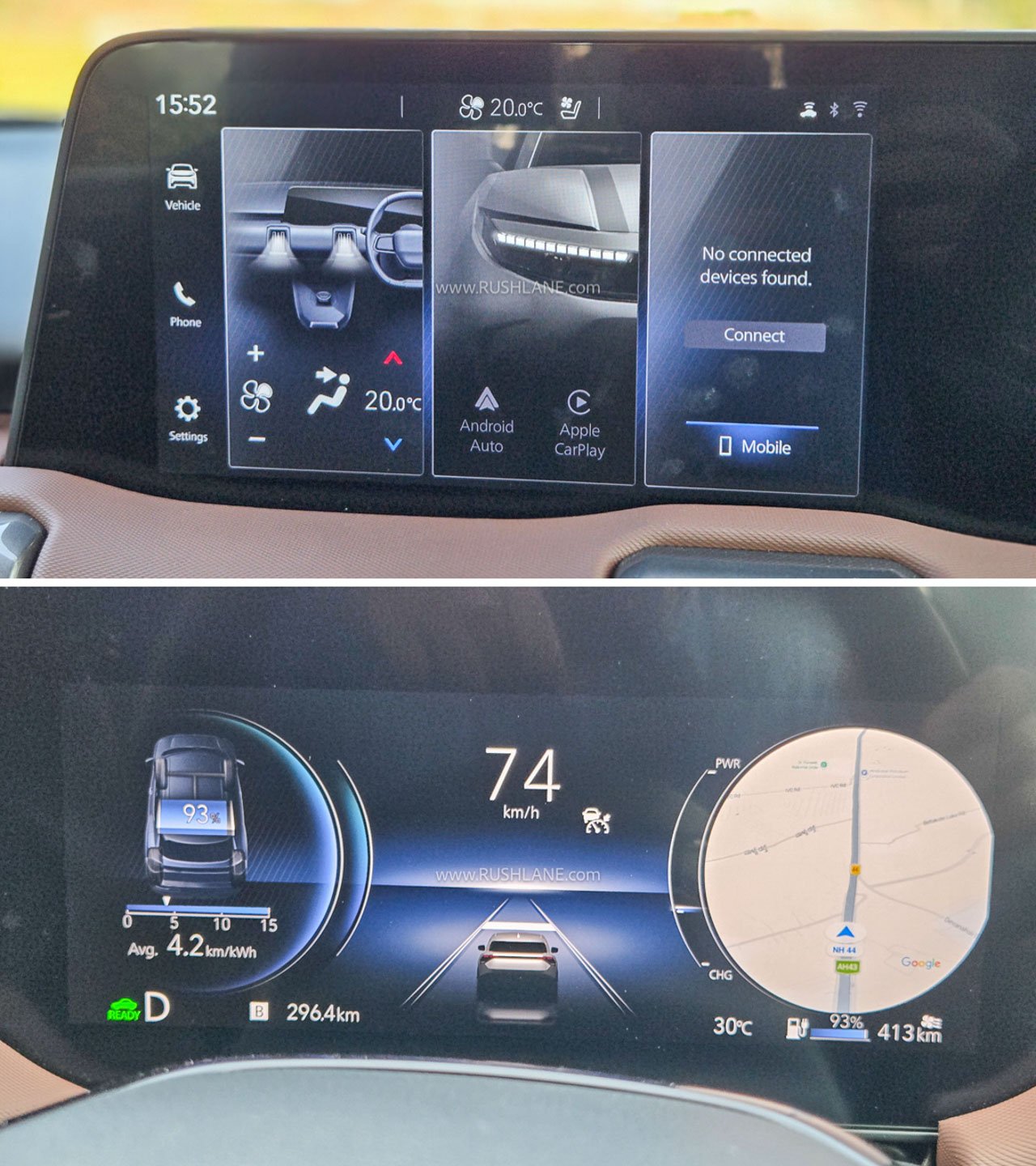
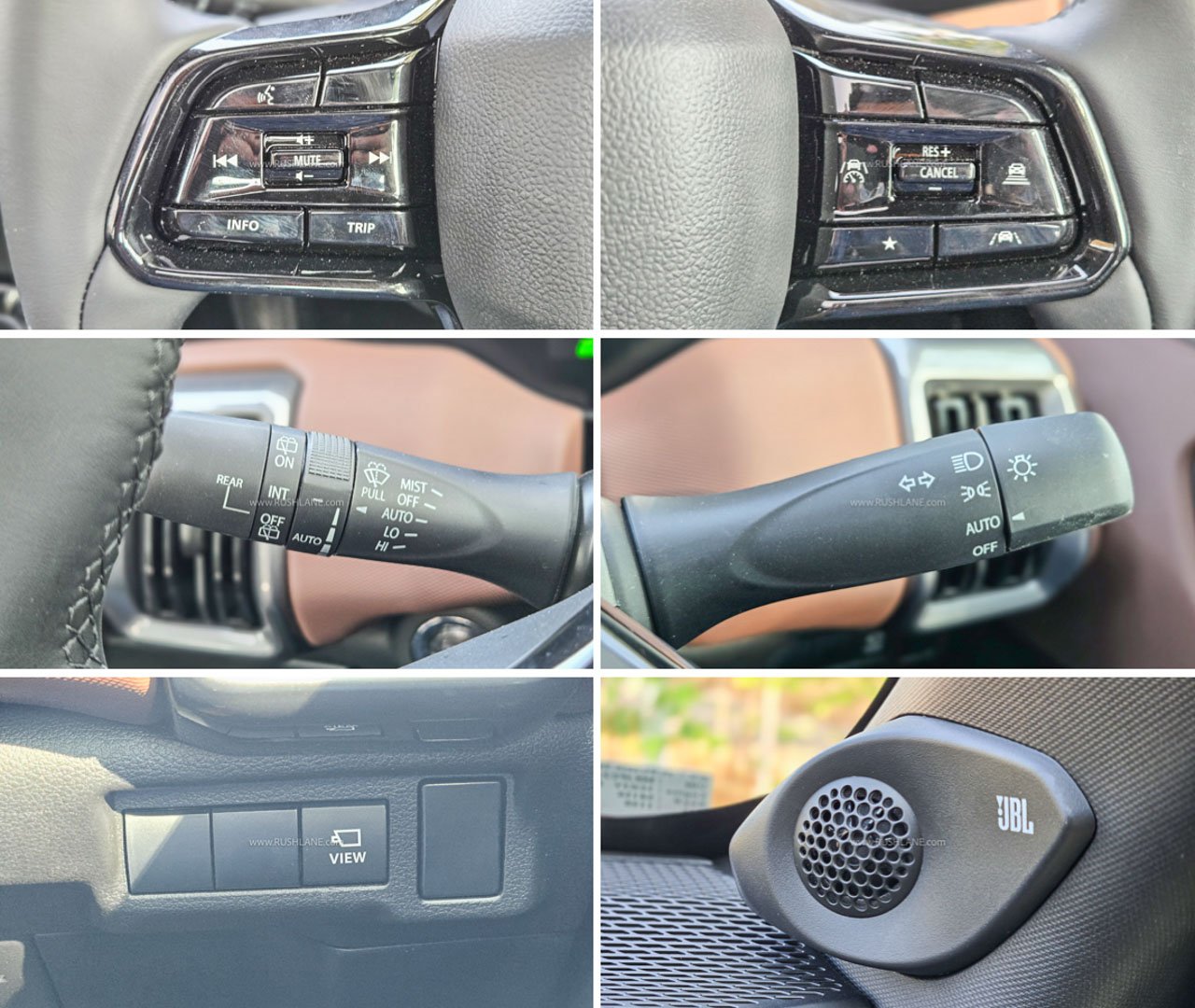
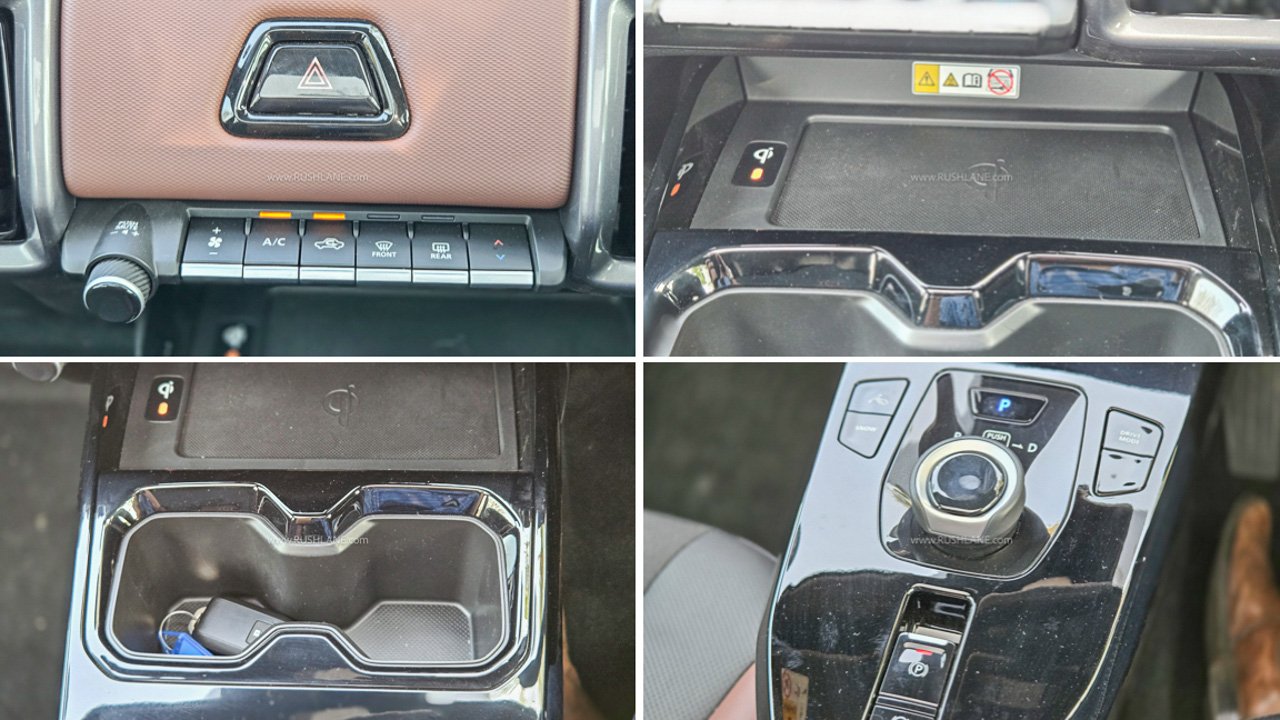
The TFT instrument cluster is quite functional and shows a lot of information. Even navigation details are shown here, which compensates for the lack of a HUD. The two-spoke steering wheel is nice to grip and has plenty of buttons for audio and instrumentation. Even the cruise control and ADAS related buttons are on the steering wheel. There are no paddles to adjust the regen, but there is a button on the floating center console to turn the regen on/off completely. This is where we get an e-shifter, which will take some getting used to.
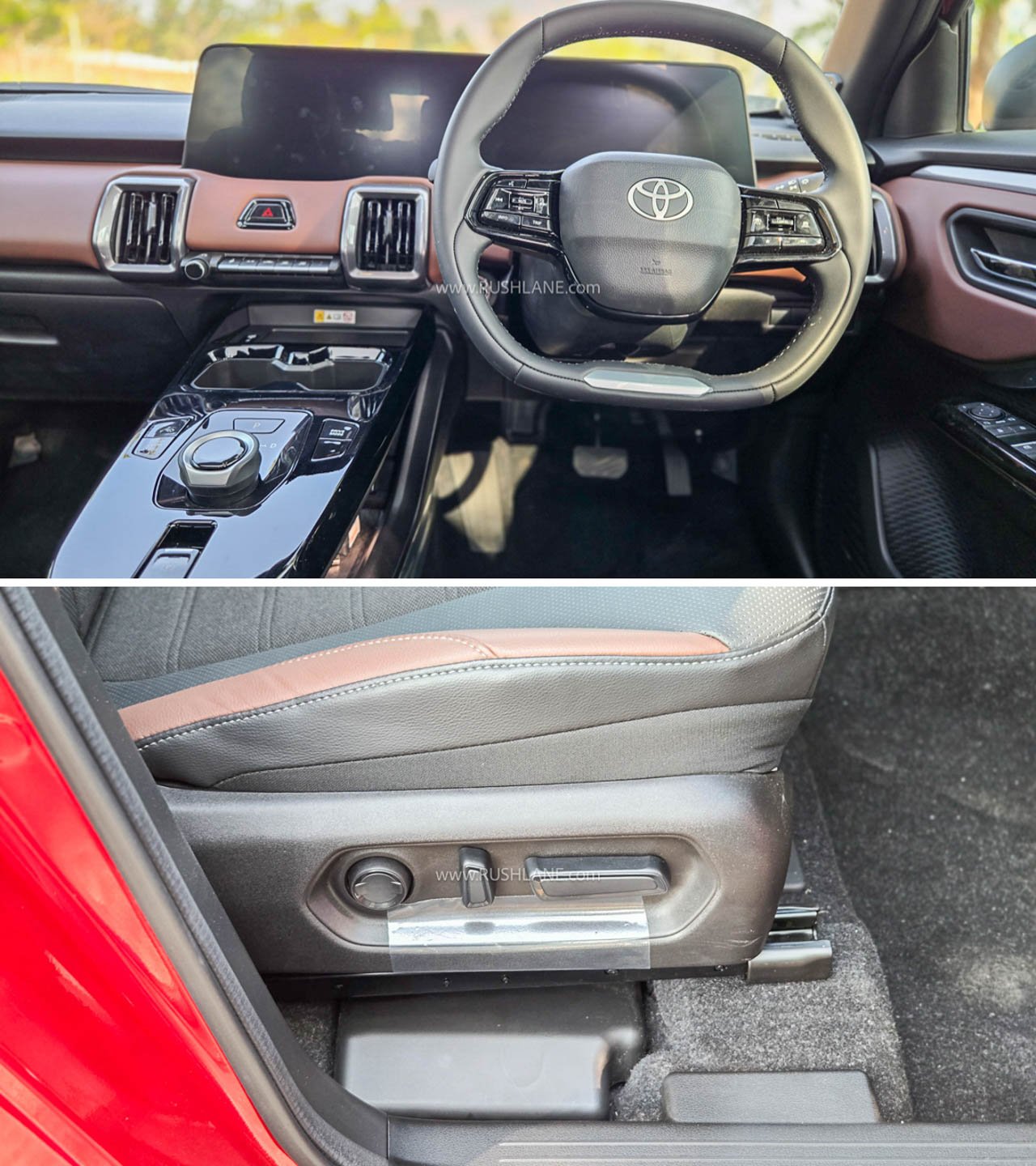
Even though the ‘Hold’ function was on, we found that the electronic parking brake was not engaging automatically. The center console has some physical buttons for vehicle functions including dials for volume and climate control buttons. Below this there is a wireless charging pad and some cup holders. If you’re looking for the 360-degree camera button, it’s inconveniently located behind the steering wheel. If you’re interested in these types of things, the IRVM is auto-dimming and has a fixed glass roof and manually opening shade.
Comfort and Drive Dynamics
The first thing that catches one’s eye after entering the Toyota Abella is its high floor height, which we also complained about in the Evitara. This ensures knee-high position for all occupants, but only the driver gets adjustable under-thigh support. Headroom for the rear occupants is tight, which is acceptable for the front occupants. Both the driver and co-driver sun visors lacked illumination and the glovebox was not cooled, which was a surprise.
Driving the new Toyota Abella is a joy, which is a major strength of this platform. We drove the E3 trim with the larger 61 kWh battery pack, which promises to range up to 543 km on a single charge. The E3 has a maximum power of 128 PS and 193 Nm of instantaneous torque. The acceleration in Sports mode is quite addictive, which reduces considerably in Eco mode, while the Normal mode is like a bridge between the two.
The suspension setup of the Abella is soft, providing good ride quality. Bump absorption is quite commendable and suspension noise is well controlled. During our brief test, we did not experience the suspension bottoming out and ground clearance was also adequate. High speed cornering induces a lot of body roll, which is par for the course for this segment. Braking performance leaves little to complain about and just needs a little more initial input. However, absolutely at par for its segment.
Unlike some of its competitors, the ADAS features worked well and weren’t too intrusive. Toyota Abella offers 7 airbags as standard including an airbag for the driver’s knee. Even though the Abella has 360-degree cameras, Toyota has not implemented blindspot assistance with side camera feed on the instrument cluster. Like the Evitara, the Toyota Abella also lacks load sensors for the rear seats that trigger a seatbelt warning on the instrument cluster.
conclusion
It is a difficult task to draw conclusions about Toyota Abella without knowing the prices. This is more or less the same package as the Maruti Suzuki Evitara. Abella brings a more sophisticated design that gives it a more premium appeal. It brings the desirability of the Toyota badge, while losing functional features like fog lights that the Evitara offers. The main attraction of the Toyota Abella could be its BaaS pricing as well as a robust charging infrastructure, which it will share with the Evitara.
Even though it’s late to the party, it doesn’t make a complete statement. Depending on what you want in an EV, the Toyota Abella may or may not be right for you. There is no middle ground. However, pricing and especially BaaS plans may change our opinion. If you’re in the market to buy an electric SUV, you should probably look at the Toyota Abella, even if it’s not on your shortlist. Especially if the BaaS prices fit your bill whenever they are announced.