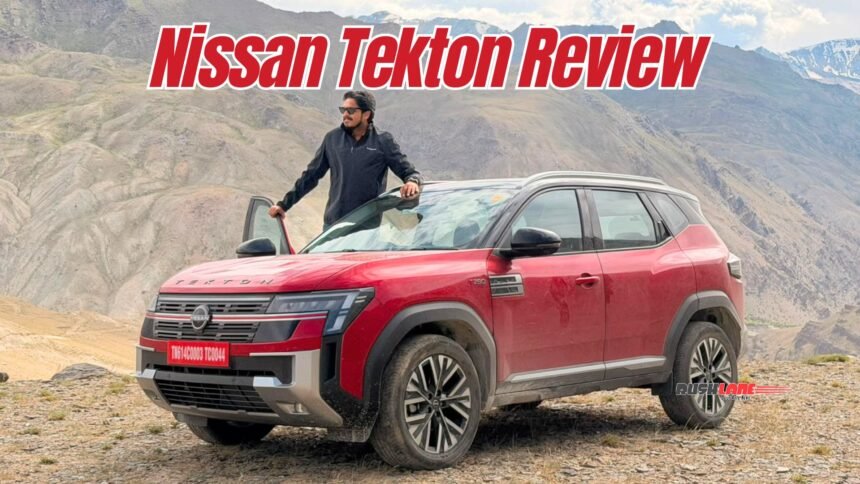
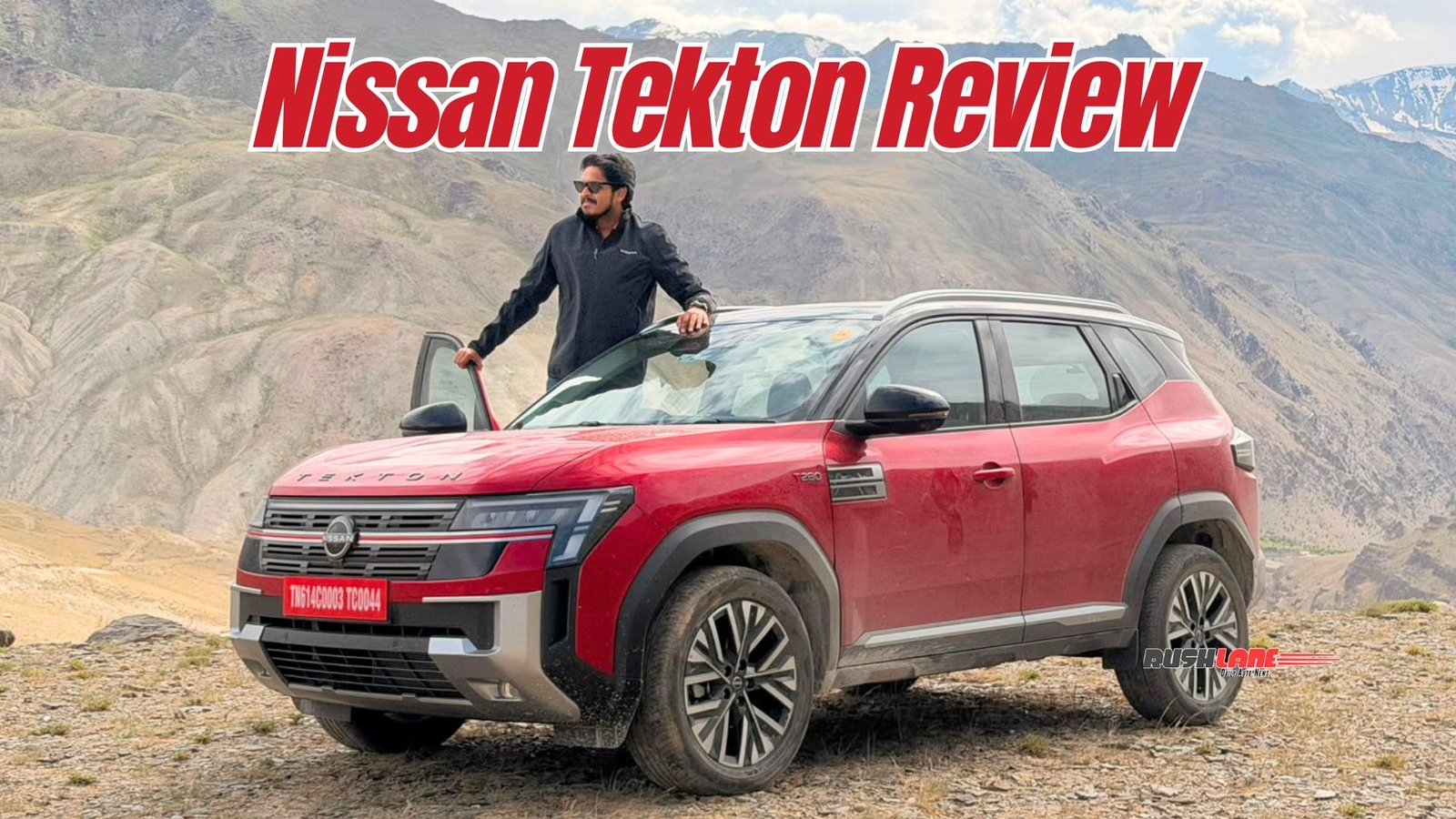
Nissan Motor India seems to be very confident about the newly launched Tecton SUV. We say this because the media drive of 700 kilometers from Chandigarh to Leh took place in some of the toughest terrain in the world. Sure, the India Book of Records and the media coverage on it did a good job, but organizing a media drive for 3 days covering a distance of 700 km across some of the toughest terrain in the world is no mean feat.
Spending three days and approximately 700 km with a vehicle across the Himalayas gives you a better understanding of its strengths and weaknesses. This move shows how confident Nissan is about the Tecton. After driving almost 700 km with the Tecton, we have arrived at our thoughts where there is a lot to like and very little to complain about.
Nissan Tecton Review – Design & Aesthetics!
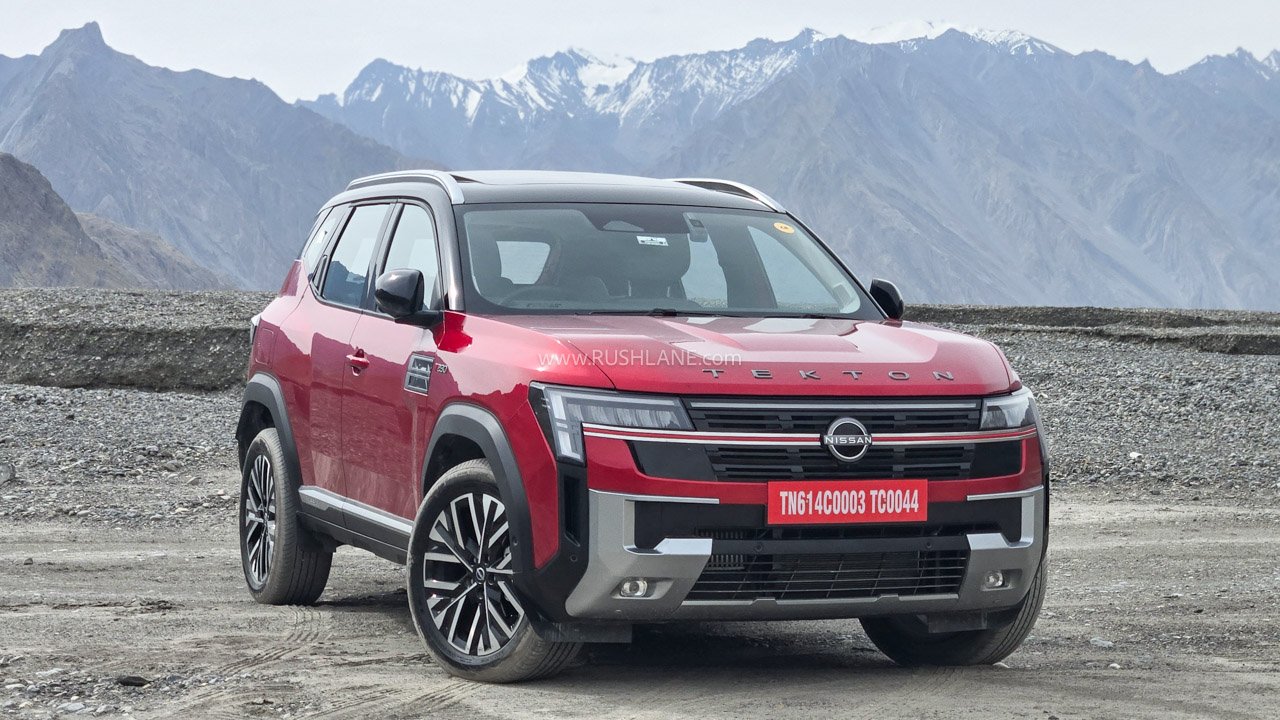
The launch price of Nissan Tekton starts at Rs 10.49 lakh (ex-sh) for the base Visia variant with the T160 6MT (1.0L turbo engine) and it goes up to Rs 18.59 lakh (ex-sh) for the top-spec Tekna+ variant with the T280 6DCT (1.3L turbo engine). There are many single-tone and dual-tone colors to choose from. We sampled the Flair Garnet Red with Black Roof, but we think the Pearl White really looks nice.
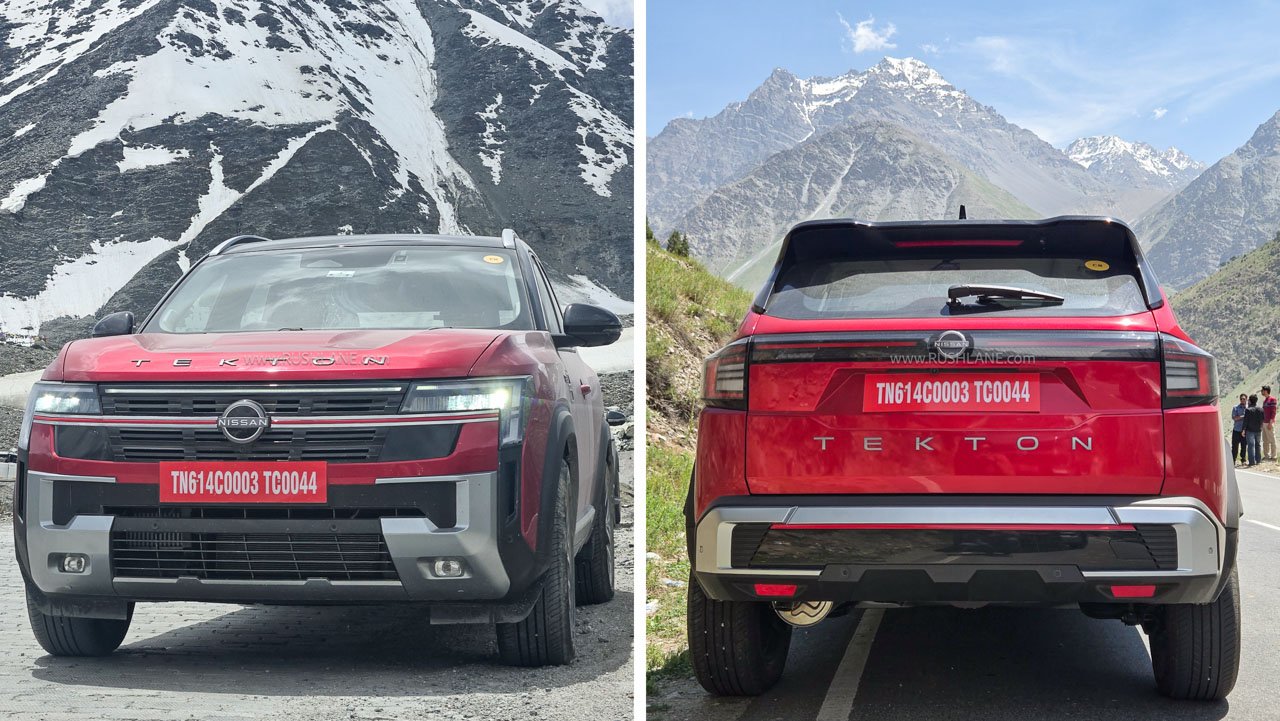
In terms of design, one can dismiss the Nissan Tecton as a rebadged Renault Duster, as was the Terrano in the past. However, we believe Nissan has done a great job in differentiating the Tecton from the Duster with the unique fascia. Many (including us) think that the Tecton looks better than the Duster due to its more refined fascia and lighting elements, giving it a classy and elegant aesthetic. It’s not that the Duster looks bad, the Tecton just looks better.
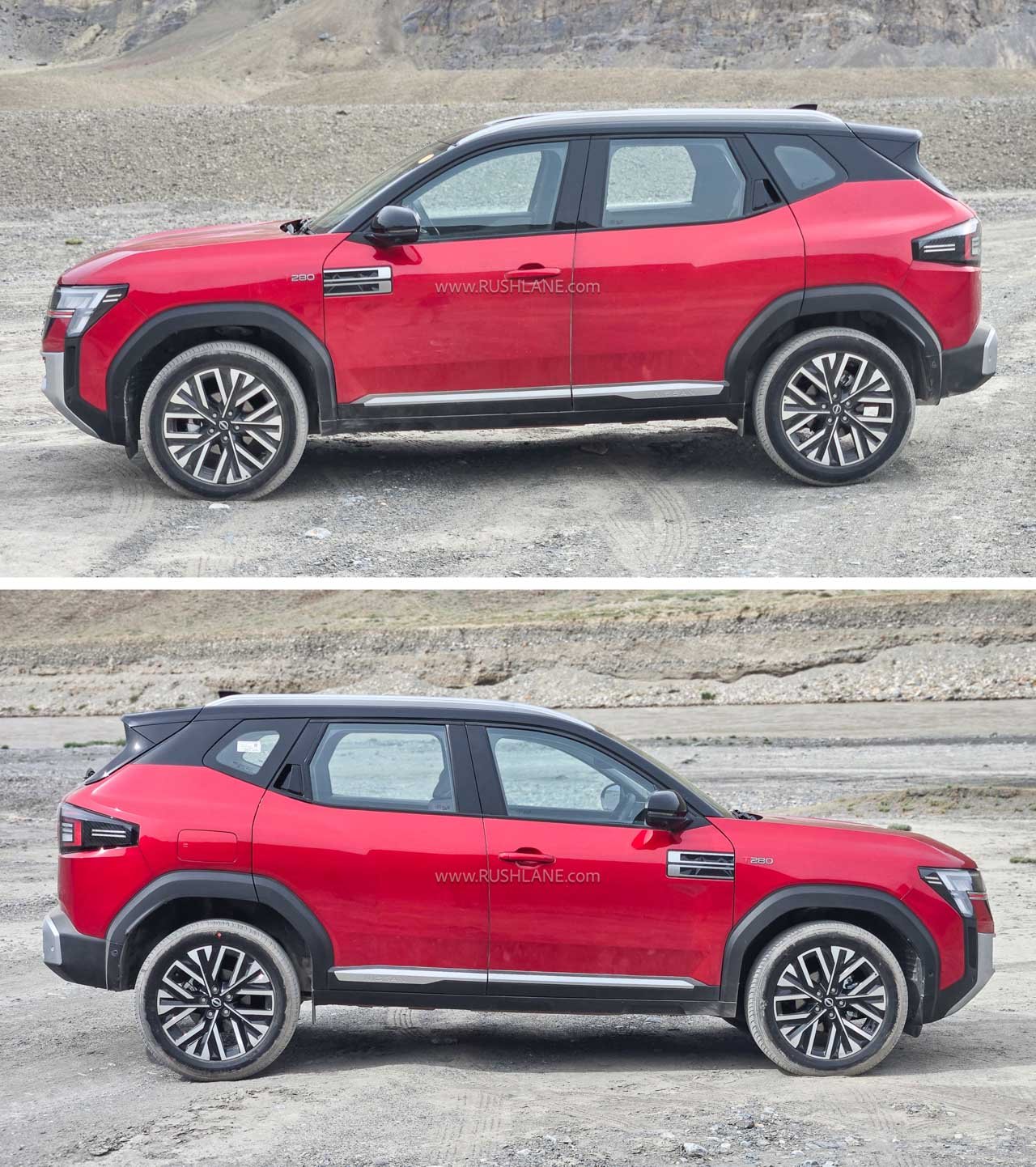
We particularly liked the red horizontal element used at the front and rear which adds a touch of sportiness in line with the overall personality of the Tecton. The wheels are also unique with the Tecton, retaining the 18-inch size, wrapped with 225-section tyres. At the rear too, the Nissan Techton brings a distinct look with the C-shaped connected LED tail light signature, C-shaped design on the bumper and big Techton badging, which looks a bit tacky (though the front looks good).
interior design, equipment, quality
Just like the exterior, Nissan India has tried to create a distinct identity with the Tecton on the inside as well. For starters, we get the combination of burgundy and white. While white gives an airy and attractive feel, it is difficult to maintain in Indian conditions and we wanted the burgundy to be red to match the red exterior highlights. Talking about the highlights, Nissan has used rose gold, which adds a classy touch.
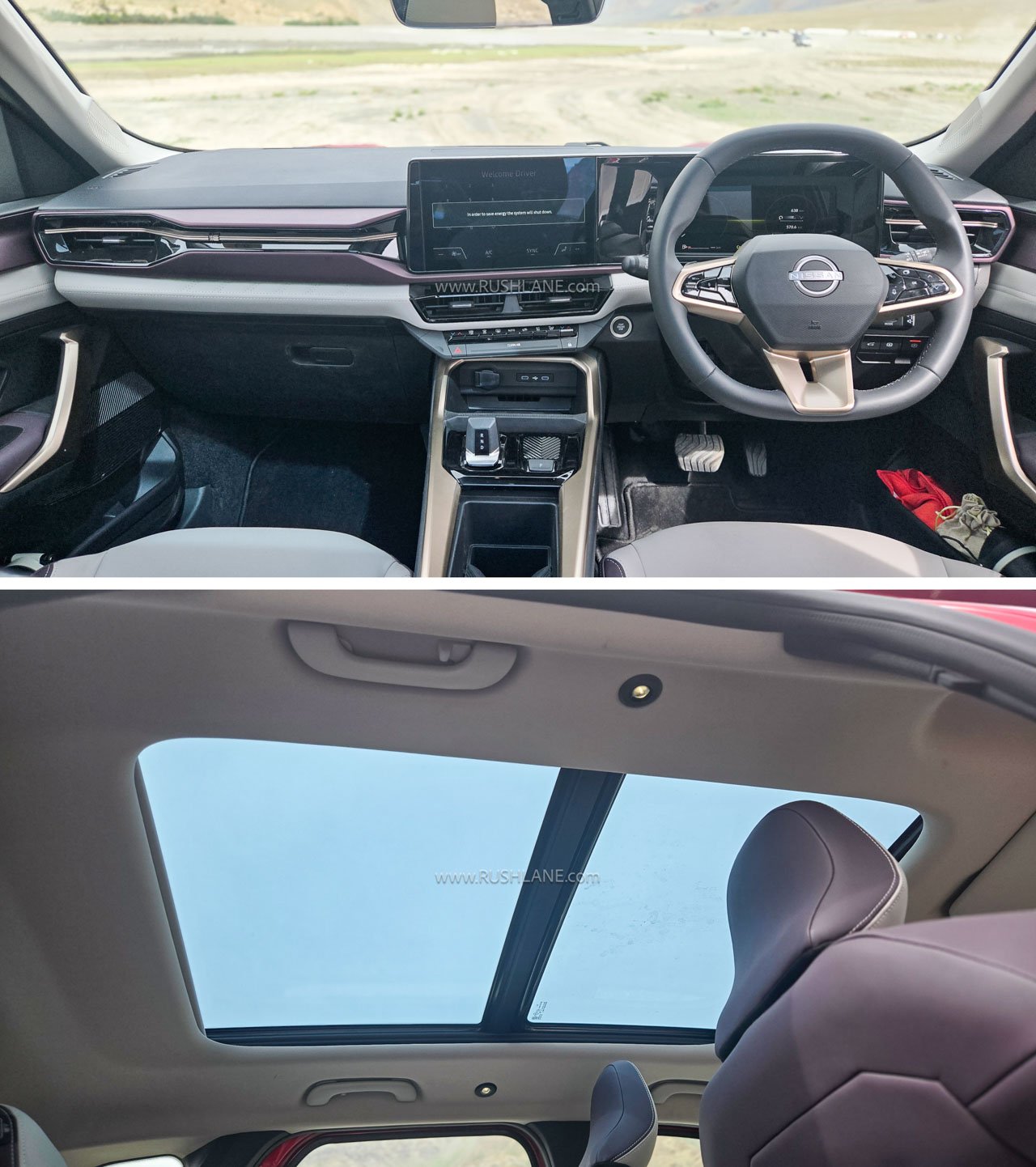
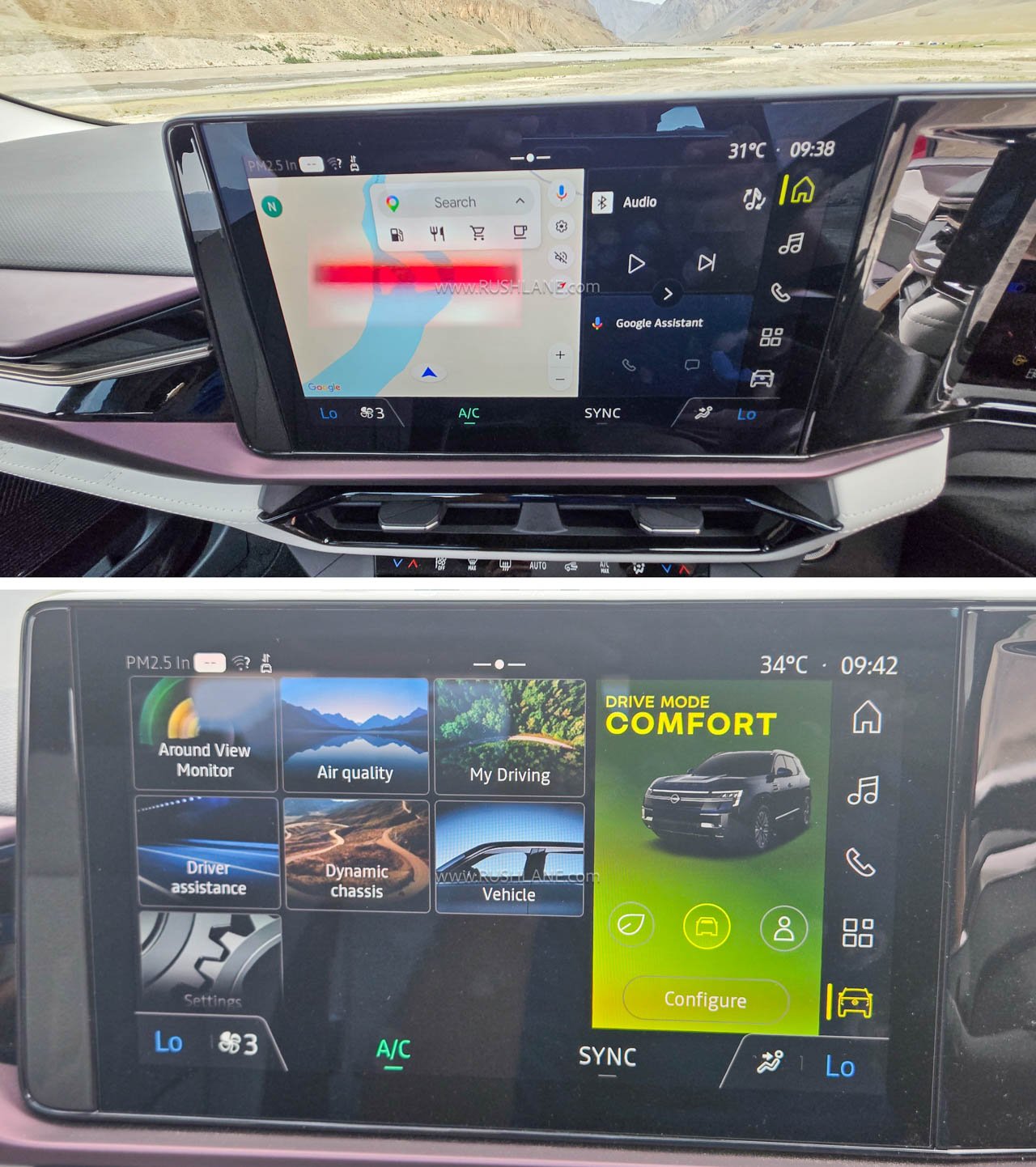
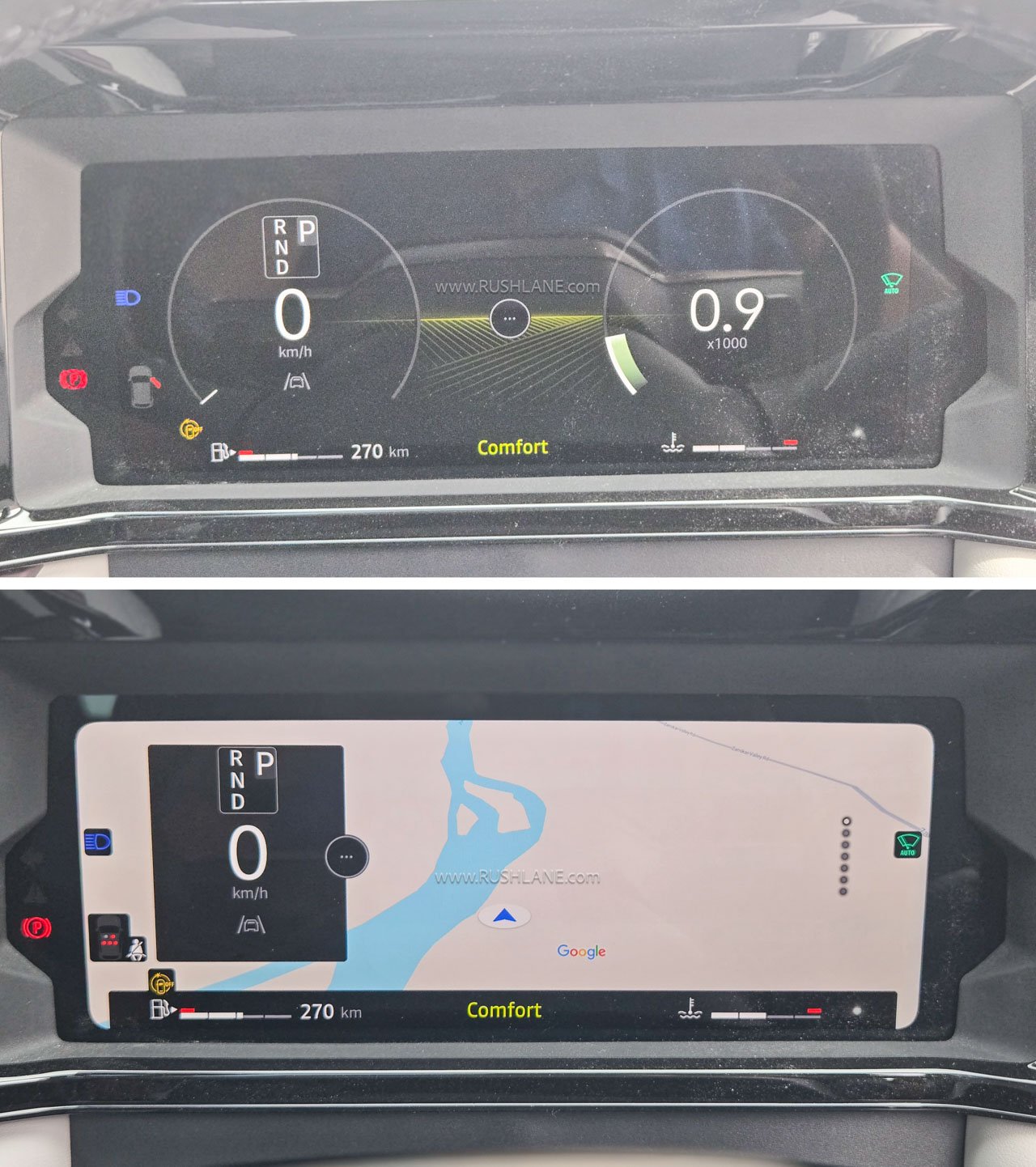
When compared to the Duster, the Tecton interior definitely has a wow factor with the color theme and even the unique dashboard design. The center console, 10.1-inch Google built-in infotainment, 10.25-inch instrumentation, steering wheel, all the buttons and toggles inside the car are shared with the Duster. The UI for the infotainment screen and instrumentation is unique to the Tecton and we prefer the UI on the Duster a bit more. The instrument cluster can also show a full-screen map.
We liked the Google built-in infotainment screen that negates Android Auto and we liked the reliable proximity-based Keyless Go system. All the switches, buttons and toggles feel exceptional and even the window controls are proper dual-stage. The fit and finish is excellent and we did not face any bumps even over rough terrain. There are also soft touch plastics, but not widespread enough.
space and comfort
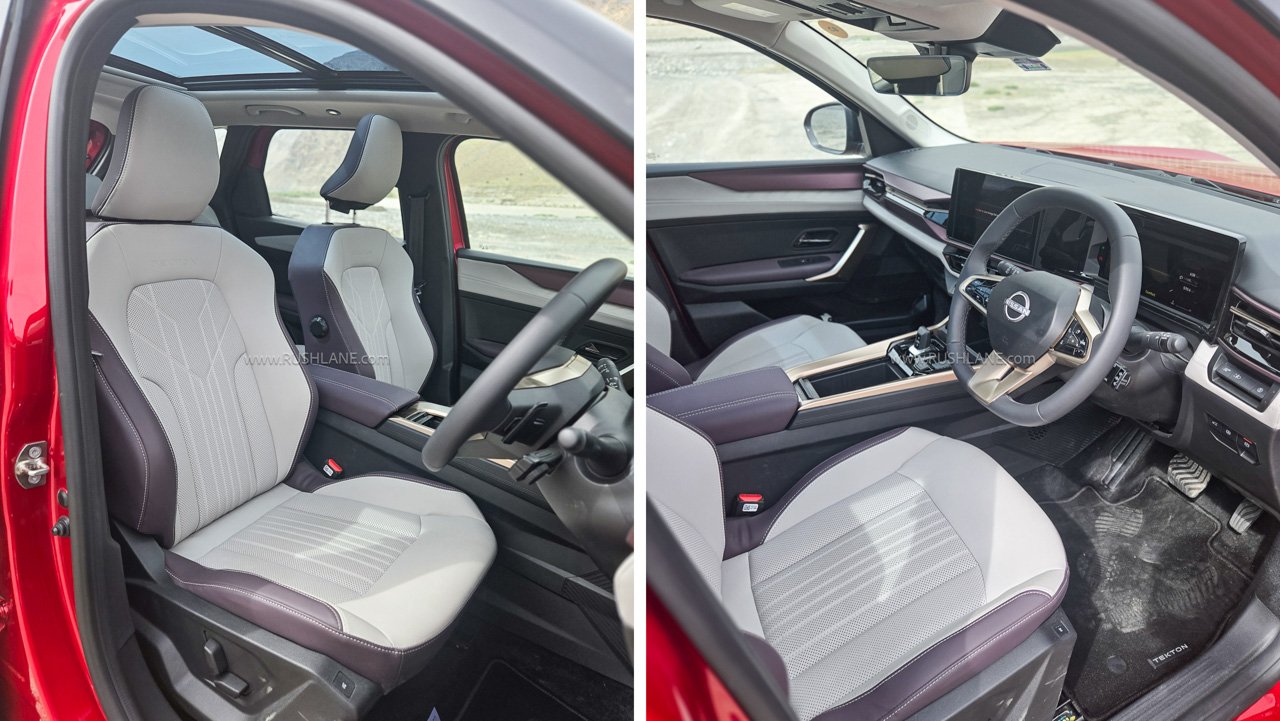
While the perceived space is more in the Tecton than the Duster, the actual space is exactly the same. There are no complaints about space for the front passengers. Under-thigh support could have been better, while there was ample leg room, knee room and head room. Both front seats are ventilated and powered with height adjustment and also get manual lumbar adjustment. Both front seats can go really low, like a hatchback.
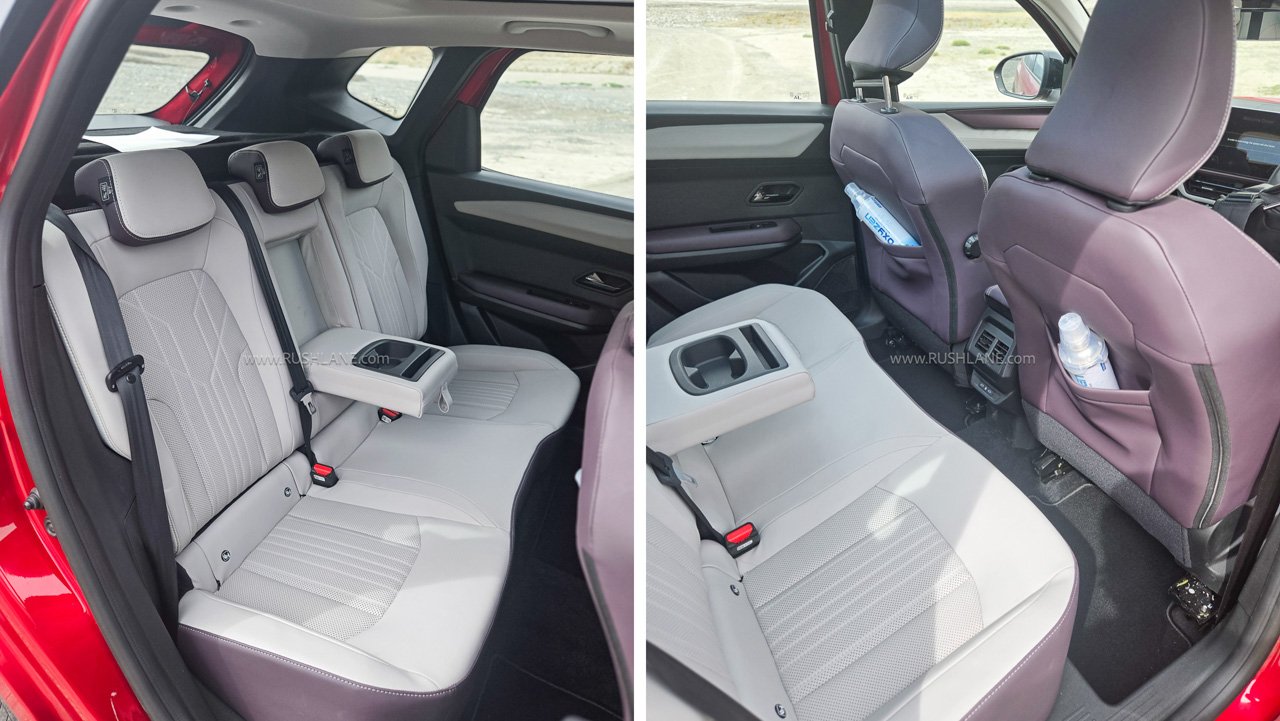
Even at the lowest seat height, my 6ft frame could see the bonnet, but this low seat position made us feel like the window area was quite high. The front seats hug you nicely and the side bolsters will keep you in place if you’re driving enthusiastically. The sun visor should have been extended for the front passengers. The rear seats don’t have as much room as some rivals in this segment. It’s usable, but not detailed.
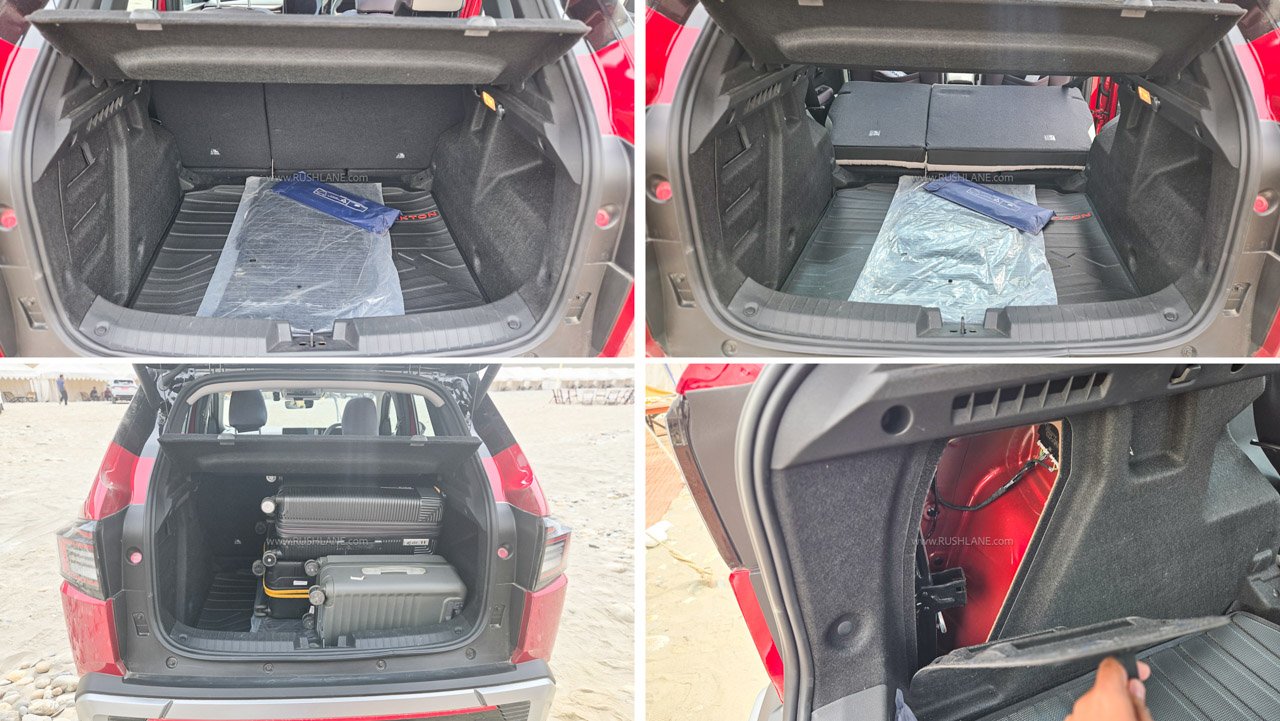
It has rear AC vents, USB port, three headrests and a center armrest, a panoramic sunroof and reading lights. Rear window shades are absent. Boot space is up to 700L, exactly like the Duster, if you load it up to the roof. We could fit two large check-in suitcases, two cabin suitcases and still had room for about 4-5 backpacks.
Powertrain and performance
In terms of powertrain, the Duster has only two turbo petrol engine options, giving rise to three possible combinations. We have the T160 engine which is a 1.0L 3-cylinder turbo petrol engine, which gets a 6-speed manual gearbox only and then we have the T280 engine which is a 1.3L 4-cylinder turbo petrol engine, mated to a 6-speed MT or a 6-speed wet DCT. We exclusively drove the T280 DCT on this historic 700 km journey from Chandigarh to Leh.
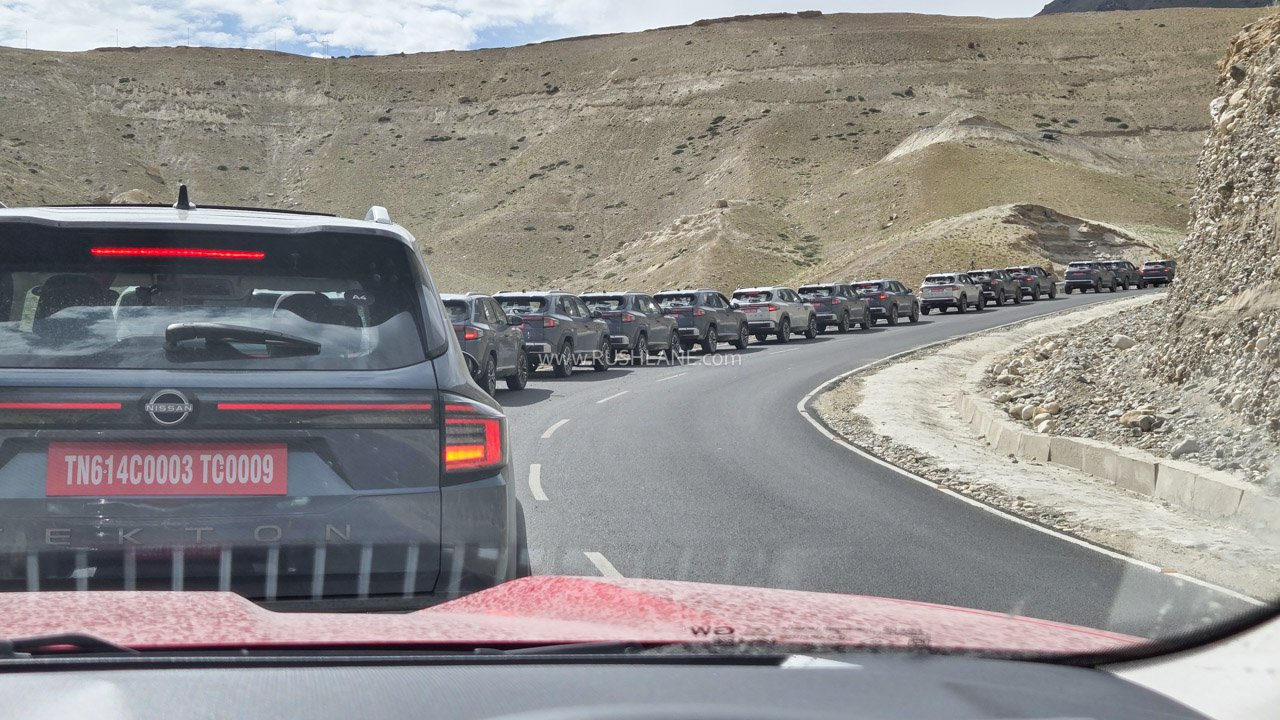
We are glad that we got the DCT and not the manual, which we experienced especially during the Duster drive in Dehradun. Manual gearboxes have unpredictable clutch action and the clutch bite point is not well calibrated. The DCT is faster and offers smoother shifts. This DCT does a good job of keeping the vehicle in the correct gear and downshifting quickly when needed.
When pushed hard, as we did in the Himalayan, the gearbox takes a while to get into the right gear, but eventually it does. In the Himalayas where the air is thin, we found the engine struggled a bit and turbo lag became more pronounced. Additionally, the T280’s 163 PS output is the highest in the segment, while the 6-speed wet DCT is also one of the best transmissions we have experienced in this class. There is no Sport mode and all of the engine’s performance can be accessed in Comfort mode.
Cabin insulation could have been better, as a lot of engine noise filters into the cabin. That said, we don’t mind too much as the 1.3L turbo petrol sounds good. In fact, we believe it’s one of the best-sounding engines in the segment, with noticeable turbo blow-off sounds along with a satisfying intake howl under acceleration.
Acceleration is brisk and 0-100 km/h can be achieved in less than 10 seconds. The engine is eager to rev and doesn’t hesitate to rev at high revs for long periods of time.
Drive and Dynamics
Handling is where the Nissan Tecton shines most and drives exactly like the Duster. It has two steering modes and we kept the steering in hard mode all the time. This adds weight to the steering feel, while steering precision remains the same. In the winding stretches of the Himalayas, the Nissan Tecton felt more like a sporty hatchback than a high-riding SUV, which is a good thing in our opinion. Braking is progressive, but requires a little more initial effort.
Plus, the suspension is also very absorbent and seems indestructible over broken roads, which were in abundance on our route. Does it feel as strong as the B0 platform seen in cars like my Renault Captur? No, but is it one of the best in its segment? Yes it is. Even when pushed hard, body control remains impressive, with the Tecton holding its line confidently through corners.
The ride and handling balance that the Nissan Tecton has struck is similar to the Duster, but still commendable. The Tecton also has Level-2 ADAS, which is active by default and is configurable. The system works quite well and we did not face any situations where it applied brakes unnecessarily. Which is a good thing. You can decide which features you want to keep on and then all ADAS functions can also be disabled with the press of a button.
Should you buy one?
After driving 700 km on some seriously demanding roads, the Tecton gave us far more positives than negatives. Rear seat space isn’t class-leading, the audio system could have been better and there are a few ergonomic annoyances. But these are relatively minor complaints against an SUV that combines a strong 1.3L turbo petrol, excellent DCT, absorbent suspension and genuinely pleasant handling.
If driving dynamics top your priority list, the Duster and Tecton currently make particularly strong cases in this segment. Between the two, the underlying experience is remarkably similar. The advantage of the Tecton is its more refined exterior design and more exclusive cabin. Whether that’s enough to make you choose it over the Duster will ultimately depend on price, styling preferences and the ownership experience offered by Nissan.