
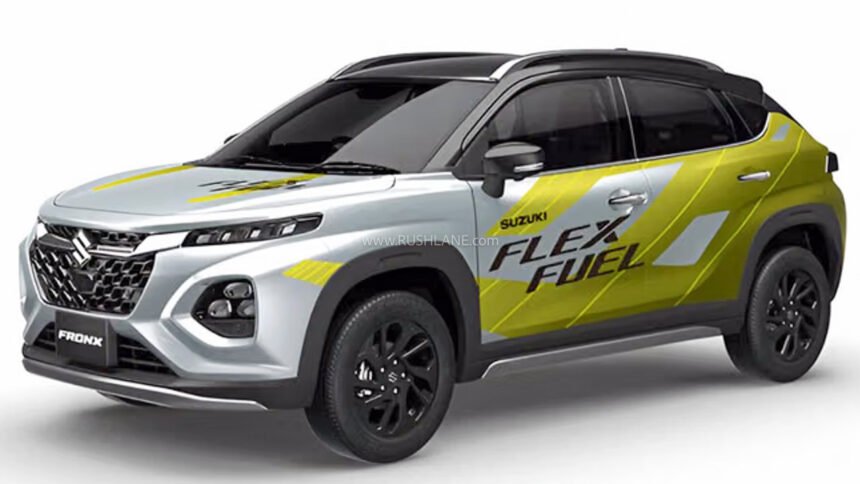
India’s Union Minister of Road Transport and Highways, Nitin Gadkari has just announced that Maruti Suzuki will launch a flex fuel capable vehicle at a special event in Delhi on the occasion of Environment Day this year, while he stressed the need to move towards green fuels. This suggests that Maruti Suzuki may unveil or showcase a flex-fuel vehicle capable of running on high ethanol blends up to E100 (100% ethanol), possibly on June 5, 2026.
Maruti E100 flex fuel launched?
It should be noted that there is not a single flex fuel 4W vehicle on sale in India currently. The soon-to-be-launched Maruti Suzuki Flex Fuel vehicle will be the country’s first 4W vehicle capable of running on a blend of fuel combinations up to E100 (Ethanol 100%) with a specially designed fuel storage, delivery and ignition system.
Video | Nagpur, Maharashtra: Union Minister Nitin Gadkari says, “Our biggest pollution problem is fossil fuels…petrol and diesel. So, as Transport Minister, I am happy that we have introduced electric scooters, electric cars, electric buses, electric trucks and… pic.twitter.com/0me380XHVF
– Press Trust of India (@PTI_News) 23 May 2026
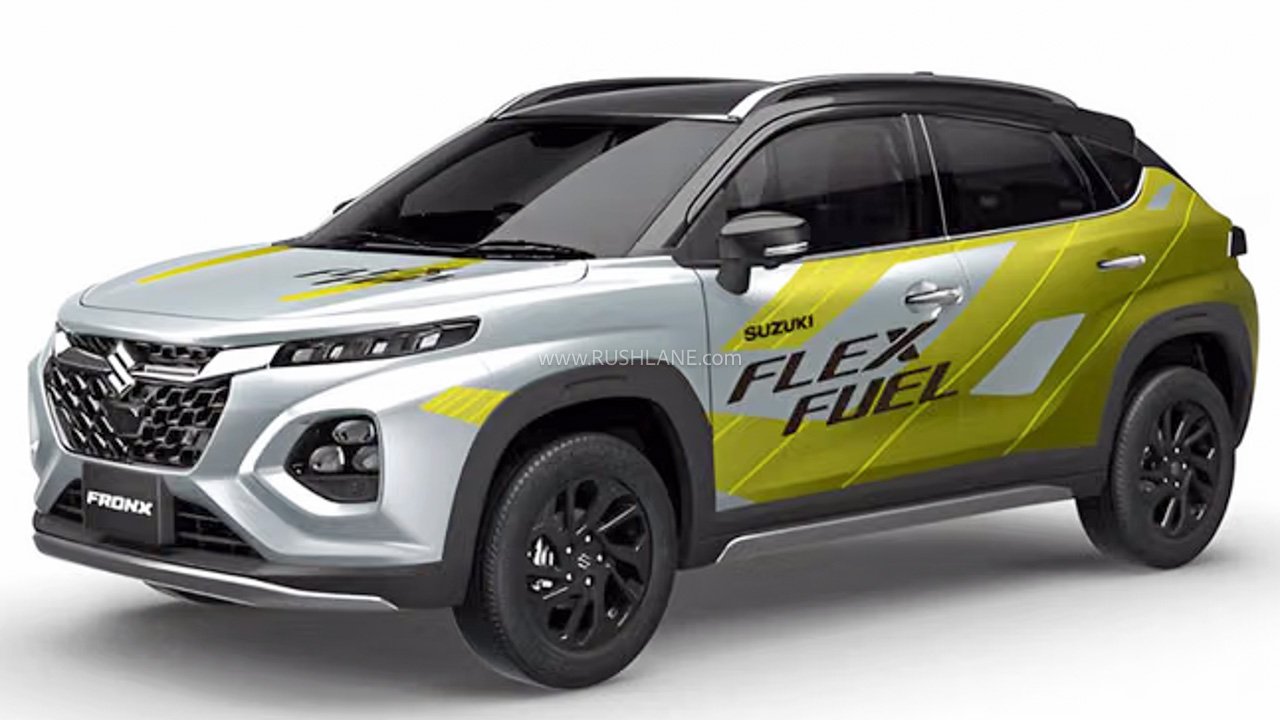
Last year, Suzuki showcased the flex fuel version of the Fronx sub 4 meter coupe SUV at the Japan Mobility Show 2025 in Tokyo. Interestingly, this Fronx flex fuel vehicle showcased last year was capable of running fuel blends up to E85 (85% ethanol), not E100. There is a good possibility that Maruti Suzuki may introduce an E100 capable flex fuel vehicle based on a vehicle other than the Front End.
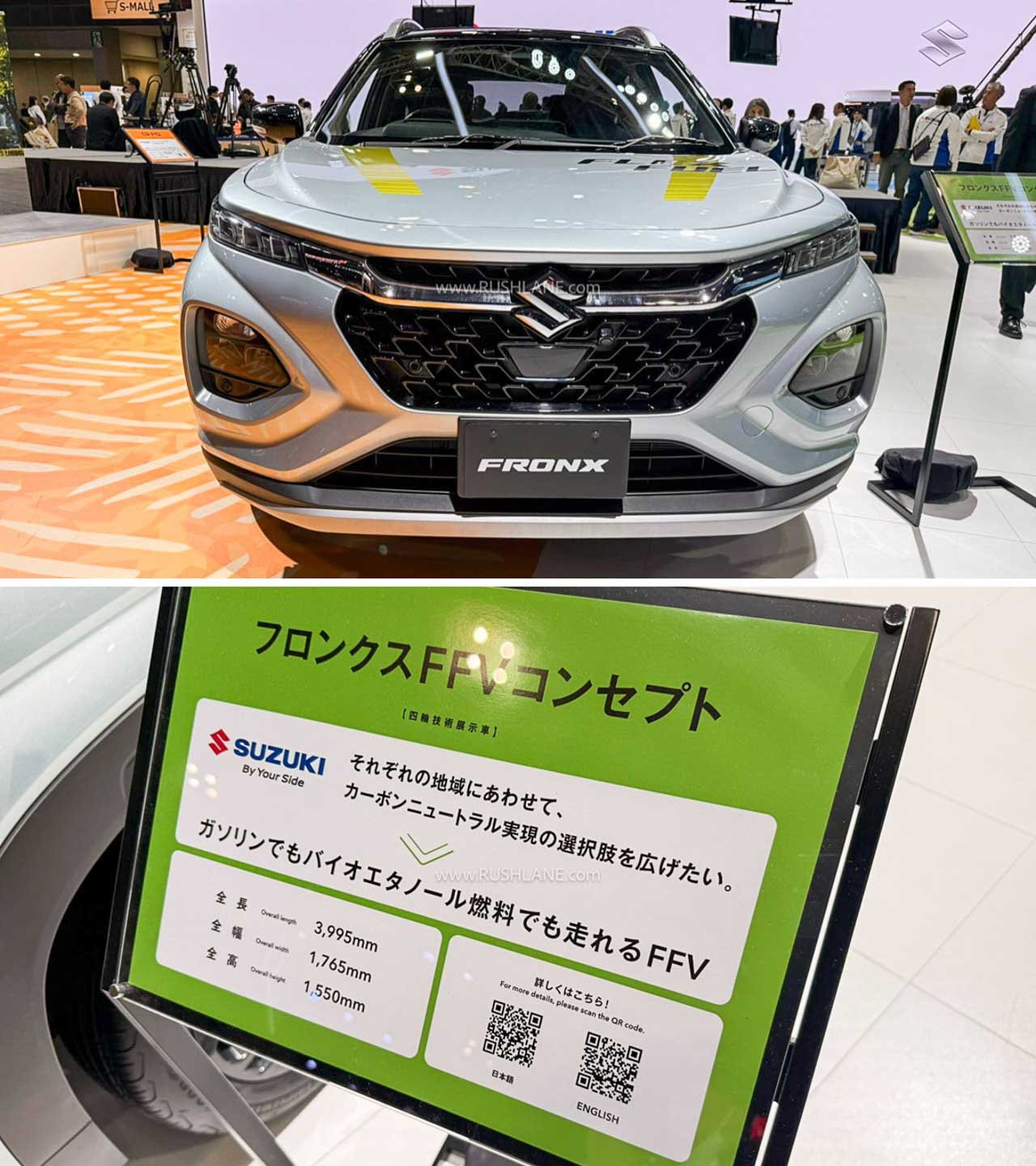
Further modifications can be made on top of the E85 prototype to make the soon-to-be-launched Maruti Suzuki E100 capable flex fuel vehicle compatible with E100 fuel. Ethanol has a greater tendency to retain moisture than regular refined unleaded gasoline. Higher ethanol concentrations require specially designed fuel systems and engine components, as ethanol absorbs moisture more readily than conventional gasoline.
According to Gadkari, the push towards higher percentage of ethanol content in our fuel will ensure cost-effective, pollution-free and indigenous fuel production and supply. It also reduces India’s dependence on crude oil imports (87% cumulative) amid rising global energy security concerns and volatility in crude oil prices.
what to expect?
He further informed that a total of 12 companies including Toyota, Tata, Mahindra and Suzuki have already demonstrated such vehicles (flex fuel vehicles). Thanks to Honda and Suzuki, flex fuel 2W vehicles have also arrived.
He expressed his enthusiasm towards the increasing penetration of EVs in scooter, car, truck, bus and tractor segments. In other news, India has standardized E20 petrol and BIS has released specifications for E22, E25, E27 and E30 fuels – preparing for the next phase of the ethanol blending roadmap.