
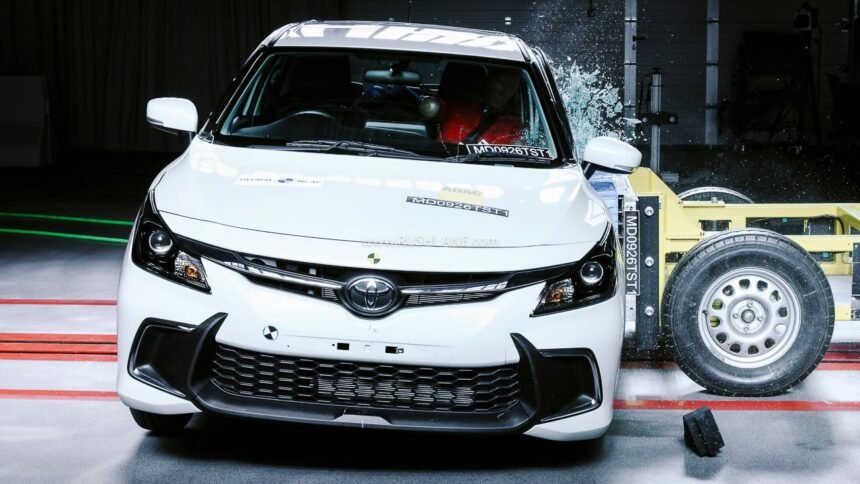
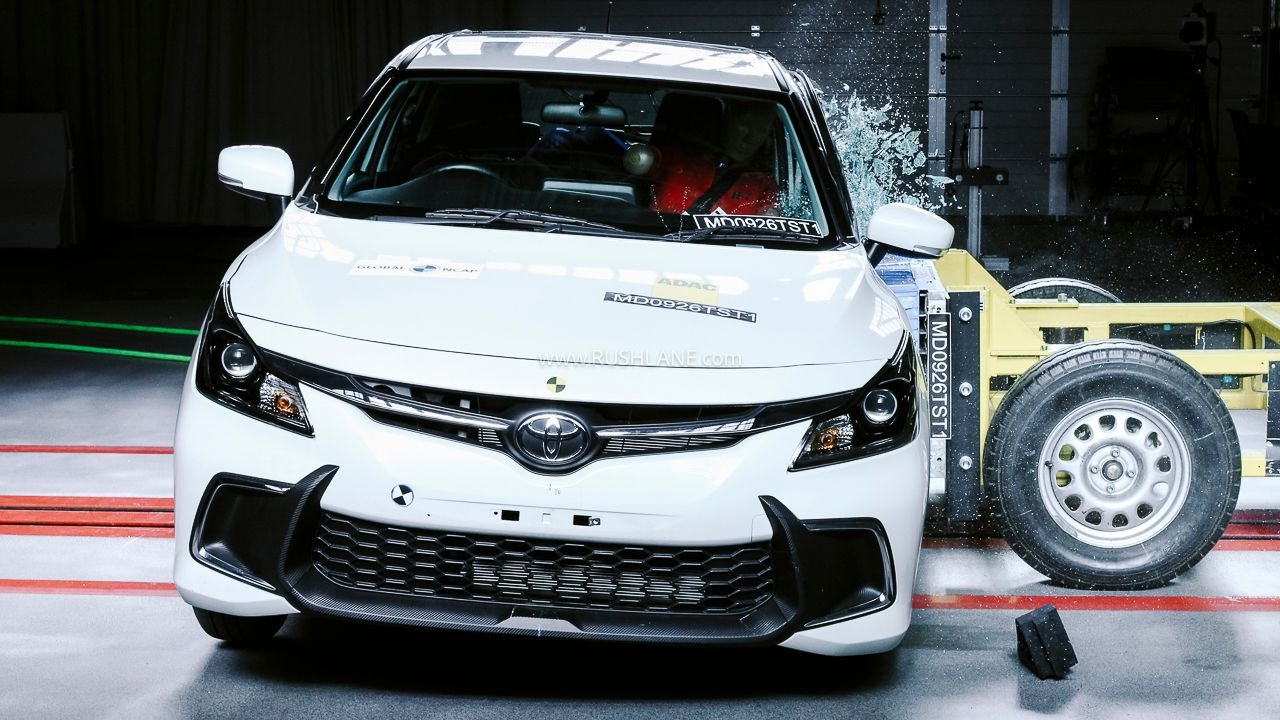
Earlier, the Baleno had scored 2 stars in Latin NCAP and 4 stars in India NCAP – the latest Global NCAP ratings are for the South African market
The Toyota Starlet, which is basically a rebadged version of the India-made Maruti Baleno, has received a zero-star safety rating for adult occupant protection in the latest Global NCAP South Africa crash tests. The vehicle tested was the outgoing South African-spec model made in India, while child safety was given a 3 star rating.
In India, the same car is sold by Toyota as the Glanza through its partnership with Maruti Suzuki, while export markets like South Africa get the Toyota Starlet branding. The tested version was equipped with dual front airbags and electronic stability control (ESC) as standard, but lacked side curtain airbags and side chest airbags.
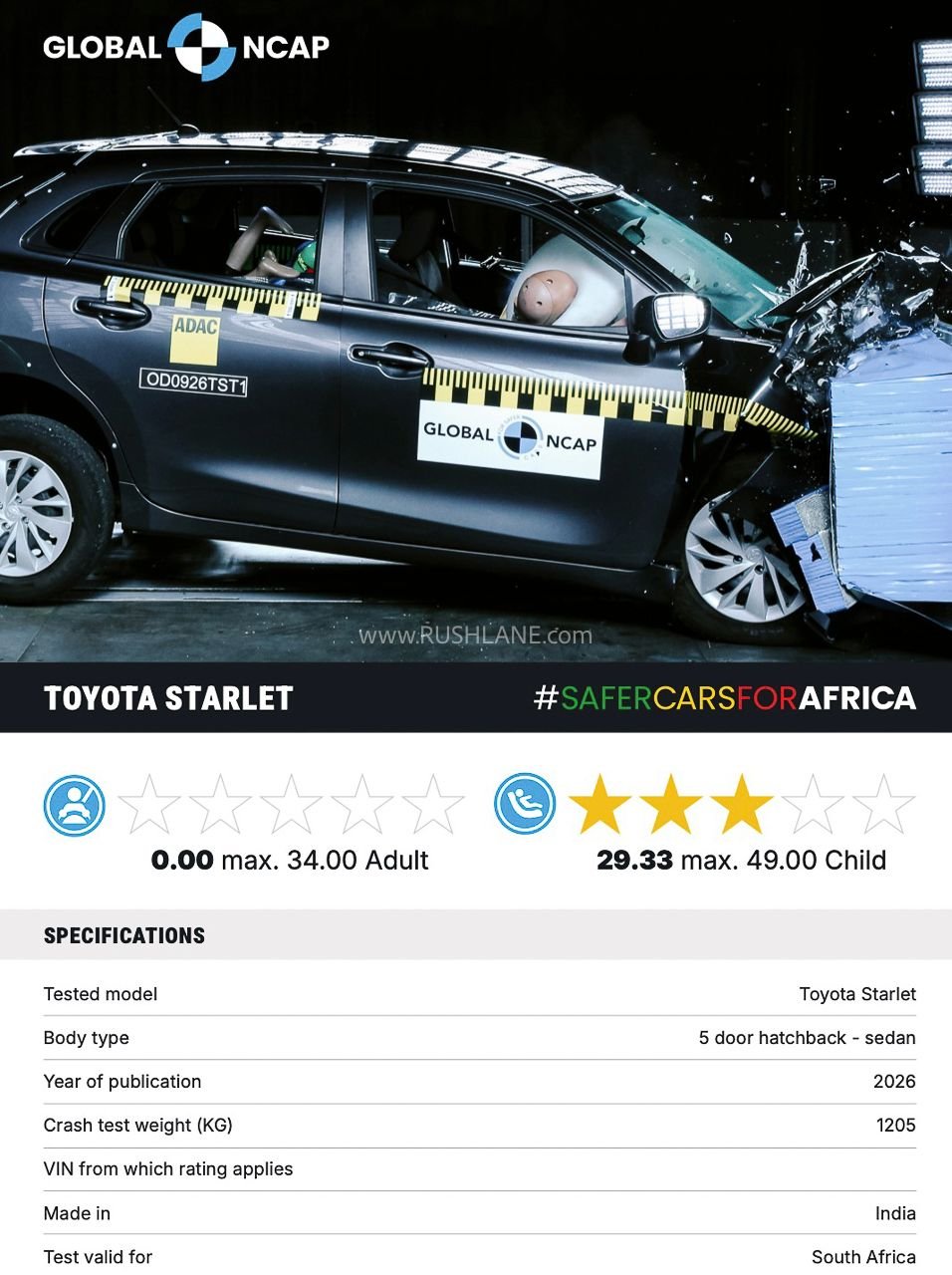
Unstable bodyshell, poor side impact protection
The Global NCAP report highlighted several concerns related to structural integrity and side effect protection. Both the footwell area and bodyshell were rated unstable and “not able to withstand further load”.
During the frontal offset crash test, head protection for the driver and passenger was rated Good to Adequate, while chest protection was marked as Adequate. However, protection of the knee was rated marginal due to the potential for contact with dangerous structures behind the fascia.
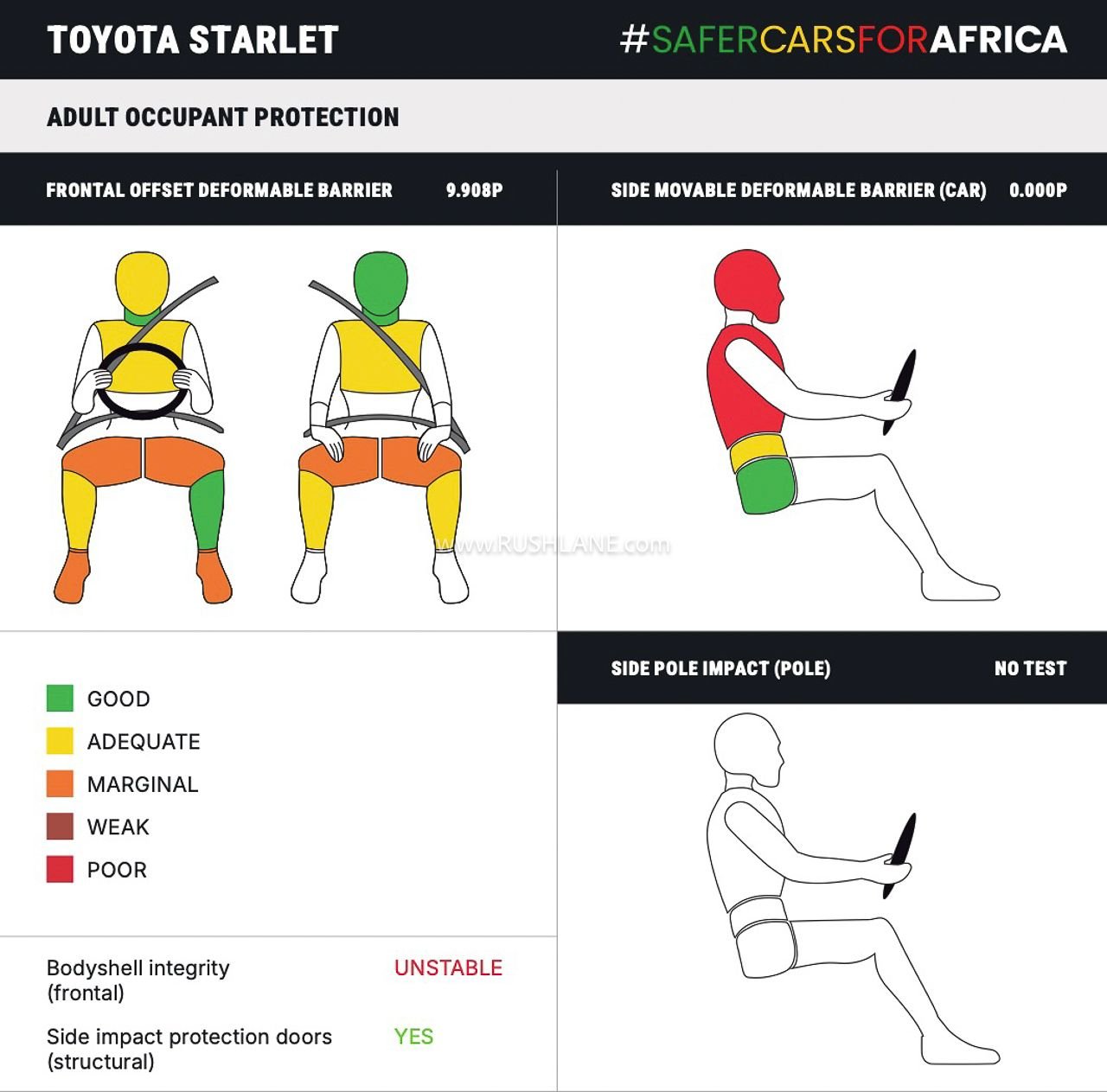
Side impact testing resulted in poor ratings for both head and chest protection. Since the vehicle did not have standard side head protection airbags, a side pole impact test was not conducted. For the safety of the child, the head of the three-year-old dummy reportedly came in contact with the interior of the vehicle during a frontal collision, while side impact assessment found the head of the dummy came in contact with the vehicle during a frontal collision. The child occupant protection score stood at 29.33 out of 49 points, resulting in a 3-star rating.
Toyota has already updated the South African model
Global NCAP said Toyota informed them during transportation and testing that the South African-spec Starlet was being updated with additional safety equipment. The updated version now gets side head and body airbags as standard. Global NCAP confirmed that it has anonymously purchased the modified model and plans to test it soon so that consumers can compare the two versions.
Richard Woods, CEO of Global NCAPdescribed the result as “shocking”, especially given the starlet’s popularity in South Africa. He reported that the unstable bodyshell as well as poor head and chest protection were major concerns. Bobby Ramagwede, CEO of the Automobile Association of South Africa, also criticized the lack of strong safety standards for entry-level vehicles sold in African markets.
NCAP results vary for Baleno across markets
Interestingly, the India-made Baleno platform has delivered very different crash test results in global NCAP events. In December 2025, Latin NCAP crash tested the export-spec Suzuki Baleno and awarded it 2-star safety rating. Latin NCAP The report highlighted concerns related to side effect protection and structural performance.
However, the Maruti Baleno sold in India performed much better India NCAP, where it achieved 4-star Security Rating. The differences in ratings can be attributed to the different crash test protocols, scoring systems, equipment levels and market-specific specifications adopted by different NCAP agencies.
Now, with the Toyota Starlet in South Africa receiving a 0-star Global NCAP Africa rating for the outgoing version, it once again highlights how the same core vehicle platform can deliver very different safety results depending on the market specification and the crash test standards being applied.