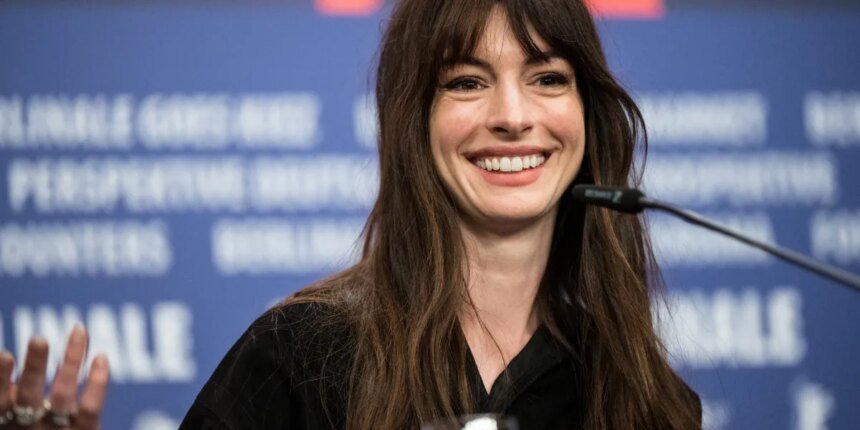
Anne Hathaway has a warning for anyone who uses ChatGPT to help them write job application thank you notes: She can tell.
In the age of AI, it has never been easier to apply for thousands of roles at once. But as the Oscar-winning actress recently revealed while casting for a role, getting caught has never been easy.
“I was in the process of hiring someone; they were all very good candidates, and they all sent me thank you notes,” Devil Wears Prada The star recalled in an interview hits the radioBefore adding that each one was written by an AI.
How could she tell? “They were all exactly the same thank you notes,” Hathaway said.
When she first came in, she thought, “How nice, how professional.” But when others arrived in his inbox, word-for-word identical to the first, the penny dropped rapidly.
“I was like, ‘Oh, no… I’m watching something I shouldn’t be watching,'” Hathaway said. “So I just want to warn you: If you’re out there thinking you’re avoiding something, chances are you’re exposing yourself.”
And while she was able to see the funny side, her co-star Meryl Streep, who also sat in on the interview, said exactly what the boss would be thinking in that scenario.
“So many Anne Hathaways you’re going to apply to – you can’t write it yourself,” Streep rolled her eyes. In fact, a few minutes of effort can really be the difference between getting the job and getting ghosted. And when it’s a rare once-in-a-lifetime opportunity, as Streep described, the lack of effort doesn’t go unnoticed.
“Oh my God, he would absolutely be a killer,” she added. “Nobody on that list gets that job.”
The thank you note is supposed to be your secret weapon – not your downfall.
As young people look ahead to an uncertain economy, a wave of AI-driven redundancies, and the worst job market in 37 years, the pressure to automate writing thank you notes makes sense.
For many candidates applying to hundreds of roles at once, AI-written thank you notes aren’t laziness – it’s the only way out of what experts have described as a “recruitment nightmare”.
Plus, the thank you note was already there controversialMany argue that this requires candidates to work for free in addition to the already arduous process, which includes multiple-stage interviews, aptitude tests, and even covert personality assessments.
The problem is that when everyone uses the same equipment, with the same cues, to retrieve the same sounding tones, they don’t just fail to look different – they look actively uninvested in the company and the role.
And in a job market where a young person with a master’s degree applies to thousands of positions for more than six months without a single callback, there are very few ways to stand out among the millions of unemployed youth struggling to find a job. The extra effort it takes to handwrite a note could lead to an easy win, especially as one Gen Z hiring manager pointed out that they are few and far between these days.
Sophie Rocha, who works in marketing for Gen Z career platform Home From College, emphasizes, “It literally takes two seconds, and frankly… people aren’t sending them, so you’ll stand out if you send a thank you to your interviewer after the call is over.”