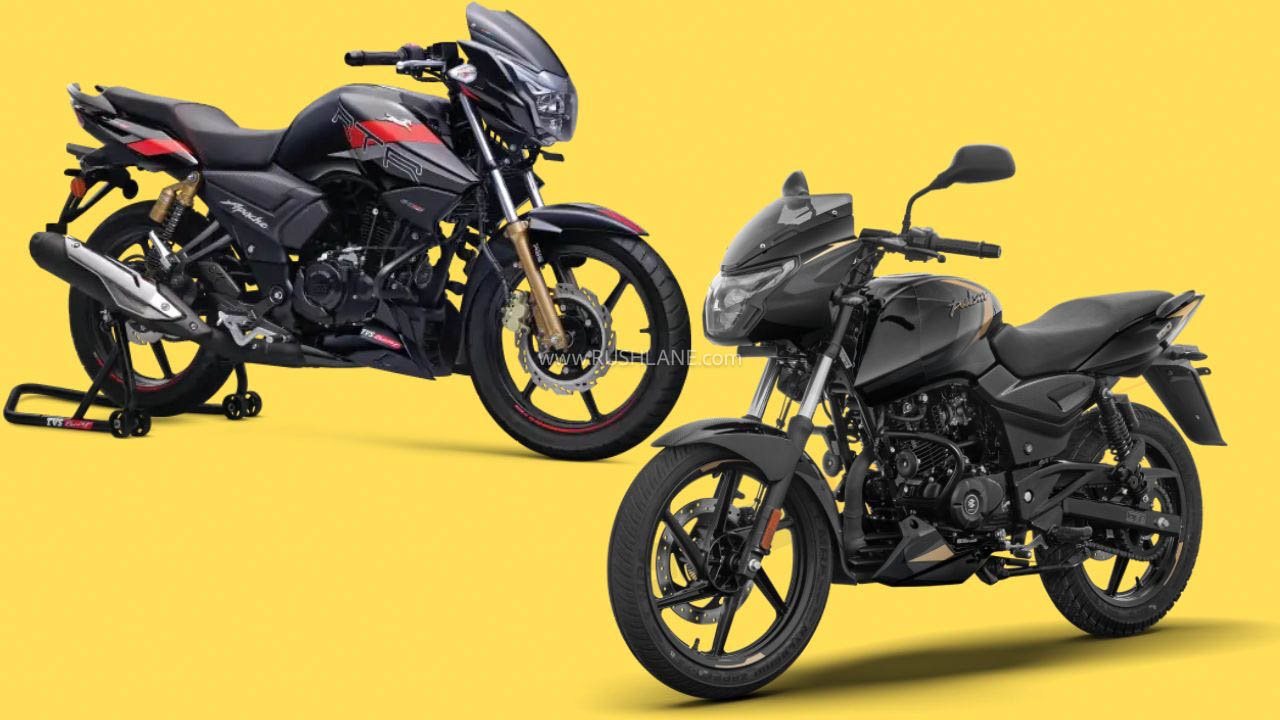
Bajaj Auto has recently re-entered the segment where TVS Motors was always partying. We are talking about the relaunch of the Pulsar 180 in the 180 cc premium sporty commuter segment where the Apache RTR 180 and Hornet 2.0 are present. The rivalry between the Pulsar 180 and Apache RTR 180 is long-standing and is set to clash once again in 2026.
In this post, we will compare these two arch-rivals in terms of their specs, features, equipment and powertrain characteristics to see where they stand on paper. In terms of price, the Pulsar 180 is priced at Rs 1.22 lakh, while the Apache RTR 180 is priced at Rs 1.26 lakh (both ex-sh). Let’s take a deeper look and relive this iconic rivalry between Pulsar 180 and Apache RTR 180 in April 2026.
Pulsar 180 vs Apache RTR 180
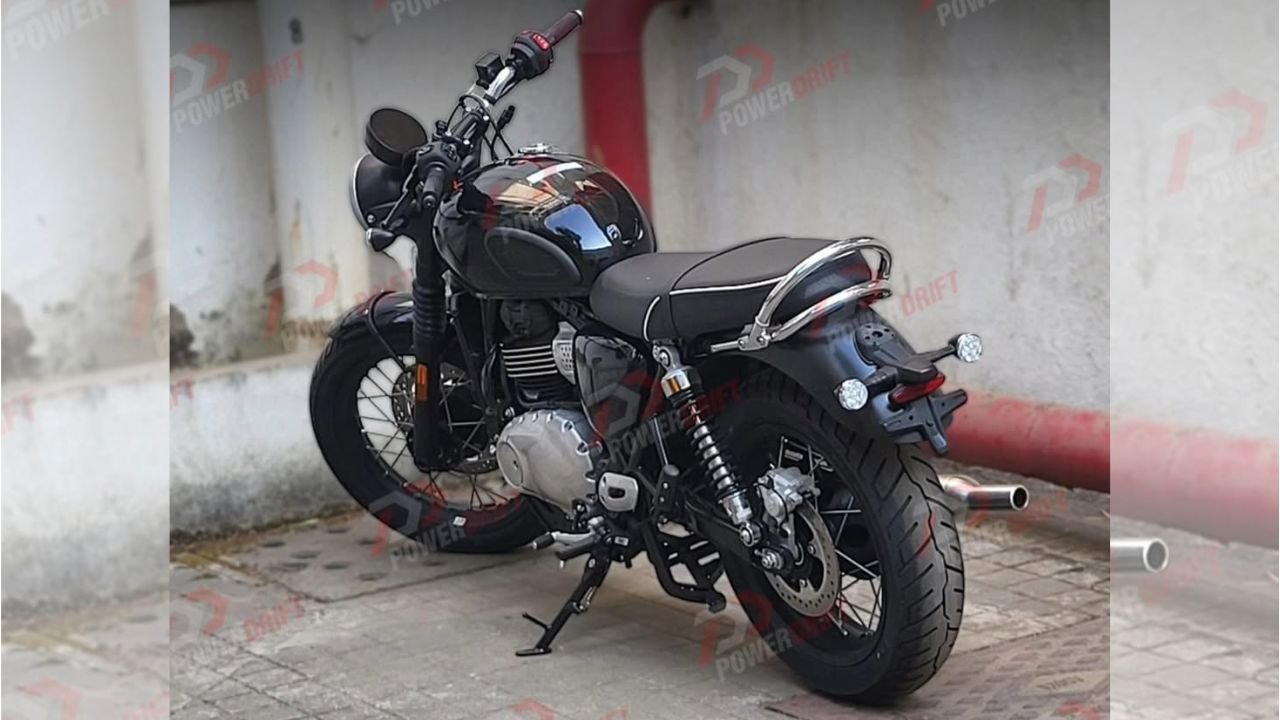
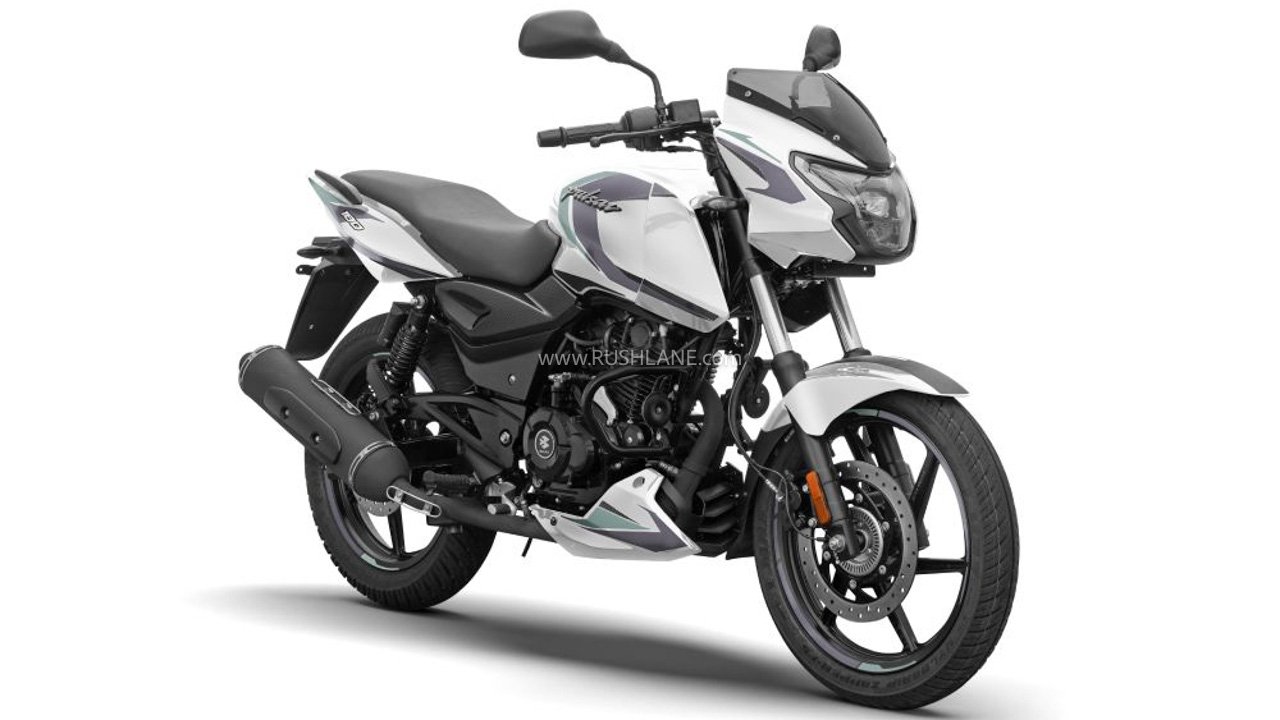
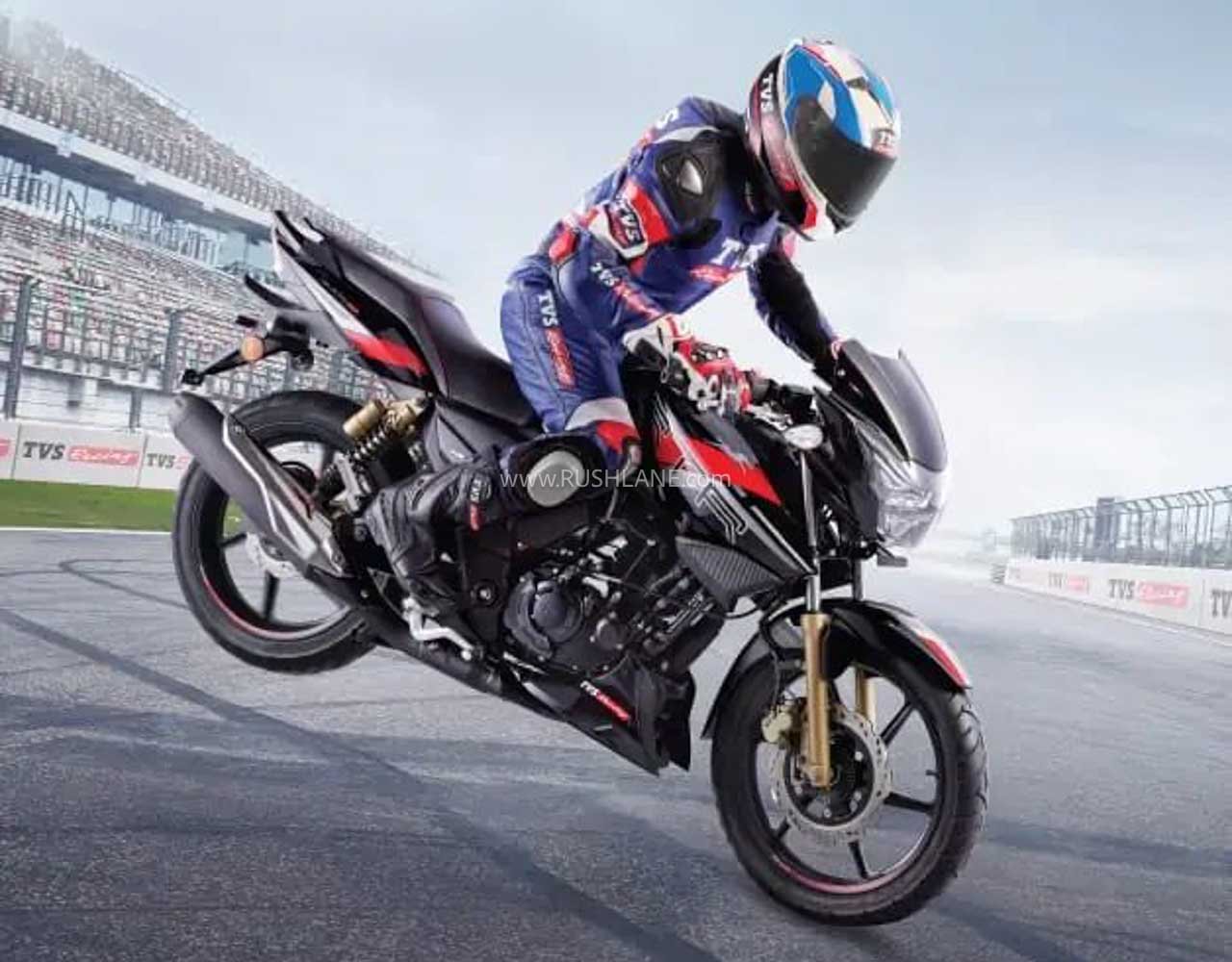
Design is subjective and both Bajaj Auto and TVS Motors are trying to woo customers with unique looks. Many may find the Pulsar 180 easy to look at and its new white color is quite attractive. Apache RTR 180 looks sporty and also has white color which looks attractive.
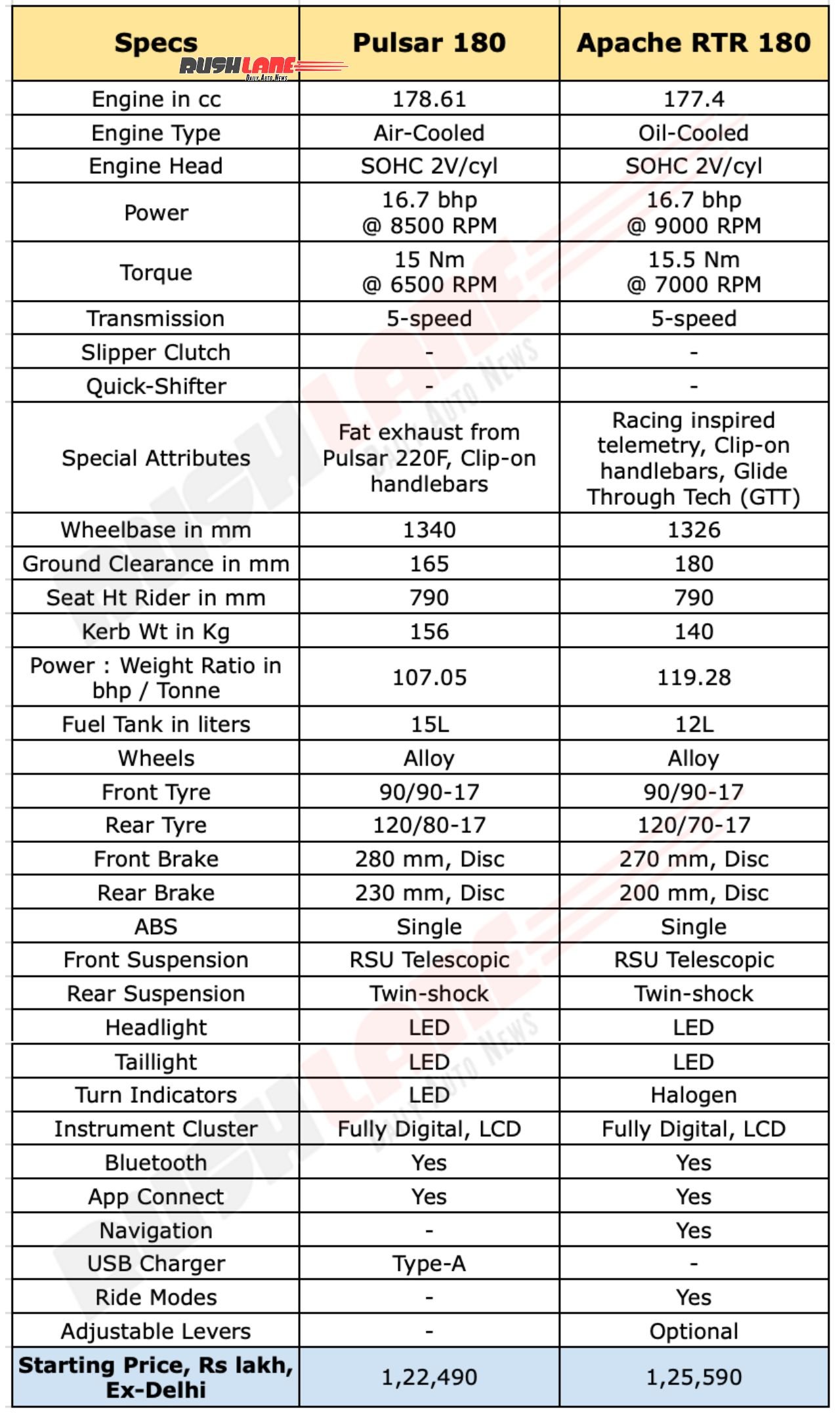
The Pulsar 180 gets the chunky exhaust of the Pulsar 220F, which gives a more muscular look. The Apache RTR 180 still offers halogen turn indicators, while the Pulsar 180 has moved to a full LED setup. Both the bikes come with clip-on handlebars as well as split rear grab rail, a stepped single-seat and a seat height of 790 mm.
Both the bikes have an engine of around 180cc and the power figure is same at 16.7 bhp. In terms of torque, we can see a slight edge towards the RTR 180 as it has more torque by 15.5 Nm. However, the maximum power and maximum torque of the Pulsar 180 comes at lower revs than the Apache. Both get 5-speed gearbox.
The Apache RTR 180 has a shorter wheelbase at 1,326 mm as opposed to the Pulsar 180’s 1,340 mm. The ground clearance of the RTR 180 is 180 mm higher and it weighs just 140 kg, less than the Pulsar 180’s 156 kg. It is 16 kg lighter and this reflects the power-to-weight ratio. It should be noted that the Pulsar 180 offers a larger 15L fuel tank, which is liked by many.
Components, Features, Tools
The Pulsar 180 has larger disc brakes at both ends and both bikes get single-channel ABS on the front wheel. Both get RSU telescopic front forks and twin-shock rear suspension. A fully digital LCD instrument cluster with smartphone connectivity is common between the two, but only the TVS has a turn-by-turn navigation feature.
Bajaj offers a Type-A USB port as standard with the Pulsar 180, which the TVS does not have. TVS offers optional adjustable clutch and brake lever, which Bajaj does not. The Apache RTR 180 is the only bike that also gets a ride mode, which also changes the performance of the bike.